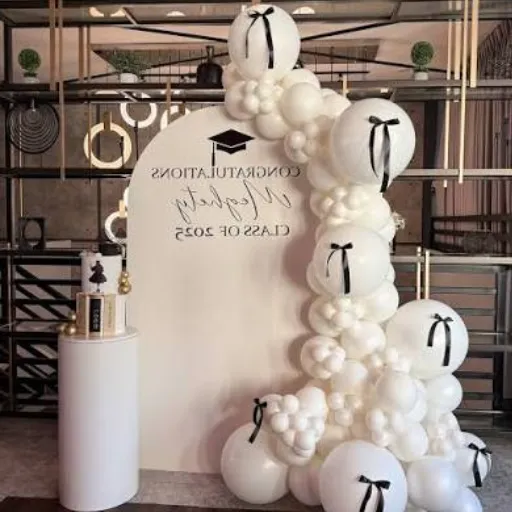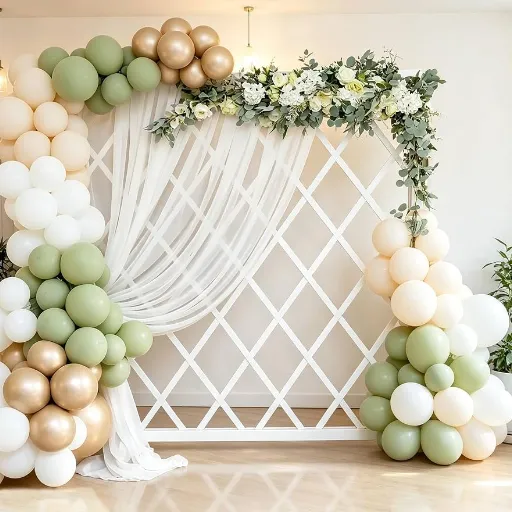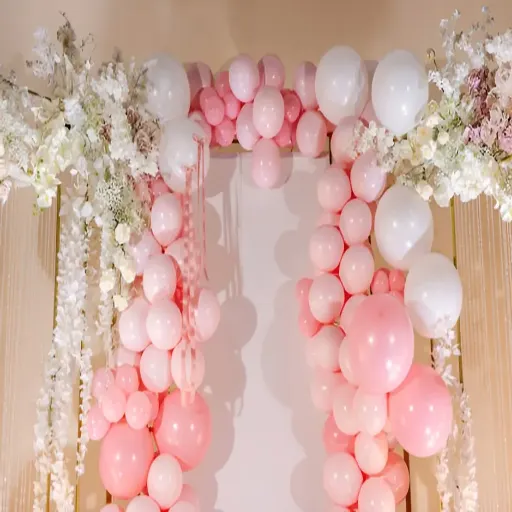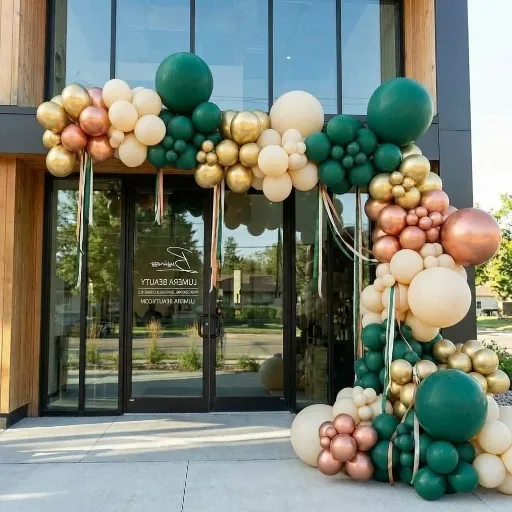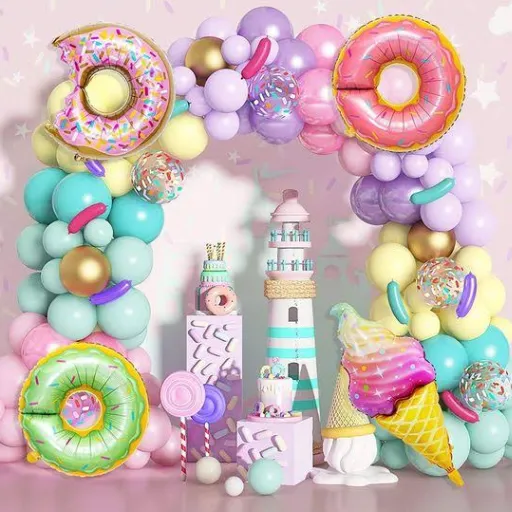
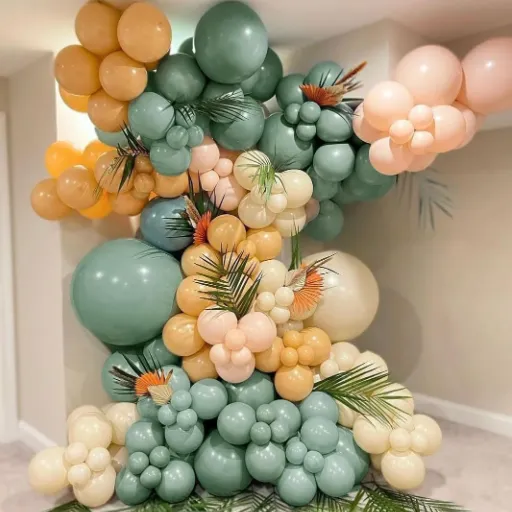
An organic balloon arch is a mixed-size, asymmetrical arch built from roughly 70% 11-inch, 25% 5-inch and 5% 16-inch-or-larger balloons. An 8-foot arch needs about 72 to 91 balloons in that mix, and it costs roughly $35 to $70 in loose balloons and materials, $11 to $85 as a kit, or $325 to $885 installed at home scale.
Those numbers settle the shopping list. They don’t settle the look.
A hundred balloons sounds like an arch. It’s about nine feet of one, and a 10-foot doorway needs closer to 120 once spares are counted. That’s why “is 100 balloons enough” keeps appearing under this keyword, and why so many arches are finished at midnight, two feet short of the doorway.
The second trap is subtler. Organic isn’t a shape.
It’s a set of decisions about size, inflation, symmetry and spacing. Get those right and a cheap bag looks custom. Get them wrong and a professional frame looks like a school fete.
This guide gives you the five rules that separate the two, a count table you can apply to your own span, and the real price of the arch three ways: built, bought as a kit, and paid for.
Key Takeaways
- Organic balloon arches mean mixed sizes, uneven clusters and deliberate gaps, not simply “curved”.
- Use roughly 70% 11-inch, 25% 5-inch, 5% 16-inch or larger. Organic builds take 20 to 30% more balloons than a structured arch of the same length.
- Budget 6 to 10 balloons per foot of span in 11-inch latex, or about 9 to 13 per foot once you mix in filler sizes, plus 10 to 15% spares.
- A 10-foot span is about 12 to 14 feet of actual curve, and the standard reference tables already allow for it. Measure the span, not the curve.
- Expect roughly $35 to $70 in balloons and supplies to build it, $11 to $85 as a kit, or $325 to $885 installed at home scale, with a US median of $477.
If the arithmetic is the part you want to skip, our does it for any length. Tell it your span and it tells you what to buy. Everything else, including the five design rules and the three price routes, is below.
What Is an Organic Balloon Arch?
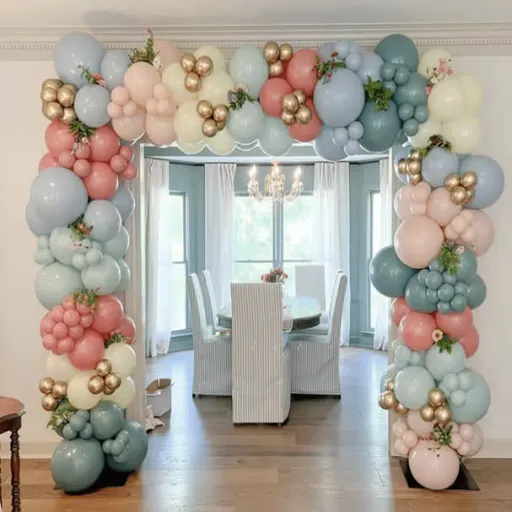
An organic balloon arch is a curved structure built from several balloon sizes in uneven clusters, with deliberate gaps and no repeating pattern. The asymmetry is planned rather than accidental.
Four formats get called “balloon arch”, and three of them aren’t organic.
Classic spiral. Two or three colours wound in a repeating pattern around a frame. Uniform inflation, even spacing, mirrored on both legs. Our guide covers the whole family.
Garland. A flexible cluster that drapes. The difference between a garland and an arch is the object, not the technique, and our page sets out where each earns its cost.
Structured arch. Multiple sizes on a rigid frame, evenly spaced. This is the most common fake organic: the spacing is regular even though the sizes aren’t.
Organic. Mixed sizes, clustered unevenly, under-inflated in places, with visible gaps.
What that costs in materials is public. prices a classic arch at $18 or more per foot with “up to 5 balloons in a row”, and an organic arch at $23 or more per foot with “up to 12 balloons in a row”. Same foot of arch, more than twice the balloons. That single line is the clearest public explanation of what the style costs and why.
The Five Rules That Make an Arch Look Organic
Each of these is a decision you make before you inflate anything.
Rule 1: Use three balloon sizes, minimum
The working ratio is 70% medium, 25% small, 5% statement. Medium means 11 or 12 inch. Small means 5 inch. Statement means 16 inch or larger, and 24 inch and 36 inch both work on a wide span.
We make from 5 inch through 36 inch for exactly this reason. A single-size build can’t produce the look however many balloons you use, because the eye reads size variation as texture.
The 5-inch balloons are structure. They cover the gaps that appear once the medium balloons are tied in, so skipping them leaves the arch thin at the frame.
Rule 2: Under-inflate to change the silhouette
A fully inflated latex balloon stretches into an oval with a narrow neck. A balloon inflated to about 90% stays rounder, softer and shorter.
That rounded shape makes an organic cluster read as clouds rather than eggs. Inflate, let a little air out before you tie, and press the balloon gently between your palms. Do this for most medium balloons and all statement ones.
It’s the cheapest improvement available. Nothing to buy, and it changes the finished piece more than any colour choice here.
Rule 3: Break the symmetry on purpose
A mirrored arch reads as classic no matter how many sizes you use. Organic means one shoulder is heavier, the apex sits off-centre, and the legs differ.
Place your largest statement balloon between a third and a half of the way along, not at the centre. Build one side to roughly 60% of the volume and the other to 40%. Offset each cluster a few inches rather than sitting it dead on the line.
If your event wants symmetry, build a spiral and save the balloons.
Rule 4: Leave negative space
Gaps are the design. A dense uniform sausage reads as a garland; a sparse one reads as unfinished. Organic sits between, with open pockets where the wall shows through.
Fill gaps last, from a distance, after the arch is standing, and leave some.
Rule 5: Cap the palette at two to four colours plus one finish
More than four colours reads as a jumble at any distance. The rule across our guide is a 60-30-10 split: 60% dominant, 30% secondary, 10% accent or metallic.
Finish counts as a colour. A matte base with one chrome or pearl accent looks more expensive than five flat colours, because the finish does the work the extra colours were meant to do.
The honest trade-off: rules 1 and 4 are why organic costs more. More balloons, more sorting, more placement decisions, more leftover partial bags. If those costs buy you nothing at your event, read the comparison before you commit.
How Many Balloons for an Organic Balloon Arch?
Short answer: 6 to 10 balloons per foot of span in 11-inch latex for an organic build, against 5 to 7 for a structured one. In 5-inch balloons it rises to 12 to 16 per foot; in 16-inch balloons it falls to 3 to 5 per foot. Organic arches use 20 to 30% more balloons than a structured arch of the same length. These bands come from , which publishes counts by both balloon size and arch span.
Build a mixed arch and you need one number that covers all three sizes. Start from the 11-inch organic figure for your span, multiply by about 1.3 to allow for filler and statement balloons, then split the total 70/25/5.
| Arch span | 11″ baseline (organic) | Mixed build total (about ×1.3) | 11″ (70%) | 5″ (25%) | 16″+ (5%) |
|---|---|---|---|---|---|
| 6 ft | 40–50 | ~52–65 | ~36–46 | ~13–16 | ~3 |
| 8 ft | 55–70 | ~72–91 | ~50–64 | ~18–23 | ~4–5 |
| 10 ft | 80–100 | ~104–130 | ~73–91 | ~26–32 | ~5–6 |
| 12 ft | 95–120 | ~124–156 | ~87–109 | ~31–39 | ~6–8 |
A mixed organic arch therefore runs about 9 to 13 balloons per foot of span at 8 to 12 feet. The 11-inch baseline column is sourced. The multiplier and the split are our working estimate from building and quoting these arches, so treat the right-hand columns as planning figures rather than published standards.
Four things move that number.
Density is a choice. The same 8-foot arch is about 72 balloons loose and about 91 full. That’s the difference between a $40 arch and a $65 arch, and both are correct.
Span isn’t run. Measure base to base. A 10-foot span produces roughly 12 to 14 feet of curve, the most common mistake in this build. The table above already allows for the curve, so apply a 1.2 to 1.4 multiplier only when working from your own per-foot estimate.
Spares aren’t optional. Add 10 to 15%. Balloons pop, mis-tie, and arrive at inconsistent sizes.
Height adds length. A tall 5-foot peak carries more curve than a low one. Add another 10 to 15% for a dramatic apex.
A worked example: the 10-foot doorway
Say your venue has a 10-foot doorway and a 7-foot ceiling.
The table gives 80 to 100 balloons in 11-inch. Multiply by 1.3 for 104 to 130 total. Split that 70/25/5 and you need about 73 to 91 medium, 26 to 32 small and 5 or 6 statement balloons. Add 12% spares and you’re ordering around 120 to 145 balloons.
Then the ceiling intrudes. A 7-foot arch in a 7-foot room has no clearance, so the apex drops to 6.5 feet and the span narrows to 9 feet. That’s about 90% of the balloons you just calculated, or 110 to 130.
Measure the room, then the span, then the count. Doing it the other way costs a second order or a shorter arch. That’s why “is 100 balloons enough” has no single answer: 100 balloons is roughly nine to eleven feet of arch, depending on how full you build it.
Organic vs Classic Balloon Arch: What Actually Changes
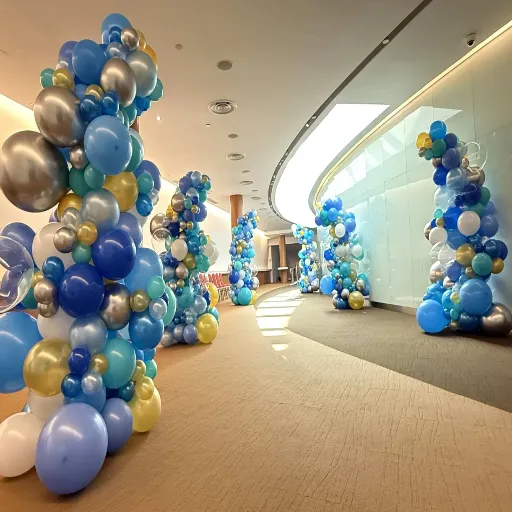
The two styles aren’t better and worse. They’re different tools, and the price gap buys you one specific thing: how forgiving the build is.
| Classic spiral | Organic | |
|---|---|---|
| Balloon sizes | One or two, uniform | Three or more, mixed |
| Pattern | Repeating, mirrored | Asymmetrical, clustered |
| Balloons per row (decorator pricing) | Up to 5 | Up to 12 |
| Balloons per foot, 11″ | 5–7 | 6–10 |
| Balloon volume vs the other | Baseline | +20 to 30% |
| Build difficulty | Easy to plan, easy to make look wrong | Hard to plan, easy to make look good |
| Best for | School events, sports, grand openings, kid parties | Weddings, showers, brand events, photo backdrops |
| Typical installed price per foot | $18+ | $23 to $26+ |
The per-foot row is the only public pair on this search result: at $18+ classic versus $23+ organic, and at from $26 per linear foot plus delivery.
Read the difficulty row twice, because it inverts the usual advice. A spiral is easier to plan, since the count is predictable. But it’s easier to get wrong visually, because any inconsistency shows against a regular pattern. An organic arch is harder to plan and far more forgiving to execute, because irregularity is the goal.
That’s also the answer to the question people keep asking about this style: no, an organic arch isn’t harder to make than a classic one. It’s harder to plan, because mixed sizing makes the count less predictable. It’s easier to execute, because a wobbly cluster is the intended look rather than a defect.
The decision isn’t “which is cheaper” but “which failure mode can I live with”. Choose classic when the event is bright, full of children and the arch is background. Choose organic when the arch is the photograph.
Those are two of the in our styles guide, which also covers columns, walls and full circles if your venue calls for one of those instead.
If you have already decided to build, our cover construction. The next section is about choosing a route.
How to Make an Organic Balloon Arch
Three routes cover almost every build. They differ in how much control you get over the curve, and in what happens when a venue won’t let you attach anything to a wall.
| Route | Needs | Best for | Limitation |
|---|---|---|---|
| Balloon strip | Strip, glue dots, pump | First-timers, indoor, fast build | The strip fixes the curve; deep clusters are hard |
| Fishing line | Line, hooks or frame, pump | Fullest organic look, wall-mounted | Slower; needs two people above 8 feet |
| Frame or stand | Frame, ballast, panels | Freestanding, outdoor, no-fix venues | Highest cost; needs transport |
An organic balloon arch stand costs more than the other two routes and solves the one problem they can’t: venues that forbid wall fixings. Buy it once and it pays back over three or four events.
The strip deserves a note, because demand for it is larger than demand for the arch itself. “Balloon garland strip” searches at 1,000 a month in the US, more than double “organic balloon arch” at 480. The reason is practical: the strip lets one person build a straight-ish run in an hour. Our covers it end to end.
The order of work is the same on all three routes:
- Inflate in three size piles, under-inflating most balloons.
- Build clusters, pairing same-size balloons and twisting pairs together.
- Attach clusters along the run, rotating sizes and colours as you go, then stand or hang the arch.
- Fill gaps last, with 5-inch balloons, standing back to judge.
Two rules prevent most failures. Above 8 feet, use two people. On a hot day, under-inflate by about 10%, because latex expands as it warms and pops without warning.
If you would rather follow a garland build, the walks through the same size ratio and cluster logic for a draped format.
Organic Balloon Arch with Flowers and Greenery
Flowers separate a balloon arch from a balloon display, and they go on last.
Three placements work reliably:
- A single asymmetric floral cluster at one shoulder.
- Trailing greenery down to the base, which also hides frame legs and sandbags.
- A single statement bloom near the apex.
Build balloons first, structure second, flowers last. Moving a finished arch sheds petals and knocks balloons loose, so position everything before you decorate.
Fresh, artificial and dried all work, and the choice is mostly about heat. Fresh stems wilt in a marquee without air conditioning and cost the most; dried and artificial tolerate sun better. One caution: latex and moisture don’t mix. Wet stems pressed against balloons soften the rubber and cause early failures, so wrap the stems or leave a gap.
On price, the listings are more useful than a rule of thumb. One seller on the current search results lists the same 6-by-4-foot organic L-shape at $325 plain, $350 to $375 with flowers, and $425 with greens and a name. Across the captured listings, floral add-ons run from nothing to about $100. If you’re buying flowers yourself, our guide puts DIY stems at $40 to $250 for a 10-foot arch.
Organic Balloon Arch Kits: What to Buy
A kit is the right purchase for most first builds, and most “organic” kits are wrong.
A kit that can actually produce this style needs four things: at least three balloon sizes, glue dots or a strip, a pump, and enough 5-inch balloons to fill gaps. If the box lists one balloon size plus a small bag of 5-inch, it can’t produce the look, because size variation is the entire style.
Buying organic arch balloons loose doesn’t change those four requirements. You still need three sizes, a strip or glue dots, a pump and 5-inch fillers. What changes is that you choose the counts yourself rather than accepting the box’s ratio.
Observed prices on this query’s own search results, captured on 2026-11-20:
- $10.83 for a 95-piece biodegradable balloon garland set (Efavormart, sold via Walmart)
- $12.09 for a 110-piece biodegradable latex arch kit (TableclothsFactory)
- $18 to $45 for Etsy DIY organic garland kits
- $59.99 for a Wildflower arch kit (PopFestCo)
- $84.99 for a three-colour organic arch kit (Inflate Decorate Celebrate)
The gap between $12 and $85 isn’t design. It’s balloon count, size range, and whether the box includes a pump and strip. The $12 kit is a bag of balloons with a strip. That’s not a bad purchase at a small span, but it isn’t the same product as the $85 kit.
covers frame kits versus strip kits, and the parts that go missing.
What an Organic Balloon Arch Costs
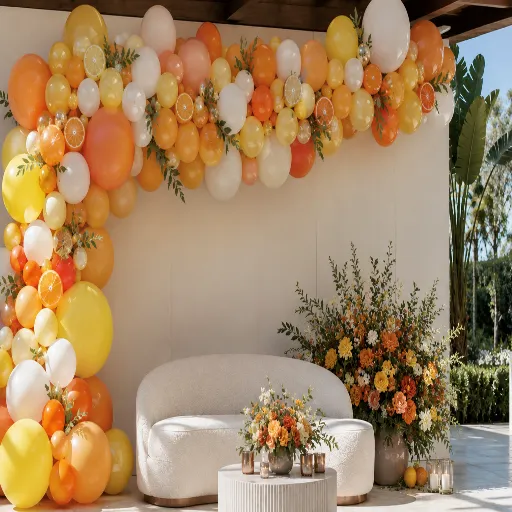
Three routes, one span. An organic balloon arch is sold three ways at this scale, and here is the 8-foot build priced each of them, with the installed figures taken from named US listings rather than a rule of thumb.
| Route | What you are paying for | Typical cost |
|---|---|---|
| Loose balloons and supplies | 72–91 balloons in a 70/25/5 mix, pump, strip, spares | $35–$70 |
| Kit | Balloons, strip or glue dots, sometimes a pump | $11–$85 |
| Frame or stand, DIY | Reusable frame and ballast, sold apart from the balloons | varies by frame |
| Installed, small (6×6 ft) | Decorator, delivery, setup | $325–$400 |
| Installed, mid (8×8 to 10×6 ft) | Decorator, delivery, setup | $495–$725 |
| Installed, large (8×12 ft and up) | Decorator, larger install, florals optional | $700–$1,390+ |
The installed rows come from named listings on the current results: a 6×6 ft organic arch at $345 (Long Beach Balloons), 8×8 ft at $690 (Memo Balloons), 10×6 ft at $725 and 8×12 ft at $885 (Pink Flamingo Party Co.), a 10-foot arch at $845 (BalloonPlanet) and an XL at $1,390 (Memo Balloons). Complete arches run from $165 for 6 ft (USA Party Store) up to $1,999 (Balloon and Party Service).
Across 119 unique organic arch listings on these results, the median price is $477, with a quarter below about $375 and a quarter above about $600. That median is the number to quote back to a decorator, because it’s what the market charges rather than what a range implies. Ninety-six of the 119 sit between $325 and $885, which is the honest band for a home-scale arch.
Why are balloon arches so expensive?
Because you’re buying balloons per row, not per foot, and then paying someone to place each cluster by hand.
Three things drive the price up:
- More balloons. An organic build takes 20 to 30% more material at the same span, before spares.
- More labour. Sorting three sizes and placing clusters unevenly takes longer than winding a uniform spiral, and that’s exactly what the $18 versus $23 per foot gap buys.
- More waste. Mixed-size builds leave partial bags of the sizes you used least.
The balloons themselves aren’t the cost. At $0.08 to $0.25 each according to the industry materials breakdown our cites, 100 balloons is under $25. Everything above that is structure, delivery and the hours.
What a decorator will quote you
If you’re hiring rather than building, expect a per-project quote rather than a per-foot one. Balloon ASAP 757 advertises organic arches from $399, and Party Perks STL starts classic decor at $200 before delivery and strike fees. Delivery, teardown and florals are separate lines at most studios, which is why two quotes for the same 8-foot arch can differ by two or three hundred dollars.
If you plan to build more than one arch, the frame is the line item that pays for itself. We supply in the size ranges these builds need, and if the arch carries a name or a logo.
Making It Last, and Making It Responsible
Air-filled latex on a frame looks its best for two to five days indoors and around 8 to 12 hours outdoors in heat or direct sun, according to the same reference that gives the count bands. Under-inflate on a hot day, keep the arch out of sunlight, and build as late as the schedule allows.
Can you build it the night before? Yes, if it stays indoors and out of direct sun, and if you under-inflate by about 10% to leave room for the latex to relax overnight. A night-before build on a frame in a climate-controlled room is safer than a same-day build outdoors.
Do you need helium? No. Helium is the wrong gas for this format, because an arch needs structure rather than lift. Air-filled balloons last longer, cost less per balloon, and can be built on a reusable frame. Helium belongs in a floating ceiling cloud, not in a garland.
Natural latex is renewable and does degrade in the right conditions, but “biodegradable” describes what a balloon is made of, not a promise about how fast it disappears. Foil doesn’t degrade the same way. Our guide sets out what can’t honestly be claimed.
Two rules matter more than the material choice. Never release balloons; deliberate releases are banned or restricted in many places, and cover where. And reuse the structure, not the balloons: frames, strips, pumps and weights last for years, while the balloons are single-use.
Organic Balloon Arch FAQs
What is an organic balloon arch? An organic balloon arch is a curved structure built from several balloon sizes in uneven clusters, with deliberate gaps and no repeating pattern. The asymmetry is planned. It differs from a classic spiral, which uses uniform sizes in a mirrored repeating pattern.
How many balloons do I need for an organic balloon arch? About 6 to 10 balloons per foot of span in 11-inch latex, or roughly 9 to 13 per foot once filler and statement sizes are mixed in. An 8-foot span needs about 72 to 91 balloons. Add 10 to 15% for pops and mis-ties, and assume all three sizes.
How many balloons per foot is an organic arch? Six to 10 per foot in 11-inch balloons for organic, against 5 to 7 for a structured build. In 5-inch balloons it rises to 12 to 16 per foot; in 16-inch balloons it drops to 3 to 5. Organic uses 20 to 30% more than structured.
What sizes of balloon do I need? Three minimum: 11-inch as the body, 5-inch as filler, and 16-inch or larger as statement pieces. Split them roughly 70/25/5. A single-size build can’t produce the look, however many balloons you inflate.
Can I make an organic balloon arch without a frame? Yes. A balloon strip fixed to a wall works, and so does fishing line between two hooks or two weighted columns. Without a frame you’re limited on height and curve control, and you need a wall or floor anchor the venue allows.
How much does an organic balloon arch cost? About $35 to $70 in balloons and supplies, $11 to $85 as a kit, or $325 to $885 installed at home scale. The median across 119 US listings is $477. Frames, delivery, greenery and number balloons are the add-ons people forget.
How long does an organic balloon arch last? Two to five days indoors for air-filled latex, and around 8 to 12 hours outdoors in heat or direct sun. Under-inflate by about 10% on a hot day, and never expect a helium-filled arch to last a full day.
Is an organic arch harder to make than a classic one? No, and this surprises people. Organic is harder to plan, because mixed sizing makes the count less predictable, but easier to execute, because irregularity is the goal. A spiral is easier to plan and much less forgiving of a wobbly cluster.
Conclusion
An organic balloon arch comes down to four decisions, in this order.
Set the span against the room, allowing 12 inches of clearance under the ceiling. Convert the span to a count using 6 to 10 balloons per foot in 11-inch latex, then multiply by about 1.3 for a mixed build and split it 70/25/5. Choose the route: loose balloons, a kit, or a frame, each with a different cost and a different amount of your evening. Then apply the five rules, of which under-inflating and breaking the symmetry do the most visible work.
Everything else, the palette and the flowers and the finish, is styling. The numbers are what make the styling possible, and they don’t take long to work out before you order anything.
An organic balloon arch rewards the ten minutes you spend measuring over the four hours you spend inflating. If you want the balloons made to your colours, with a name or a date printed on them, send us the span, the palette and the quantity. We’ll tell you what’s realistic at your scale, and what the balloon line costs.