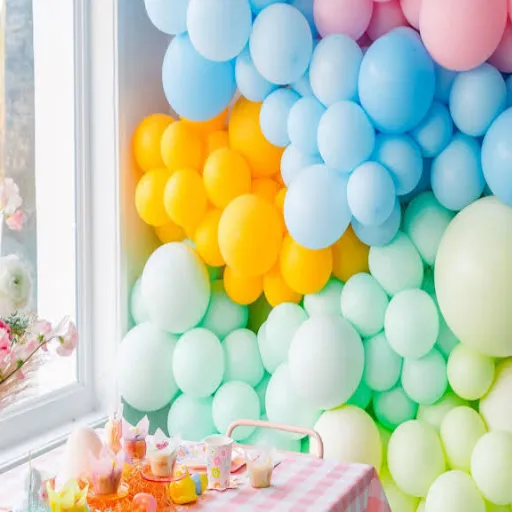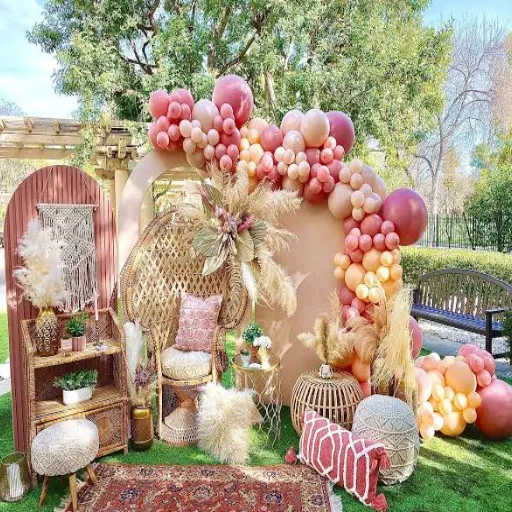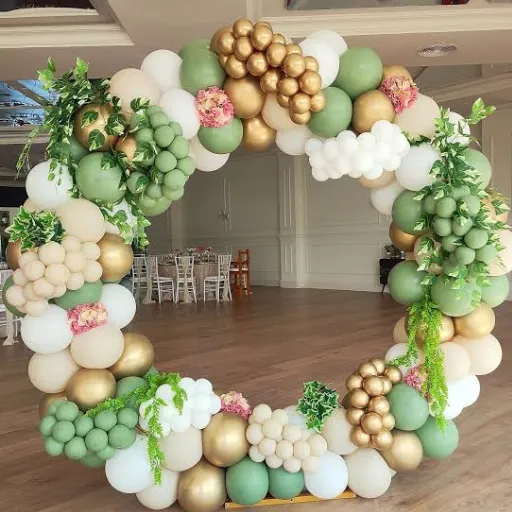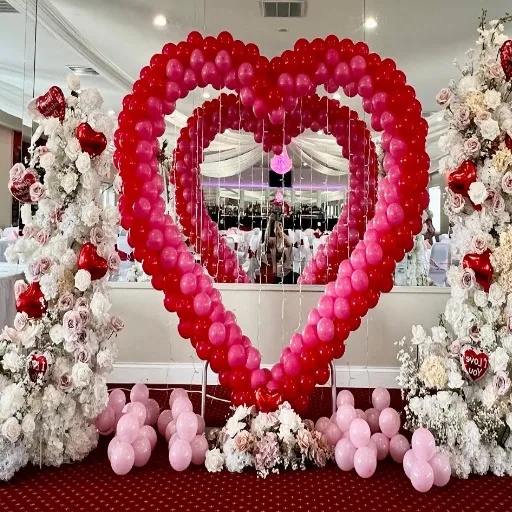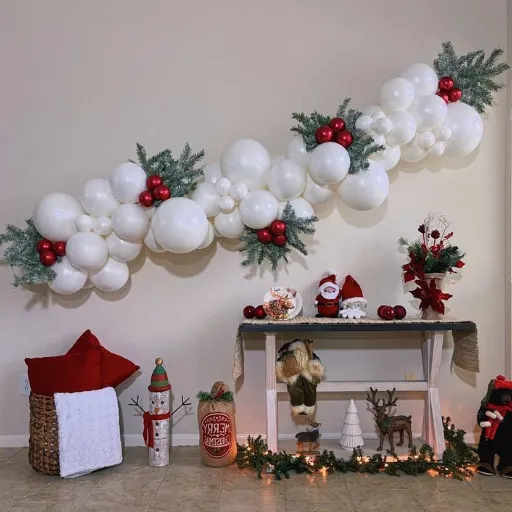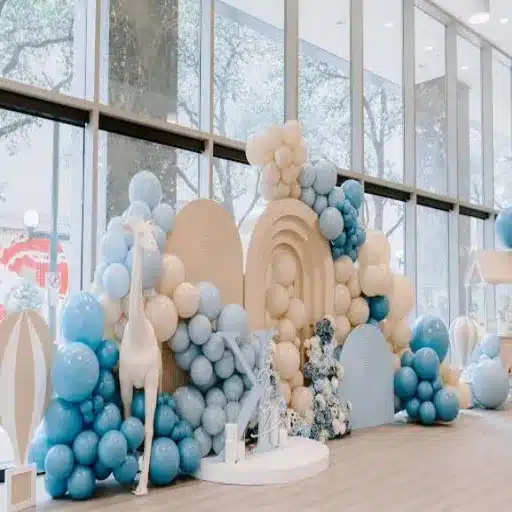
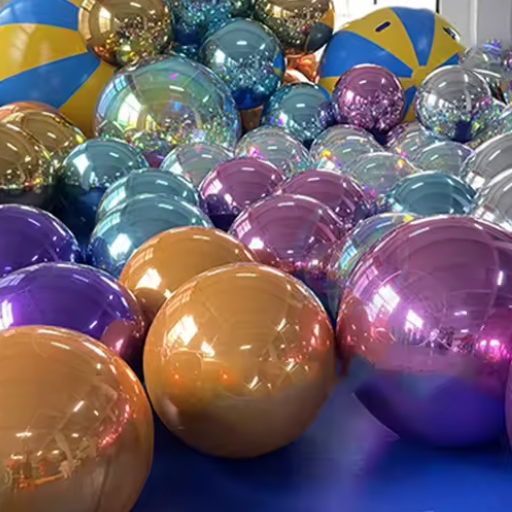

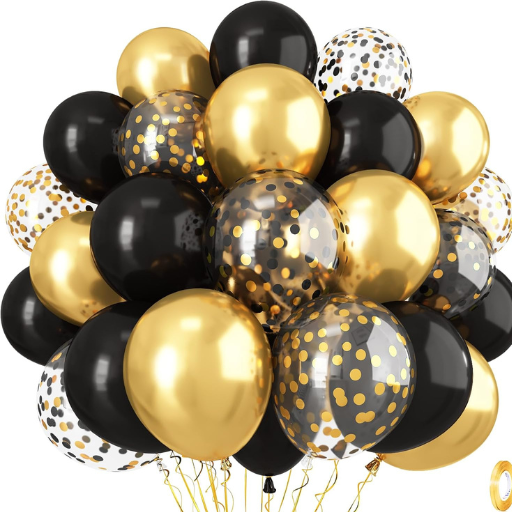

Eco friendly balloons are constructed from natural latex, reusable materials, and plant-based alternatives which rapidly decomposes, while offering the same aesthetic look of regular inflated toy or balloon. These balloons decomposes supporting eco-friendly farming practices and, therefore, are perfect for weddings, events, and other social gatherings. Parties should be fun and highly appreciated. Even without such wasteful decorations, any occasion can still be remarkable.
These balloons are so cute but the amount of leftover balloons is discouraging to most people. Fortunately, the manufacturers have done a lot to improve the industry. Nowadays, the balloons that are being manufactured are not only attractive but also promotion of sustainability. You never have to choose between having a beautiful event and taking care of the earth.
This guide is offering deep insights into an environment-conscious balloons. This will include discussion of the greenness of the balloon, decomposition of the natural latex, consideration of the particular requirements of your event and how disposed of materials in a certain event are eco-friendly. Step by step we shall light up different components of the given stage design as well as look into the boxes full of advice from green-mindedclever professionals.
It has been exactly 12 years that our company, Trading Shanxi Co., Ltd., dons the robe of a company that sets trends and produces at a cost effective rates to offer their customers biodegradable latex balloons. Our company has delivered green friendly celebrations to six continents. This guide will bring together our goods and ideas derived from our goods with practical suggestions already solved to be commercially reproducible.
Key Takeaways
- Natural latex balloons biodegrade within 6 months to 4 years under the right conditions, making them a genuinely sustainable choice compared to foil or plastic alternatives.
- “Eco-friendly” is not a regulated term. Look for certifications like FSC or Rainforest Alliance, and verify that latex is 100% natural rather than synthetic.
- Foil balloons can take hundreds of years to decompose. All-latex garlands, giant organic balloons, and air-filled sculptures offer equally stunning alternatives.
- Responsible disposal matters: pop balloons indoors, compost natural latex where possible, and never release any balloon outdoors, even biodegradable ones.
- Custom-printed biodegradable balloons let corporate clients maintain branding while meeting sustainability goals.
What Are Eco-Friendly Balloons?
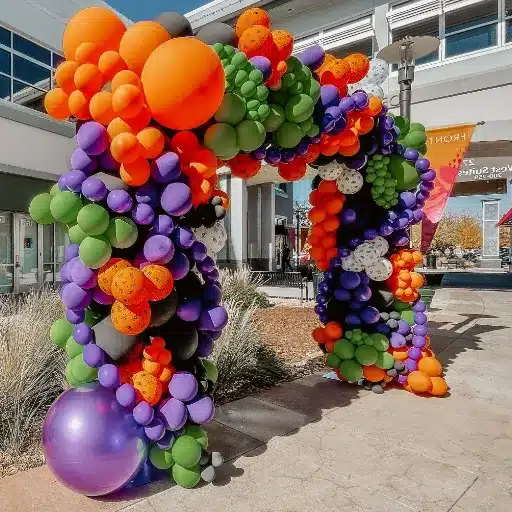
Eco-friendly balloons refer to decorations made using eco-conscious materials to serve the purpose of beautifying an area. Such decorations are constructed in a way that they recycle after its disposable use after a certain time frame or can be used several times on different occasions. Most traditional decorations have to be disposed off the end of their useful life yet these balloons recycle or can be used over and over again for events.
This concept is subdivided into three main groups. To be precise, the primary group involves balloons made of biodegradable natural latex, to be more specific, biodegradation breaks down these balloons by natural biological action. In the case of the second group, one can mention the balloons of the reusable category, that is, the ones that are made of durable silicone and luxurious latex and can be made to decorate a few events. The third category of this concept consists of those that are made of alternative materials, like organic and botanical materials, which include substance such as Tapioca as oppose to substances made from petroleum.
Nevertheless, the term “eco-friendly” does not represent an approved label. Every manufacturing company is entitled to use it on a package or product, thus the authenticity is not proved by anyone. Consequently, discerning consumers tend to overlook such marketing terminology and substantiate a statement with actual proof instead, for instance, confirmed company’s green practices.
Certifications That Actually Matter
The ambiguity in the product label is eliminated through the use of third-party certifications. The Forest Stewardship Council (FSC) ensures that latex does not come from rubber tree plantations that are not under good management. Rainforest Alliance Certified fields do not only meet biodiversity and environmental sustainability but also social welfare guidelines. OK Compost certification ensures that the substance decomposes in an industrial composting setting in a certain time limit.
When appraising the availabiity of eco-friendly balloons, find out from vendors whether any certification verifying them is available. When it comes to environmentally friendly balloon manufacturing, such as that of trading Shanxi, genuine manufacturers are never hesitant with this transparency. Do ask questions if the seller gives fresh and bold statements but fails to provide any substantiation.
Are Latex Balloons Biodegradable? The Science Explained
Yes, that is true. Natural latex balloons are considered biodegradable, they will even decompose as fast as falling oak leaves do, under optimal circumstances. But mind you, it would actually take quite a lot in order for that to happen. Intense sunlight, high oxygen levels and exposure to microorganisms are basically necessary for the process of decomposition to go on normally, without any causes.
Latex, in its natural form, is sourced predominantly from the rubber tree. It is a milky liquid that is extracted after tree bark is punctured, before insolating into latex at room temperature. It is bio and available from the plant. The same cannot be said about synthetic latex which has added oil based chemicals to it and will not break down easily.
The timetable in which these natural latex decomposes ranges from one extreme to the other. Given that they are outside and the conditions are right, the latex in question can fully decompose within 6 months up to 4 years. However, if it is situated in a dark, non-porous landfill, where oxygen is limited, it takes longer. The three most important factors contributing to the speed of this process are exposure to water, the condition of the temperature, and microbial activity.
Natural vs. Synthetic Latex
You see, all latex types are not like—”one for all, and all for one’. It should be understood from the outset that the natural latex is basically a conglomerate of natural rubber compounds extracted from trees and certain proteins and fats found in nature that soil organism considers as food. Another option is using synthetic latex, which is mostly made from petrochemicals. Despite all the available sources, Lexical pattern “used to possess” is not considered unique. This is not applicable to these types of information to great element.
Some producers might opt for recycling based on availability of materials rather than synthetic products which can blend either natural or synthetic latex. Such color latex balloons take more time to decompose compared to 100% natural ones. Be that as it may, one must always check the information before spending any money.
The “Litter-Friendly” Myth
Unfortunately, many consumers ignore an important detail: the fact that something is biodegradable does not mean it should out be here and there. To be more specific, a latex ball embellished and chosen to decorate the sky will be effectively converted to organic matters, through natural decomposition. Yet, danger to wildlife, ownership of disruptive sight, and or disregard to laws set by local environmental agencies are possible during landing and even on airborne.
As a matter of fact, balloon landings have been banned in more than seven states in America and in several other countries all over the world. Even if the balloons such as biodegradable balloons are utilized, they should not be used intentionally. The responsible approach to the utilization of balloons calls for a designed decoration thereby starting them and or disposing them afterward, either indoors or outside. Looking for premium balloon products with reliable supply service? Reach out to Trading Shanxi Co., Ltd. for customized options and competitive pricing.
Types of Sustainable Balloon Options
Choosing the right eco-friendly balloon depends on your event type, budget, and environmental priorities. The table below compares the most common sustainable options.
| Material | Decomposition Time | Durability | Best For | Relative Cost |
|---|---|---|---|---|
| Natural latex | 6 months – 4 years | Single event | All event types | Low |
| Reusable silicone | 5+ years (reusable) | 50+ uses | Recurring events | High |
| Thick durable latex | 2+ years (reusable) | 10-20 uses | Small parties | Medium |
| Plant-based (tapioca) | 1-2 years | Single event | Eco-focused events | Medium-High |
| Organic cotton/fabric | Indefinite (reusable) | Unlimited | Static displays | Medium |
Natural Latex: The Workhorse
Natural latex balloons remain the most popular eco-friendly choice for good reason. They offer the familiar balloon experience at minimal environmental cost. Modern manufacturing produces vibrant colors, reliable shapes, and consistent quality. For most weddings, birthdays, and corporate events, natural latex provides the best balance of aesthetics, performance, and sustainability.
Reusable Options: Long-Term Investment
Reusable silicone balloons cost more upfront but pay for themselves across multiple events. Event rental companies and frequent hosts benefit most from this category. These balloons withstand inflation, deflation, and storage without degrading. Some designs include self-sealing valves for repeated use.
Emerging Materials: The Future
The future of plant-based options relies on ingredients such as cotton, wood pulp, and polylactide. Chemical additives help retarded biodegradation of industry compounds as well as their composted forms, helping to overcome the negative environmental effects of rubber manufacturing. Unfortunately, issues arise from aspects like color selection and stretch resistance, but brands are catching up quickly. For more detailed information considering costs, strength assessment in respect to products and the criteria of selection, take a look at the full Buyer’s Guide for green balloons.
Need help choosing the right material for your specific event? Our team has guided thousands of celebrations. Contact us for a free consultation and we will recommend the perfect sustainable option.
Eco-Friendly Alternatives to Foil Balloons
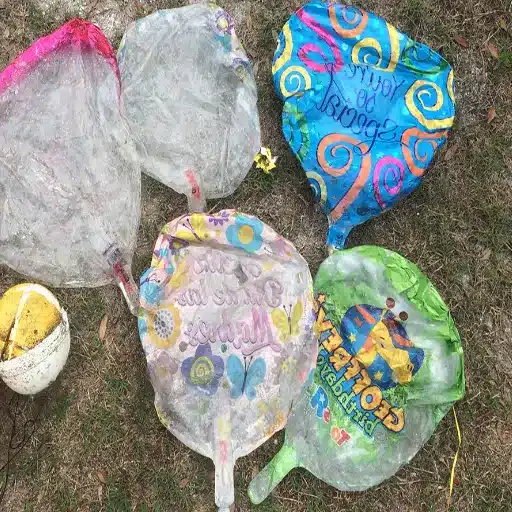
Colored balloons, which can be referred to as foil balloons, present a significant visual marvel. However, they are associated with very many damaging effects including global warming. It is a general knowledge that foil balloons are made of Mylar, a very tough kind of plastic with a very thin, conductive layer that suits its purpose. Nonetheless, Mylar balloons can take ages to breakdown when dumped at different landfills according to the most recent reports. In addition, it is detrimental that the natural resource, helium, is also used in the manufacturing process too because it is well known that this resource is limited.
1. Double-Stuffed Biodegradable Latex
Layering two natural latex balloons, one inside the other, creates opaque, richly colored orbs that mimic foil’s polished look. The technique also increases durability. Designers use this method to achieve jewel tones and pastel shades impossible with single-layer construction.
2. Giant Organic Latex Balloons
Oversized natural latex balloons, ranging from 24 inches to 36 inches in diameter, command attention without metallic finishes. Their organic, slightly irregular surface catches light beautifully. Single giant balloons anchor tablescapes, photo backdrops, and entrance displays with minimal material use.
3. Fabric and Cloth Alternatives
For static installations, fabric shapes on wire frames create balloon-like silhouettes without any disposable material. These work beautifully for corporate logos, themed characters, and permanent retail displays. The initial investment exceeds balloons, but reusability makes them economical over time.
4. Paper Lantern Installations
Rice paper lanterns offer ethereal, glowing alternatives to helium-filled orbs. They come in diverse sizes, shapes, and colors. LED lights inside create magical effects for evening events. Afterward, lanterns flatten for storage or compost easily.
5. Reusable Bubble Balloons
Clear PVC bubble balloons stretch around decorations like flowers, feathers, or smaller balloons. Unlike Mylar, they deflate completely for storage and reinflation. One bubble balloon serves dozens of events with proper care.
6. Natural Fiber Decorations
Pampas grass, dried palms, and preserved eucalyptus create sculptural, organic shapes that complement balloon arrangements. These materials require zero inflation, last indefinitely, and compost completely at end-of-life.
7. All-Latex Garlands
Structured garlands using only natural latex balloons in varying sizes produce lush, organic installations. No foil accents are necessary. Skillful color blocking and texture variation create visual interest that rivals mixed-material designs.
8. Air-Filled Latex Sculptures
Using framing wire, balloon tape, and air-filled natural latex, designers build organic arches, columns, and abstract shapes. These structures use no helium, last longer than helium-filled arrangements, and decompose fully afterward.
There can be justified reasons for using foil in some cases while other materials may not be suitable. Such situation is observed with respect to heat, especially in the outdoors, in these areas foil turns out to be the best option. This is attributed to direct retrieval of certain ultimate objectives where the substrate is foil paper that is smooth. If one is compelled to use the foil, one is encouraged to limit the use as much as possible, discourage the use of helium gas wherever achievable and ensure a proper disposal using TerraCycle recycling programs. For a relative comparison of foil balloon alternatives with their advantages and disadvantages associated with each option, you can access the link below to our specifically created guide.
How to Dispose of Balloons Responsibly
Responsible disposal completes the sustainability cycle. Even biodegradable balloons deserve proper handling. Therefore, follow these steps after your event ends.
- Pop balloons safely indoors. Use a pin or needle to deflate balloons away from wildlife and waterways. Popped latex poses minimal risk, but intact balloons can tempt animals.
- Sort materials by type. Separate natural latex, foil, ribbon, weights, and clips into distinct piles. Each material requires different disposal.
- Compost natural latex. Cut balloons into small pieces and add them to active compost piles. The heat and bacterial activity accelerate decomposition. Do not add latex to cold or inactive compost.
- Recycle foil alternatives where accepted. Some specialized recycling programs accept Mylar balloons. TerraCycle offers balloon recycling brigades in select regions. Check local availability before tossing foil in general waste.
- Handle ribbon and clips properly. Polyester ribbon and plastic clips do not biodegrade. Reusable clips should be collected and stored for future events. Ribbon can sometimes be repurposed for gift wrapping or craft projects.
What Never to Do
Even biodegradable balloons should not be let go outside of the house. Balloons seem to have a mind of their own and can travel long or short distances before going back to earth. Upon arrival to the ground, there is a chance that a poor unsuspecting animal will consume portions of the balloons just because they are within reach. Under circumstances, marine animals are unable to tell the difference between jellyfish, and a piece of balloon that is floating on the water and what goes around comes around.
There is more than one good reason why burning balloons is a wrong thing to do. When latex balloons get burned the smoke they emit is quite unpleasant. When some balloons are burned, there is a possibility of the smoke that is produced being rich in some dangerous contents because the balloons or balloons in question might have been made of entirely foil. Properly dispose of balloons in the environment by first, recycling or composting in a landfill’s appropriate way and, if none of the above are available, incinerating. For complete lists of how-to and pre-sorted instructions, you can get our checklists and pre-sorted instructions.
Want a printable disposal checklist for your event team? Download our responsible balloon disposal guide to share with vendors and cleanup crews.
Eco-Friendly Balloons for Special Events
Sustainable balloons adapt beautifully to every celebration type. However, the key is matching material choices and design approaches to each specific occasion. For example, weddings need different solutions than corporate product launches.
Weddings
Even with 200 people invited, Sarah Chan didn’t expect inconvenience while organising the outdoor wedding scheduled for June 2025. It was caused by the fact that the venue where she decided to celebrate was very specific and overly focused on maintaining environmental balance. The clients were not allowed to use the usual foil decorations.
It was also designed as an all-latex concept for which biodegradable balloons were adjusted with a buffer with dusty pink, inexperienced, and milk colors. The crest of the ceremony was made up of a flexible vesica interrupted by varying sizes of pure balloons. The orbs of 36 inches were combined with clusters of 5 inches at both the breastplater and higher level centerpieces.
This incredible design was a great experience for all involved who were present. The look of the balloons in the sundown softened by ribbed latex was particularly impressive in photographs. As an alternative to shrinkage and mitosis, the used item was carefully laid down in the appropriate site and the item was extinguished from the noticeboard. Sarah expressed that the sustainable design option was discussed by the guests more than other topics such as the bride and the groom or the performance of a pianist.
Design tips for eco-friendly wedding balloons:
- Choose earthy tones and pastels that complement natural latex’s matte finish.
- Use air-filled structures for arches and garlands to avoid helium waste.
- Combine balloons with pampas grass or dried flowers for organic texture.
- Plan composting logistics with your venue in advance.
For more inspiration, explore our gallery of eco-friendly wedding balloon designs.
Corporate Events
It is the current norm that businesses are now capable of going overboard and deal with environmental aspects in their corporate social responsibility. They do so or through such opportunities which also act as promotional tools are not aligned with clearly defined corporate social responsibility as they take the form of conventional balloons which are not recycled after use.
This article is useful because the scope of the study and the overall quality to be achieved are known before it is written. No more events like those organized by GreenTech Solutions, which happen to be environmental events, will be possible within or without the aspect of environmental conservation Cellphone before. The commitment to never hold such events is detailed further on in the third paragraph.
The balloons formed a dramatic entrance tunnel and branded photo backdrop. Attendees photographed the installation extensively, generating organic social media exposure. Afterward, the venue composted all materials. GreenTech’s sustainability report highlighted the event as a model for future company gatherings. Trading Shanxi specializes in custom eco-friendly balloon designs for corporate branding, bulk orders, and large-scale sustainable installations.
Corporate applications for sustainable balloons:
- Branded entrance arches and tunnel displays.
- Logo-printed centerpieces for gala dinners.
- Color-matched installations aligned with brand palettes.
- CSR messaging integrated into event signage.
For bulk orders and custom printing on biodegradable materials, see our corporate sustainability guide.
Birthday Parties and Private Celebrations
The festivities underscore the need to increase the number of inexpensive and eco-friendly options available. With respect to this, natural latex contradicts more conventional statues of foil since it is not only cheaper but also degrades better. Even the most creative of the Walmart graders will be able to produce decorator-worthy decorations that look expensive in the volume is up with the tight budget.
Next, air filled balloons on line designs do not even make use of helium gas and can last for several days. Simple balloon towers on a weighted base decorated with color-coordinated latex balloons scream party on the other hand. The idea of utilising organic latex for kids birthday parties is applauded by many families concerned with the safety of their children to wondrous effect.
Budget-friendly sustainable party tips:
- Buy natural latex in bulk and mix sizes for visual interest.
- Use air-filled designs instead of helium to cut costs and environmental impact.
- Create reusable balloon garland strips that work across multiple parties.
- Combine balloons with recycled paper decorations for a complete eco-theme.
Eco-Friendly Party Supplies: Beyond Balloons
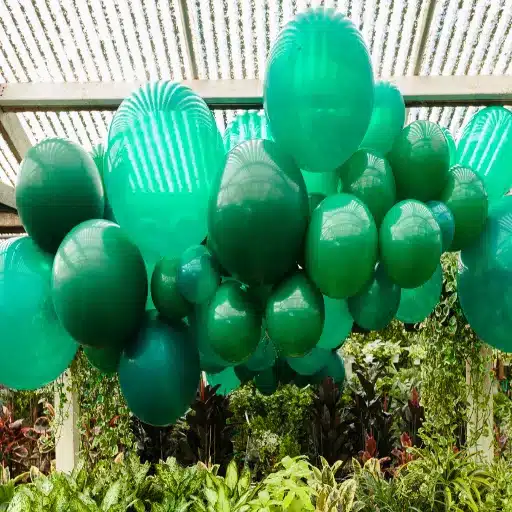
Sustainably responsible parties require a lot more than simple balloon decoration. Planning with regard to all the supplied in weddings and other occasion creates a useful goal for an environmental beauty experienced and adored by most individuals who value the Earth.
Work on the reusable utensils and tissues first. Use the palm leaf, cane fiber, or bamboo disposable plates and cups that are eco friendly instead of the plastic plates. For these divided by all these materials, they cycle back into the soil from where they had come within a few months in the personal composter system. There are also wooden cutlery products that do not ruin the aesthetics of food packaging and do not support plastic use.
Then, using an environmentally friendly concept, minimize decoration and include recycled paper bunting, seed paper confetti, and raw ink signage. Linen or organic cotton table runners render a professional and stylish look with a natural touch. More so, if guests want any presents, they can carry the table accessories such as the herb pots and owers – no waste whatsoever. If you are interested in more detailed information about eco-friendly dishes, cups, supplies for decorating, and guest present things – check the full sustainable party guide prepared options.
Favor good quality stuff when selecting party giveaways. For instance, things like seed packets or reusable bags are much better than plastic pieces which probably will be thrown away in a minute. Consumable types of gifts in the form of handmade chocolates from nearby stores or honey jars are another good idea.
Lastly, have a coherent plan concerning rubbish disposal. Preventive measures must be taken and the arrangement of waste processing area with easily understandable and easily accessible labeled waste categories. Brief staff and cleaning crew involved on the accurate waste separation roles. As stated, some places have the system in place, while others expect the host to be involved. We’re here to help! Feel free to contact our team for more information or support.
Where to Buy Eco-Friendly Balloons
Not all suppliers deliver genuine sustainability. However, knowing what to look for separates authentic eco-friendly balloons from greenwashed imitations.
What to Look For
Most firms like to show what they know. Considering the incentives at play one might be forgiven for thinking that consumer product companies would try to take advantage of what they have; on the contrary, a few of them do. Most manufacturers or traders legitimately state the materials of production, the acquisition and the documentation on the relevant matters. Also they mention if the latex is composed of 100% raw materils or has some elements of plastic. They also ought to take a stab at explaining how they chose the packages and sailed them at the end of the day.
As is the case in the preceding argument, the importance of quality stretches to several dimensions. Very thing latex of small amounts is not strong enough and it is quite frail and tears at the slightest stretch. In addition, it suffers greatly darkening. The last thing but not the least is when the natural latex rich in quality is properly stored, maintains all its qualities and any fading off occurs hence creating an even result which can be disposed
Certification documents should be issuance supported. FSC and Rainforest Alliance databases help checking with specific license numbers. But ignore any detailed explanations about greenish sounding products that do not have a seal of a reputable agency even the one that says they do good things.
Red Flags to Avoid
General, purposefully ambiguous language si the trigger-point of being accused as a scamming green. The words like “green,” “organic,” or “environmentally friendly” are actually meaningless. Unless they have qualifyig measures to back them up, they are purely promotional slogans.
It should be noted that synthetic latex passing off as natural latex really is a shame. There are the suppliers who add latex with petrochemical-based polymers, and they do not provide this information to the buyers. Kindly, how about asking what is the composition? The sellers who know their sources well and deal honestly shall without a doubt respond to it.
One thing that frustrates some suppliers is the fact that, they see sustainability labels being used excessively for various products opportunities. Compostable balloons should not be such that they are bound tightly in plastic bags which cannot be recycled and hence can ease the pain a little better. Ensure that the vendors you choose supply products in accustomed reasonable sized bags and with the least possible use of recycled materials.
Price vs. Quality
In general, using eco-friendly balloons is considered more expensive than the common ones by 10-20%. This is the average difference that is attributed to the higher price of production due to assured sources, the cost of certification, and the activity that is sustainable in nature. Yet making large orders ensures that per balloon payment radically decreases.
Knotting the points, the bulk wholesale orders which are known to have lower costs and more reliable quality are available through dealing with producers like Shanxi trading. Another advantage of direct dealing is that customers are given the freedom to choose their own colors, patterns and even modify sizes, which are impossible within the retail environment. And before you buy them, check what should be considered when purchasing biodegradable balloons to do not fall for an imposition and check the documents.
Frequently Asked Questions
What makes a balloon eco-friendly?
A balloon qualifies as eco-friendly when made from materials that minimize environmental harm. Environmentally safe balloons use natural latex, reusable silicone, or plant-based substances rather than petroleum-derived plastics. Natural latex biodegrades through bacterial action. Reusable options eliminate single-use waste. Plant-based alternatives avoid petroleum entirely. True eco-friendliness also requires responsible sourcing, non-toxic pigments, and minimal packaging.
How long do biodegradable balloons take to decompose?
Natural latex balloons decompose within 6 months to 4 years under favorable conditions. Sunlight, oxygen, and bacterial exposure accelerate breakdown. In dry, dark landfills with limited microbial activity, decomposition extends toward the longer end of that range. This timeline matches oak leaves and other organic materials.
Are there eco-friendly alternatives to helium?
Yes. Air-filled designs using framing structures, balloon tape, and weights replace helium for most installations. Organic arches, garlands, and sculptures use ambient air exclusively. For floating effects, consider reusable bubble balloons filled with air and suspended from ceilings. These approaches avoid helium, a finite resource with supply volatility.
Can I reuse biodegradable balloons?
Most biodegradable latex balloons are designed for single use. However, high-quality natural latex balloons can sometimes withstand gentle deflation and reinflation if handled carefully. For guaranteed reusability, choose dedicated reusable options like silicone or thick durable latex designed for multiple events.
Are eco-friendly balloons more expensive?
Natural latex balloons typically cost 10-20% more than synthetic alternatives. The premium reflects sustainable sourcing and certification. Reusable options cost significantly more upfront but save money across multiple events. For budget-conscious planners, air-filled natural latex installations offer the most affordable sustainable option.
What certifications should I look for?
Prioritize third-party certifications over marketing claims. The Forest Stewardship Council (FSC) verifies sustainable rubber tree farming. Rainforest Alliance certification covers broader environmental and social standards. OK Compost certification confirms decomposition in industrial composting facilities. Always verify certification numbers through official databases.
Can I get custom-printed eco-friendly balloons?
Absolutely. Modern printing techniques work beautifully on natural latex. Custom logos, messages, and patterns apply using non-toxic, biodegradable inks. Corporate clients use this capability for branded events without sacrificing sustainability. Minimum order quantities vary by supplier, with bulk corporate orders typically starting at 500 pieces.
Do eco-friendly balloons look different from regular balloons?
Natural latex balloons have a softer, matte finish compared to the glossy surface of synthetic options. Many people prefer this organic aesthetic. Colors are equally vibrant, though slightly less saturated than synthetic pigments. Double-stuffing techniques create opaque, rich tones that rival any conventional balloon’s visual impact.
Conclusion
The growing demand for more sustainable decoration at social events has caused a shift in the perceptions when it comes to balloons. And this demand is most clearly expressed among desired or expected certain groups of people i.e. corporate event planners, retail traders, private party organisers, and others.
The issue of how eco-friendly balloons are good for the environment consists of several fundamental points. First of all, the stipulated period of the natural latex decomposition is no greater than a couple of years in contrast with the damage which nondegradable substances can create within a few centuries. Secondly, exceptional visual effects can be obtained using biocompatible materials instead of foil. Making eco-friendly balloons beautiful is easy. Thirdly, it is claimed that eco-friendly balloons make a good end of life product as they can be even buried in the ground provided that the components are natural and decomposable. Lastly, The green customisable choices protect the environment and are meant to give an event some level of exclusivity at the same time.
This is good because there is no need for you to do the same. You can be all for beauty and also be all for the earth when selecting balloons.
Ready to plan your sustainable celebration? Contact Trading Shanxi today for custom eco-friendly balloon solutions, bulk orders, or expert guidance on biodegradable materials. Whether you are organizing an intimate birthday party or a corporate product launch, our team will help you create an unforgettable event that respects the environment.