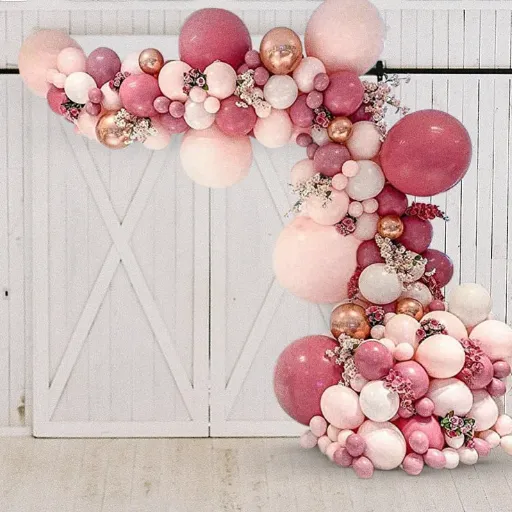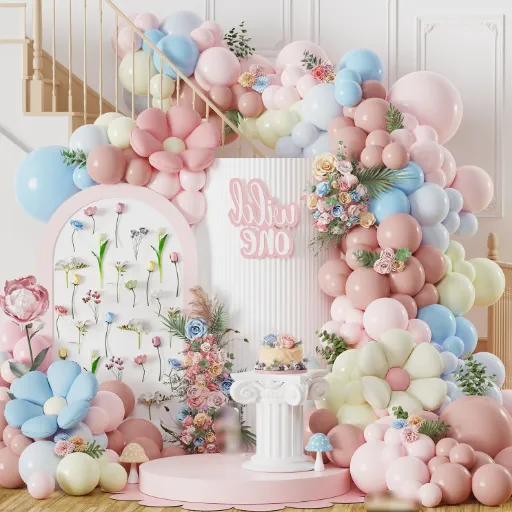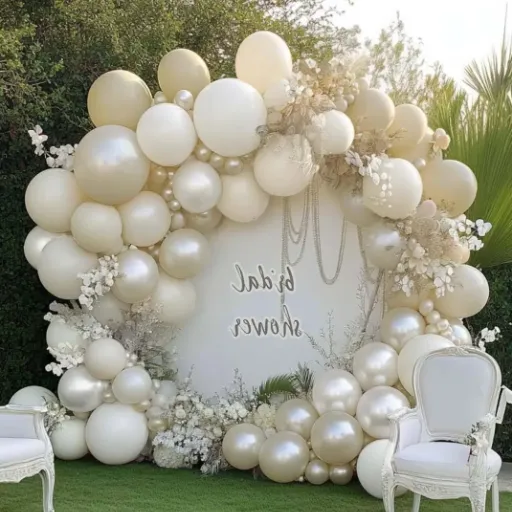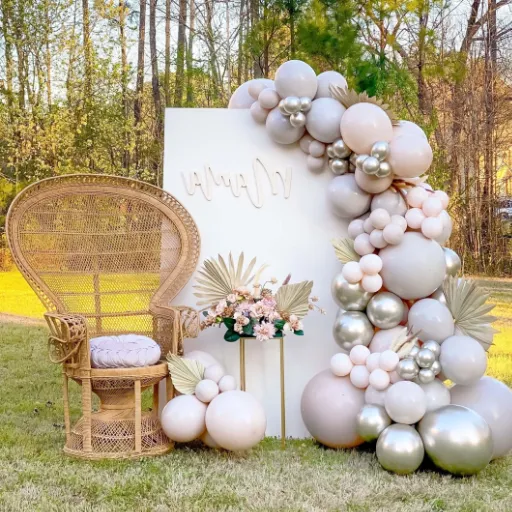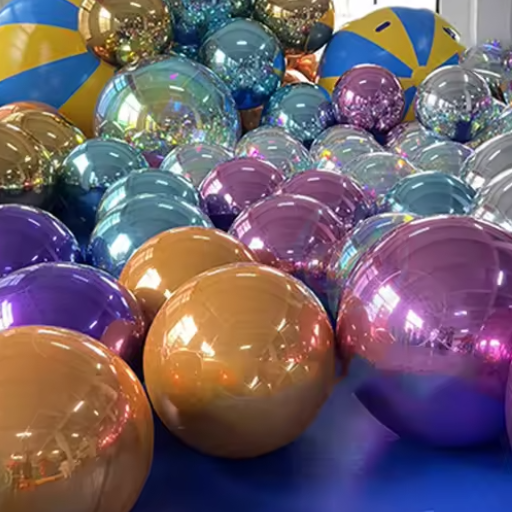
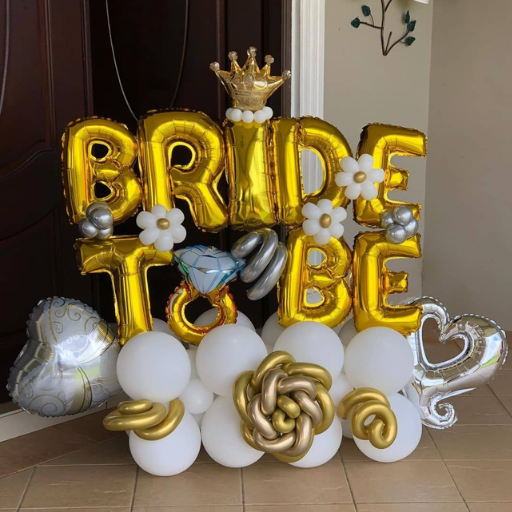

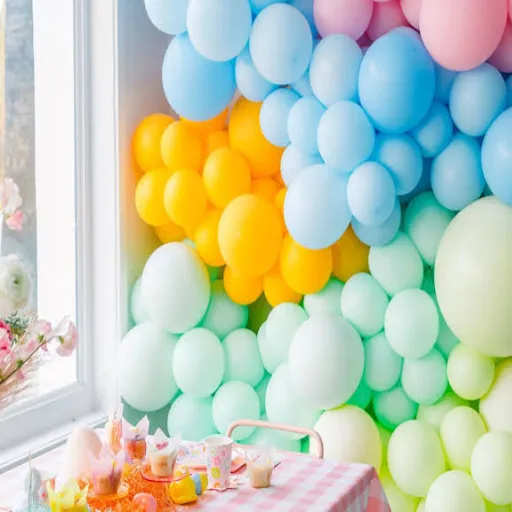
The best balloon backdrop ideas start with the format, not the color. A backdrop is a designed frame that makes whoever stands in front of it the star of the photo, and the format you choose, a full wall, a circle, an arch, a garland swag, or a mosaic number, decides how it reads. Pick the format first, size it to the group you’ll photograph, and the color becomes easy.
Most balloon backdrops fail for one of two reasons: the balloons stop at guests’ shoulders, or the design has no focal point and reads as a random wall of color. This guide fixes both. You’ll get every backdrop format explained, an ideas gallery by format and occasion, a size and balloon-count table, cost brackets, the build and hardware reality, and how to order your exact backdrop in bulk or custom.
Trading Shanxi Co., Ltd. manufactures natural latex, foil, and PVC balloons and supplies event teams in more than 50 countries. We see both halves of a backdrop order: the design idea and the balloon count that makes it work. If you’d rather hand the design off, request a quote and we’ll build your balloon list.
Key Takeaways
- A backdrop is a frame, not a wall of balloons. Format and proportion matter more than density, so pick the format first and size it to the group.
- Size for the tallest person plus headroom. Plan at least 8 feet wide and 7 to 8 feet tall, or the balloons stop at your guests’ shoulders and the photo looks empty.
- Budget by density, not by balloon count alone. A full wall runs about 2.3 to 5 balloons per square foot; a 6×6-foot wall takes roughly 180 to 220 balloons.
- Use three colors, mixed balloon sizes, and one accent. A 60-30-10 palette plus 5-inch, 11-inch, and 16-to-18-inch balloons is what separates designed from homemade.
- Air beats helium for backdrops. It’s cheaper, needs no float-time clock, and holds 3 to 7 days indoors.
What Is a Balloon Backdrop?
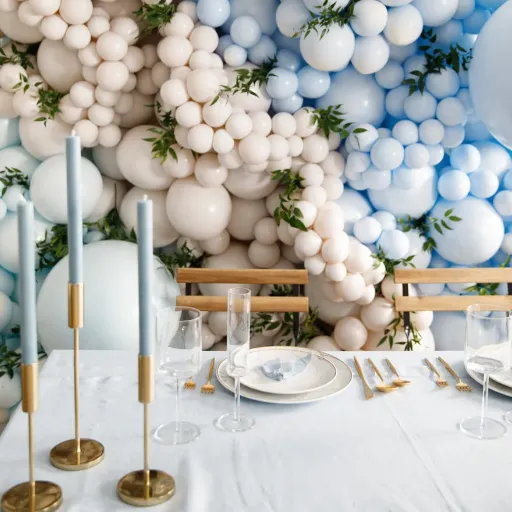
A balloon backdrop is a designed arrangement of balloons built on a frame, wall, or freestanding stand to create a photo moment. Unlike a garland, which drapes along a surface, or an arch, which holds a fixed curve, a backdrop is sized to fill the space behind people so the group, not the balloons, is the subject.
That distinction is the whole point. A backdrop is a stage. The balloons are the set, and the guests step into the frame.
Everything in this guide follows from that idea: you size the frame to the people, then style it so the people look their best. For the full range of balloon decor beyond backdrops, start with our balloon decoration ideas pillar.
Backdrop vs. arch vs. garland: how they differ
These three formats get used interchangeably, but they behave differently, and choosing the wrong one is the most common planning mistake.
- A backdrop is the broad, full-coverage frame: a balloon wall, a circle on a stand, a rectangular panel. It fills the space behind the subject and works for groups and full-length photos.
- An arch is freestanding and structural. It holds its curved shape on a rigid frame, so it frames an entrance or a cake table and reads as geometry. The full range lives in our balloon arch ideas gallery.
- A garland is flexible. It’s built on a decorating strip or fishing line and drapes against a wall, table, or backdrop. It adds a soft, organic edge rather than full coverage. See the balloon garland ideas for the format itself.
The practical rule: choose a backdrop for coverage, an arch for a structure, and a garland for an accent. Many designs combine all three, but one of them should lead.
Why backdrops are the highest-value photo moment
Guests take more photos at the backdrop than anywhere else at an event. It’s the one spot that gets used all night, for arrivals, for group shots, and for the photo that ends up framed on a wall. That’s why a backdrop earns more of the budget than any other single piece: it works the hardest and it lasts in the photos long after the event.
It’s also the piece most likely to look wrong if the size is off. A backdrop that’s too small reads as a decoration. A backdrop sized to the group reads as a set. Getting that right costs nothing extra, and it changes everything.
Balloon Backdrop Ideas by Format
The format is the silhouette, and it decides the cost, the build, and the mood. Here’s how each one looks and what it’s best for, with the balloon reality attached to each.
| Format | Look | Balloon count | Typical size | Rough cost | Best for |
|---|---|---|---|---|---|
| Balloon wall | Full, dense coverage | 180-220 (6×6 ft) up to 450-550 (10×10 ft) | 6×6 ft and up | 60−60−120 DIY; 300−300−600+ pro | Photo booths, stages, step-and-repeat |
| Circle / round frame | Giant picture frame, draws the eye in | 100-150 (6 ft ring) | 6.6-10 ft | 150−150−400 | Photo moments, showers, milestones |
| Arch | Freestanding, structural curve | 100-120 (10 ft) | 8-10 ft span | 150−150−500 | Entrances, cake tables, ceremonies |
| Garland swag | Soft, organic, draping | 100-150 (10 ft) | 8-14 ft | 150−150−500+ | Cake tables, walls, photo corners |
| Mosaic number/letter | Personalized flat focal point | 40-70 | 3-5 ft | 40−40−150 | Milestone birthdays, anniversaries |
| Step-and-repeat | Branded, repeating panel | Varies (logo-driven) | 8×8 ft and up | Quote-based | Corporate events and launches |
The balloon wall backdrop: full-coverage design
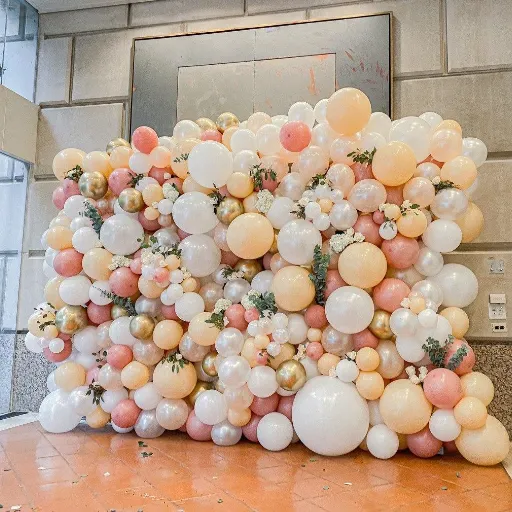
A balloon wall is the densest option and the one most people picture when they say “backdrop.” It’s the standard for photo booths, stages, and step-and-repeat setups because it delivers a complete, colorful background. It also uses the most balloons, so it’s the highest-cost format. Build it on a wall grid or frame so the balloons hold an even surface rather than sagging. Our guide to how many balloons a garland needs covers the same density math you’ll use here, and the full build steps for this format sit in our DIY balloon backdrop wall tutorial.
The circle balloon backdrop: the giant picture frame
A circular frame is the most photogenic single backdrop for smaller groups because it literally frames the subject. The eye lands inside the ring, so one or two people look intentional rather than lost. Most round frames run about 6.6 to 10 feet tall. You can buy a circular stand or make one from a hula hoop, then fill it with clusters of four and treat the inner edge with smaller balloons to add depth (Purely Celebrations).
Arches and garland swags as backdrops
An arch can double as a backdrop when you want structure instead of coverage. A garland swag works the same way and costs less, because it uses fewer balloons than a wall while still framing the subject. That’s the sweet spot for cake tables and photo corners, where full coverage would overwhelm the room. If you want the arch format in depth, the arch gallery covers every curve and span.
Mosaic number and letter frames
For a milestone, a flat number or letter filled with small balloons is a personalized focal point at a fraction of the cost of a wall. It’s built on a foam-board frame and finished with 5-inch balloons. This is the format that makes a first birthday, a 21st, or a 50th read as that specific celebration. Pair it with foil and number balloons to spell a full age or name.
Step-and-repeat and branded backdrops
For corporate events, a step-and-repeat backdrop carries a repeating logo or brand pattern so every photo is on-brand. This format is designed around the logo, not the palette, so the balloon count follows the graphic. It’s the natural bridge to custom balloon solutions when a company needs a brand-exact color that no stock balloon matches.
Planning a backdrop for a client? Send us the format, the size, and the brand or theme color, and we’ll return a balloon list and a quote. Request a quote →
Balloon Backdrop Ideas by Occasion
The same formats flex to fit the event. Here is a starting design for each occasion, following the format-first logic.
Weddings: balloon backdrop ideas for wedding receptions
Weddings reward restraint. The backdrop usually sits behind the head table, at the ceremony altar, or at the entrance, so it should complement florals and linen rather than compete. A circle frame in ivory and champagne, or a garland swag behind a sweetheart table, reads elegant and photographs softly. Our wedding balloon guide walks through entrance, altar, and table zones in one palette.
Birthdays and milestones
Birthdays earn more color and more personality. Kids’ parties suit a bright wall or a themed arch backdrop, while adult milestones do better with a mosaic number or a black-and-gold wall.
When Sofia, a Toronto party planner, built a 6-foot wall for a sweet sixteen photo booth, the balloons stopped at the guests’ shoulders and the photos looked empty. She rebuilt it as an 8×8-foot wall in blush, cream, and rose gold, and added the birthday number as a mosaic topper. The same booth became the spot everyone queued for.
The fix was size and a focal point, not more balloons. More ideas live in the birthday balloon guide.
Baby showers and gender reveals
For showers, keep the palette neutral and let texture do the work. A circle frame in sage, cream, and a warm gold accent is versatile and photographs gently. For a gender reveal, build a neutral outer shell in cream and white so the reveal color pops in the photos, and keep the coded color inside the design. The full range of reveal formats sits in our gender reveal balloon ideas and baby shower balloon ideas guides.
Graduations and corporate events
Graduations call for school colors, a “Class of” top-piece, and a photo wall sized for families and groups. Corporate events usually need a step-and-repeat panel or a stage backdrop in strict brand colors. Our graduation balloon guide covers the seasonal timing, and the corporate balloon guide covers keeping a lobby, a booth, and a stage reading as one identity.
Balloon Backdrop Size: How Much Backdrop Do You Need?
Size is where most backdrops are won or lost, and it’s the easiest thing to get right before you buy a single balloon.
How big should a balloon backdrop be?
Plan for a backdrop at least 8 feet wide and 7 to 8 feet tall, so groups fit comfortably in frame and the balloons clear the tallest person plus headroom. About 8 feet wide frames two to four adults; go to 10 feet or more for larger group shots. Taller is almost always better, because balloons that stop at head height leave awkward empty space above your guests.
How many balloons for a backdrop? Counts by size
Density drives the count, and density drives the cost. The reliable range is about 2.3 to 5 balloons per square foot for a full wall, depending on how tight you want the finish (Bristow Direct). Use this table as your shopping list.
| Backdrop size | Light coverage | Medium coverage | Dense coverage |
|---|---|---|---|
| 6×6 ft | ~120 balloons | ~160 balloons | ~200 balloons |
| 8×8 ft | ~200 balloons | ~260 balloons | ~320 balloons |
| 10×10 ft | ~300 balloons | ~400 balloons | ~500 balloons |
| 6 ft circle | ~70 balloons | ~100 balloons | ~130 balloons |
Order 10 to 15 percent extra to cover bursts, breakages, and touch-ups. The same overage rule applies to every balloon build in this guide.
The size mix that reads professional
Uniform balloons are the fastest way to make a backdrop look homemade. Mix three sizes instead: 5-inch balloons as gap fillers, 11-inch balloons as the main body, and 16-to-18-inch balloons as statement pieces, with 260 modeling balloons as connectors. A common professional ratio for walls is roughly 60 percent 11-inch and 40 percent 5-inch, so the wall reads full without looking like a single size flat-packed together.
How to Style a Balloon Backdrop
Once the format and size are right, styling decides whether it looks custom or generic. Three moves do most of the work.
The three-color rule
Limit the palette to about three colors: one dominant, one supporting, and one accent, split roughly 60-30-10. The dominant fills most of the frame, the supporting shade adds depth, and the accent, usually a metallic or a neutral, sits in the smallest amount so it reads as jewelry rather than noise. Our guide to balloon color combinations carries the full 60-30-10 system and 30-plus named palettes.
Texture, florals, and the organic finish
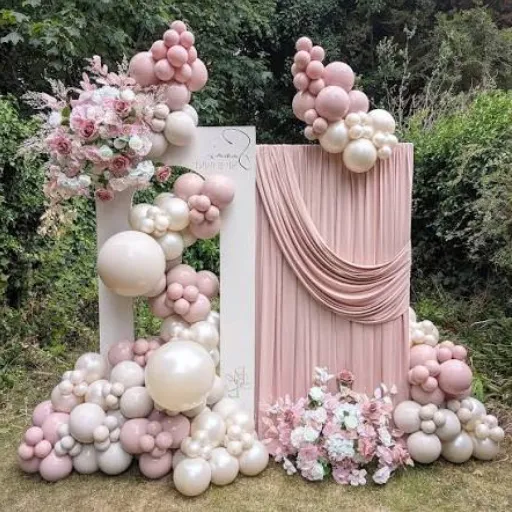
Backdrops look richer when the balloons aren’t the only material. Weave in dried florals, greenery, or pampas for an organic edge, and let the balloons sit around the texture rather than beside it. This is the single biggest difference between a flat wall and a designed one. Our balloon garland with flowers guide shows how to blend florals without the arrangement swallowing the balloons.
Lights, signage, and props
Fairy lights, neon signs, and letter balloons turn a backdrop into a scene. A neon sign or a custom-printed panel gives the eye a focal point and gives the photos a subject. Add these last, after the balloons are set, so they sit in front of the frame rather than fighting it.
Balloon photo backdrop: depth, distance, and light
For the best balloon backdrop photoshoot, place the subject 3 to 4 feet in front of the balloons so the frame sits behind them with a little depth, rather than flat against their backs. Use even, indirect light and avoid direct midday sun, which flattens color. Golden hour, about an hour before sunset, is the ideal outdoor window. Warm string lights work indoors where overhead light is harsh.
Frames and Hardware: How to Hang a Balloon Backdrop
The balloons get the attention, but the frame is what makes a backdrop stay put. Choose the support before you choose the design, because the frame sets the maximum size.
Stands, PVC frames, and hula-hoop circles
A commercial circular or rectangular backdrop stand is the simplest option and supports the largest sizes. A PVC pipe frame is the budget equivalent and can be cut to any dimension. For a circle, a hula hoop on a stand is the classic DIY base. Our balloon stands guide compares the options by size, cost, and stability.
Mounting to a wall without damage
When the backdrop goes on a wall, mount it so it doesn’t mark the venue. Command hooks, fishing line, and a balloon decorating strip hold a backdrop without nails, and they come off cleanly. Our guide to Command hooks for balloons covers the weight limits and the removal process so deposits stay safe.
Air vs. helium for backdrops
Backdrops are grounded, so they don’t need to float. Use air for walls, circles, arches, and garlands: it’s cheaper, needs no helium tank, and holds 3 to 7 days indoors. Helium is only worth the cost for something that must rise, such as a ceiling cloud above the backdrop. The full method lives in our guide to balloon decorations without helium.
Cost, Build Time, and DIY vs. Pro
Cost follows density and format, and knowing the brackets keeps the project on budget.
Rough cost by format
- DIY wall: about 60to60to120 in materials for a 6×6-foot wall, versus 300to300to600+ for a professional install of the same size.
- Simple garland backdrop: from around $150 professionally.
- Large or full-wall design: $500 or more, driven mostly by balloon count and labor (BearloonSG).
Density is the single biggest cost driver. A 10-foot span can mean 100 balloons or 200, and photos never reveal which you chose, so decide the density first and buy to it.
Build time and lead time
A simple 6-foot garland takes about 45 minutes; a 10-to-14-foot backdrop can take 1.5 hours or more. Air-filled backdrops can be built a day or two ahead indoors, in a cool room, so event day stays calm. If you’re assembling a large wall, budget the time in clusters rather than trying to fill the whole frame at once.
When to DIY and when to hire
DIY suits small garlands, clusters, and mosaics. Hire for full walls, exact color matching, complex logos, venues with strict setup windows, or anything 10×10 feet and larger. For a first build at a low-stakes event, DIY is a real option. Our DIY balloon backdrop wall walks through the beginner method step by step.
Making a Balloon Backdrop Last, Safely and Responsibly
A backdrop that’s built to hold and disposed of correctly protects both the photos and the venue.
Longevity, heat, and humidity
Indoors, an air-filled backdrop holds 3 to 7 days. In humid rooms, balloons can slide or oxidize, so seal latex with a gloss or UV spray and check the mounting before guests arrive. Outdoors, inflate shortly before the event because heat and sun weaken latex, and weight the frame against the wind. The full outdoor playbook sits in our guide to balloon decorations for outdoor events.
When Elena, a New Zealand coordinator, built an outdoor ceremony backdrop in January, she built the frame the day before but inflated the balloons the morning of the event and sealed the latex matte. Mid-afternoon heat peaked at 28 degrees Celsius, yet the walls held through the photos and the reception. The one garland she inflated the day before had already dulled by the ceremony. Timing, not the balloon, saved the backdrop.
Responsible backdrops: no releases, dispose properly
Build with natural latex, which is biodegradable and comes in the full color range, so a sustainable event never has to look beige. Never release balloons, indoors or out. Reuse foil and letter balloons where the design allows, and dispose of latex correctly after the event. Our biodegradable balloons guide explains how the material breaks down, and how to dispose of balloons covers the after-event steps.
Frequently Asked Questions
What is a balloon backdrop?
A balloon backdrop is a designed balloon arrangement built on a frame, wall, or stand to create a photo moment. It fills the space behind people so the group is the subject, unlike a garland that drapes along a surface or an arch that holds a fixed freestanding curve.
How many balloons do I need for a backdrop wall?
A full wall needs about 2.3 to 5 balloons per square foot. A 6×6-foot wall takes roughly 180 to 220 balloons, an 8×8-foot wall about 200 to 320, and a 10×10-foot wall around 450 to 550. Order 10 to 15 percent extra.
What size should a balloon backdrop be?
Plan for at least 8 feet wide and 7 to 8 feet tall, so groups fit in frame and the balloons clear the tallest person plus headroom. About 8 feet frames two to four adults; go to 10 feet or more for larger groups.
Do you need helium for a balloon backdrop?
No. Backdrops are grounded, so air is the better choice. Air is cheaper, needs no helium tank, and holds 3 to 7 days indoors. Use helium only for elements that must float above the backdrop.
How much does a balloon backdrop cost?
A DIY 6×6-foot wall runs about 60to60to120 in materials, while a professional install of the same size costs 300to300to600 or more. Simple garland backdrops start around 150,andlargeorfull−walldesignscanreach150,andlargeorfull−walldesignscanreach500 or more.
How long does a balloon backdrop last?
An air-filled backdrop holds 3 to 7 days indoors. Outdoors, inflate shortly before the event and seal matte latex, because heat and sun weaken balloons.
How do you hang a balloon backdrop?
Use a circular or rectangular stand, a PVC frame, or a hula hoop for freestanding designs. To mount on a wall without damage, use Command hooks, fishing line, and a balloon decorating strip rather than nails.
Conclusion
Good balloon backdrop ideas are a system, not a guess. Choose the format first, size it to the group you’ll photograph, and only then choose the color. Mix three balloon sizes, keep the palette to three colors plus an accent, and match the density to your budget so the cost stays predictable. Build with a proper frame, use air rather than helium, and clean up responsibly when the event ends.
Trading Shanxi Co., Ltd. produces latex, foil, and PVC balloons for backdrops of every size, shipped to more than 50 countries. Bring us your format, your size, and your theme or brand color, and we’ll turn it into a balloon list you can order. Request a quote →, or explore our wholesale latex balloons for bulk pricing in the full color range.