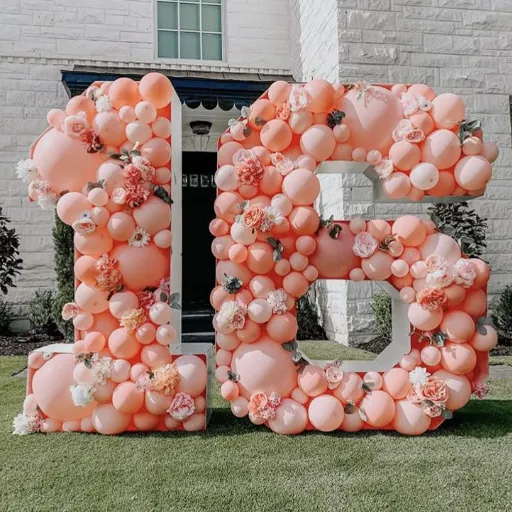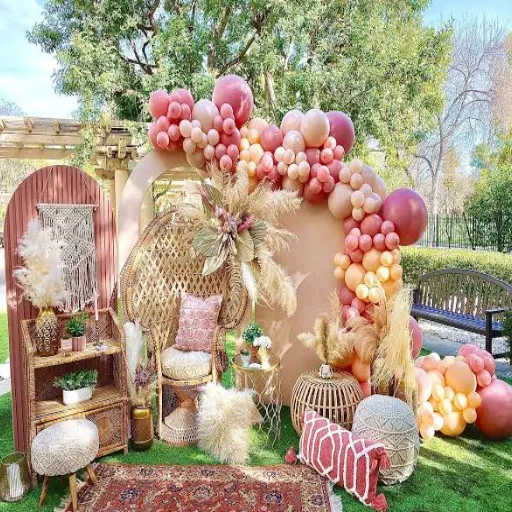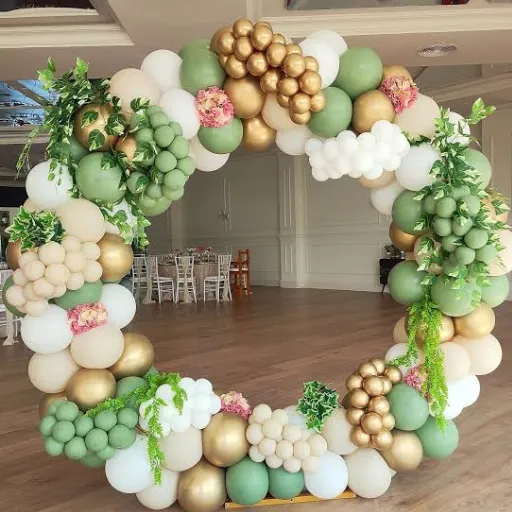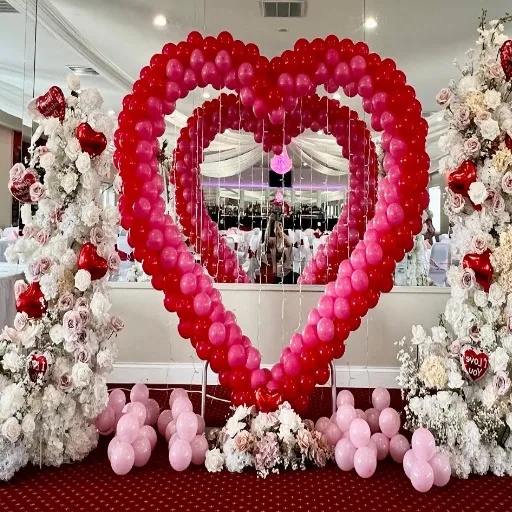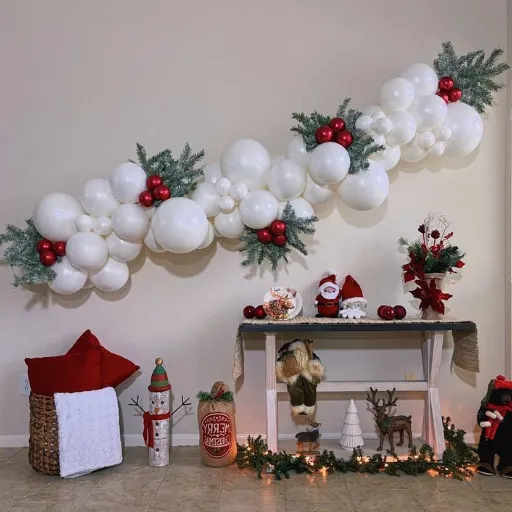
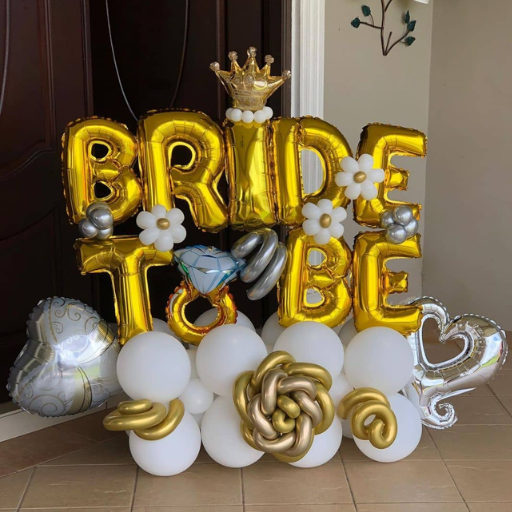

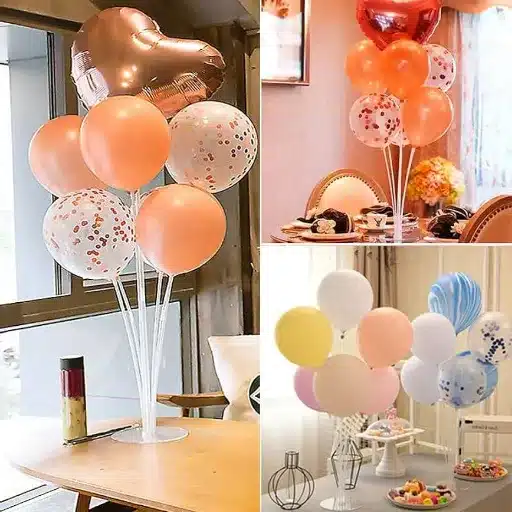
The best balloon stands fall into four categories: table stands for centerpieces, floor stands for entryways, column stands for tall vertical statements, and arch stands for entrances and backdrops. For most events, a set of adjustable table and column stands covers everything you’ll build, because they hold air-filled balloons upright without a drop of helium.
Priya learned this the hard way at her daughter’s sixth birthday party last March. She rented a helium tank, inflated twenty balloons the morning of the party, and tied them to the tables with trailing ribbon. By the time the first guest arrived, half had started drooping. Three more were stuck to the ceiling by 3 p.m., pushed up by a ceiling fan she hadn’t noticed.
The next month she built the same centerpieces with air-filled balloons on table stands the night before, and every single one still looked fresh when the cake came out.
You can skip the helium headache entirely. This guide covers the types of balloon stands, how many balloons each one holds, step-by-step setup for no-helium displays, and how to keep everything standing at an outdoor event. We’ll also cover safety, planning, and sourcing stands if you stock them for a business.
Key Takeaways
- Table stands hold 3 to 7 air-filled balloons per centerpiece; floor columns hold 19 to 40 depending on height
- A standard column needs 4 balloons per tier and one tier per foot, so a 6-foot column takes 24 balloons plus a topper
- Air-filled balloons on stands last days or weeks, versus 10 to 12 hours for helium
- Weight the base with water or sand, and double it outdoors, or even a light breeze will topple the display
- Quality telescopic columns range from about 18 inches to 87 inches and collapse flat for storage
What Is a Balloon Stand and Why Use One?
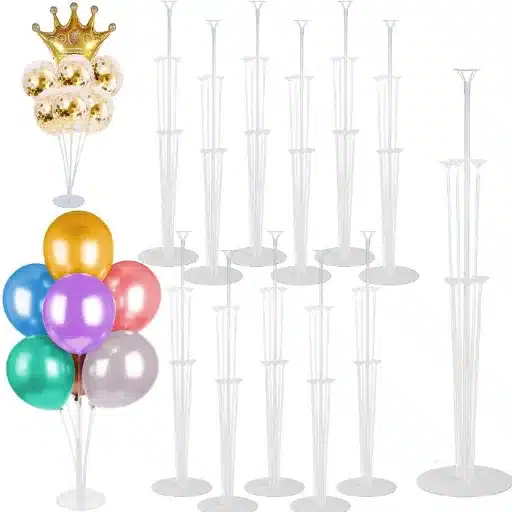
A balloon stand is a support frame that holds balloons upright without helium. It typically has a weighted base, a vertical pole or rod, and cups, clips, or rings that hold individual balloons. Stands fix balloons in place on a table, on the floor, or in an arch shape, so a display keeps its structure instead of drifting or sagging.
You need a stand whenever you want height and structure without buying or renting helium. Air-filled balloons have no lift, so they can’t float on their own. A stand gives them that lift, turning a pile of balloons into a centerpiece, a column, or an entrance arch.
The case for skipping helium is strong. Air-filled balloons on a stand last several days or even weeks, while a helium balloon starts drooping after 10 to 12 hours. You can build the display the night before and transport it without anything floating away. And you never pay for gas, tank rental, or the last-minute panic of a tank that runs dry mid-setup.
For the full toolkit that makes these displays come together, our complete balloon accessories guide covers stands alongside pumps, ribbons, weights, and every other essential.
Balloon Stand vs. Weight vs. DIY: Which Should You Use?
Not every display needs a stand. Sometimes a weight is simpler, and sometimes a homemade solution is better. This quick table routes you to the right approach.
| If you need… | Use… | Because… |
|---|---|---|
| Table centerpieces with height | A table stand | Holds balloons upright, reusable, no helium |
| Single helium balloons on a table | A balloon weight | Cheapest way to anchor one floating balloon |
| A tall entryway or stage accent | A floor or column stand | Provides height air-filled balloons can’t reach alone |
| An arch or photo backdrop | An arch stand | Creates the curved frame balloons attach to |
| A one-time budget event | DIY sticks or PVC | Costs almost nothing, made from household parts |
| Floating bouquets at a venue | Helium + weights | Nothing else makes balloons actually float |
Here’s the rule of thumb. Use a stand when you want height, structure, or a display you can prep in advance. Use a balloon weights solution when you’re anchoring a helium balloon or a small bouquet that sits on its own. Use DIY when budget matters most and you have an hour to build.
The choice changes the outcome. A helium centerpiece looks great for a few hours, then sags. An air-filled centerpiece on a stand looks the same at the start and at the end of the party. If you’re setting up the night before, a stand is the only option that survives the wait.
Types of Balloon Stands Compared
Balloon stands come in four main types, and each is built for a different job. Match the type to where the display sits and how much presence you want.
| Type | Height range | Balloon capacity | Best for |
|---|---|---|---|
| Table stand | 15 to 31 inches | 3 to 7 balloons | Centerpieces, buffet tables, place settings |
| Floor stand | 4 to 7 feet | 12 to 40 balloons | Entryways, corners, stage accents |
| Column stand | 18.5 to 87 inches | 19 to 40 balloons | Tall towers, doorway framing, photo backdrops |
| Arch stand | 9 to 10 feet tall | 80 to 120 balloons | Entrances, wedding backdrops, photo zones |
| Balloon sticks | 17 inches and up | 1 to 3 balloons | Simple single or small clusters |
Table Balloon Stands
Table stands sit flat on a table with a short pole and a cup or clip on top. They create the classic floating-look centerpiece, with balloons hovering above the plates. A typical stand holds 3 to 7 balloons, and a four-stand kit usually includes about 28 cups total.
Kits with adjustable poles let you mix heights across a table for a fuller arrangement. These are the workhorses of birthday parties, baby showers, and wedding receptions where you need many small, uniform displays.
Floor and Column Balloon Stands
Floor stands and column stands are the tall versions. A floor stand holds a modest cluster at entry height. A column stand, sometimes called a balloon tree or tower, stacks balloons in tiers up a central pole for a dramatic vertical statement.
Telescopic models adjust from about 18 inches to over 7 feet, and the best ones use a one-piece metal pole with a twist lock so they don’t wobble at the joints. Column stands are the right call for framing doorways, flanking dessert tables, and marking the edges of a stage.
Arch and Garland Stands
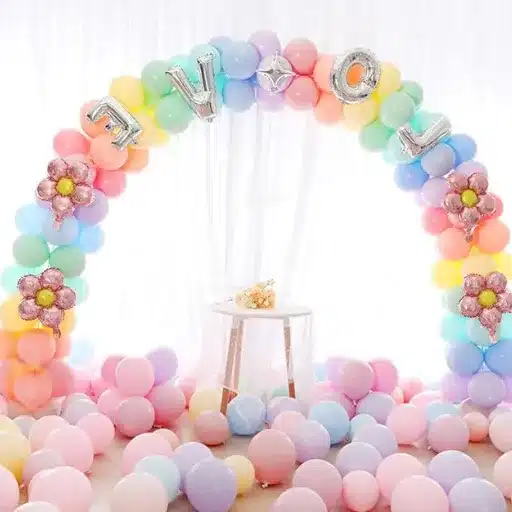
Arch stands use curved rods with weighted bases to form an arch that balloons attach to. A standard arch runs about 9 to 10 feet tall and 10 feet wide, and a full arch needs 80 to 120 balloons. These are the showpieces for weddings, graduations, and corporate entrances. Some arch kits include water-fillable bases and stakes for outdoor anchoring, which matters more than any other feature when the venue is open to the wind.
Balloon Sticks and Holders
At the simple end, a balloon stick is a plastic or wire rod with a cup that holds the neck of one balloon. Stick them into a vase, a flower pot, or the ground along a path. They’re cheap, fast, and perfect for a single accent or a row of small displays. The trade-off is presence, since a stick doesn’t create the height or structure of a floor or column stand.
Materials matter when you choose. Stainless steel and aluminum stands handle repeated commercial use and resist rust outdoors. PVC and plastic stands are lighter, cheaper, and fine for indoor table displays.
Whatever you pick, check the base. A wide, water-fillable base beats a thin plastic disc every time, because it’s the base that keeps the whole display upright.
How Many Balloons Do You Need for a Balloon Column or Centerpiece?
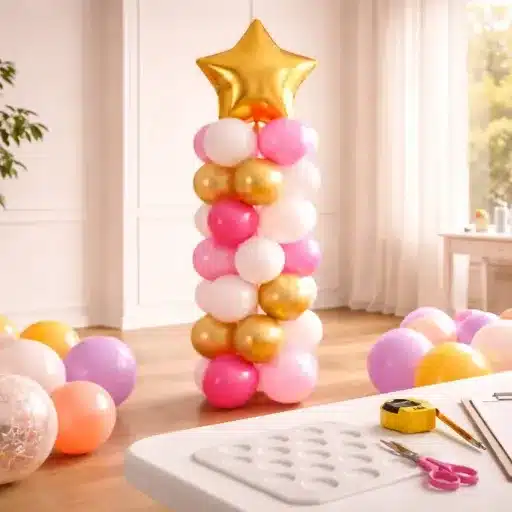
Balloon counts follow a simple pattern, and getting the number right is the difference between a full display and a sparse one. For a column built with standard 11-inch balloons, plan on 4 balloons per tier and one tier per foot of height.
| Column height | Balloons (no topper) | With topper |
|---|---|---|
| 3 ft | 12 | 13 |
| 4 ft | 16 | 17 |
| 5 ft | 20 | 21 |
| 6 ft | 24 | 25 |
| 7 ft | 28 | 29 |
| 8 ft | 32 | 33 |
So a 6-foot column takes 24 balloons plus a 24-inch topper on top. A pair of columns at a wedding entrance doubles that to about 50 balloons. The math holds for most standard kits, which is why balloon-decoration-guide.com uses the same 4-per-tier rule in its column balloon count guide.
For table centerpieces, the count is much smaller. Three balloons give a simple look, five give a fuller display, and seven make a real statement. Most centerpieces stay in the 2 to 9 balloon range, arranged at different heights on a stand so they feel layered rather than flat.
Balloon size changes the math. Smaller balloons pack more densely per foot: 5-inch balloons run about 10 to 12 per foot of column, 9-inch about 8 per foot, 11-inch about 4 to 6, and 16-inch about 3 to 4. Smaller balloons create a fuller, more detailed column. Larger balloons make a bolder column with fewer pieces.
Order about 10 to 15 percent extra balloons no matter what you build. Breakage happens, and a spare handful keeps the display full without a last-minute store run.
How to Make Balloons Stand Without Helium (Step by Step)
Making balloons stand without helium is straightforward once you understand the two parts of the job: inflate with air, and give the balloons a structure to hold. Here’s how to do it with a store-bought stand, and how to build your own when you want to save money.
Using a Store-Bought Balloon Stand
- Assemble the base and insert the pole. Most stands twist or snap together without tools.
- Fill the base with water or sand. This single step does more for stability than anything else.
- Inflate balloons with a hand or electric pump, using a sizer or the markings on the pump for consistent sizes.
- Attach the balloons in clusters of four. Twist the necks of two balloons together, then pair the pairs, then slide the cluster onto the pole or into a cup.
- Work up the pole in tiers, alternating colors and sizes for a full, organic look.
- Top the column with a single larger balloon, and tug each cluster to confirm it holds.
DIY Balloon Sticks
Cut wooden dowels to the height you want, or use thick wire with one end bent into a loop. Inflate a balloon with air and tie the knot to the top of the dowel, wrapping the string four or five times. Outside, push the dowel into the ground. Inside, slide it into a container filled with sand or gravel, and cover the container to hide it.
For the full build walkthrough, ehow’s PVC balloon stand guide shows the classic X-shaped base version with a PVC pole.
Weighted-Base Columns and Towers
Use a sturdy, heavy base like a terracotta pot filled with sand or concrete, a weighted bucket, or a reinforced plastic plate weighed down. Insert a PVC pipe or a sturdy dowel into the base, then build balloon clusters around the pole exactly as you would on a store-bought stand. The key is weight. If the base is too light for the balloons above it, the whole display tips over with the first nudge.
5 Mistakes That Send Balloon Stands Tumbling
- Skipping the water or sand base. This is the number one cause of toppled displays.
- Over-inflating balloons until they strain the cups or clips.
- Building top-heavy, with too many balloons at the top and too few near the base.
- Leaving loose knots that slip when a balloon is pushed or bumped.
- Forgetting toppers and clips that hold the top balloon in place.
How to Keep Balloon Stands From Falling Over (Stability & Outdoor)
Stability is the whole game with balloon stands, and it comes down to one idea: weight at the bottom. A wide base filled with water or sand gives a column the counterweight it needs to stay upright, and the difference is dramatic. Filling a column’s base adds roughly 11 pounds of weight, which turns a wobbling pole into a display that stays put.
Outdoors, the rules change. Plan to double your weighting and add secondary anchors. Use sand instead of water when you can, because sand is heavier, and secure the stand to a fixed object like a fence, a tent pole, or a table leg with zip ties or fishing line at multiple points. Concentrate the weight at the bottom and spread the anchors wide, so the display doesn’t act like a sail in the wind.
Dan, who runs a decor business in Austin, found this out during a May wedding. He set up four 7-foot columns around a courtyard, filled their bases with water, and called it done.
A front moved through at 4 p.m., and two columns toppled before he could react. He now fills every outdoor base with sand, doubles the weight, and ties each column to a fence post or table with zip ties. Since then, not a single outdoor display has fallen.
Indoors, watch the hidden threats. Ceiling fans and HVAC vents create air currents that push tall displays. Keep columns away from high-traffic walkways where guests brush past, and check the display after any bump.
For pools and wet areas, keep stands and balloons clear of the water. Foil balloons expand in direct sun and can burst, so place them in shade, and never let helium or loose balloons near open flames or heat sources.
Balloon Stand Safety
Balloon stands are safe when set up properly, but a few rules keep them that way. A tall, weighted column near a doorway or a walkway is a toppling hazard, so position displays where they can’t fall on guests or block exits. Keep stands and uninflated balloons out of reach of children under eight, since small parts and burst latex are choking hazards.
At venues, never block exits, fire-safety clearances, or sprinkler access with a display. Confirm the venue’s rules before you set up tall structures, and plan the layout so every column sits clear of the walk path. If a balloon pops, pick up every piece, including the neck, before children or pets reach it.
On disposal, never release balloons outdoors. A released balloon comes down somewhere eventually, and the latex and ribbon become litter and a wildlife hazard. Deflate balloons and take them off the stand, cut any string, and dispose of everything in household trash. Reuse the stand itself, which is the whole point of a reusable frame.
Get quality balloon accessories from Trading Shanxi Co., Ltd for your next project.
How Many Balloon Stands Do You Need for Your Event?
Planning the number of stands comes down to the venue and the look you want. Use one table stand per table for a wedding or a birthday party where every table gets a centerpiece. For a buffet or a lounge area, one stand every few feet is enough to set the mood without crowding the space.
A birthday party with ten tables needs about ten table stands, each with a 3 to 7 balloon centerpiece. A wedding with a reception for 150 guests, a pair of 6-foot columns at the entrance, and a 10-by-8 arch for the photo area needs two column stands, one arch stand, and a table stand for every table. A graduation with a stage to frame needs two matching 7-foot columns, plus table stands if the tables get centerpieces.
Buy about 10 percent more than your count. Stands are reusable, so extras aren’t wasted, and having spares covers broken bases or a last-minute table added by the venue.
Balloon Stand FAQ
Do balloon stands need helium?
No. Balloon stands are designed for air-filled balloons. They hold balloons upright with a pole and base, so you never need helium, a tank, or gas for a stand display.
How many balloons does a balloon column hold?
A column needs 4 balloons per tier and one tier per foot, so a 6-foot column holds 24 balloons plus a topper. Taller columns hold more: an 8-foot column takes 32 balloons plus a topper.
How do you make balloons stand up without helium?
Inflate balloons with air and mount them on a stand, a balloon stick, or a DIY PVC or dowel pole with a weighted base. The structure holds the balloons upright without any gas.
How do you keep a balloon stand from falling over?
Fill the base with water or sand, and use a wide base for tall displays. Outdoors, double the weight, use sand instead of water, and tie the stand to a fixed object with zip ties or fishing line.
Can balloon stands be used outdoors?
Yes, with the right setup. Use sand-filled bases for extra weight, add ground stakes and wind ropes, and anchor the stand to a fixed structure. Plan to double your weighting whenever the venue is open to the elements.
Are balloon stands reusable?
Most are. Metal and durable plastic stands collapse or break down for storage and survive years of events. Drain any water, dry the parts, and inspect joints and cups before each use.
Sourcing Balloon Stands for Your Business
If you run an event company, a decor business, or a party-supply shop, you aren’t buying one stand. You’re stocking a range that has to survive daily use and work for every client.
Stock four types. A set of table stands for centerpieces, a pair of telescopic column stands for entrances and stages, an arch kit for backdrops, and a box of balloon sticks for quick single displays. Choose stainless steel or aluminum for anything you’ll use repeatedly, since thin plastic bends and wobbles after a few events.
When you source in volume, ask suppliers for real specs: pole material, base weight when filled, height range, and balloon capacity. Check that telescopic locks hold when the pole is fully extended, that cups hold balloons without tearing, and that bases drain cleanly. Wholesale pricing varies widely, from under a dollar a piece for plastic sticks to roughly four to twenty dollars per unit for metal stands, so compare across suppliers and confirm minimum order quantities and lead times before you commit.
A smart stocking strategy also means pairing stands with the balloons you already sell. Clients who ask for a sustainable event will appreciate reusable stands alongside our eco-friendly balloons, made from biodegradable natural latex without sacrificing quality.
For the tools that support every install, our guide to electric balloon pumps vs hand pumps covers the inflation side, and our balloon decorations guide walks through the full display process from planning to hanging.
Keep Every Balloon Display Standing
Balloon stands turn simple air-filled balloons into professional displays that last. They save you the cost and hassle of helium, let you set up the night before, and give every table, doorway, and entrance a clean, structured look.
Here’s the summary. Match the stand type to the display: table stands for centerpieces, floor and column stands for tall statements, and arch stands for entrances and backdrops. Count 4 balloons per tier per foot for columns, and keep table centerpieces in the 3 to 7 balloon range.
Weight every base with water or sand, double it outdoors, and anchor tall displays to fixed objects. Build with air-filled balloons, order 10 to 15 percent extra, and reuse your stands event after event.
Take ten minutes to test every display before your guests arrive. Give each stand a gentle push, confirm the base is weighted, and tug a few balloons to check the cups. A stable display is the difference between a beautiful event and a rescue mission.
Ready to build a display that lasts? Explore our balloon accessories collection to find the stands, pumps, and tools you need, or contact Trading Shanxi Co., Ltd. for custom solutions and bulk ordering that keep every celebration effortless.