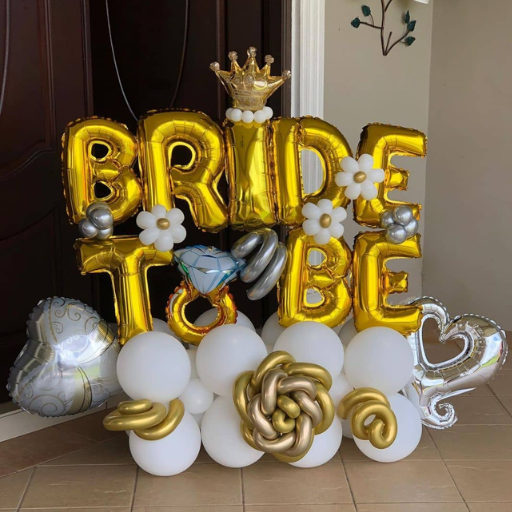

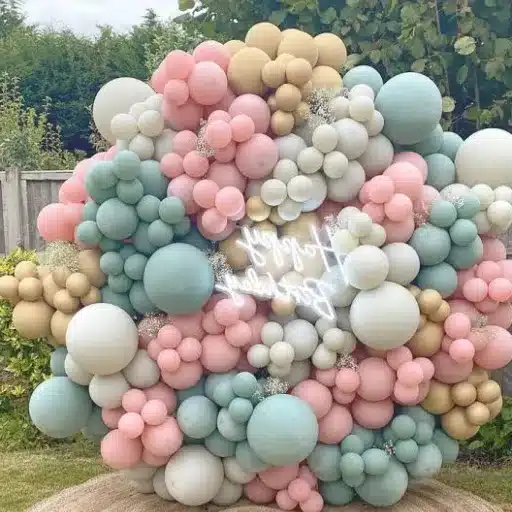
A DIY balloon backdrop wall is one of the fastest ways to make a party look professionally styled, and you can build one in about two hours for $60 to $120 in materials. All you need are air-filled balloons in three sizes, a pump, and one of three attachment methods: glue dots, a balloon decorating strip, or a foam board base.
When Emma planned her daughter’s sixth birthday party last spring, she nearly paid a local decorator $450 for a photo backdrop. Instead, she spent one Friday evening and about $85 on balloons and supplies. The wall she built covered 6 feet by 8 feet, stayed up for four days, and became the backdrop for roughly 200 party photos. Her guests assumed she’d hired someone.
That’s the real appeal of a balloon wall. It looks expensive, but the technique is forgiving. Balloons hide their own mistakes.
This guide walks you through the supplies you need, exactly how many balloons to buy for your wall size, three beginner-friendly build methods, and the color formulas that photograph best. We’ll also cover the mistakes that deflate first-timers (sometimes literally) so yours goes up once and stays up.
Key Takeaways
- A DIY balloon backdrop wall costs 60–60–120 in materials versus 300–300–600 for a professional install, and takes about 2 hours for a standard 6 ft × 8 ft wall.
- Use air-filled balloons, not helium. They’re cheaper, last 3–7 days indoors, and won’t float away during setup.
- Plan on 80–100 balloons per square meter for a dense wall, or 40–50 per square meter for a looser, organic look.
- Glue dots are the best method for first-timers; foam board works best for outdoor or freestanding walls.
- Follow the 60-30-10 color rule: 60% base color, 30% secondary, 10% metallic or accent.
What You Need for a DIY Balloon Backdrop Wall
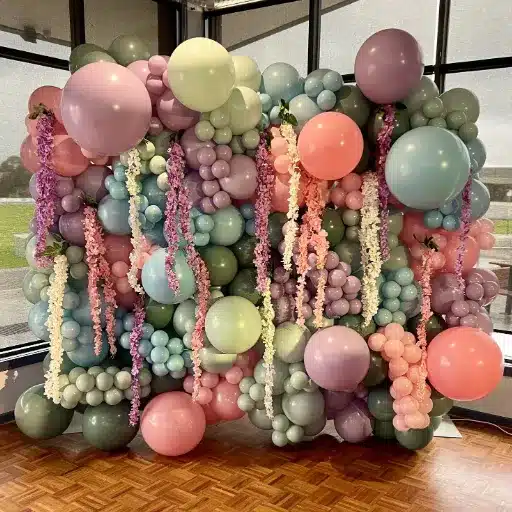
Before you touch a single balloon, gather your supplies. Running out of glue dots mid-build is how two-hour projects turn into four-hour ones.
Core supplies:
- Balloons in mixed sizes: 5-inch, 11-inch, and 16-inch latex balloons. The size variation is what creates that lush, organic look.
- Balloon pump: An electric pump cuts inflation time by roughly 70% compared to a hand pump. For a 100-balloon wall, that’s the difference between 20 minutes and over an hour.
- Attachment material: Glue dots, a balloon decorating strip, or a foam board with push pins. We’ll compare all three below.
- Command hooks or removable mounting hooks: For hanging a strip or board without damaging paint.
Nice-to-have extras:
- 5-inch filler balloons in your base color for covering gaps
- Greenery sprigs, fairy lights, or a neon sign for accents
- A step ladder and a patient friend
One more decision to make up front: skip helium. Air-filled balloons are cheaper, easier to attach, and last far longer than helium-filled ones. Helium is for floating ceiling clouds and bouquets, not walls.
Want a shortcut? Trading Shanxi offers coordinated balloon kits with pre-matched sizes and colors, so you can skip the math and go straight to building. Explore our balloon collections →
How Many Balloons Do You Need for a Balloon Backdrop Wall?
For a dense, professional-looking balloon backdrop wall, plan on 80 to 100 balloons per square meter (about 8–10 per square foot), a density consistent with BearloonSG’s backdrop estimates. A standard 6 ft × 8 ft party wall needs roughly 80 to 120 balloons, while a large 8 ft × 10 ft wedding backdrop needs 150 to 250.
Here’s a quick reference chart based on that density:
| Wall Size | Balloon Count | Build Time | Est. Material Cost |
|---|---|---|---|
| 4 ft × 6 ft (photo booth) | 50–70 | 1–1.5 hours | 40–40–70 |
| 6 ft × 8 ft (party wall) | 80–120 | 1.5–2 hours | 60–60–100 |
| 8 ft × 10 ft (wedding backdrop) | 150–250 | 3–4 hours | 120–120–200 |
These estimates assume a mix of 11-inch and 16-inch balloons with 5-inch fillers. If you prefer a looser, more minimal wall with visible gaps, cut the count nearly in half.
A few buying tips from experience:
- Buy 10–15% extra. Some balloons pop during inflation or have small defects. Extras also let you fill gaps you only notice from across the room.
- Weight your purchase toward 11-inch balloons. They form the bulk of the wall. A good ratio is roughly 60% 11-inch, 25% 5-inch, and 15% 16-inch.
- Don’t overinflate. Slightly underfilled balloons are rounder, easier to attach, and far less likely to pop overnight. Leave the “neck” of the balloon soft when you tie it off.
If you want to double-check your numbers, BalloonBuilder’s free calculator lets you plug in exact dimensions and balloon sizes.
How to Make a DIY Balloon Backdrop Wall: 3 Beginner Methods
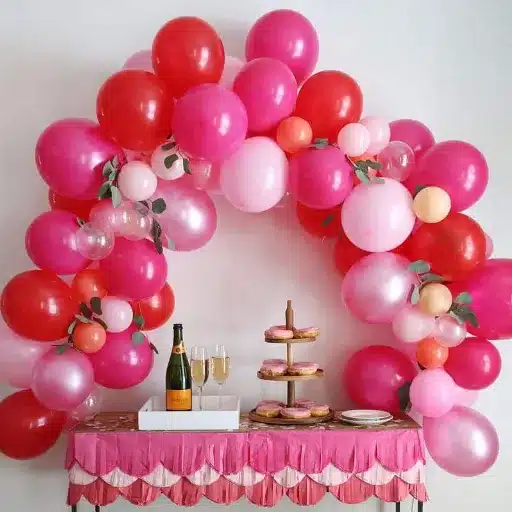
There’s no single “right” way to attach balloons to a wall. The best method depends on your wall surface, whether you’re renting, and whether the wall needs to stand alone outdoors. Here’s how the three main approaches compare.
Method 1: Glue Dots Directly on the Wall (Best for First-Timers)
Glue dots are small, double-sided adhesive circles that stick balloons directly to a smooth wall. This is the method Emma used, and it’s the one we recommend for beginners.
Steps:
- Wipe the wall with a dry cloth so dust doesn’t weaken the adhesive.
- Inflate your largest balloons (16-inch) first and place them across the wall, spacing them 12–18 inches apart. Press each balloon against a glue dot for about 10 seconds.
- Add your 11-inch balloons around and between the large ones.
- Fill remaining gaps with 5-inch balloons.
- Step back every few minutes and squint. Dark spots mean gaps; crowded spots mean you can steal a balloon for elsewhere.
Pros: Fast, requires no extra tools, easy to reposition balloons, and removes cleanly from painted walls.
Cons: Doesn’t hold well on textured walls, brick, or in humid rooms.
A tutorial from Lovely Indeed covered a 7 ft × 8 ft wall with about 70 balloons in 1.5 hours using exactly this approach, which matches what we see with our own customers.
Method 2: Balloon Decorating Strip (Best for Full, Garland-Style Coverage)
A balloon decorating strip is a long plastic band with evenly spaced holes. You pull balloon knots through the holes to build a connected garland, then mount the whole strip to the wall.
Steps:
- Inflate balloons and tie each one individually.
- Push each knot through a strip hole, alternating sizes and colors as you go.
- Once the strip is full, hang it horizontally or vertically using Command hooks spaced every 2–3 feet.
- Layer a second strip beside the first for deeper coverage.
- Tuck 5-inch balloons into gaps using glue dots.
Pros: Produces the fullest, most “professional decorator” look; balloons can’t slide off individually.
Cons: Slower to build, and the strip can show through if you don’t layer enough balloons.
If you already know how to build arches with a strip, this method will feel familiar. The same technique powers our balloon arch tutorial for beginners, just laid flat against a wall instead of curved over a frame.
Method 3: Foam Board or Wire Mesh Base (Best for Outdoors and Freestanding Walls)
For outdoor events, textured walls, or any setup that can’t rely on adhesive, build your wall on a portable base instead. Foam board, plywood, or wire mesh panels all work.
Steps:
- Stand or lean your board where the backdrop will go. Secure it so it can’t tip.
- Inflate balloons and attach them with push pins (through the tied neck) or strong double-sided outdoor tape.
- Work from the bottom up, overlapping balloons so pins stay hidden.
- Fill gaps with 5-inch balloons as you go.
This matters more than most tutorials admit. When Sofia built a glue-dot wall for an outdoor baby shower in Houston, the afternoon humidity loosened half her balloons within an hour. She rebuilt on two foam boards the next weekend, and that wall survived a breezy 90-degree afternoon without losing a single balloon. Indoors versus outdoors is a completely different game.
Pros: Works anywhere, reusable, and transportable.
Cons: More upfront effort, and you’ll need to store or dispose of the boards afterward.
Ready to build? Our backdrop-ready balloon bundles include the mixed sizes and filler balloons each method calls for, matched to the color palettes in the next section. Shop balloon bundles →
Choosing a Color Palette That Photographs Well
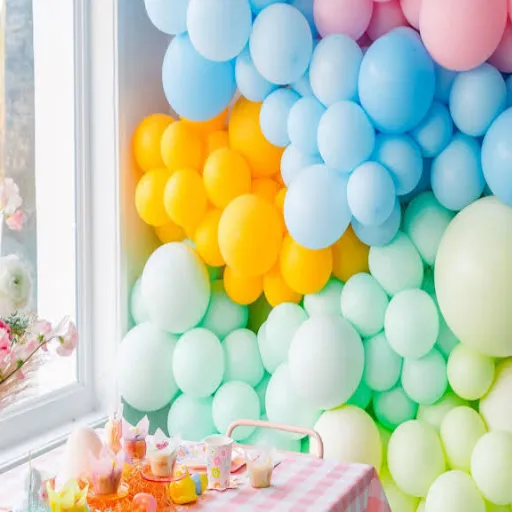
A backdrop wall lives or dies by its photos, and color is what makes photos work. The simplest reliable formula is the 60-30-10 rule: 60% of your balloons in a base color, 30% in a secondary shade, and 10% in a metallic or bold accent.
Five palettes that consistently photograph well:
- Blush + champagne + gold: Soft and romantic. Ideal for weddings and baby showers.
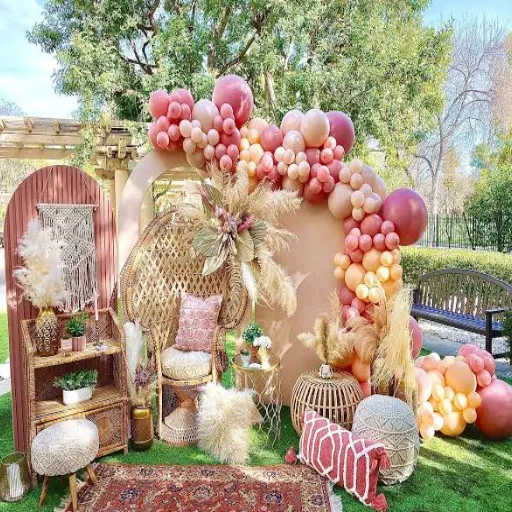
- Sage + ivory + copper: Earthy and modern. Great for outdoor or boho events.
- Navy + white + silver: Clean and formal. Works for corporate events and graduations.
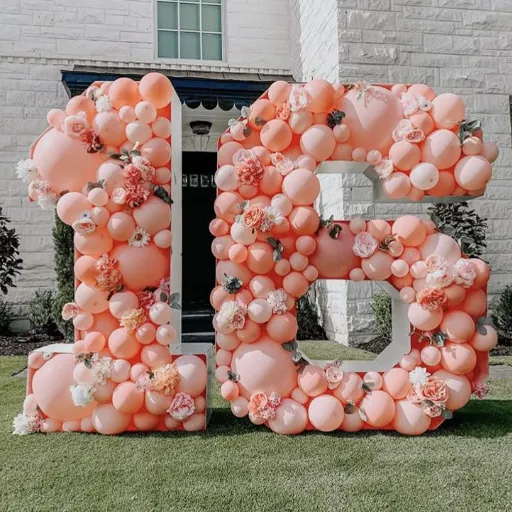
- Coral + peach + rose gold: Warm and playful. A birthday party favorite.
- Dusty blue + cream + chrome: Calm and elegant. Popular for gender reveals.
Two mistakes to avoid here. First, don’t use more than four colors total, or the wall reads as chaos instead of design. Second, blend colors as you build rather than blocking them into sections. Randomized placement looks organic; hard color lines look like a flag.
For biodegradable versions of every color above, our eco-friendly balloon collection offers the same palette range in natural latex that breaks down after the party.
4 Common Balloon Backdrop Wall Mistakes (and How to Avoid Them)
Most failed backdrop walls come down to four predictable problems. Fix these and you’re ahead of 90% of first attempts.
1. Balloons popping overnight. This is almost always heat or overinflation. Build your wall in a cool room, keep balloons slightly underfilled, and avoid spots near windows where afternoon sun hits directly.
2. The attachment showing through. Visible glue dots, tape, or strip edges ruin the illusion. Always keep a handful of 5-inch filler balloons in your base color to cover hardware.
3. Balloons sliding off the wall. Humidity and textured surfaces weaken adhesive. If your wall is textured or the room is humid, switch to the foam board method instead of fighting physics.
4. Underbuying balloons. Priya, a first-time builder planning a retirement party, bought 60 balloons for an 8 ft wall because “that seemed like a lot.” The finished wall looked sparse and patchy, and she ended up making a frantic second supply run the morning of the party. Use the chart above, then add 15%.
How Long Does a Balloon Backdrop Wall Last?

An air-filled balloon backdrop wall lasts 3 to 7 days indoors when kept in a cool, dark room away from direct sunlight. Outdoors, plan for same-day use only, since heat and UV exposure break down latex quickly.
That longevity gives you flexibility. You can build the wall one or two days before your event, which takes enormous pressure off party day. Just keep pets and small children away from it until showtime.
When the party’s over, pop and bag the balloons rather than releasing anything outdoors. If you used natural latex balloons, they’ll biodegrade far faster than foil or plastic alternatives.
One honest caveat: DIY has limits. If your backdrop needs to span more than about 10 feet, include complex shapes or logos, or go up at a venue with strict setup windows, a professional install is worth the cost. Our team designs custom balloon backdrops for corporate events and large celebrations, and we’re happy to tell you honestly whether your project is a DIY job or a hire-a-pro job.
DIY Balloon Backdrop Wall FAQs
How do you attach balloons to a wall without damage?
Use glue dots or removable Command hooks instead of nails, tacks, or heavy-duty tape. Glue dots peel off painted drywall cleanly, and Command hooks release with a pull tab. Always test one adhesive point in an inconspicuous spot first if you’re renting.
How many balloons do I need for a balloon backdrop wall?
Plan on 80–100 balloons per square meter for dense coverage. A 6 ft × 8 ft wall needs roughly 80–120 balloons; a 4 ft × 6 ft photo booth backdrop needs 50–70.
Can I make a balloon backdrop the day before?
Yes. Air-filled balloons hold their shape for several days indoors. Build your wall up to two days ahead, keep the room cool, and the balloons will look fresh on party day.
How much does a DIY balloon backdrop wall cost?
Most builders spend 60–60–120 on balloons and supplies for a standard party wall. A professional install of the same size typically runs 300–300–600.
What’s the best balloon size for a backdrop wall?
A mix works best: roughly 60% 11-inch balloons as the base, 25% 5-inch fillers for gaps, and 15% 16-inch balloons for visual anchors.
Conclusion: Your Wall, Your Way
A DIY balloon backdrop wall is one of the highest-impact, lowest-skill projects in event decor. Pick your attachment method based on your surface, buy balloons using the size chart rather than guessing, stick to the 60-30-10 color rule, and build a day early so you can fix gaps with fresh eyes.
Start small if you’re nervous. A 4 ft × 6 ft photo backdrop teaches you everything the big walls do, and you can finish it in under 90 minutes.
Ready to gather supplies? Browse our balloon decoration collections for coordinated kits in every palette above, or contact our team if your event calls for a custom design. Either way, your photos are about to get a serious upgrade.