You can buy biodegradable balloons from four main sources: online specialty eco-retailers, manufacturer-direct suppliers, established balloon brands, and large marketplaces. The right choice depends on how many you need, what event you’re decorating, and how seriously you take sustainability claims.
Here’s the catch: not every balloon labeled “biodegradable” actually is. Some contain synthetic latex blends. Some are sold with foil ribbon or mylar attachments that quietly cancel out the eco angle. And some brands lean on the word “biodegradable” without a single third-party certification to back it up. By the time the wedding is over or the corporate event has wrapped, it’s too late to ask the supplier the right questions.
This guide walks through every legitimate place to buy biodegradable balloons in 2026, what to verify before you spend a dollar, and how to match your purchase to the size of your event. Whether you need thirty balloons for a backyard birthday or three thousand for a brand launch, you’ll know exactly where to look.
Key Takeaways
- Online specialty eco-marketplaces are best for small orders (under 100 balloons) where curation and certifications matter more than price.
- Manufacturer-direct suppliers offer the lowest per-unit cost on bulk orders of 500+ and full transparency on materials and certifications.
- Local florists and party-supply stores are reliable for last-minute needs but rarely carry certified biodegradable options without phoning ahead.
- Around 40% of “green” claims on consumer goods lack substantiation, so always verify with named certifications like FSC or OK Compost.
- True biodegradable balloons cost 10-30% more than standard latex. If an “eco” balloon is priced below standard latex, treat the claim with suspicion.
Where Can I Buy Biodegradable Balloons?
You can buy biodegradable balloons from four main sources: online specialty retailers (best for variety and certifications), manufacturer-direct suppliers like Trading Shanxi (best for bulk and custom orders), eco-friendly party supply stores (best for last-minute or local shopping), and certified eco-marketplaces. Always verify natural latex content and look for FSC or compostability certifications before checkout.
Each source has a different sweet spot. Below, we break down which one is right for your situation, what red flags to watch for, and what you should reasonably expect to pay.
The 4 Best Online Sources for Biodegradable Balloons
Most buyers start their search online, and for good reason. The selection is wider, certifications are easier to verify, and you can compare half a dozen suppliers before lunch. Here are the four categories worth knowing.
Specialty Eco-Marketplaces
Curated stores like EarthHero, Package Free, and Public Goods exist specifically to sell sustainable products, which means their balloon inventory has usually been pre-screened for genuine eco credentials.
Pros: Pre-vetted suppliers, sustainability transparency, easy to trust.
Cons: Limited bulk options, premium retail pricing, and selection skews small-scale.
Best for: Birthday parties, eco-conscious gift-givers, and anyone buying fewer than 100 balloons who values certification over savings.
Manufacturer-Direct Suppliers
Buying straight from a balloon manufacturer cuts out the retail markup, gives you access to the full product line, and lets you ask hard questions about materials and certifications. Trading Shanxi falls into this category, alongside several international manufacturers who sell directly to event planners, retailers, and large clients.
Pros: Best per-unit pricing at volume, custom design options, traceable supply chain, certifications on request.
Cons: Minimum order quantities (MOQs) often start at 500 units, lead times run 2-6 weeks, and international shipping adds logistics to manage.
Best for: Bulk orders, custom-printed balloons, corporate events, retailers stocking inventory, and any buyer who wants documented sustainability claims.
If your event is more than a few weeks out and you need 500+ balloons, this category will almost always beat retail on price and quality. Request a custom quote from Trading Shanxi to see how manufacturer pricing compares.
Established Balloon Brands
Names like Qualatex and Bunch O Balloons have built decades of professional credibility. Their eco-friendly product lines are smaller than their standard offerings, but they’re consistent, widely distributed, and easy to source through professional balloon decorators.
Pros: Brand recognition, consistent quality, broad retailer network.
Cons: Limited “eco” SKU depth, less transparency on certifications, premium pricing.
Best for: Professional decorators who want a familiar brand with predictable performance.
Major Marketplaces (Amazon and Etsy)
Amazon and Etsy carry biodegradable balloons by the hundreds of listings, but the variation in quality is enormous. Some are excellent. Many are not.
Pros: Fast shipping, customer reviews, low friction.
Cons: Highest greenwashing risk, no vendor vetting, inconsistent inventory, almost no certification disclosure.
Best for: Emergency or last-minute small purchases where you have time to read every product description carefully and verify claims independently.
How to Buy Biodegradable Balloons Locally
If you need balloons in a hurry, online sourcing won’t work. Here’s where to look in person.
Eco-Friendly Party Supply Stores
A handful of cities now have dedicated eco-friendly party stores stocking biodegradable balloons, plant-based confetti, and reusable decor. Search your area for “zero waste party store” or “eco party supplies” to find them.
Local Florists and Event Decorators
This is the most overlooked local source. Many independent florists carry biodegradable latex balloons because their clients ask for them. Call ahead and ask whether they stock natural latex options and what brand they use.
Whole Foods and Natural-Foods Retailers
A growing number of natural-foods retailers stock biodegradable party supplies, especially around peak event seasons. Selection is limited but worth checking if you’re already shopping there.
How to Search “Biodegradable Balloons Near Me” Effectively
A Google Maps search for “biodegradable balloons near me” often surfaces party stores that label any latex balloon as “biodegradable” without specifying the source. Before driving over, call and ask three questions: “Are these natural latex from rubber trees?” “Do you have any certifications on the packaging?” and “What’s the manufacturer’s name?” A store that can answer all three is worth visiting. A store that hedges is worth skipping.
How to Buy Biodegradable Balloons in Bulk
Bulk buying changes the math completely. At volume, the per-unit price drops sharply, but so do the channels available to you. Here’s the breakdown.
When Marcus, an events manager at a mid-sized tech company, needed 2,000 branded balloons for a product launch, he started by pricing them at a party-supply retailer. The quote came in at 1.20 per balloon. He moved to a wholesale balloon distributor and got it down to 0.55. When he reached out to a manufacturer directly, he locked in 0.22 per balloon with custom logo printing, full FSC documentation for the company’s ESG report, and a six-week lead time. He saved nearly 2,000 and ended up with a better product than the retail option.
That pattern is typical. Manufacturer-direct pricing at 1,000+ units usually runs 60-80% below retail, but you need to plan ahead. Typical lead times:
- 500-1,000 balloons: 2-3 weeks from manufacturer
- 1,000-5,000 balloons: 3-5 weeks
- 5,000+ balloons, custom printed: 4-6 weeks plus design approval
Shipping is the wild card on international manufacturer orders. Sea freight is cheap but slow. Air freight is fast but doubles your cost per pound. Most manufacturers will quote both options upfront. Ask about customs documentation and duty calculations before you commit, especially for orders crossing borders.
If you’re planning a corporate event, fundraiser, or anything north of 500 balloons, contact Trading Shanxi for a bulk quote before you commit to a retail source. Even a quick comparison usually pays off.
How to Verify a Balloon Is Actually Biodegradable
This is the section that matters most, and the section that most buying guides skip. The Federal Trade Commission has flagged dozens of consumer brands for unsubstantiated “biodegradable” claims, and balloons are not exempt. According to the FTC’s Green Guides, an environmental claim must be specific, substantiated, and clearly communicated to be lawful. A lot of balloons on sale today fail that test.
A few months before her wedding, Maya ordered 200 balloons from a seller on a major marketplace whose listing promised “100% biodegradable eco-friendly party balloons.” When the box arrived, the balloons came with foil-coated ribbon, the packaging didn’t list any certifications, and a closer inspection showed the latex felt suspiciously plastic-like. She emailed the seller asking for material details. No response. She’d spent $180 on something she couldn’t responsibly use at her zero-waste wedding.
Here’s how to avoid that outcome.
Red flags:
- “100% biodegradable” claims with no certification listed anywhere on the page
- “Eco-friendly” labels on balloons sold with foil ribbon, mylar attachments, or plastic clips
- Suppliers who can’t name the source of their latex (natural rubber from Hevea brasiliensis is the answer you want)
- Prices significantly below standard latex balloons (true biodegradable costs more, not less)
- No decomposition timeline disclosed
Green flags:
- Natural latex sourced from rubber trees (Hevea brasiliensis), clearly stated
- Third-party certifications named on the packaging or product page
- Decomposition timeline disclosed (typically 6 months to 4 years in active soil)
- Non-toxic, plant-based dyes
- Honest disposal guidance (biodegradable does not mean litter-friendly, and reputable brands say so)
The single most useful question to ask any supplier: “What’s the rubber source, and do you have a certification number I can verify?” A real eco supplier answers in one email. A greenwasher disappears.
For a deeper breakdown of what “biodegradable” actually means in scientific terms, see our guide on what biodegradable balloons really are and whether latex balloons are biodegradable.
Certifications to Look For
The certifications that carry weight in 2026:
- Forest Stewardship Council (FSC) for sustainably harvested natural rubber
- TÜV Austria OK Compost / OK Biodegradable for verified compostability
- Cradle to Cradle Certified for full lifecycle sustainability
- ASTM D6400 for compostability under industrial conditions
- USDA BioPreferred (US buyers) for biobased product verification
A balloon does not need every certification on this list, but it should carry at least one. If you can’t find any, ask the supplier directly. Their answer (or silence) tells you what you need to know.
Match Your Purchase to Your Event Type
Different events have different priorities. Here’s how to match your source to your situation.
Weddings (50-300 balloons)
Quality and color matching matter more than price. Buy from a specialty eco-marketplace or manufacturer-direct if you have time, and order 10-15% extra to account for transit losses and inflation defects.
Birthday Parties (30-100 balloons)
Budget-friendly and fun is the priority. A specialty eco-marketplace or a reliable local store will both work. Avoid the temptation to order 200 “just in case”, because biodegradable doesn’t mean low-impact when you over-buy.
Corporate Events and Brand Launches (200-5,000+ balloons)
Manufacturer-direct is the right choice almost every time. You’ll need certifications for ESG reporting, custom branding for visibility, and per-unit pricing that works at scale. Lead times of 3-6 weeks are standard, so plan accordingly.
Schools, Nonprofits, and Community Events (200-1,000 balloons)
Wholesale or manufacturer-direct for bulk pricing. Many manufacturers offer nonprofit discounts. Ask.
Memorial and Tribute Releases
Don’t. Even biodegradable balloons released into the air become litter, can be ingested by wildlife, and travel hundreds of miles before they decompose. Reputable eco-suppliers will refuse to support balloon releases. Use bubbles, planted seeds, or candle lanterns instead. For more on responsible end-of-event practices, see our guide on responsibly disposing of balloons.
What You Should Pay: Price Guide
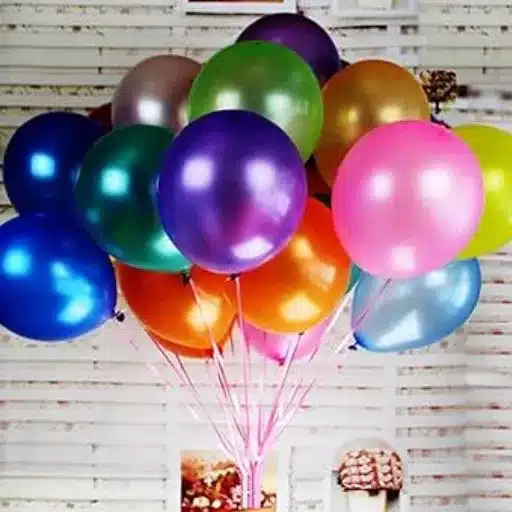
True biodegradable balloons cost 10-30% more than standard latex. If a balloon is sold as “eco” at a lower price than standard latex, the claim is almost certainly fake.
| Quantity | Price per Balloon | Typical Source |
|---|---|---|
| 1-50 | 0.50−0.50−1.50 | Retail, specialty stores |
| 50-200 | 0.30−0.30−0.75 | Online retailers, DTC brands |
| 200-1,000 | 0.20−0.20−0.45 | Wholesale, manufacturer-direct |
| 1,000+ | 0.10−0.10−0.30 | Manufacturer-direct only |
Custom printing typically adds 0.10to0.10to0.50 per balloon depending on color count and complexity. International shipping adds 0.05to0.05to0.20 per balloon depending on freight method.
Frequently Asked Questions
Are all latex balloons biodegradable?
No. Only natural latex balloons made from rubber trees (Hevea brasiliensis) are genuinely biodegradable. Many “latex” balloons on the market contain synthetic latex blends that don’t decompose the same way. Check the product page for the source.
How long do biodegradable balloons take to decompose?
Natural latex balloons decompose in 6 months to 4 years under typical soil and oxygen conditions, depending on temperature, sunlight, and microbial activity. That’s faster than oak leaves but slower than apple cores. Biodegradable doesn’t mean instant.
Can I buy biodegradable balloons in bulk for events?
Yes. Manufacturer-direct suppliers offer the best per-unit pricing on bulk orders of 500 balloons or more. Expect lead times of 2-6 weeks and minimum order quantities starting at 500 units. Request a quote at least three weeks before your event.
Are biodegradable balloons more expensive than regular ones?
Yes, typically 10-30% more. The natural materials and certification processes cost more to produce. If you see an “eco” balloon priced below standard latex, treat the claim as suspect.
Do biodegradable balloons hold helium as well as regular latex?
Yes. Natural latex balloons hold helium for 12-24 hours, the same as standard latex. Pre-treating with Hi-Float extends float time to 2-3 days, just as it does with non-eco balloons.
What’s the difference between biodegradable and compostable balloons?
All compostable balloons are biodegradable, but not all biodegradable balloons are certified compostable. Compostable means the balloon will break down into non-toxic components in a composting environment within a specified timeframe (typically tested against ASTM D6400). Biodegradable is a broader term that requires less verification.
Your Next Step
The right place to buy biodegradable balloons depends on what you’re buying them for. For small events and gifts, a specialty eco-marketplace will serve you well. For weddings and birthdays, an established eco-friendly brand or local florist will deliver quality and color matching. For corporate events, school fundraisers, or any order over 500 units, manufacturer-direct is almost always the smarter choice on price, certifications, and customization.
Whichever route you choose, verify the claim. Ask for the rubber source. Look for a named certification. And remember that biodegradable still requires responsible disposal, never a release.
If you’re planning a larger event and want certified biodegradable balloons at wholesale pricing, contact Trading Shanxi for a custom quote. We’re a manufacturer, which means we can answer the hard questions about materials, certifications, and lead times directly. For a broader look at sustainable balloon options across the full category, see our complete guide to eco-friendly balloons or our sustainable balloon options buyer’s guide.