


There is no federal US ban on balloon releases, but as of 2026 twelve states restrict intentional outdoor releases: California, Connecticut, Delaware, Florida, Hawaii, Maine, Maryland, Nevada, Rhode Island, Tennessee, Virginia, and Louisiana. Louisiana is the newest, effective August 1, 2026. Penalties range from 5to5to25 per balloon up to jail time, and many cities add their own ordinances. Releases remain legal statewide in Ohio, Kentucky, and Indiana. If you are planning a release, the safest assumption is that it is illegal or will be soon.
That gap between what people assume and what the law actually says is where most of the trouble starts.
Priya found out the hard way. As the volunteer coordinator for a Virginia middle school, she spent three weeks organizing a “release 100 balloons” event for the end of the school year. A parent emailed her a link to the state code, and Priya discovered that Virginia bans the release of any non-biodegradable balloon, even one, at 25perballoon.Her100−balloonplanwasa25perballoon.Her100−balloonplanwasa2,500 fine and a broken tradition in one email.
This guide gives you the current picture so you never get surprised the way Priya was:
-
- Which states ban balloon releases, and what each law restricts
- The penalties, from per-balloon fines to jail time
- The exemption that most people misread as a loophole
- The municipal and international rules below the state level
- What to do instead, so the moment still feels meaningful
Because we make balloons, we can talk about releases honestly, including the parts that don’t flatter our own industry.
Key Takeaways
- Twelve states restrict balloon releases as of 2026, led by Louisiana’s Act 196, which took effect August 1, 2026 and covers planned releases of 12 or more balloons
- The laws come in three shapes: total bans on intentional releases, count-threshold bans (usually 10 to 20 balloons), and material bans on non-biodegradable balloons
- Penalties run from 5to5to25 per balloon up to a $1,250 fine and 30 days in jail, and organizers can be liable for releases they arrange
- An exemption for “biodegradable” balloons isn’t permission to release them; the science shows they degrade slowly and still harm wildlife
- Releases remain legal statewide in Ohio, Kentucky, and Indiana, but cities, parks, beaches, and venues often ban them anyway
Planning an event and need a release-free plan that still wows a crowd? Explore our custom balloon solutions and ask us how to build a statement piece that stays anchored.
Balloon Release Laws by State: The Complete 2026 Table
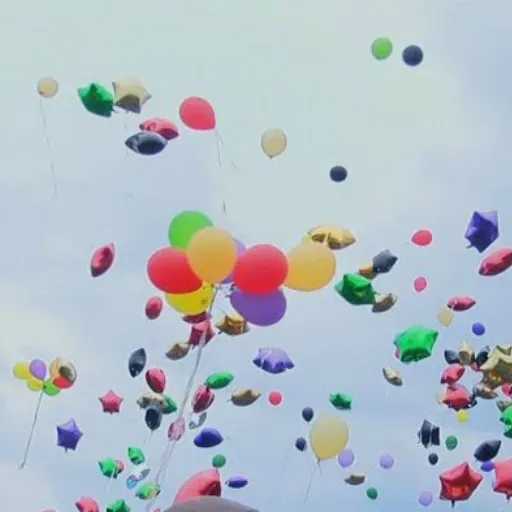
The laws aren’t uniform, which is why a single news headline rarely tells you whether your event is legal. They come in three shapes.
Some ban any intentional release. Some set a count threshold, usually 10 or 20 balloons. Others ban specific materials, like anything that won’t degrade quickly. A few do more than one.
Here is the current state-by-state picture. This is informational and not legal advice, and the details change as new sessions pass, so confirm the rule in your own state before you plan.
| State | What’s restricted | Penalty | Notes |
|---|---|---|---|
| California | Mass releases restricted (state law plus many city ordinances) | Varies | The municipal layer does much of the work |
| Connecticut | Intentional releases banned | Fine | The 6th state to act, in May 2026 |
| Delaware | Mass release restrictions | Civil penalty | Early adopter |
| Florida | Releasing 10 or more lighter-than-air balloons in 24 hours | Noncriminal littering infraction | No balloon has yet qualified for its biodegradable exemption |
| Hawaii | Intentional releases banned | Fine | Driven by marine-debris concerns |
| Maine | Mass release restrictions | Civil penalty | |
| Maryland | Knowing release; mass releases of 10 or more | Community service or an educational video; mass releases up to $100 per violation | Environment Code §9-2301 |
| Nevada | Mass release restrictions | Civil penalty | |
| Rhode Island | Balloon release restrictions | Fine | |
| Tennessee | Balloon release restrictions | Fine | |
| Virginia | Any non-biodegradable or non-photodegradable balloon, or one needing more than 5 minutes to degrade, in any number | $25 per balloon | Code §29.1-556.1, since 2021 |
| Louisiana | Intentional outdoor release; planned releases of 12 or more balloons | 1st: 500and8hoursoflittercleanup.2nd:500and8hoursoflittercleanup.2nd:900 and 20 hours. 3rd: up to $2,500, 80 hours, and a 1-year license suspension | Act 196 (HB 851), effective August 1, 2026 |
Two things stand out in that table. First, the thresholds are low. Louisiana’s 12-balloon rule and Florida’s 10-balloon rule mean a modest classroom or memorial release can cross the line. Second, the penalties compound. Louisiana’s fines escalate with repeat offenses, and Virginia charges per balloon, so the cost scales with how many you let go.
Read the Virginia statute directly at law.lis.virginia.gov, and the Louisiana law at the Louisiana State Legislature.
The Three Kinds of Balloon Release Law
Knowing which category your state falls into tells you how much room you have, if any.
Total bans on intentional release
A handful of states, including Virginia and Oregon, ban intentional releases outright. Virginia’s law is the strictest version. It prohibits releasing a balloon that is non-biodegradable or non-photodegradable, or that needs more than five minutes of contact with air or water to degrade. That applies to even a single balloon. Oregon goes further on the penalty side, treating an intentional release as offensive littering with up to 30 days in jail and a $1,250 fine.
If you live in a total-ban state, the answer to “can I do a release?” is simply no.
Count-threshold bans
Most states target mass releases rather than single balloons. Louisiana sets the line at 12 or more balloons. Florida and Maryland use 10. Most count the release of many balloons at one event, location, or time as a single violation, which is why the organizers, not just the people holding the strings, can be on the hook.
Material-based bans
A third group bans specific materials. Virginia’s five-minute degradation test is the clearest example, and it’s also the law that quietly defeats most “biodegradable” claims, because few if any balloons meet it. This is the category to watch if someone tells you a release is fine because the balloons are eco-friendly.
Contact Trading Shanxi Co., Ltd. for quality biodegradable balloons.
States Where Balloon Releases Are Still Legal
Ohio, Kentucky, and Indiana still allow balloon releases statewide, which makes them the states most often cited by release advocates. But “legal” is doing less work here than it sounds.
Even in those states, local rules often apply. New Orleans approved a Mylar balloon ban in 2024, and Louisville, Kentucky, has its own restrictions. Parks, beaches, school districts, and venues routinely prohibit releases on their property regardless of state law, usually because of litter, wildlife, or the cost of cleaning up.
So before you plan a release anywhere, check three levels:
- The state: Does your state ban releases outright, or only in large numbers?
- The city or county: Does a local ordinance add rules the state does not have?
- The venue: Does the park, beach, school, or hall allow releases on its property?
The venue is the one that will actually stop your event.
Proposed and Pending Balloon Release Laws to Watch
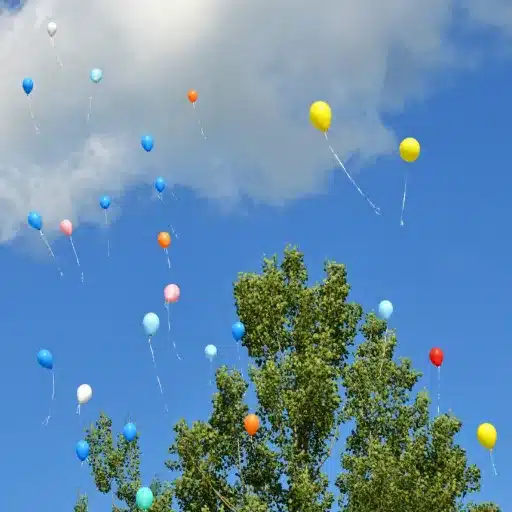
The trend line points one way, toward more states and lower thresholds.
South Carolina’s Bill 3047 would create an offense for intentionally releasing balloons, with a civil fine of up to $50. As written, it would take effect July 1, 2027, with only warnings issued for the first 180 days. Mississippi’s Senate Bill 2328 proposed a $25-per-balloon fine but died in committee in February 2026, a reminder that not every bill becomes law.
If a release is a tradition you care about, don’t bet on the rules staying put. The count of regulated states has moved from a handful to twelve in a few years, and the direction is consistent.
The “Biodegradable Balloon” Exemption Is a Trap
Here is the detail that trips up the most well-meaning planners. Several state laws specifically exempt biodegradable or photodegradable balloons. Louisiana exempts them. Florida’s law contains the same carve-out. On a quick read, that sounds like a green light: use the eco-friendly balloons and release away.
It isn’t a green light, for two reasons.
First, an exemption from a ban isn’t the same as permission to release. It means the specific statute won’t charge you. It doesn’t mean the release is legal under other rules, welcome at your venue, or harmless to wildlife.
Second, the word “biodegradable” is doing less than it appears to. Independent testing found that balloons labeled biodegradable were still largely intact after 16 weeks in industrial compost, freshwater, and saltwater. Florida’s own law notes that no balloon has yet qualified for its exemption, which tells you how narrow that door is.
The honest position, and the one we take as a manufacturer, is that a released balloon is a hazard no matter what it’s made of. It’s still litter that lands somewhere, and it still looks like food to wildlife long before it breaks down. If you want the science, our articles on whether latex balloons are biodegradable and how long a balloon decomposition timeline actually runs cover it in full. The short version: never release, exempt or not.
Municipal Ordinances: The Rules Below the State Level
Cities and counties often move faster than states, and their rules are the ones you are most likely to run into on the ground.
New Orleans banned Mylar balloon releases in 2024. Louisville, Kentucky, restricts releases even though Kentucky has no statewide ban. Beach towns and park authorities commonly prohibit balloons of any kind, both to protect wildlife and to avoid cleanup costs, and many school districts have their own policies.
The practical move is simple. If you’re planning anything involving balloons outdoors, call the venue and ask directly. If the answer is that releases aren’t allowed on the property, you’ve saved yourself a fine and a lot of disappointment.
Balloon Release Laws Around the World
The shift away from releases isn’t just a US story, which is worth knowing if you plan events internationally.
In Australia, the rules are among the toughest. New South Wales makes it an offense to release 20 or more gas-filled balloons at once, with a higher penalty if you release more than 100, as set out in section 146E of the Protection of the Environment Operations Act. Western Australia bans releasing a gas-filled rising balloon outright, with a $5,000 fine. Victoria made helium balloon releases illegal in July 2021, and Queensland followed around September 2023.
The United Kingdom is different. There is no national ban, and the Scottish Government has said it has no plans to create one. Instead, local councils have led the way, with roughly 88 UK authorities, including 25 Scottish councils, banning releases on council land. Enforcement comes through land rules, venue licences, and public entertainment permits rather than a single statute.
The pattern is the same everywhere: the rules tighten, and the direction never reverses.
Why These Laws Exist
The laws aren’t arbitrary, and understanding the reasons makes the rules easier to accept.
Balloons are unusually dangerous debris for wildlife. A 2019 study found that ingesting a balloon made seabirds roughly 32 times more likely to die than ingesting hard plastic, because soft material blocks a bird’s digestive tract instead of passing through. That is a striking number for an item people associate with celebrations.
The litter adds up quickly. The Australian Marine Debris Initiative recorded 27,777 balloon items on beaches over five years starting in 2017, and the UK’s Marine Conservation Society reported a 53.5% rise in balloon litter on UK beaches between 2015 and 2016. Foil balloons add a second problem, because their metallic coating conducts electricity and can short power lines and start fires when it drifts into them.
The laws also work when they are enforced. After Virginia passed its release ban in 2021, monitored beach balloon litter fell from about 240.6 to about 174.9 pieces per mile. Fewer releases meant less debris on the sand.
What This Means for Event Planners, Venues, and Families

If you plan events, this is now a compliance question, not just an ethical one.
For planners and venues, the clean move is to build release-free language into contracts and decor plans from the start. A clause that rules out releases protects your client and your venue, and it removes an awkward conversation later. It also pairs naturally with the responsible disposal habits we cover in our guide to disposing of balloons responsibly.
For families marking a memorial, a graduation, or a gender reveal, the emotional weight is real, and “just don’t do it” isn’t helpful on its own. What helps is a substitute that carries the same meaning. Releasing flower petals, planting a tree, lighting candles, or blowing bubbles can all hold the moment, often more intimately than a release does. Our alternatives to balloon releases walks through more than a dozen options.
For brands and corporate teams, a branded release carries legal and reputational risk at the same time. An anchored, custom-printed installation delivers the same visibility without the fine, the headline, or the litter.
FAQ
Is it illegal to release balloons?
In many US states, yes. Twelve states restrict intentional outdoor releases as of 2026, and several ban them outright. There is no federal ban, but Ohio, Kentucky, and Indiana are now the only states that still allow releases statewide. Local city, park, and venue rules often go further than the state.
What states ban balloon releases?
California, Connecticut, Delaware, Florida, Hawaii, Maine, Maryland, Nevada, Rhode Island, Tennessee, Virginia, and Louisiana restrict releases as of 2026, with Louisiana’s Act 196 taking effect August 1, 2026. Some ban all intentional releases, while others set a threshold of 10 to 20 balloons.
How much is the fine for releasing balloons?
It varies by state. Virginia charges $25 per balloon. Louisiana’s first offense is a $500 fine plus 8 hours of litter cleanup, rising to $2,500, 80 hours, and a possible 1-year license suspension by the third offense. Oregon treats a release as a crime carrying up to a $1,250 fine and 30 days in jail.
Are biodegradable balloons exempt from release bans?
Some laws exempt them, including Louisiana’s and Florida’s. But an exemption isn’t permission to release. Biodegradable balloons still degrade slowly, still land as litter, and still harm wildlife, and Florida’s law notes that no balloon has yet qualified for its exemption.
Can you release balloons at a funeral or memorial?
Only if your state and venue allow it, and many now don’t. A memorial release carries the same wildlife and litter risk as any other. Flower petals, a tree planting, candle lighting, or bubbles are legal, meaningful, and increasingly the preferred choice for families.
Is releasing balloons illegal in the UK or Australia?
In Australia, several states ban releases, including New South Wales (20 or more balloons), Western Australia ($5,000 fine), and Victoria. In the UK, there is no national ban, but roughly 88 local authorities bar releases on council land.
How many balloons can you legally release?
It depends entirely on where you are. Louisiana allows fewer than 12, and Florida and Maryland allow fewer than 10. Some states, including Virginia and Oregon, allow none. In practice, the safest number to release anywhere is zero.
What should I do instead of a balloon release?
Choose a substitute that holds the same meaning: petals, bubbles, seed planting, lanterns used safely, ribbons, or a decorated installation you keep and reuse. It protects wildlife, keeps you compliant, and often feels more personal than a release.
The Bottom Line on Balloon Release Laws
Balloon release laws have moved fast, and 2026 is the strictest year yet. Twelve states now restrict releases, with Louisiana’s Act 196 the newest, and cities, parks, and venues add rules of their own. The laws take three forms: total bans, count thresholds as low as 10 balloons, and material bans that defeat most “biodegradable” claims. Penalties range from 5to5to25 per balloon up to jail time, and organizers can be liable for the releases they plan.
The one dependable answer across every jurisdiction is to never release. Anchor your displays, keep helium balloons indoors where you can, and dispose of everything properly when the event ends. That path keeps you legal, protects wildlife, and still lets you create something spectacular.
If you are sourcing balloons for an event, a store, or a campaign and want a supplier who can help you build a release-free plan and document the materials, get in touch with our team. For the full picture on materials, decomposition, and buying responsibly, our complete guide to biodegradable balloons is the place to start.