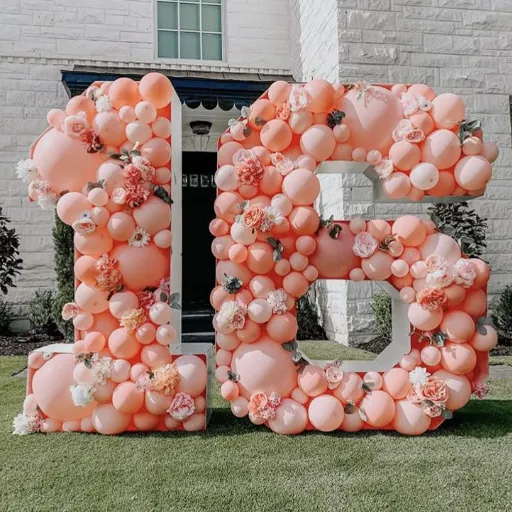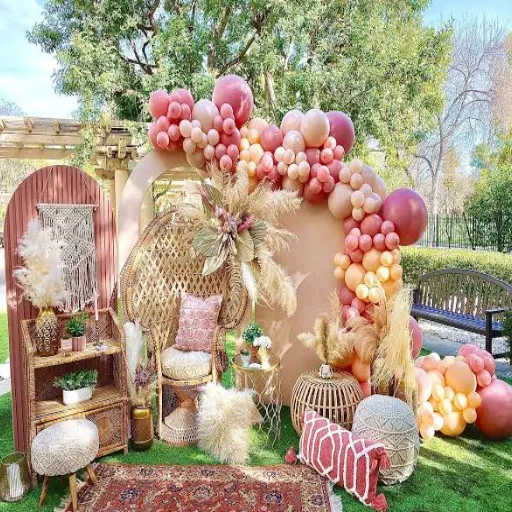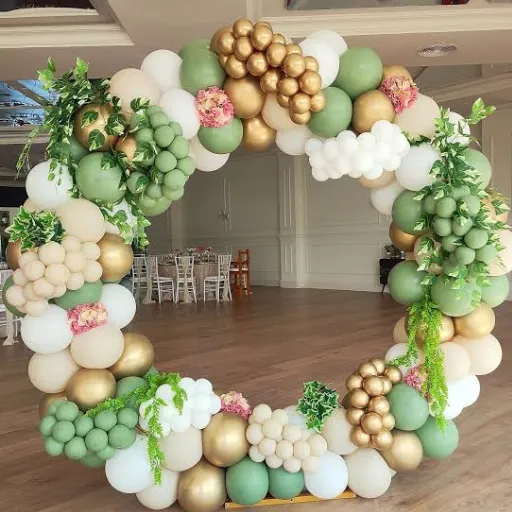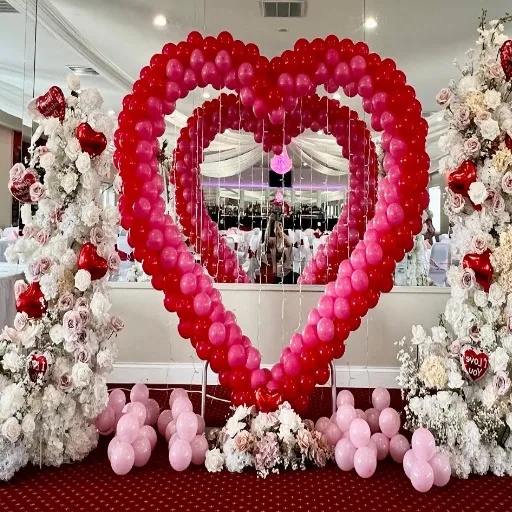

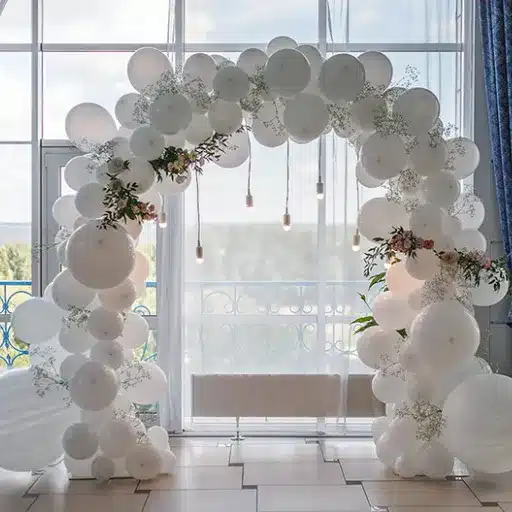
A balloon arch kit is a package that supplies the frame or strip plus the clips, ties, and balloon arch accessories you need to build a balloon arch, and the right one for you depends on your event size, budget, and whether you plan to reuse it. Most kits do not include balloons, so budget for 160 to 200 balloons of 10 to 12 inches to fill a standard arch. Here’s exactly what’s in each type of kit, how many balloons you’ll need, what it costs, and the quality markers that separate a kit that lasts from one that tips over by noon.
That’s the short version. If you’re planning a birthday party, wedding, baby shower, or gender reveal, the longer answer matters, because kits vary wildly.
Some are reusable metal frames that cost $40 and survive a decade of events. Others are $10 plastic strips that you use once and throw away. And the marketing on most boxes does not tell you which one you’re getting.
That’s why we wrote this guide. We’re Trading Shanxi Co., Ltd., a balloon and event-decoration manufacturer that builds and sources arch kits, pumps, and accessories for DIY hosts and event professionals alike. In the sections below, we’ll walk through kit types, a full component breakdown, balloon-count math, a DIY-vs-kit-vs-pro cost table, quality markers from a factory standpoint, and the mistakes that show up in thousands of reviews.
Key Takeaways
- A balloon arch kit supplies the frame or strip, clips, ties, and stability parts, but most kits do not include balloons; plan on buying 160-200 balloons of 10-12 inches separately.
- Kit types range from refill kits under 10toreusableframekitsinthe10toreusableframekitsinthe30-100 range; the frame kit pays for itself after one or two events.
- A 10-foot arch needs about 70-100 balloons for a standard look and 100-150 for a fuller organic look.
- Assembly takes 1-3 hours with a kit versus 3-5 hours building from scratch, and professional install runs 250−250−1,500.
- The top kit failures are tipping over, water bags leaking, fiberglass splintering, and over-inflation in heat, all of which are preventable.
What Is a Balloon Arch Kit?
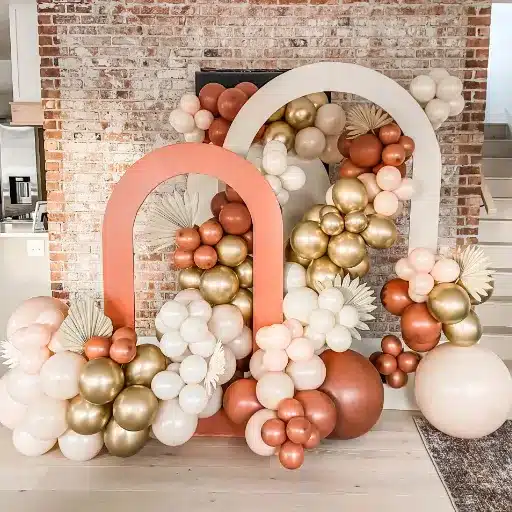
A balloon arch kit is a ready-made package that provides the structural support and attachment hardware needed to build a balloon arch. A typical kit includes fiberglass rods or a PVC frame, weighted bases, water or sand bags, balloon clips or a strip, and sometimes a pump and tying tools. Balloons themselves are usually sold separately.
The reason kits exist is simple: building an arch from scratch takes planning, math, and a shopping list that’s easy to get wrong. A kit bundles matched supplies into one order, which cuts down both assembly time and the odds of a part missing at the worst moment.
Consider what happened to Sarah, who ordered a $12 discount kit for her daughter’s fifth birthday and got it with half the clips missing and water bags so thin they leaked in the car. By noon, the arch had tipped into the dessert table. The kit saved her $40, but it cost her the party photos.
A few quality markers would have caught every problem before she ordered. Browse our complete balloon accessories guide for a broader look at the tools this article covers.
The Four Kit Types
Kits are not created equal, and the marketing names on product pages rarely match. Here’s the honest breakdown.
| Kit Type | What’s Included | Typical Price | Best For |
|---|---|---|---|
| Refill kit | Replacement rods, clips, or bags for an existing kit | Under $10 | Replacing worn parts |
| Starter kit | Basic frame or strip, clips, minimal stability parts | 10−10−30 | A single indoor event |
| Complete kit | Frame, bases, water bags, clips, knotters, pump, instructions | 20−20−60 | First-time builders who want one order |
| Premium frame kit | Steel or high-strength fiberglass frame, thickened bags, multi-config frame | 40−40−100+ | Reuse, outdoor events, organic arches |
Air-Filled vs. Helium Arches
Almost every kit on the market assumes an air-filled arch, and that’s the right choice for most people. Air-filled arches are cheaper to build, last 2 to 3 days indoors with quality latex (up to a week with premium balloons), and need no tank.
A helium arch floats only 3 to 6 hours untreated, costs more per balloon, and needs the arch tethered to the floor or ceiling. As Orlando Sentinel’s buying guide notes, air is the default because it’s budget-friendly and longer-lasting. For the full picture on structure options, our balloon decorations guide covers arches, garlands, columns, and backdrops.
What’s Included in a Balloon Arch Kit?
Here’s what’s inside a balloon arch kit, component by component, written the way a manufacturer thinks about it: what each part does, why it matters, and what’s worth paying more for.
| Component | What It Does | Why It Matters | Worth Upgrading? |
|---|---|---|---|
| Fiberglass or steel rods | Form the arch skeleton | Steel resists wind; fiberglass bends without breaking | Yes, for outdoor or reuse |
| PVC bases | Hold the rods upright | Flimsy plastic cracks under load | Yes, look for reinforced bases |
| Water or sand bags | Anchor the base | An under-filled bag means a tipped arch | Yes, thick seams and 80% fill |
| Balloon clips or rings | Attach balloons to the frame | Clips that slip ruin a full arch | Yes, if clips are brittle |
| Knotters | Tie balloon necks | Saves fingers on 100+ balloons | Nice to have |
| Pump | Inflate balloons | Manual pumps tire you out; electric saves hours | Yes, consider electric |
| Ground ropes and nails | Secure outdoor arches | Keeps the arch from blowing away | Yes, for outdoor use |
| Instructions | Assembly steps | Missing or vague instructions cause mistakes | Check reviews |
Frame and Supports
The balloon arch frame is the backbone of the kit. Typical frame kits ship 15 to 16 folding fiberglass rods, 2 to 3 PVC bases, and 2 to 3 water or sand bags. Cheap kits use thin rods that splinter when bent too aggressively; better kits use high-strength fiberglass that flexes without cracking, or steel supports for outdoor use. Wear gloves and inspect rods for cracks before bending, because a splintered rod can fail mid-build.
Balloon Attachment
You attach balloons to the frame with clips, rings, or a strip. Clips work on frame kits and grip the knot cleanly. Strips and garland kits use a pre-cut plastic strip with holes, which speeds up assembly but shapes the arch differently. If you plan to build garlands rather than arches, see how to use a balloon arch strip.
Inflation
Manual pumps are standard and work fine for a small arch. For 100-plus balloons, an electric pump saves an hour or more of cranking. Many complete kits include a basic manual pump, but an electric pump is the upgrade most reviewers wish they’d bought first.
Stability Extras
Water bags, sand bags, ground ropes, and nails are what keep an arch standing. Fill each water bag to at least 80 percent capacity, roughly 2 gallons per base, or a full balloon load will tip the arch. For outdoor events, use ground stakes and ropes in addition to the bags. If you’re hanging a wall arch instead, Command hooks for balloon garlands are the reliable mounting option.
What’s NOT Included
Most balloon arch kits do not include balloons, and that’s the budget item people forget. A standard arch needs about 160 to 200 balloons of 10 to 12 inches. Some kits skip the water bags or include undersized ones. Check the product description before you order, and add a spare pack of clips and bags to your cart so you’re not scrambling on event day.
Want to see how the pieces work together before you commit? Explore our balloon accessories collection for pumps, clips, strips, and water bags sold individually.
How Many Balloons Do You Need for a Balloon Arch?
The short answer: match your balloon count to the arch length and how full you want it to look. Here’s the chart, based on the sizing guidance used by professional decorators.
| Arch Length | Standard Look | Full/Organic Look |
|---|---|---|
| 5 ft | 30-40 balloons | 45-60 balloons |
| 8 ft | 60-70 balloons | 80-100 balloons |
| 10 ft | 70-100 balloons | 100-150 balloons |
| 12 ft | 90-110 balloons | 120-160 balloons |
| 16 ft | 130-160 balloons | 170-210 balloons |
| 20 ft | 180+ balloons | 220+ balloons |
Balloon Size Mix
A flat row of identical 11-inch balloons looks thin and amateur. For depth, mix sizes. Use 11-inch balloons as the base layer, add 5-inch fillers to tuck into gaps, and drop in 16- to 18-inch accents for the organic, modern look. This is the same mix professional decorators use, and it’s why their arches look full at lower total counts.
The Quick Formula
If your arch falls between the lengths above, use this formula: arch length in inches, divided by balloon diameter in inches, times 0.87. For a ring-and-clip build, a common rule from balloon arch kit suppliers is 128 balloons (32 rings of 4) for an arch, or 192 (48 rings) for an arch plus two columns.
Add 10 to 15 Percent Extra
Balloons pop. Balloons deflate. Balloons arrive with defects. Add 10 to 15 percent to your count so you have spares on hand, especially in warm weather, where dark balloons can pop in direct sun.
For a 10-foot arch, that means ordering 110 to 120 balloons even if the chart says 100.
How Much Does a Balloon Arch Kit Cost?
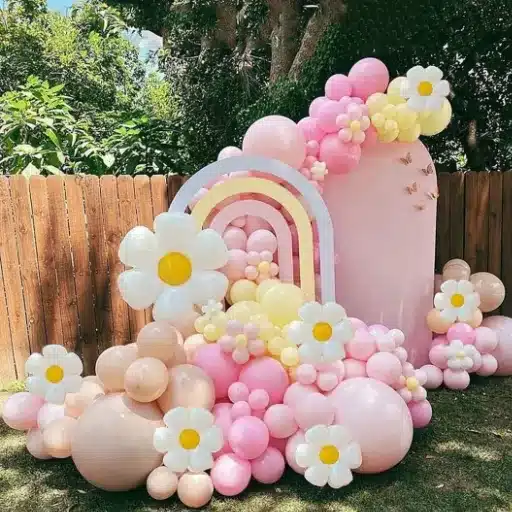
The honest answer is that a balloon arch kit is almost always cheaper than hiring a professional and often cheaper than building from scratch, once you count your time. According to PartySparkz’s cost breakdown, DIY materials alone run 35to35to150. Here’s the full comparison.
| Option | Materials Cost | Time | Quality/Risk | Best For |
|---|---|---|---|---|
| DIY from scratch | 35−35−150 (150−150−400 with frame and pump) | 3-5 hours | High risk of wrong parts | Builders who already own tools |
| Balloon arch kit | 15−15−100+ | 1-3 hours | Low risk, matched parts | Most first-time hosts |
| Professional install | 250−250−1,500+ | 0 hours (you watch) | Guaranteed result | Weddings and large corporate events |
Kit Price Tiers
Within the kit range, balloon arch kit prices split into clear tiers. Refill kits run under $10 and are just replacement parts.
Starter balloon arch kits run $10 to $30 and work for a single indoor event, but they use thinner balloons and simpler bases that pop and tip more easily. Complete kits run $20 to $60 and include the pump, knotters, and instructions. Premium frame kits run $40 to $100 and are the ones worth buying if you host events more than once or two.
Hidden Costs
The box price is not the final price. Add balloons (usually the biggest line item), a pump if the kit lacks one, replacement water bags if the included ones are thin, and spare clips. Cheap balloon arch kits in the 15 to 30 range save money upfront but use thinner latex that deflates early and bases that crack, which is why the practical cost of a cheap kit can exceed a premium kit you use twice.
If you’re weighing building a PVC frame instead of buying a kit, our PVC pipe arch frame guide breaks down the materials and labor honestly. For the true DIY-from-scratch route, how to build a balloon arch without a stand covers a no-stand method that needs almost no hardware.
Frame Kit vs. Strip/Garland Kit: Which Should You Buy?
This is the fork in the road, and most buyers pick wrong because the box photos look similar. Decide based on shape control, reuse, and budget. Watching a build helps, too, so here’s a quick walkthrough of the assembly process before you commit to a kit type.
| Factor | Frame Kit | Strip/Garland Kit |
|---|---|---|
| Shape control | Precise arch and column shapes | Loose, wavy garland shape |
| Reuse | Yes, disassemble and store | Mostly single-use |
| Outdoor stability | Strong with ballasted bases | Needs anchors to hold shape |
| Photo quality | Clean, defined arch | Organic, lush look |
| Price | 20−20−100 | 10−10−30 |
| Best for | Arches, backdrops, columns, events | Budget garlands and quick builds |
When a Frame Kit Wins
Choose a frame kit when you want a defined arch shape, need it to survive outdoors, or plan to use it more than once. A frame kit also shines for photos, because the shape stays crisp for the full 2 to 3 days the balloons last. Multi-configuration frames convert between an arch, a round backdrop, and columns, which makes one kit cover a whole event.
When a Strip/Garland Kit Wins
Choose a strip or garland kit when you’re on a tight budget, building a quick indoor garland, or deliberately going for the soft organic look. Strips are faster to load than clips and cost a fraction of a frame kit. Just know they’re mostly single-use, and they produce a draped shape rather than a standing arch. For the technique behind these, our balloon decorating strip guide walks through the full method.
How to Choose a Quality Balloon Arch Kit
Since we manufacture and source these balloon arch kits, we can tell you exactly what to inspect before you buy. These are the quality markers we check in our own factory QC, and they apply to any kit you’re considering.
Frame Materials
Look for steel or iron supports for outdoor or high-use kits. For fiberglass, the marker of quality is a rod that bends a full curve without splintering. Inspect for cracks before bending, and wear gloves. Thin, brittle rods are the number one cause of mid-build failure.
Base and Ballast
Quality bases are reinforced PVC that won’t crack under a full balloon load. The water bags should have thick, heat-sealed seams and hold at least 2 gallons. Fill them to 80 percent at minimum. Some kits cheap out on bags, and a tipped arch is the result.
Balloon Quality
A kit that includes balloons is a red flag to inspect closely. Quality latex is thick, stretchy, and holds air for days; cheap latex is thin, prone to pinhole leaks, and deflates overnight. Check the balloon size distribution too, because a mix of sizes is what makes an arch look full.
Hardware and Accessories
Clips should grip a balloon knot firmly without slipping. Knotters and pumps should feel solid, not flimsy. If the kit lists an electric pump as an option, that’s a sign the manufacturer knows what builders actually buy.
Adjustability and Multi-Configuration
The best kits let you change the shape. A frame that builds an arch, a round backdrop, and columns from one set of parts is worth more than a fixed single-shape kit, especially for hosts who repeat events.
Quality checklist. Look for a kit that hits all seven of these:
- Steel or thick fiberglass frame that bends without splintering
- Reinforced bases that won’t crack under a full load
- Thick water bags with at least 2-gallon capacity
- Quality latex balloons that are thick and stretchy
- Clips that grip a knot firmly
- Electric pump option available
- Multi-configuration frame (arch, backdrop, columns)
If a kit checks all seven, you’re buying the good one.
Common Balloon Arch Kit Mistakes (and How to Fix Them)
These are the failures that show up in reviews over and over. Every one of them is preventable.
The Arch Tipping Over
This is the most common failure, and it’s almost always a ballast problem. The arch is top-heavy by design, so under-filled bags or lightweight bases let it fall. Fill each water bag to 80 percent, use ground stakes and ropes outdoors, and lean the frame supports inward slightly so the weight centers over the base.
Marcus, a wedding planner in Austin, learned this lesson at an outdoor June ceremony. His 12-foot arch stood for exactly one song before a gust of wind toppled it into the table holding the cake. The kit had included water bags, but they were only a third full.
Now his team fills every bag to 80 percent and stakes outdoor arches as a rule, no exceptions. It’s the difference between a backdrop and a hazard.
Water Bags Leaking or Tearing
Thin bags leak at the seams, usually on the drive to the venue. Check seams when the kit arrives. Sand works as a backup ballast, and a strip of duct tape seals small leaks in a pinch. For repeated events, buy replacement bags with thicker material.
Fiberglass Rods Splintering
Bent too aggressively, fiberglass rods splinter into fine, itchy splinters. Wear gloves, bend slowly and evenly, and inspect rods for cracks before you start. If a rod feels brittle, replace it rather than forcing it.
Over-Inflating in Heat
Dark balloons over-inflated in warm weather pop in direct sun. Under-inflate slightly for outdoor events, keep dark colors out of direct sunlight, and have spares on hand. Air-filled arches also last longer in cooler, shaded spots.
Cheap Plastic Bases Cracking
Under the load of 100-plus balloons, cheap plastic bases crack at the rod socket. Reinforced PVC bases avoid this, and spreading the weight across more bases helps too.
Missing or Broken Parts on Arrival
Inspect the kit the day it arrives, not the day of the event. Count rods, clips, and bags against the product description, and contact the seller immediately if anything is missing or broken. A quick inspection is cheaper than a panic order for rush parts.
Are Balloon Arch Kits Reusable?

Yes, if you buy the right type. Frame kits are built to disassemble, store, and rebuild. Strip and garland kits are mostly single-use at 10to10to30, which is fine for one event but wasteful if you host regularly.
Here’s the math for repeat hosts. A reusable balloon arch kit runs $ 30 to $ 50. A single-use strip kit runs about $10 per event.
If you host two events a year, the frame kit pays for itself after your first or second use, and from then on you only buy balloons. That’s why event companies stock frame kits instead of buying strips each time.
Lily runs Bright Events, a decorating company that books more than 40 events a year. Two years ago she traded her single-use strip kits for reusable frame kits and a stock of spare water bags. The frames paid for themselves within the first season, and her tip-over rate dropped to zero. For her, the reusable frame kit wasn’t a purchase; it was an investment in every event she’d book afterward.
There’s an eco angle here too. Pair a reusable frame with biodegradable latex balloons, and you have an event toolkit that produces almost zero waste: the frame is reused, and the balloons break down naturally instead of sitting in a landfill. It’s the sustainable setup we recommend to every client who asks about reducing their event’s footprint.
For Event Planners and Retailers (B2B Sourcing)
If you’re stocking kits for a business, the buying criteria change. You care less about one event and more about consistency, spare parts, and cost per use.
What to stock: frame kits across the common sizes (8, 10, and 12 feet), strip kits for budget garlands, electric pumps, and a steady supply of spare clips, water bags, and replacement rods. The last two are the parts that wear out, and having them on hand turns a one-time customer into a repeat one.
Quality-control criteria: verify rod thickness and flex, bag seam strength, clip grip, and latex thickness before you commit to a supplier. Ask for material samples and, for custom events, check whether the supplier offers branded colors and logo printing. Confirm minimum order quantities and lead times so you can plan stock around your event season.
The sourcing question: buying kits direct from a manufacturer usually beats retail pricing at scale, and it’s the only route to custom colors and packaging. As a manufacturer ourselves, we build kits and accessories in the sizes, colors, and volumes event businesses actually order.
Ready to source for your business? Contact our team for bulk pricing, custom balloon arch kits, and sourcing support tailored to your event calendar.
Balloon Arch Kit FAQ
Do balloon arch kits include balloons?
Most balloon arch kits do not include balloons. Budget for about 160 to 200 balloons of 10 to 12 inches to fill a standard arch, plus 10 to 15 percent extra for pops and defects.
How many balloons do I need for a 10-foot arch?
A 10-foot arch needs about 70 to 100 balloons for a standard look and 100 to 150 for a fuller organic look. Add 10 to 15 percent extra so you have spares on hand.
Are balloon arch kits reusable?
Frame kits are reusable and can be disassembled and stored between events. Strip and garland kits are mostly single-use. A reusable frame kit pays for itself after one or two events.
How do you keep a balloon arch from falling over?
Fill every water bag to at least 80 percent, roughly 2 gallons per base, and add ground stakes and ropes for outdoor events. An under-filled bag is the most common cause of a tipped arch.
Conclusion
Buying a balloon arch kit comes down to five decisions: pick the right kit type, budget for balloons and a pump, match the balloon count to your space, buy on quality markers rather than price, and reuse the frame if you host more than one event. Nail those, and the kit is the cheapest, most reliable route to a professional-looking arch.
A good kit beats both the listicle “winners” and DIY guesswork, because the hard part was already solved by the manufacturer: matched parts, sensible ballast, and instructions that work. Choose the kit that fits your event, budget for the balloons, and give yourself 90 minutes before guests arrive.
At Trading Shanxi Co., Ltd., we build balloon arch kits, pumps, clips, and accessories for DIY hosts and event professionals around the world. Explore our balloon arch kits and accessories to see what fits your next event, or contact us for custom sizes, branded colors, and bulk orders.