
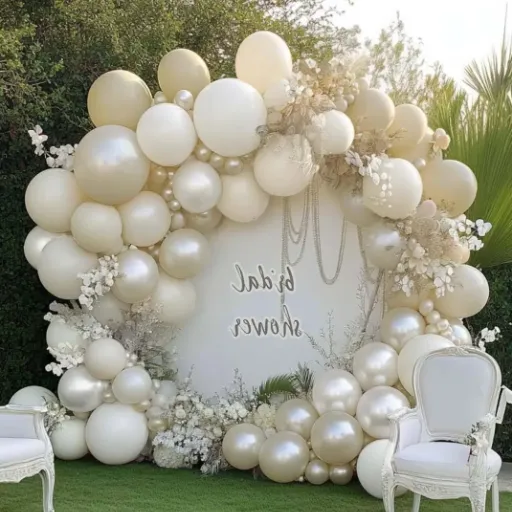
A wedding balloon arch is usually 7 to 8 feet tall and 6 to 8 feet wide. In 11-inch latex it needs roughly 6 to 10 balloons for every foot of curve, and it costs about $50 to $150 in loose materials, around $129 as a ready-made kit, or $300 to $1,500 professionally installed.
Those four numbers settle most of the planning. Height comes first because guests duck under anything lower than seven feet. Width comes second because it decides how many balloons you buy. Budget comes third, and it is the one most couples get wrong, because the arch they priced and the arch they need are rarely the same size.
Here’s the trap: the width you measure isn’t the length you build.
A ceremony arch that spans 8 feet has a balloon run closer to 10 feet once you follow the curve, and a 10-foot span can carry 12 to 14 feet of balloons. Order for the span and you’ll come up short on the day. Order for the run and you’ll have a few spares, which is exactly where you want to be.
This guide gives you the numbers in the order you need them: height and span, balloon count, style, budget, build-or-book, and the venue rules that can overrule all of it.
Key Takeaways
- A ceremony arch is 7 to 8 feet tall and 6 to 8 feet wide. Doorway arches run 7 to 9 feet tall by 6 to 8 feet wide.
- Measure the span, then expect 1.2 to 1.4 times that length in balloon run. A 10-foot span is a 12 to 14-foot curve.
- Budget 6 to 10 balloons per foot for 11-inch latex, plus 10 to 15% spares.
- Expect roughly $50 to $150 DIY, about $129 for a 10-foot kit, or $300 to $1,500 installed.
- Book a decorator 4 to 8 weeks out and order custom printed balloons 3 to 4 weeks out.
What Is a Wedding Balloon Arch?
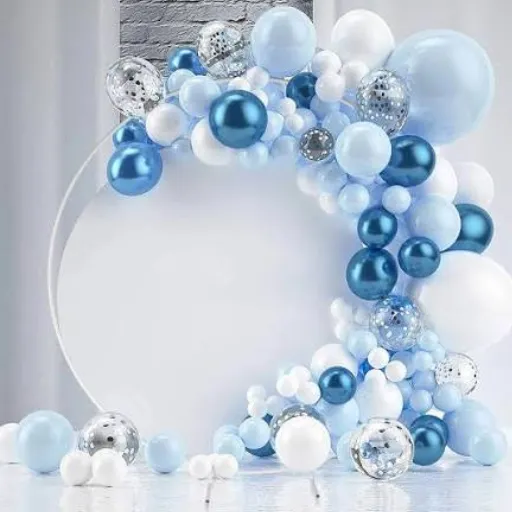
A wedding balloon arch is a curved balloon structure, usually air-filled latex on a frame or strip, that frames a ceremony, an entrance, or a photo backdrop. It isn’t the same purchase as a balloon garland, and the difference matters before you shop.
Three placements cover almost every wedding:
- Ceremony arch. At the altar or at the head of the aisle. Seen for 20 to 40 minutes and in every wide photograph.
- Reception backdrop. Behind the sweetheart table, the cake, or the photo booth. Seen for hours.
- Entrance or walkway. At the door, or repeated as a tunnel along a path. Seen in passing and in arrival photos.
The honest answer to “is this right for my wedding?” is that an arch suits couples who want volume and color for less than a full floral installation. It doesn’t suit venues that forbid attachment points or restrict what can be brought in. Check the venue before you choose a design. A freestanding frame solves most attachment problems, but it has to fit through the door.
If you are still deciding between the two formats, our comparison of covers where each one earns its cost.
Wedding Balloon Arch Sizes and Dimensions
Size is the first decision, and it is the one competitors skip. Here are the working numbers.
Height. Set the apex at 7 to 8 feet for a ceremony or entrance arch. Seven feet is the floor: below that, tall guests duck and photographs show people stooping. Go to 8 feet if the couple is tall or if the photographer needs headroom above them.
Width. A ceremony entrance is 6 to 8 feet wide. A photo backdrop or dessert table runs 8 to 10 feet. A stage or full ceremony backdrop runs 12 to 15 feet, and a grand entrance can reach 15 to 20 feet. As a rule of thumb, width sits at 60 to 80% of height.
Run length. This is the number that saves you a second order. A curved arch uses more balloon than its span. A 10-foot span measures 12 to 14 feet along the curve. Multiply your span by 1.2 to 1.4 and buy for the result.
Ceiling clearance. Leave 12 inches above the highest balloon, with 6 inches as the absolute minimum. An 8-foot ceiling therefore caps a freestanding arch at about 6.5 to 7 feet. In a low room, a flat-topped arch peaking at 5 to 6 feet looks deliberate. A tall arch that touches the ceiling looks like a mistake.
Depth. An organic garland is 10 to 14 inches deep, so it needs 3 to 4 feet of floor space at the base. Check that against the aisle width before you commit.
The count table below converts span into balloons. Measure the span, read across, then add 10 to 15% for breakage and inflation differences.
| Arch span | Approx. curve | 5-inch balloons | 11-inch balloons | 16-inch balloons |
|---|---|---|---|---|
| 4 ft | 5 to 6 ft | 40 to 50 | 25 to 35 | 12 to 16 |
| 6 ft | 7 to 8 ft | 60 to 75 | 40 to 50 | 18 to 24 |
| 8 ft | 10 to 11 ft | 80 to 100 | 55 to 70 | 24 to 32 |
| 10 ft | 12 to 14 ft | 100 to 125 | 80 to 100 | 30 to 40 |
| 12 ft | 14 to 17 ft | 120 to 150 | 95 to 120 | 36 to 48 |
| 15 ft | 18 to 21 ft | 150 to 185 | 115 to 145 | 45 to 58 |
| 20 ft | 24 to 28 ft | 200 to 250 | 155 to 195 | 60 to 80 |
Counts assume a single-row arch. Double the figure for a two-row arch. Source: .
A worked example. An 8 by 8-foot ceremony arch is a 10-foot span and an 11-foot curve. At 7 balloons per foot with 11-inch latex, that is 77 balloons. Add 15% for spares and you order about 90. That single calculation is the difference between a full arch and a thin one.
For the full size-by-size method, including half arches and doorways, see .
Seven Wedding Arch Styles and Where Each One Works
Seven formats cover nearly every wedding. Each one below lists its typical size, difficulty, and best placement, so you can match the look to the logistics rather than the other way round.
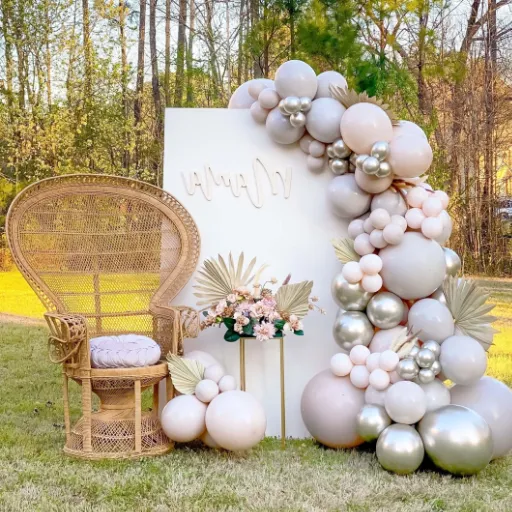
1. Organic garland. An asymmetric, freeform cluster built on a strip. This is the dominant look for 2026 and the most forgiving to build, because nothing has to line up. It is also the most balloon-hungry: expect 20 to 30% more balloons than a structured arch of the same size. Best for ceremony backdrops and photo walls.
2. Classic spiral. Four-balloon clusters wrapped around a frame. Cheaper per foot, quicker to build, and the most traditional. A full semicircle reads older than an asymmetric shape, so use it where the venue is formal or the theme calls for it.
3. Half arch. One side only, rising from the floor. It suits small venues, narrow aisles, and rooms where a full arch would block a view. It uses roughly half the balloons of a full arch.
4. Floral-fused. Balloons with fresh, dried, or artificial flowers worked through the base and one side. This is the fastest way to move an arch from party to wedding, and it is covered in its own section below.
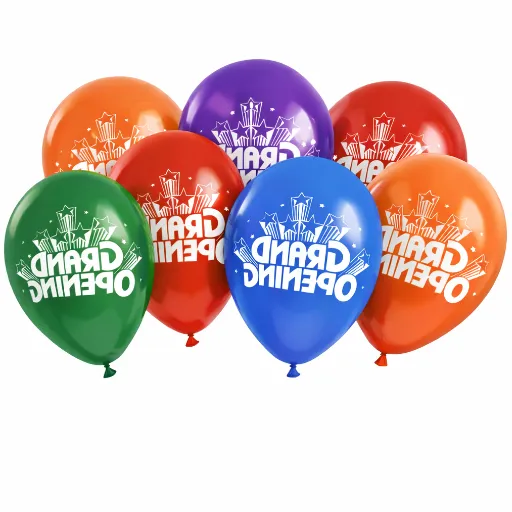
5. Monogram or printed. Names, initials, or a date printed onto the balloons themselves. Strong for couples who want the arch to appear in the photographs of the couple, not just the guests. We print these to order, and the lead time is the one part of the plan you cannot compress.
6. Tunnel or walkway. Repeated arches along an aisle or entrance path. Each unit is cheap; the cost is in the repetition and the install time. Good for outdoor ceremonies where the path is the main event.
7. Cloud or ceiling cluster. Balloons floated or fixed above head height. Spectacular in tall rooms and impossible in most others, because it usually needs rigging permission and a ladder crew.
Most couples land on the organic garland or the floral-fused version, because both forgive the imperfections that show up on the day. The structured spiral and tunnel formats reward precision and punish a rushed install. Create eye-catching balloon arches with Trading Shanxi Co., Ltd.
Choosing a Color Palette for a Wedding Arch
Color is where an arch either reads as a wedding or as a children’s party. The difference is rarely the balloons. It is the number of colors and the finish.
Four palettes do most of the work:
- Ivory, champagne, and blush. The safest choice, and the most photographically reliable. Warm whites stay warm under flash and under evening light.
- White on white. All-white arches photograph beautifully and hide poorly made clusters, because the eye has no color contrast to catch a gap. Use pearl or matte finishes so the shapes still read.
- Sage, ivory, and eucalyptus. Works with greenery, barns, and garden venues. Add a single metallic only if the table settings already carry one.
- Terracotta, sand, and nude. A boho palette that suits autumn dates and outdoor settings. It can look flat in overcast light, so keep one lighter tone in the mix.
Hold the arch to two to four colors plus one metallic accent. A spread of every pastel is the single most common reason a balloon arch looks amateur, and it is the complaint behind most of the “are balloon arches tacky” threads online.
Apply a 60-30-10 split: one dominant color, one secondary, one accent. If the arch sits behind the couple, keep the dominant tone lighter than their outfits so they stay the focal point.
Finish matters as much as hue. Matte reads soft and modern. Pearl and chrome add light and suit evening receptions.
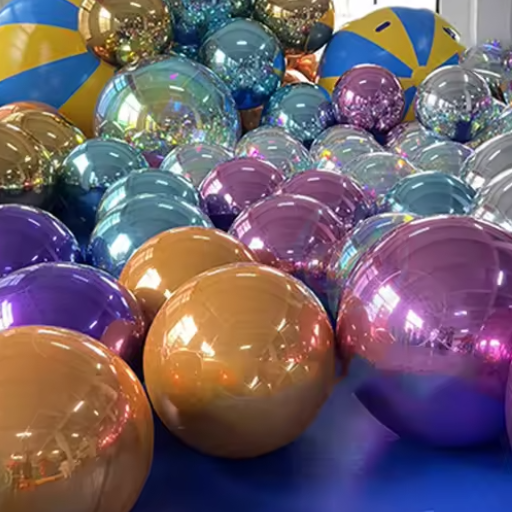
Metallic balloons dull and oxidize once inflated. Use them sparingly and place them where the light hits. For more combinations, see our guide.
How Much Does a Wedding Balloon Arch Cost?
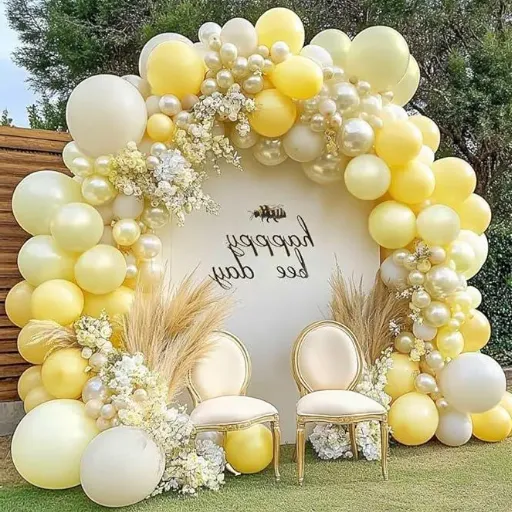
There are three ways to buy an arch, and they are not as far apart as they look once you count the hours.
| Route | What you’re paying for | 8 by 8 ft benchmark | Basis |
|---|---|---|---|
| DIY from loose balloons | balloons, frame or strip, pump, tape | $50 to $150 in materials | A 10 ft DIY build is quoted at $50 to $90 in supplies by |
| Balloon arch kit | pre-matched balloons plus strip and glue dots | around $129 for a 10 ft kit | lists $68, $129, $249, and $499 for 5, 10, 20, and 40 ft |
| Professional install | design, labor, delivery, setup, breakdown | $300 to $1,500+ | Quoted per foot, about $25 to $40 classic and $35 to $55 organic |
The benchmark most decorators quote is the 8 by 8-foot arch. One US supplier publishes $300 indoors and $350 outdoors for that size, which is a useful floor for a professional install. At the other end, a full wedding arch package commonly lands between $850 and $2,500 once delivery, florals, and a second installation are added.
Four costs sit outside the headline quote, and they catch people out:
- The frame or stand. $20 to $60 to buy, or a rental fee.
- The pump. $12 to $30. An electric pump turns a two-hour job into a one-hour job.
- Delivery and breakdown. Often a separate line item for venues outside a local radius.
- The deposit. 50% up front is standard for decorators.
Flowers are the fifth, and they are big enough to deserve their own section further down.
For a deeper breakdown by size and market, see .
DIY or Professional: Which Route Fits Your Wedding?
The decision is rarely about money. It’s about height, time, and permission.
| Factor | DIY | Professional |
|---|---|---|
| Time | 1 to 1.5 hours for an 8 ft arch, two people, electric pump | None on the day |
| Height | Comfortable up to about 8 ft | Any height, including ceilings |
| Venue rules | You must satisfy insurance and access rules yourself | They carry insurance and know the venue |
| Transport | You move every balloon | Included |
| Best for | One arch, midday event, venue access the night before | Multiple installs, tall rooms, hotels, heritage venues |
Build it yourself if you have one arch, two people, and a venue you can reach early. An 8-foot arch takes 1 to 1.5 hours with an electric pump and roughly double that on a first attempt. Air-filled latex holds for a day or two indoors, so building the night before is realistic.
Book a professional if the arch is part of a wider installation, if the ceiling is above 12 feet, if the venue requires a certificate of insurance, or if you can’t be in the room before the morning.
What to buy on the DIY route. The shopping list is short:
- 11-inch latex in your three colors, plus 5-inch fillers
- A balloon strip or arch frame
- Glue dots and clear tape
- An electric pump
- Ribbon and a weight or sandbag for each leg
A kit bundles the first four and saves you the matching work, which is why it sits between loose balloons and a decorator on price. Our covers what a good kit includes and what it leaves out. Step-by-step construction is in .
If you are ordering balloons with names or a date printed on them, we make those to order in , and the artwork deadline is worth checking before you settle the install date.
Wedding Balloon Arch with Flowers and Greenery
Flowers are what separate a balloon arch from a balloon display. They also add the largest single line to the budget after labor.
Three placements work reliably:
- The asymmetric third. One cluster at the base and up one side. The most natural look and the easiest to install.
- The base only. Flowers hide the frame legs and the sandbags, which is the part guests actually notice.
- Trailing greenery. Eucalyptus or ruscus threaded down one side. Cheap per stem and very forgiving.
Build in this order: balloons first, structure second, flowers last. Flowers go on once the arch is standing and positioned, not before, because moving a finished arch sheds petals and knocks balloons loose.
Fresh flowers add roughly $30 per linear foot when a decorator supplies them. Dried and artificial options cost less and tolerate heat better, which matters for outdoor ceremonies and for venues without air conditioning.
One caution: latex and moisture do not mix. Wet stems pressed against balloons soften the latex and cause early failures. Wrap stems or keep a small gap between the two.
Dried and artificial stems are the safer choice for a July wedding or a marquee without air conditioning.
Timeline: When to Book, Order, and Install
Working backwards is the only reliable way to plan this. The dates below are the ones that cause problems when they slip.
| When | What to do |
|---|---|
| 8 to 12 weeks out | Decide arch or alternative. Ask the venue about attachment, rigging, and load-in rules. |
| 4 to 8 weeks out | Book the decorator. This is the window most studios quote. |
| 3 to 4 weeks out | Order custom printed or monogram balloons. Approve artwork and proofs. |
| 1 week out | Confirm delivery, load-in window, and a rain plan. |
| Day before | Inflate air-filled elements. Store cool, flat, and out of sunlight. |
| Day of | Final assembly on site. Keep helium and latex out of direct heat. |
Two timing rules are worth stating separately.
Heat shortens everything. Latex expands as it warms and pops without warning. On a hot day, under-inflate by about 10% and assemble as late as the schedule allows. A car interior in summer is the worst place to transport inflated balloons.
Helium is not the default. Air-filled latex holds its shape for a day or two indoors and costs less. Helium buys float, not longevity, and an arch built on a frame does not need float at all. Most modern garlands are air-filled for exactly this reason.
Venue Rules and Logistics Checklist
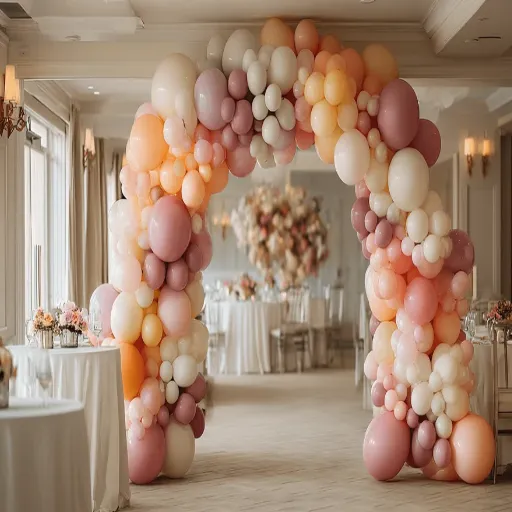
Venue constraints override design preferences more often than couples expect. Ask these questions before you settle on a style.
- Ceiling height and clearance. Can a 7 to 8-foot arch stand without touching?
- Attachment permission. Are tape, adhesive hooks, or fixings allowed on walls, beams, or ceilings?
- Rigging requirements. Does anything overhead require a certificate of insurance or a licensed rigger?
- Open flame policy. Candles near latex are a fire risk and often banned outright.
- Load-in and load-out windows. Hotels and heritage venues usually have narrow ones.
- Floor protection. Some venues require mats under sandbags and frames.
- Wind and sun exposure. Outdoors, both change the design.
- Rain contingency. What is the covered alternative, and when must you decide?
Churches and historic buildings deserve a separate conversation. Many prohibit adhesive, tape, and any fixing to historic fabric. That pushes the design toward a freestanding frame with weighted feet, and it means the arch has to be assembled outside and carried in already built, which changes the door width you need.
If the arch is traveling between venues or sitting overnight, test the transport before the day. Inflated latex does not survive a hot car, and a frame that does not fit through the service door will not fit at midnight either.
Making It Responsible: Latex, Reuse, and Disposal
Balloons carry real environmental criticism, and the honest answer is more specific than “ours are eco-friendly.”
Material. Natural latex is a plant-derived material and breaks down faster than foil. Foil or mylar is a metalized plastic film and does not degrade in the same way. If degradability is the priority, natural latex is the better choice.
Air over helium. Air-filled arches need no gas, last longer, and can be built on a reusable frame. The environmental cost is lower and so is yours.
Reuse the structure, not the balloons. Frames, strips, pumps, and weights are reusable indefinitely. Balloons are not. Budget for the frame once and it serves every event after.
Never release. Deliberate balloon releases are banned or restricted in many places, and the litter they create is the single strongest argument against the product. Our guide to covers the rules. Pop and bin, rather than let go.
We test our balloons to European EN71 toy-safety standards, and we print on when a customer asks for it. We don’t extend that into claims about certifications we haven’t been issued. Neither should any supplier you buy from.
Wedding Balloon Arch FAQs
How tall should a wedding balloon arch be? Seven to eight feet at the apex. Below seven feet, tall guests duck and photographs show people stooping. Eight feet gives headroom for a tall couple and room for the photographer above them. In a room with an 8-foot ceiling, drop the apex to 6.5 to 7 feet and leave 12 inches of clearance.
How wide should a wedding balloon arch be? Six to eight feet for a ceremony entrance, 8 to 10 feet for a photo backdrop, and 12 to 15 feet for a stage backdrop. Width usually runs 60 to 80% of height. Measure the aisle or doorway first, then the arch to fit.
How many balloons do I need for a wedding arch? About 6 to 10 balloons per foot of curve in 11-inch latex, or 55 to 70 balloons for an 8-foot span. Add 10 to 15% for spares. A 10-foot span is a 12 to 14-foot curve, so buy for the curve, not the span.
How much does a wedding balloon arch cost? Roughly $50 to $150 in loose materials, about $129 for a 10-foot kit, or $300 to $1,500 installed. A full wedding setup with delivery, florals, and a second installation commonly runs $850 to $2,500.
Are balloon arches tacky at weddings? Not by nature. The arches that read as tacky usually have too many colors, uneven spacing, or a full semicircle in bright primaries. Two to four colors, one metallic accent, an organic shape, and deliberate placement fix all four problems.
How early should I book a wedding balloon arch? Four to eight weeks before the wedding is the usual booking window. Custom printed balloons need three to four weeks for artwork and production. Outdoor summer dates book earlier because decorators cap their weekend workload.
Can I reuse a wedding balloon arch? The frame, strip, pump, and weights can be reused indefinitely. The balloons cannot. Air-filled latex holds for a day or two indoors, so plan to rebuild rather than rehang.
How long does a wedding balloon arch last? Air-filled latex looks its best for 24 to 48 hours indoors. Heat, sunlight, and dry air shorten that quickly. Helium balloons lose lift within a day or so and need a top-up for a second event.
Can I make a wedding balloon arch without a frame? Yes. A balloon strip fixed to a wall or held by two weighted columns works, and so does a freestanding stand. Without a frame you are limited in height and shape, and you need a wall or floor anchor point the venue will allow.
Do balloon arches work outdoors? They work, with caveats. Wind pulls them over, direct sun pops latex, and rain ruins the finish. Anchor with sandbags, under-inflate on hot days, and have a covered plan you can trigger the morning of the wedding.
Conclusion
The plan comes down to four decisions, and they settle each other in order.
Set the height and span against the venue first: 7 to 8 feet tall, 6 to 8 feet wide for a ceremony, with 12 inches of ceiling clearance. Then convert the span into a balloon count using the curve, not the width. Then choose the route: materials, kit, or decorator, each with a different cost and a different amount of your time. Then lock the date and work backwards, four to eight weeks for the decorator and three to four for anything printed.
Everything else, the palette and the flowers and the finish, is design. The numbers are what make the design possible.
If you want the arch built to your colors, with names or a date printed on the balloons, send us the date, the venue, and the palette. We will tell you what is realistic.