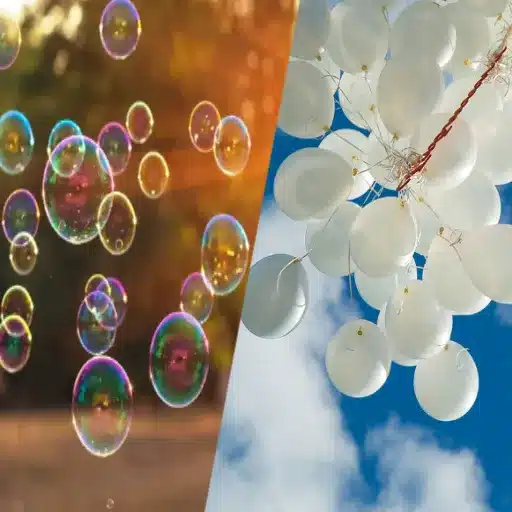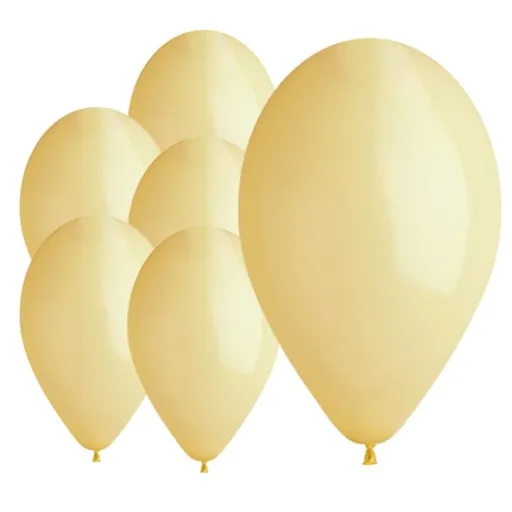
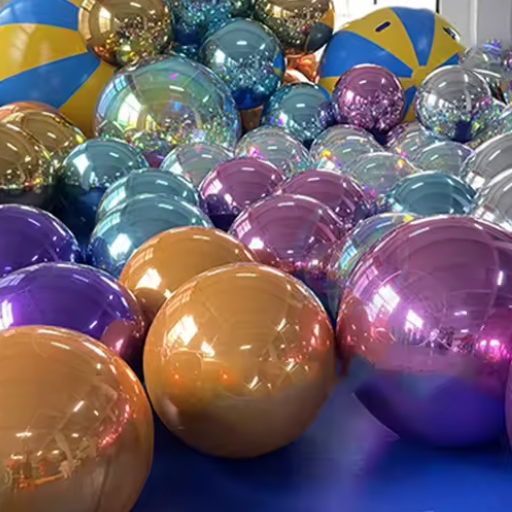



When you compare latex balloons vs foil balloons for the environment, latex wins on material source and end-of-life, while foil wins on helium retention and reusability. Natural latex comes from rubber trees, a renewable resource that can break down under the right conditions. Foil, also called Mylar, is metalized plastic film that never biodegrades. But a reused foil balloon can beat a single-use latex one, so the honest answer depends on how you use each type.
Elena learned that the expensive way. The event coordinator for a San Diego rooftop gala ordered a set of foil number balloons for the entrance sign, then watched one break loose in the wind and drift toward a power line.
She got it back with a pole and a lot of embarrassment, but she also spent the next hour explaining to her client why the venue’s manager had come running out to chase it. The balloon was beautiful. It was also a conductive sheet of plastic that could have knocked out power to the block.
That single moment captures the whole comparison. Foil looks better and lasts longer, and it carries a risk that latex doesn’t. Latex is friendlier to the planet, and it can’t hold helium to save its life.
This guide compares the two on the factors that actually matter:
- Material source and renewability
- Decomposition and end-of-life
- Recycling reality
- Wildlife impact
- Power-grid and wildfire risk
- Helium use
Then it gives you a straight answer on which to choose.
Because we manufacture balloons, we can compare the two materials from the inside, not just from a marketing label.
Key Takeaways
- Natural latex is a renewable material from rubber trees that can break down under the right conditions; foil (Mylar) is metalized plastic film that never biodegrades and only fragments into microplastics
- Neither balloon is accepted in curbside recycling, and foil’s composite plastic-and-metal build can jam sorting machinery
- Foil’s metal coating conducts electricity, causing thousands of power outages and wildfire risk every year, a hazard latex does not share
- Foil holds helium for days to weeks and can be deflated and reused several times; latex floats for 8 to 18 hours and cannot be effectively refilled, so reuse changes the environmental math
- Both types harm wildlife, so never release either one, and helium is a finite resource that balloons consume
Comparing materials for an upcoming event? See our custom balloon solutions and ask us for samples of both latex and foil stock.
Latex Balloons vs Foil Balloons at a Glance

| Factor | Natural latex | Foil / Mylar |
|---|---|---|
| Made from | Rubber tree sap (renewable) | Metalized plastic film (petroleum-based) |
| Stretchy | Yes, about 8x | No, fixed shapes |
| Holds helium | 8 to 18 hours untreated | Days to weeks |
| Biodegradable | Yes in principle, slowly, under conditions | No |
| Curbside recyclable | No | No |
| Reusable | Rarely, cannot be refilled | Yes, 3 to 5+ times if the valve holds |
| Wildlife risk | High if released | High if released |
| Power-grid risk | None | High, conducts electricity |
| Best for | Arches, garlands, clusters, color volume | Numbers, letters, multi-day or outdoor focal points |
Here is the plain-language version of that table. If you need a load of color filling a space on a budget, latex is your material, and it is the better choice for the planet. If you need one showpiece to hold its shape for a week or survive an outdoor event, foil is the practical pick, and its environmental case only holds up if you reuse it.
What Are Latex and Foil Balloons Made Of?
The two balloon types start from completely different places. Latex balloons begin as a milky sap tapped from Hevea brasiliensis rubber trees, the same species behind rubber gloves and elastic bands. The tree keeps producing for decades, which is why latex counts as renewable.
Foil balloons begin as a thin plastic film, usually metalized nylon or a polyester film sold under the DuPont brand name Mylar, with a whisper-thin layer of aluminum bonded to the surface for shine. If you’ve ever wondered whether foil balloons are made of metal, they aren’t. They’re plastic with a metallic coating. We break down the full material science, including synthetic latex and clear TPU bubble balloons, in our guide to what balloons are made of.
That difference in origin sets up everything that follows.
Are Foil Balloons Biodegradable?
No. Foil balloons aren’t biodegradable. Because they’re made from plastic film with a metallic coating, they never break down in the environment. They only fragment into smaller and smaller pieces of plastic, eventually becoming microplastics that persist in soil and water.
Latex is the opposite in principle. It comes from a plant, so microbes can break it down. In practice, the honest version is slower than most marketing suggests.
Vulcanizing and additives make a finished balloon far tougher than raw sap. Independent testing found that balloons labeled biodegradable were still largely intact after 16 weeks in an industrial compost heap, a result documented by The Conversation. We cover the full verdict in our article on whether latex balloons are biodegradable.
So the scorecard is uneven. Latex can break down, slowly and only under the right conditions. Foil can’t break down at all.
Latex vs Foil: The Environmental Comparison
Material Source and Renewability
Latex comes from a tree that regrows. Foil comes from petroleum, a finite fossil resource. On this measure, latex is the clear winner, and it’s the one environmental advantage of latex that no amount of reuse fully erases for foil.
Decomposition
Latex breaks down over months to years depending on heat, moisture, sunlight, and microbial activity, and not at all quickly in a sealed landfill. Foil never breaks down at all. It stays plastic, then becomes microplastic. If you want the environment-by-environment detail, our balloon decomposition timeline covers it in full.
Recycling Reality
Here is a fact that surprises almost everyone: neither balloon belongs in your recycling bin. Mylar balloons are a composite material, plastic film fused with a metallic coating, which is exactly the kind of hybrid that recycling facilities can’t process. It can jam sorting machinery, so most councils and waste services list balloons under what you can’t recycle at home. As USA Today puts it, Mylar is plastic, not metal, and it doesn’t recycle like metal foil.
That has a silver lining. Because neither is recyclable, the responsible path for both is the same: pop it, cut it, and bin it. Our guide to disposing of balloons responsibly walks through the details.
Wildlife Impact
This is where both materials carry a shared cost. Balloons rank among the deadliest debris for wildlife. A University of Tasmania study found that ingesting a balloon made seabirds roughly 32 times more likely to die than ingesting hard plastic, because soft material blocks a bird’s digestive tract instead of passing through. The Ocean Conservancy ranks balloons among the top three deadliest items of ocean trash, behind fishing gear and plastic bags.
The lesson isn’t “latex is fine to release.” It’s that the material matters less than the behavior. A released balloon of either type is a hazard.
The Power Grid and Wildfire Risk
Foil has one hazard that latex doesn’t: its metallic coating conducts electricity. When a foil balloon drifts into a distribution line, it can short the line, melt wires, and start a fire. The scale is larger than most people realize. Southern California Edison logged 802 metallic-balloon outages and 97 explosions in a single year, affecting 1.1 million customers, and utilities have reported hundreds of balloon outages annually around the country.
This is why California passed AB 847, which requires metallic balloons sold in the state to be non-conductive and phases out the conductive versions by 2031. Latex, being a poor conductor, doesn’t create this problem. It’s the single strongest argument for latex on public-safety grounds.
The Reusability Twist
If latex wins on material, foil deserves a fair word on waste, and this is where most “eco” comparisons go quiet.
Foil holds helium for days or weeks and can be deflated and reused three to five or more times as long as the self-sealing valve holds. Latex is effectively single-use. Once a latex balloon deflates, the material has stretched and you can’t refill it to a useful size.
That flips the math in one specific case. Tom and Rachel bought a large foil “1” balloon for their daughter’s first birthday. They deflated it carefully, stored it flat, and re-inflated it 14 months later for their son.
One balloon, two parties, no new plastic. A family doing the same with latex would have bought and thrown away dozens of balloons across those two events.
So the fair conclusion is this: a reused foil balloon can have a smaller footprint than a pile of single-use latex, while a one-and-done foil balloon is the worst of both worlds. Foil only earns its environmental case when you commit to reusing it.
The Helium Question
There’s one more factor that rarely makes it into a latex vs foil comparison, and it matters: helium.
Helium is a finite, non-renewable gas. Once it escapes into the air, it’s light enough to leave the atmosphere permanently, and there’s no practical way to make more at scale. It’s also essential to MRI scanners, semiconductor manufacturing, and scientific research, which is why researchers have warned that wasting helium on party balloons is a poor use of a scarce resource.
Both balloon types consume it. Latex wastes it faster because it leaks out within a day. Foil holds it longer and uses more per balloon, but keeps it contained. The most efficient move is to use air-filled decor wherever floating isn’t essential, and to treat helium as a resource worth not spilling. If you do use helium with latex, a sealant treatment can cut the waste dramatically. Our Hi-Float balloons guide explains how that works.
So Which Is Better, Latex or Foil?
Here is the honest verdict, without a slogan.
| Your priority | Pick this | Why |
|---|---|---|
| Volume, color, and arches on a budget | Natural latex | Renewable material that can break down, and the best value for filling space |
| A statement piece, or a multi-day or outdoor event | Foil / Mylar | Holds helium for weeks and can be reused several times |
| The lowest wildlife risk | Neither, if it is a release | Both types harm wildlife when released, so anchor and dispose instead |
In short, latex is the better environmental choice for volume decor, used responsibly. Foil only earns its environmental case when you will actually reuse it: a foil balloon used three times beats the same volume of single-use latex. And neither belongs in a release or a recycling bin.
If you want to compare materials in person before you commit, request a sample kit of our latex and foil stock.
How to Use Both More Responsibly

Whichever material you pick, the responsible habits are the same:
- Anchor every balloon to a weight so it cannot drift into the sky.
- Keep helium balloons indoors or tethered where possible.
- Pop and bin every balloon after the event instead of releasing it.
- Separate ribbons, clips, and weights so they can be handled properly.
- Ask your supplier where the latex or film comes from, and whether they can document it.
A supplier who can answer those questions is worth keeping. For the deeper science behind all of this, our complete guide to biodegradable balloons covers materials, certifications, and buying criteria in one place.
FAQ
Are foil balloons biodegradable?
No. Foil or Mylar balloons are made from metalized plastic film, so they never biodegrade. They only break down into microplastics over time. Latex balloons come from natural rubber and can break down under the right conditions, though slowly.
Are foil balloons recyclable?
Not in curbside recycling. Foil balloons combine plastic film with a metallic coating, a composite that most facilities can’t process and that can jam sorting machinery. Put deflated foil balloons in the general trash, not the recycling bin.
Are foil balloons better than latex?
Only in specific ways. Foil holds helium far longer and can be reused several times, which can make it the lower-waste choice if you reuse it. Latex is better on material source and end-of-life, since it comes from a renewable plant and can biodegrade.
Do foil balloons decompose?
No. Foil balloons don’t decompose because they’re plastic film with a metallic coating. They only break into smaller pieces of plastic over time. Latex balloons decompose slowly, and only when they’re exposed to the right mix of moisture, heat, and microbes.
Do foil balloons cause power outages?
Yes. The metallic coating conducts electricity, so foil balloons that touch power lines can short circuits, melt wires, and start fires. Utilities report hundreds to thousands of balloon-related outages each year, which is why California is phasing out conductive metallic balloons by 2031.
What are foil balloons made of?
Foil balloons are made from a thin plastic film, usually metalized nylon or polyester, with a microscopic layer of aluminum bonded to the surface for shine. Despite the name, they contain no metal foil and are not metal.
Can you reuse foil balloons?
Often yes. If the self-sealing valve stays intact, a foil balloon can be deflated, stored flat, and re-inflated three to five or more times. Latex balloons can’t be effectively refilled once they deflate, so they’re effectively single-use.
Are latex balloons better for the environment?
On material and end-of-life, yes. Latex comes from a renewable rubber tree and can biodegrade, while foil is petroleum-based plastic that persists. But “biodegradable” isn’t permission to release or litter, so responsible use still matters for both.
Is Mylar the same as foil?
Effectively, in everyday use. Mylar is a DuPont brand name for a polyester film, and most balloons people call Mylar or foil are made from metalized film of that type. The names refer to the same category of shiny plastic balloon.
Choose Trading Shanxi Co., Ltd. for dependable biodegradable balloon supply.
The Bottom Line: Latex Balloons vs Foil Balloons
Compare latex vs foil balloons honestly and no single material wins everything. Latex comes from a renewable tree and can break down, so it is the better environmental choice for volume decor. Foil is plastic that never biodegrades and can knock out power, but it holds helium for weeks and can be reused, which gives it a real edge when you actually reuse it. Both harm wildlife if released, and neither belongs in the recycling bin.
The greenest balloon is the one you use again or don’t release at all. Choose the material that fits your event, anchor it, and dispose of it properly, and you’ve done the part that matters most.
If you’re sourcing balloons for an event or a store and want a supplier who can document the materials and answer the hard questions, get in touch with our team. We make both latex and foil balloons, and we’re happy to help you choose the right one for your next celebration.