

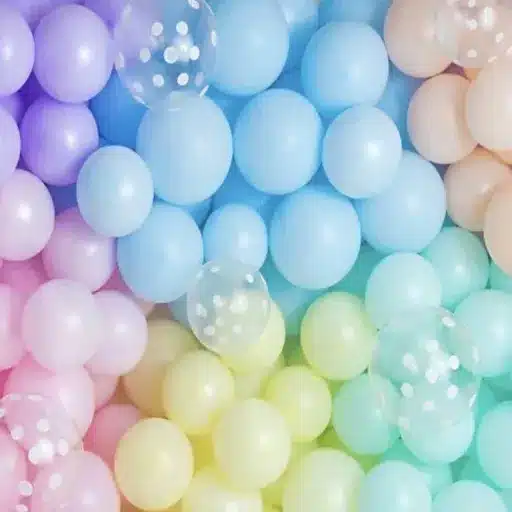
Party balloons are almost always made from one of two materials: natural latex, which is the sap tapped from rubber trees, or a thin metallized plastic film that most people call foil or Mylar. A growing third category, the clear “bubble” balloons popular for confetti and LED looks, is made from stretchy plastic such as TPU. The material you choose decides how long a balloon floats, whether it pops or deflates, and what happens to it after the party ends.
That last part is where people get surprised. Maya, an event planner in Portland, learned the hard way last spring. She had filled a dozen latex balloons with helium for a 9 a.m. brunch and left them overnight in her car. By morning they sat limp on the floor, and she had to scramble for a florist’s wire arch backup. Her mistake was not the brand. It was the material. Latex is porous, so helium escapes through the walls within hours, while a foil balloon of the same size would still be bobbing at the ceiling a week later.
This guide explains exactly what balloons are made of, how each material is manufactured, and which one fits your event or your store. Because we make balloons ourselves, we can show you the difference between marketing labels and the real material inside the bag.
Key Takeaways
- Most party balloons are natural latex tapped from the Hevea brasiliensis rubber tree; foil balloons are metallized plastic film, not metal, and clear bubble balloons are TPU or PVC
- Natural latex can stretch to about eight times its size and is biodegradable in principle, but it is porous, so helium escapes within roughly 8 to 24 hours
- Foil and Mylar balloons hold helium for days or weeks because the film is nearly airtight, but they do not biodegrade and they conduct electricity
- “Mylar” is a brand name for a polyester film, and many balloons sold as Mylar are actually metallized nylon
- Colorants and vulcanizing chemicals are added to every latex balloon, so even “natural” balloons are not 100 percent pure rubber
What Are Balloons Made Of? The Short Answer
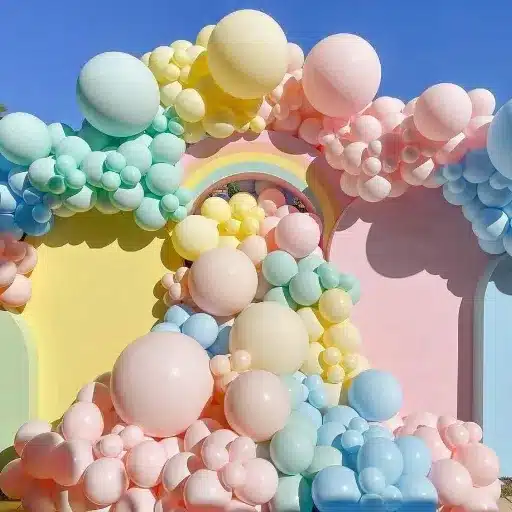
Most party balloons are made from natural latex, the milky sap harvested from rubber trees, while shiny foil balloons are made from thin metallized plastic film and clear bubble balloons use stretchy plastic like TPU. A balloon is defined by its skin, not its contents: the same latex shell can hold air or helium, and the gas inside is what makes it float.
The confusion usually starts with the word “foil.” A foil balloon is not made of metal. It is a sandwich of printed plastic film, often nylon or a polyester film called boPET, with a microscopic layer of aluminum vapor deposited on it to create the shine. That metal coating is thinner than a human hair, which is why the balloon stays flexible and can be folded flat for shipping.
Once you know the material, a lot of balloon behavior makes sense. Latex stretches, so it can be inflated to different sizes and tied. Foil does not stretch, so it must be manufactured in a fixed shape and sealed shut. Latex is porous, so helium leaks out quickly. Foil is nearly airtight, so it keeps helium for days. And latex comes from a tree, while foil comes from petrochemicals. Those differences drive every buying decision below.
The Main Balloon Materials Compared
| Balloon type | What it is made of | Stretchy? | Holds helium | Biodegradable? | Best for |
|---|---|---|---|---|---|
| Natural latex | Sap of the rubber tree (Hevea brasiliensis) | Yes, about 8x | Hours to about a day | Yes in principle, slowly and only under conditions | Arches, garlands, air-filled decor, eco events |
| Synthetic latex | Petroleum-based rubber polymers | Yes | Similar to natural latex | No | Budget balloons where sourcing is not a priority |
| Foil / Mylar | Metallized nylon or polyester (boPET) film | No | Days to weeks | No | Number and letter balloons, long-lasting gifts |
| Bubble / bobo | Thermoplastic polyurethane (TPU) or PVC | Yes | Days | Most are not | Clear looks, confetti and LED stuffing, allergy-safe events |
| Water balloon | Thin natural latex | Yes, until it pops | No | Same as latex | Outdoor water games |
Latex Balloons Are Natural Latex From Rubber Trees
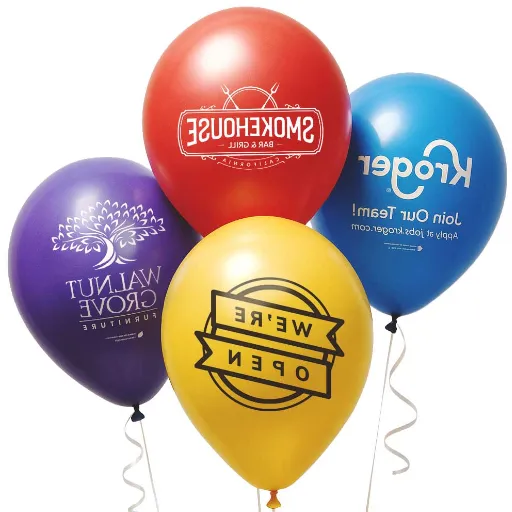
Natural latex balloons begin as sap collected from the Hevea brasiliensis rubber tree, the same species that gives us rubber gloves and elastic bands. Workers tap the trunk the way maple trees are tapped for syrup, making a thin cut and letting the milky sap drip into a cup. The tree keeps growing and keeps producing, which is why latex is called a renewable material.
Fresh latex sap is roughly 60 percent water, so it must be concentrated, compounded with color and chemicals, and formed before it becomes a balloon. The finished product is remarkably elastic. A quality latex balloon can stretch to about eight times its original size and still spring back, which is what lets you blow one up with a single breath.
Because latex is a natural material, it carries a genuine caveat. It is biodegradable in principle, but real-world breakdown is slow, and the balloon decomposition timeline depends on heat, moisture, sunlight, and microbes. Independent researchers found that balloons labeled biodegradable were still largely intact after 16 weeks in an industrial compost windrow, a result documented by The Conversation. In other words, “biodegradable” is a property of the material, not a license to litter. We cover the honest version of that story in our guide to biodegradable balloons and in the deeper question: Are latex balloons biodegradable?
Synthetic Latex Balloons Are Petroleum-Based
Not everything labeled latex comes from a tree. Synthetic latex is made from petroleum-derived polymers that are formulated to mimic the feel and stretch of natural rubber. To a shopper squeezing the bag, the two can look identical, but the origin changes the story.
Natural latex is renewable and, in principle, biodegradable. Synthetic latex is a plastic product and will not biodegrade the way tree latex can. Manufacturers generally prefer natural latex for quality balloons because it is stronger, more elastic, and has better color depth. Synthetic material is more common in very cheap novelty balloons and in some industrial products. If a supplier cannot tell you where the latex comes from, treat that as a red flag, especially if the claim is “eco-friendly.”
Foil Balloons Are Metallized Plastic Film
Foil balloons, the shiny ones shaped like numbers, letters, and characters, are not made of metal foil. They start as a thin plastic film, most often metallized nylon or a polyester film sold under the DuPont brand name Mylar, and a thin layer of aluminum is bonded to the surface to create the mirror finish. The result is a flexible, non-porous shell that can be printed, heat-sealed into a shape, and folded flat for shipping.
Because the film does not stretch, each foil balloon is manufactured to a fixed size and sealed around the edges. That construction makes it nearly airtight, which is the real advantage: helium stays inside for days or even weeks, compared with hours for latex. It is also why number balloons arrive as two flat pieces you inflate yourself.
The trade-off shows up at the end of the balloon’s life. Foil does not biodegrade. It lingers as plastic fragments, and because the aluminum coating conducts electricity, released foil balloons are a well-known cause of power outages when they drift into lines. If the environment is your priority, natural latex is the better material, a comparison we break down fully in our latex vs foil balloons guide.
Bubble, Bobo, and Clear Balloons Use TPU or PVC
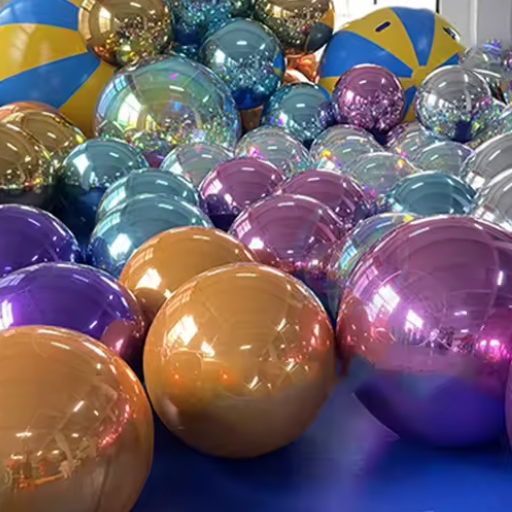
The clear, glossy balloons that look like giant soap bubbles are a separate family. Most are made from thermoplastic polyurethane, shortened to TPU, though some budget versions use PVC. These are the balloons people fill with confetti, LED string lights, flowers, or smaller balloons for a photo-wall look.
TPU balloons are latex-free, which makes them the main option for venues and guests with natural rubber allergies. They are thicker and tougher than latex, they do not carry the rubbery smell, and they hold helium far longer because TPU is less porous than natural latex. Quality varies a lot by manufacturer, so if you buy these in bulk, test a sample batch before committing.
Water balloons deserve a quick mention here too. They are thin natural latex shells designed to burst on impact, which is why they fill and pop so easily. Same tree, same material, much thinner walls.
How Latex Balloons Are Made

Understanding the factory process explains a lot about quality. Here is the short version of how a latex balloon travels from a rubber tree to your party bag.
Where Latex Comes From and How It Is Prepared
Latex is collected from rubber trees in tropical regions and shipped to factories as a concentrated liquid. At the plant, it is compounded with color pigments and small amounts of processing chemicals, including sulfur and accelerators that will later help the rubber cure. The mix is stirred for hours so the color and additives are perfectly even, because uneven compounding is exactly what produces a balloon with a thin spot that pops early.
The Dipped-Mold Process, Step by Step
- Balloon-shaped metal or ceramic forms are washed and dipped into a coagulant bath, usually a calcium nitrate solution. This is the white residue you sometimes feel on the inside of a new balloon.
- The coated forms are dipped into the liquid latex compound. The coagulant makes the latex cling to the form in a thin, even layer, and the dipping speed controls the wall thickness.
- While the layer is still wet, rotating brushes roll the top edge down to form the balloon’s lip, the neck you tie.
- The forms pass through hot water to wash out impurities and some of the proteins that trigger latex allergies.
- The forms enter curing ovens, where the rubber vulcanizes and gains its strength and elasticity.
- The balloons are stripped off the forms, washed again, dried, and dusted to stop them from sticking together.
- Every batch is inspected, with balloons inflated and checked against a light for weak spots before packing.
Science channels have filmed the full dipping line, and it is worth watching once. Business Insider’s piece on how balloons are made shows the whole process, and the short film The Magic of Making covers both latex party balloons and nylon hot-air balloons for a family-friendly version.
What Else Goes Into a Balloon
Here is the honest part that most product pages skip. A natural latex balloon is not 100 percent pure rubber. To turn milky sap into a stretchy, colored, long-lasting balloon, manufacturers add colorants, sulfur and accelerators for vulcanization, antioxidants to slow aging, and sometimes small amounts of plasticizer. That is normal and safe when done to regulated standards, but it means “100% natural” on a label is a stretch.
The additives are also why buying from a supplier that controls its chemistry matters. A peer-reviewed study of latex balloons from the Sri Lankan market found that phthalates and benzene-family solvents migrated from colored balloons, at levels above European limits under heavy mouthing, and the researchers traced the source to the colorants. Regulators in Germany, for example, set a limit of 400 micrograms of nitrosamines per kilogram of balloon material, a byproduct of vulcanization. This is not a reason to avoid balloons, and it is not a scare story. It is simply why reputable manufacturers test their compounds and why certifications like EN 71 matter for children’s events.
If your clients ask what actually goes into their balloons, this is the transparent answer. They will trust you more for giving it. For more detail on the chemistry of rubber and balloons, ChemistryViews has an accessible technical breakdown.
Balloon Material Myths, Debunked
A few persistent myths confuse shoppers, so let us clear them up directly.
- “Foil balloons are made of metal.” They are not. They are plastic film with a microscopic aluminum coating for shine.
- “Mylar is a type of balloon.” Mylar is a DuPont brand name for a specific polyester film. Many balloons called Mylar are actually metallized nylon.
- “All balloons are rubber.” Most are natural latex, but foil balloons are plastic and clear bubble balloons are TPU or PVC.
- “Natural latex balloons are 100% plant material.” They start as tree sap, but colorants and vulcanizing chemicals are added to make them usable.
- “Biodegradable means it is fine to release.” No. Latex breaks down slowly and only under the right conditions, and releases can harm wildlife. We recommend never releasing balloons outdoors.
These distinctions are not trivia. They drive float time, safety, and end-of-life, and they are the difference between a balloon that still looks good at dinner and one that is a flat ribbon on the floor by noon.
Which Balloon Material Should You Choose?
The right material depends on the job, and matching the two saves you money and disappointment.
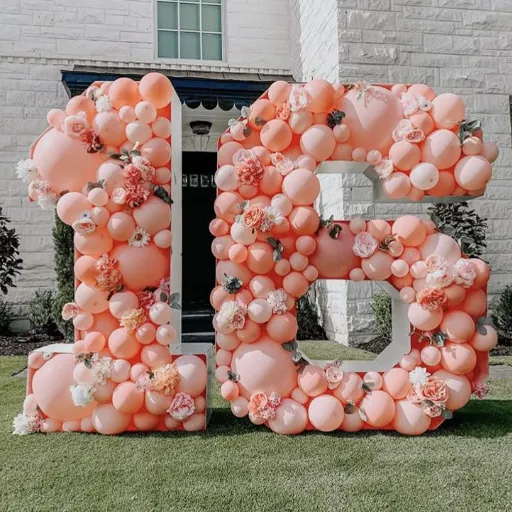
- For air-filled arches, garlands, and walls: natural latex. It is the most economical, comes in the widest colors, and does not need to float. This is where most event decor belongs.
- For long-lasting helium centerpieces: foil, or latex treated with a sealant such as Hi-Float. Foil floats for days; untreated latex drops within about a day.
- For outdoor displays in wind or heat: thicker latex or foil with proper anchoring. Heat speeds up latex helium loss, and wind pops thin balloons.
- For eco-conscious events: natural latex from a supplier that can document its sourcing, used responsibly and disposed of properly. Our biodegradable balloons guide explains what to look for.
- For venues that ban latex, such as some hospitals and schools: TPU bubble balloons, since they are latex-free and allergy-safe.
- For custom printing and branding: natural latex prints well with water-based inks, while foil suits crisp logo shapes. If you need custom work at volume, custom balloon solutions is where to start.
Priya, a party-supply buyer we work with, used to stock whatever distributor offered the best price, which meant a rotating mix of mystery latex and paper-thin foil. After a customer complained that her “good” balloons were deflating before dinner, she started specifying material on every purchase order: natural latex for air decor, foil only for helium numbers. Within two quarters her return rate dropped, and her store earned a reputation for balloons that actually last. That is the practical payoff of knowing your material.
Not sure which type fits your event or your shelves? Contact our team and we will help you compare options against your budget and timeline.
What About Hot-Air and Weather Balloons?

The question “what are balloons made of” sometimes pulls in the flying giants, so a quick clarification helps. Hot-air balloons are not latex. Their envelope is made of coated ripstop nylon, a strong woven fabric sealed to hold heat, with fire-resistant Nomex panels near the burner. Weather balloons sent into the upper atmosphere are usually natural latex or a thin polyethylene film. And decorative model balloons are commonly plastic film. None of these are party balloons, but they share the same physics: a flexible skin containing a gas.
For a closer look at the engineering side of ballooning, the Smithsonian’s STEM in 30 team toured a hot-air balloon factory and explains the fabrics and forces beautifully.
FAQ
What are balloons made of?
Most party balloons are made of natural latex from rubber trees. Foil balloons are metallized plastic film, and clear bubble balloons are TPU or PVC. The gas inside, air or helium, is separate from the material of the skin.
Are balloons made of rubber?
Not all of them. Latex balloons are made from natural rubber latex, which is plant-based. Foil balloons are plastic, and bubble balloons are thermoplastic polyurethane.
What are foil balloons made of?
Foil balloons are made of a thin metallized plastic film, most often nylon or a polyester film known as boPET. The shiny look comes from a microscopic aluminum coating, not from metal foil.
Are balloons made of plastic?
Many are. Foil and Mylar balloons are plastic film, and clear bubble balloons are plastic. Traditional latex balloons are made from natural rubber and are not plastic.
Are balloons toxic?
Balloons made to regulated safety standards are safe for their intended use. Colorants and vulcanizing chemicals are added to latex, which is why responsible manufacturers test compounds and why toy safety standards such as EN 71 exist.
Are balloons biodegradable?
Natural latex is biodegradable in principle, but slowly and only under the right conditions. Foil and clear plastic balloons are not biodegradable. The safe choice is anchored, indoor use and proper disposal.
Conclusion
Once you know what balloons are made of, the rest is easy to predict: every balloon starts as either tree sap or a thin sheet of plastic, and that origin decides almost everything else about it. Natural latex is renewable, elastic, and biodegradable in principle, but it is porous, so helium escapes within about a day. Foil is airtight and shiny, but it is plastic and does not biodegrade. Clear bubble balloons are latex-free and long-lasting but made from TPU. And behind every color sits a chemistry set of colorants and vulcanizers, which is why buying from a supplier that controls its process matters.
The practical takeaway is simple. Use natural latex for air-filled decor and eco-friendly events, reach for foil when you need helium to last for days, and choose TPU when latex allergies are a concern. Match the material to the job and your balloons will behave the way you expect, which is the real point of understanding what they are made of.
If you are planning an event or stocking a business, we would love to help you choose the right balloon material for the job, whether that is certified natural latex, custom-printed options, or long-float foil. Reach out to our team for samples, wholesale pricing, and honest guidance on what is actually inside the bag.
Trading Shanxi Co., Ltd. is a balloon manufacturer and supplier. We write honestly about balloon materials because we believe a well-made balloon starts with knowing exactly what it is made of.