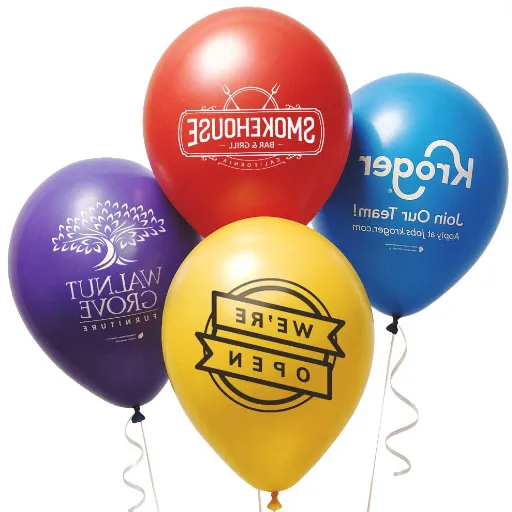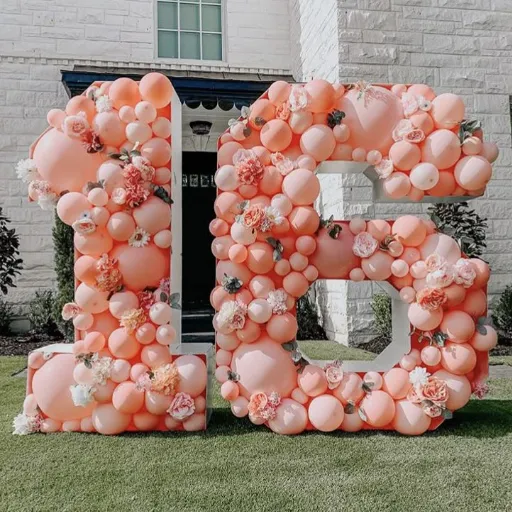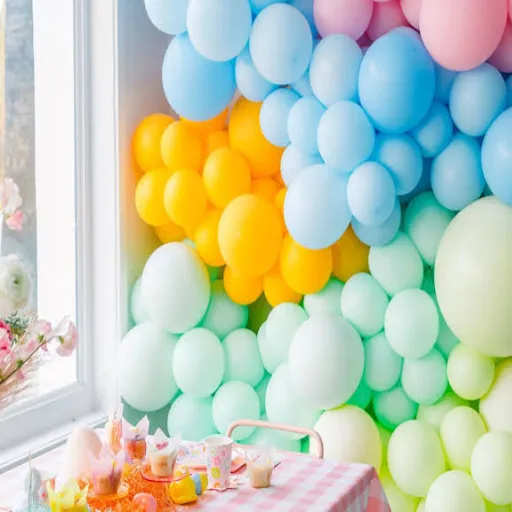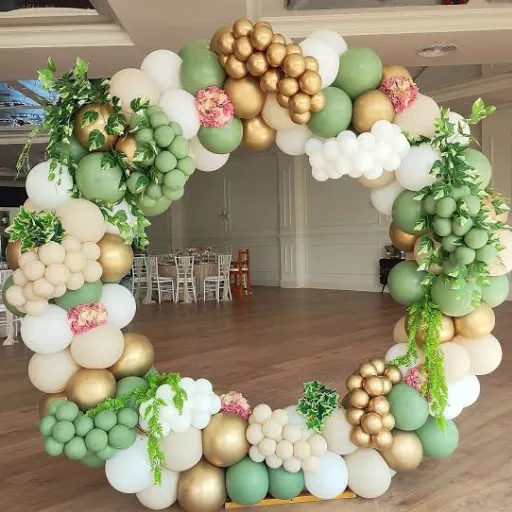

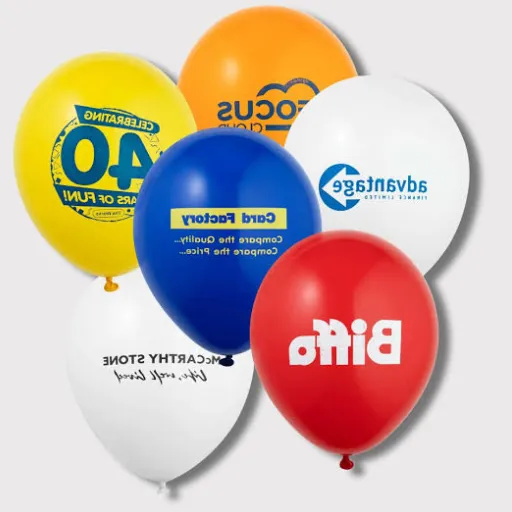
Custom printed latex balloons are natural rubber balloons printed with a logo, name, or design in one to four spot colors, usually with minimum runs starting at 100 pieces. They’re the lowest-cost printed balloon at volume and the default for storefronts, giveaways, weddings, and trade shows.
Two 12-inch latex balloons can carry the same logo, the same Pantone, and the same price on a quote, and still behave like different products. One stays sharp through the event. The other cracks at first inflation or sags by mid-afternoon.
The difference is not the design. It is the gram weight of the latex, the usable print area, the ink system, and whether the print was cured for the stretch. Most supplier pages omit all four.
This guide covers them from production. If your artwork is ready, request a custom printed latex balloon quote and we will confirm grade, size, and minimums.
Key Takeaways
- Gram weight changes the product more than an extra color does. On an 11-inch balloon, 2.2g, 2.8g, and 3.2g differ in durability, opacity, and float.
- A 12-inch balloon gives about 14 cm of usable print diameter, an 11-inch about 12 cm, and a 9-inch about 10 cm.
- Latex is printed while partially inflated, heat-cured, then deflated. Under-cured ink cracks at inflation.
- MOQ follows color count and sides. Budget setup, a 5% to 10% buffer, and a 12-month shelf life.
What Are Custom Printed Latex Balloons?
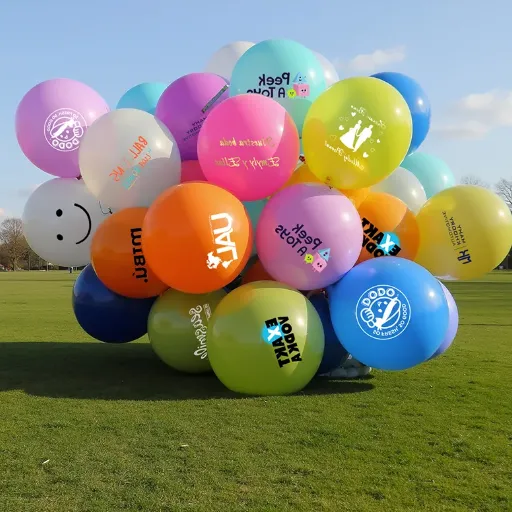
Custom printed latex balloons are natural latex balloons printed with artwork before they are packed for shipment. The artwork is applied while the balloon is partially inflated, cured, and then deflated, so the print can stretch with the rubber when the balloon is filled at the event.
What you can print on latex
The common jobs are a logo, a short slogan, a name, a date, a QR code, or a simple pattern. Complex illustrations and small taglines lose detail because every element stretches with the rubber. A QR code needs to be large, dark on a light background, and tested on a printed sample.
Who buys printed latex
Businesses buy promotional balloons, planners buy color-matched sets, and retailers and distributors buy custom printed latex balloons wholesale. Printing adds recognition, cost, and lead time, including a proof and a production slot that plain balloons don’t need. For the wider category view, see our guide to custom printed balloons.
Latex Grades: Why Gram Weight Matters More Than Size
Two balloons can both say “12 inch” and still differ by 45% in latex. Gram weight is the spec most buyers never see, and it changes durability, opacity, float, and print quality.
| Grade (11″ round) | Relative wall | Typical helium float | Opacity | Best for | Relative cost |
|---|---|---|---|---|---|
| 2.2g | Thinnest | About 8 to 12 hours | Semi-translucent | High-volume giveaways, short events | Baseline |
| 2.8g | Mid-weight | About 12 to 24 hours | Good | Weddings, retail, general decor | About 15% to 30% more |
| 3.2g | 30% to 40% thicker than 2.2g | About 24 to 48 hours | High | Outdoor events, multi-day displays, premium work | About 30% to 50% more |
These ranges vary by brand, color, fill, and conditions. Treat them as planning numbers, not guarantees.
Thicker latex is more opaque, which matters with dark colors. A 3.2g black balloon holds a deeper color than 2.2g, and thicker walls resist pinholes and helium loss. Denser film also holds ink more consistently.
How to verify gram weight
You can’t confirm grade by squeezing a balloon. Weigh 20 to 30 from the carton on a 0.1g scale, compare the average with the spec, then inflate a few and wait 24 to 48 hours.
Kenji, a distributor in Osaka, weighed 30 samples per SKU before a 5,000-unit container. One color averaged 2.3g against a 2.8g spec; the factory had substituted a lighter stock. He caught it before shipment.
For bulk grade selection, see our wholesale latex balloons guide.
Sizes and Print Areas for Custom Latex Balloons
Size controls artwork fit, float time, and visual weight. Usable print area is smaller than the balloon diameter and shrinks near the neck.
| Size | Inflated diameter (approx.) | Usable print area (approx.) | Typical helium float | Best use |
|---|---|---|---|---|
| 5″ | 13 cm | 5 cm | 4 to 6 hours | Accents, garlands, confetti |
| 9″ | 23 cm | 10 cm (4″) | 8 to 12 hours | Small logos, retail, tight budgets |
| 11″ | 28 cm | 12 cm (5″) | 8 to 12 hours standard; 12 to 24 hours in quality grades | The workhorse |
| 12″ | 30 cm | 14 cm (5.5″) | 12 to 24 hours | Weddings, storefronts, photo walls |
| 16″ | 40 cm | 20 cm | 24 to 36 hours | Trade shows, clusters |
| 24″ | 61 cm | 30 cm | 2 to 3 days | Statement pieces |
| 36″ | 91 cm | 38 cm (15″) | 3 to 5 days | Hero piece, retail opening |
Print areas are usable diameters, not rectangles. Artwork near the edge distorts, so keep important content inside a circle about 80% of the printable width.
Choosing a size
A 5-inch balloon is a garnish, not a logo balloon. A 9-inch holds a simple mark. Start at 11 inches if the logo must read from a few feet away, and go to 16 inches or larger for a room.
The 12-inch adds about 2 cm. Browse printed latex balloons to compare finishes.
Colors, contrast, and buffer
Matte standard latex gives the most predictable ink color. Crystal and metallic finishes reduce contrast, and white on dark latex usually needs an opaque underlay. Pantone matching is close, not exact, so approve a physical sample. Add a 2% to 5% buffer; for 250 pieces, plan 275.
When Dana opened a bakery in Leeds, her first quote was for 2.2g balloons. She moved to 2.8g after comparing samples on dark stock, added 10% spares, and lost four during setup. The display still looked full on day three.
How Custom Printed Latex Balloons Are Printed
Latex isn’t printed flat. It’s partially inflated to about 75% to 80% of capacity, printed in that stretched state, heat-cured, then deflated and packed. That’s why the print survives inflation, and why badly cured ink fails.
The process, step by step
- Form and inspect. The dipped balloon is stripped, dusted, and checked for wall defects.
- Mount and partially inflate. The balloon is loaded onto a fixture and inflated to a controlled diameter.
- Print one color at a time. Screen printing applies a thick, elastic ink layer through a mesh stencil.
- Heat cure. Heat bonds the ink to the rubber and brings it to full elasticity.
- Deflate, rest, and inspect. The balloon is deflated, rested, checked for adhesion, then packed.
This printing process reference explains the ink side in more detail.
Screen vs digital, and one side or two
Screen printing is the standard at volume: a thicker ink film stretches further, and unit cost falls once the screens are made. Digital wins on short runs, gradients, and full color, but its thinner film tolerates less stretch. For a 5,000-piece one-color logo, screen is usually the better buy.
Single-sided print is the default and the cheapest. Double-sided print needs a second pass and usually a higher minimum. Keep the primary mark on one side and put a short call to action or QR code on the other.
Why under-cured ink cracks
Ink failure usually comes from under-curing, over-thinning, or printing too far from the final diameter. Screen ink on latex is often tested to roughly seven times stretch, digital closer to five. Inflate a sample, wait 24 to 48 hours, and check the print edges for hairline cracks.
Artwork Rules That Survive Inflation
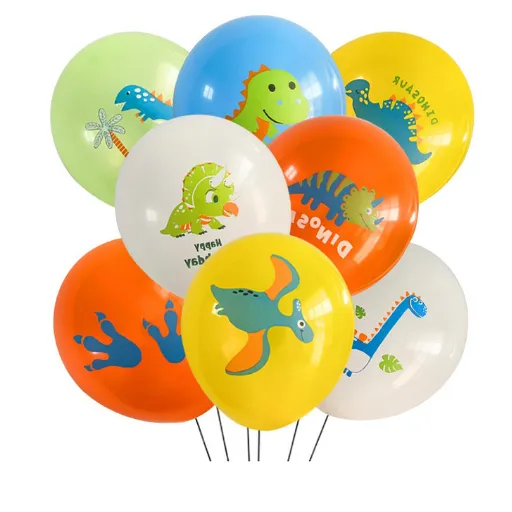
Most reprints start with the file, not the press. Artwork that looks sharp on a monitor can fail on a curved, stretching surface. Send vector, simplify, and approve a proof at final size.
Send AI, EPS, or PDF with fonts outlined. A raster file needs 300 dpi at final size. Include Pantone references and the one-color logo version.
Minimum sizes, safe zones, and placement
On 11-inch and 12-inch balloons, keep lines at least 1 mm thick and text at least 6 mm tall. Below that, ink can bridge or blur. Remove gradients, shadows, and fine texture; one strong spot color usually reads better than four.
Design inside a circle with 10% to 15% margin from the edge. The center holds shape best, and the neck distorts most, so keep critical text and QR codes away from it. Confirm orientation on the proof.
The pre-print proof checklist
Before production, confirm spelling, dates, Pantone references, white underlay, print size, placement, orientation, line weights, text size, QR scan, quantity, and packaging.
Amara planned a black-tie wedding in Nairobi with a thin-serif monogram and a white tagline. The proof showed the tagline breaking up at 12 inches. She dropped it, thickened the monogram, and added a white underlay. Of 300 balloons, two failed during setup.
For logo-specific guidance, see custom logo latex balloons.
Float Time, Shelf Life, and Helium Planning
Float time is a specification, not a promise. Grade, size, fill, temperature, altitude, and ink coverage move it.
Helium vs air
A helium-filled latex balloon floats; an air-filled one doesn’t. Air-filled balloons last far longer, often weeks indoors, which makes them better for garlands, arches, and backdrops that don’t need to rise.
In 2026, that choice costs. Helium contract prices rose roughly 15% to 30%, and some retail balloon prices climbed by up to 40%, according to MarketWatch.
Float, Hi-Float, and storage
Standard latex holds helium 8 to 12 hours. Quality 11-inch printed balloons often reach 12 to 24 hours, 12-inch give 8 to 24 hours indoors, and giants last 3 to 5 days. A spot logo adds negligible weight. For more, see how long latex helium balloons last.
Hi-Float is a sealant applied inside the balloon before inflation. It slows helium loss and can extend float from hours to days, but adds a production step and drying time. Use air-filled latex for backdrops, helium for entrances and photo moments, and Hi-Float only where the extra float pays.
Printed latex typically lasts 12 months uninflated, and up to 24 months at 5°C to 18°C in dark, dry storage. Store flat, away from heat and ozone, and order for the campaign.
MOQs and Pricing for Custom Printed Latex Balloons
Minimum order quantity isn’t a quality signal. It is a production decision driven by setup, colors, sides, and run size.
How color count and sides drive MOQ
Every color needs a screen and registration, and a second side needs a second pass. Minimums climb with complexity.
| Configuration | Typical MOQ range | What drives it |
|---|---|---|
| 1 color, 1 side | 100 to 250 | One screen, simple setup |
| 2 colors, 1 side | 250 to 1,000 | Two screens and registration |
| 3 to 4 colors, 1 side | 1,000 to 3,000 | More setup, more waste |
| Second side | Add 500 to 1,000, or double | Second pass and handling |
| 4+ colors or full coverage | 3,000 to 5,000 | Press time, ink, and reject rate |
Ranges vary by factory, size, and stock color. Wisa publishes tiers of 100, 2,000, 3,000, and 5,000 for one to four colors on its 11-inch line, while smaller printers start at 25.
Price tiers and true cost
| Quantity | Indicative price per balloon |
|---|---|
| 25 | About $3.40 |
| 100 to 249 | About $1.16 |
| 250 to 499 | About $0.58 |
| 500 to 749 | About $0.39 |
| 1,000+ | About $0.26 |
Nine-inch balloons often run 0.66to0.66to0.91 at 100, 0.25to0.25to0.32 at 500, and 0.10to0.10to0.30 at 1,000. Setup adds 0to0to75 per color. These are 2026 ranges, not quotes.
Add setup, freight, buffer, and reprint risk. A 250-piece order at 1.16plus1.16plus50 setup and 60freightlandsnear60freightlandsnear400, or 1.60each.A1,000−pieceorderat1.60each.A1,000−pieceorderat0.26 plus 50setupand50setupand90 freight also lands near 400,or400,or0.40 each.
Lead times and sampling
Proof takes about one business day. Standard screen production runs 4 to 10 business days; more colors can take three weeks. Sea freight adds 25 to 40 days, air adds 5 to 10. Work backward from the event date.
Ready to price a run? Send your artwork, quantity, size, and event date for a quote with grade options and a production timeline.
Eco, Compliance, and Supplier Vetting
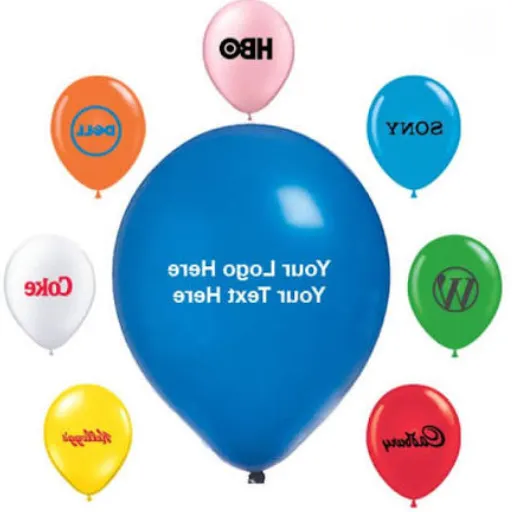
Latex comes from rubber-tree sap, a renewable resource. That doesn’t make every “biodegradable” claim true.
Eco claims that hold up
Natural latex is renewable, and water-based inks reduce the chemical load. But a 2020 University of Tasmania study found no meaningful degradation after 16 weeks in freshwater, saltwater, or industrial compost, where samples lost only 1% to 2% of mass. Never release balloons outdoors. See custom printed biodegradable balloons.
Certifications and supplier questions
For the EU, ask for EN 71-1, -2, -3, -9, and -12 reports, REACH Annex XVII compliance, and a Declaration of Conformity. For the US, ask for ASTM F963-23 under 16 CFR 1250 for products made on or after April 20, 2024, CPSIA documentation, and a Children’s Product Certificate where applicable.
Latex balloons also carry the 16 CFR 1500.19 warning requirement; the CPSC publishes small-parts guidance. CPSC eFiling begins July 8, 2026, and EU Regulation 2025/2509 applies from August 1, 2030. EN 71 and ASTM are not interchangeable.
Ask for gram weight by size and color, a print-area template, the ink system and cure temperature, stretch-test criteria, test reports for both markets, lead times, and the reprint policy. Red flags: no gram weight, no template, “biodegradable” without conditions, no test reports, or a price below the cost of the latex.
Frequently Asked Questions
Can you print on latex balloons?
Yes. Latex balloons are printed while partially inflated, then heat-cured and deflated.
What sizes do custom printed latex balloons come in?
Common sizes are 5, 9, 11, 12, 16, 24, and 36 inches; 11 and 12 inch cover most orders.
How much do custom printed latex balloons cost?
One-color 11-inch balloons commonly run about 1.16eachat100piecesandabout1.16eachat100piecesandabout0.26 at 1,000, plus setup and freight.
What is the minimum order?
One-color, one-side print starts at 100 to 250 pieces. Four colors or a second side can push it to 3,000 or more.
Do printed latex balloons float?
Yes, with helium. Standard latex floats 8 to 12 hours; quality grades reach 12 to 24.
How long do printed latex balloons last?
Uninflated stock typically lasts 12 months, and up to 24 months in cool, dark, dry storage.
Can you print photos on latex balloons?
Photo printing is possible on white latex with digital equipment, but detail softens as the balloon stretches. Foil is sharper.
Can you print white on dark latex?
Yes, but white usually needs an opaque underlay on dark rubber.
Are printed latex balloons biodegradable?
Natural latex is renewable, but independent testing has not confirmed fast biodegradation in typical conditions. Ask for the test method.
Get a Custom Printed Latex Balloon Quote
The right custom printed latex balloons come down to four decisions: grade, size, print area, and ink. Get those right and the design can survive. Skip them and the cheapest quote often becomes the most expensive order.
To recap:
-
- Choose gram weight before color count. A 2.8g or 3.2g balloon usually outperforms 2.2g for events that matter.
- Match the size to the viewing distance. Use 11-inch and 12-inch for most work.
- Design for the stretch. Vector artwork, 1 mm lines, 6 mm text, and a safe zone prevent most reprints.
- Budget setup, freight, and a 5% to 10% buffer, not just the unit price.
For a second opinion on a spec, or a quote that separates grade from price, request a custom printed latex balloon quote. Send artwork, quantity, size, event date, and destination.
For the wider material decision, compare latex vs foil balloons before you finalize the order.