Mylar balloons are quite often preferred for their vivid colors and sturdy build, making them a common choice for personal and corporate occasions. Despite their modern designs that encourage reuse, disposing of the balloons can still be considered a waste. This guide will answer your unspoken question: how to deflate Mylar balloons safely without bursting or crushing them. Be it the case that you want to make them permanent until the next party or you are simply opting for a more eco-friendly way, this tutorial will be a very thorough one taking you step by step through the basics and rules of handling the delicate foil balloons correctly. By the time you finish reading this, you will have the necessary information to make the Mylar balloons last longer, to produce less waste and to save money – all the time maintaining their structural integrity.
Understanding Mylar Balloons
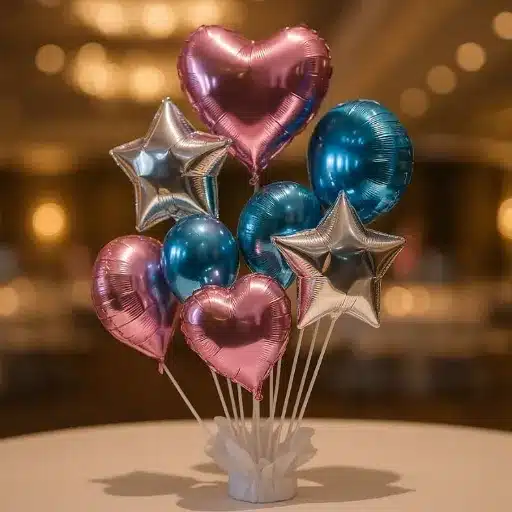
What are Mylar Balloons?
Constructed with a thin, flexible material which is actually a polyethylene terephthalate (PET) made by blowing and then stretching it and then coated with a metallic foil layer, Mylar balloons or foil balloons are actually foil balloons. This makes them highly reflective, shiny, and strong, which is quite opposite than latex balloons that are not of much durable nature. Their being made of light materials and resistance against helium leaks makes them not only suitable for decoration but also help them to be around for a long time—illustrating that they can stay up in the air for several days or even weeks if the air and other environmental conditions are ideal. Mylar, known for its strong and non-permeable properties, was first developed for the space industry but then these qualities were adapted to different other fields like food wrapping and, surely, balloons. The balloons come in a variety of shapes, sizes, and designs so as to make them very much suitable to be used in different events like birthdays, weddings, or corporate parties. Moreover, the metallic nature of the material has resulted in bright and detailed printing which is a great factor in their large-scale use in festive decoration.
Benefits of Mylar Balloons
The usage of Mylar balloons has many pros as opposed to the ordinary latex ones, which is why they are highly recommended for whatever purpose one might have. One of the most significant advantages of the Mylar balloons is that they are very sturdy. They are able to keep the helium inside them for a very long time, sometimes even for several days or even weeks, unlike latex, which can be pierced very easily and wear out over time. The cost of using them is well justified as the balloons’ durability this wise is among other things one of the major factors that determine the budget of an event.
Visual appeal is another big advantage of Mylar balloons. The Mylar balloons with their shiny metallic surface not only are higher-quality, detailed printing possible but also are more advanced in terms of the design of intricate, sharp, vivid colors, and the possibility of putting the message that you like wherever you want it accurately. So, everyone can easily see and understand it, something that is more difficult to achieve using latex balloons. Thus, they are very suitable for business branding in company eventss or the use of style and distinction at themed parties and other private events, subsequently making the place of the party look fabulously elegant HTML.
Moreover, Mylar balloons are non-porous, a feature that greatly aids in the maintenance of their inflation and at the same time protects them against the uptake of bad smells as well as moisture, thus they can retain their initial neat appearance. They are also more ecologically stable, because they do not deteriorate as quickly under the influence of heat and sun compared to latex balloons, and thus they are a better alternative for outdoor events.
In conclusion, Mylar balloons are hypoallergenic and for that reason do not have the allergy-causing proteins that latex does. Therefore, they are the best for people with latex sensitivities, making them suitable for a wide range of places like schools, hospitals, and gyms, and other places with children.
Common Uses for Foil Balloons
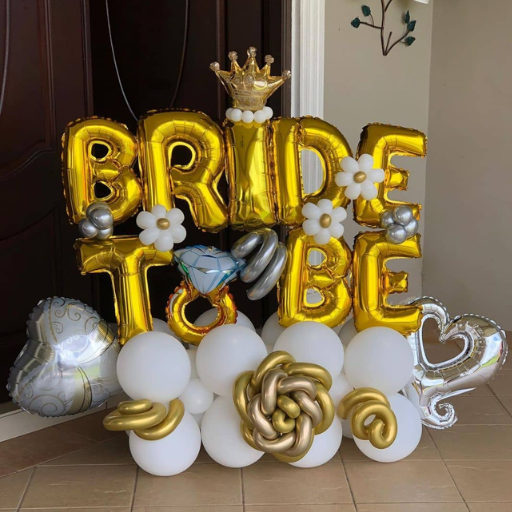
Foil balloons are a very multipurpose solution that can cater to different industries and events. A big area where they attract people is the celebration of birthdays, weddings, and anniversaries because the gas egalitarianism is their main selling point, meaning that any point during the event the decoration quality is always consistent. They are particularly applied to the most complex balloon decorations, like the arches, the bouquets, or the displays that follow a certain theme, as the very variety of choices of the shapes and designs make them so much the better and also they have the reflecting properties of the surface which adds to the attractiveness.
Moreover, Foil balloons are also a great tool used by businesses in their advertising and marketing campaigns. They are made with logos or advertisements of the company thus they are a great way of grabbing people’s attention during events such as trade shows, product launches, and corporate parties. Their powerful structure makes them good enough to stand the journey and remain very noticeable even when placed outdoors.
Foil balloons could be used for various purposes, and one of these is as a novel gift idea, especially in terms of giving care packages or surprise gifts. One of the features that makes its use really personal and special is the possibility of having any message you want written on the balloon itself. Consequently, the foil balloons that were formerly just in the form of a party product are now also found in the field of education and even in research premises, e.g., in the case of atmospheric experiments, for the reason that they have a very good ratio of strength to weight and their leakage is very minimal.
The different applications of foil balloons shown really well the flexibility and wide-ranging demand for these balloons, and this, additionally, affirm their being chosen as very helpful and dependable ones.
How to Deflate a Foil Balloon Safely
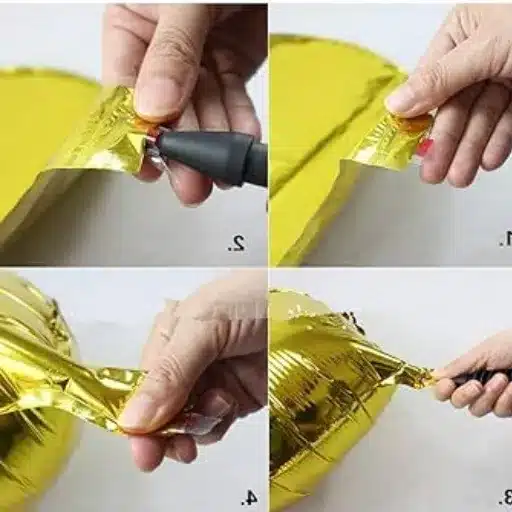
Step-by-Step Guide to Letting Air Out of a Mylar Balloon
Locate the Valve:The self-sealing valve is located on the usually on the stem of the Mylar balloon. This is the same place that the balloon was previously inflated and the nozzle came out.
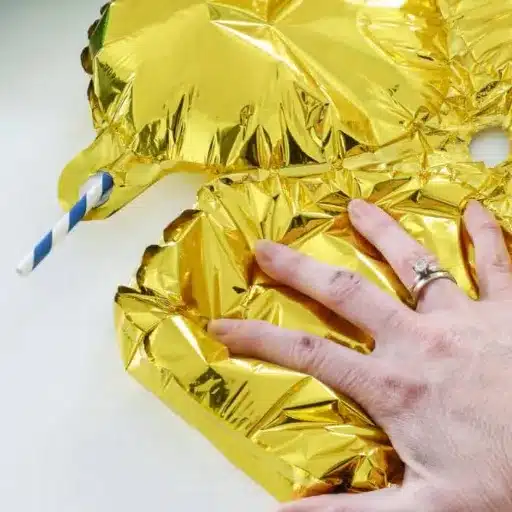
Prepare the straw or inflation stick you intend to use:Go for a straw or an easy-to-insert thin and sturdy item that will reach the valve. Maintain the cleanliness of the straw to prevent the possible damage of the seal in case of any debris.
Insert the straw gently into the valve:Move the straw toward the valve very gently and at the same time make sure that it goes between the plastic layers of the self-sealing mechanism without any hindrance. Do not try to use too much force as the material may get torn.
Release the air or helium:When the straw is safely in its place, squeezing the balloon will help the gas that has been trapped to get out. Helium balloons, on the other hand, may need to be deflated in areas with good air exchange since they use a gas that is very light.
Flatten the Balloon Gradually: Push on the balloon little by little so that you slowly flatten it while at the same time keep the straw in place so that the gas can escape without a break. You need to also be gradual in your pressing so that the material is made distorted free in case of a balloon re-use.
Take out the Straw and Fold the Balloon: When the balloon is entirely emptied already, very caringly pull the straw out and fold the balloon correctly. Keep it in a cool, dry place away from sharp items to maintain its in total for a later use.
Step by step method makes it possible for the balloon to be safely deflated without any harm thus its usability is prolonged and the waste is decreased.
Deflation Tools and Supplies Needed
To deflate a balloon efficiently and without causing any damage, you need the following tools and supplies:
Plastic Straw – A plastic straw being standard or reusable is the most urgent thing for breaking the balloon’s self-sealing valve gently so that the air may escape without the need to break the material of the balloon.
Clean Work Surface – A donut shaped balloon will not deflate properly unless it is emptied. Servers manually deflate balloons because they do not have vacuum pumps.
Soft Cloth or Towel – A cloth that is dampened from vinegar and water will provide a cushioned workspace, further protecting the balloon from potential damage while handling.
Storage Bag or Container – A dedicated storage solution, ideally a sealable bag or box, helps preserve the balloon’s material by keeping it away from moisture, dust, and sharp objects.
Protective Gloves (Optional) – For handling delicate materials, gloves can reduce the transfer of oils or dirt from hands onto the balloon surface, ensuring its longevity.
These supplies boost the efficiency of the deflation process at the same time as giving importance to durability and reusability of the balloon. Proper preparation and careful handling are crucial for the material’s quality that will last over multiple uses.
Common Mistakes to Avoid While Deflating
Forcing Deflation – One of the most common flaws is when people try to rush pushing air out of the balloon. Deflation too quickly might cause an uneven distribution of pressure, thus making it easier to get the material punctured or torn. The balloon is better off if deflation is done slowly with control that will leave it in shape and ready for a next time use.
Use of Wrong or Dangerous Tools – Instruments such as scissors or knives not meant for deflating will surely harm the balloon irreversibly by cutting the threads. The use of the proper deflation adapters or nozzles is the only way to release the air safely without weakening its strength.
Not Doing Proper Floor Cleaning – When the balloon is deflated on an uneven or soiled surface, it is likely to get scratched, punctured or contaminated. Make sure to have a tidy workspace without dirt and soft padding to minimize the risk of wear and tear.
Not Vacuuming the Air Out Completely – The balloon will grow when subjected to heat and get smaller when cold. The elasticity can gradually decrease because of it and the material of the balloon may not last as long.
Improper Wrapping or Storing – Crumpling the balloon unevenly while folding it or keeping it in a confined space may bring in creases or pressure points that will facilitate the damages. Follow a particular folding way and keep the deflated balloon in a bag that is safe in a dry and cool place.
By steering clear of these pitfalls, the user will be able to have their balloons serve them for a much longer period and at the same time ensure maximum performance in every subsequent use. Proper handling and sticking to the recommended ways are the main factors in keeping the material’s integrity.
Techniques for Deflating Mylar Balloons Without Popping
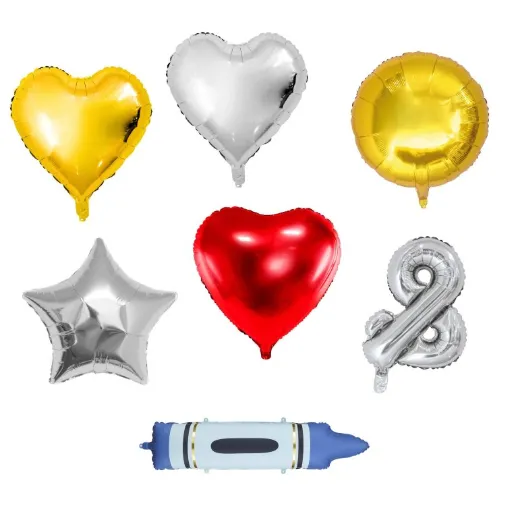
Applying a Straw Method for a Slow Deflation
Spotting the Balloon’s Valve: First of all, carefully look for the self-sealing valve of the Mylar balloon. It is usually located in the vicinity of the balloon’s lowermost part which is also the place where the air or helium is blown in during inflation. The valve is basically a tiny flat hole that closes itself after the balloon has been filled.
Insert the Straw by All Means: By no means, insert the tip of a common drinking straw into the valve even though your hands shall be shaking with the force of your will. With a little bit of pushing force and at the same time sliding the straw inward, try to get it through the self-sealing system. It is this very step that allows the air or helium to move out smoothly without damaging the valve.
Treat Air Release En Route to Valve: Care must be taken not to stand the balloon on its own weight, the straw being already securely positioned between the fingers while the thumb and index finger ensure the surface of the balloon on either side of the straw is gently made wrinkled. Do it very slowly, and you are going to separate the bonded helium or air from the Mylar in a way that does not force-material stress.
Deflation Process and its Monitoring: Observe the deflation of the deflating balloon continuously. To avoid creating folds or damaging the Mylar, change your grip and avoid squeezing the material. Let air come out naturally and please do not attempt to expedite the process by pumping in the air.
Straw Removal and Folding: When the balloon has completely deflated, very gently get the straw out of the valve. Lay the Mylar flat and fold it in half in such a way that no sharp angles or highways, which could be critical points of the material, are formed.
In this way, a systematic and error-free deflation process is done in which a Mylar balloon can be reused for later occasions.
Vacuum Technique to Speed up the Air Removal Process
The method of vacuum is proficient in removing air fastly from a Mylar balloon especially when deflation requires being done in a hurry due to the time factor. For this measure, a standard vacuum cleaner or handheld vacuum device with a suitable nozzle extension is needed. The first thing to do is to gently insert the net of the nozzle into the inflation valve of the balloon. Precise alignment needs to be maintained to avoid valve or surrounding material damage.
When the nozzle is fixed properly, switch the vacuum cleaner to the minimal power setting. This will reduce the risk of Mylar tearing or putting strain on the seams which may be the result of power being too high. Gradually turn the suction power up, making sure that the extraction of air takes place in a uniform manner and does not cause any sudden folding or creasing on the surface of the balloon. Check the advancement frequently to prevent the vacuum unit from an overheating state or to avoid the material of the Mylar to get over-compressed.
Once the balloon is completely deflated according to your satisfaction, switch off the vacuum and then gently pull out the nozzle from the valve. The balloon is to be examined for any remaining air pockets or damage, and then it must be folded nicely for the storage in a location with low humidity but moderate temperature. This method, if properly carried out, offers a controlled and quick way to let the air out of Mylar balloons without the loss of their structure for the next occasion.
Use of Heat for Easier Deflation
Using heat on Mylar balloons may help in the deflation process by the temporary softening of the material, hence, it will be more flexible and easier to deal with. To heat the material while at the same time ensuring safety, it would be best to use a heat source that is both regulated and constant, such as a low-temperature hair dryer or heat gun set to its lowest setting. Keep the heat in an even flow over the whole balloon without getting closer than 12 inches to avoid overheating or melting.
When the material feels a bit warm to the touch, please, gently squeeze the ballon so that air flows to the valve. Be careful because the Mylar can get weaker when it gets warmer and do not squeeze it too hard. After all the air has been pushed out, wait until the balloon cools down to continue handling it. This is a thorough and accurate way to let the air in the balloon escape and it is awesome because it can be used for big or thick Mylar balloons. The technique will work the best only in settings where there are a limited number of deflated balloons; therefore, the handling of them could be more careful and protective of the material. Also, do not throw it away as it is otherwise a waste of material. Always examine the balloon in light of the technique to see if it has been damaged due to overheating.
Reusing and Recycling Foil Balloons

How to Store Deflated Mylar Balloons Properly
It is necessary to store Mylar balloons properly to keep them for a long time and to protect their shape after deflation. The procedure should be started with cleaning the balloon with a soft, wet cloth to get rid of any dirt, the oil that has been absorbed, and the various residues gathered during the use. Make sure the surface is dry as wet storage will cause the balloon to mould or degrade over time. Leave the balloon to air dry completely. Now the balloon is dry you can start folding it along its natural lines or delicate seams without twisting or regretting as these actions might weaken the balloon fabric or cause the fold to be permanent at that point as well.
One method of storing an inflated balloon is in a cool and dry place, where it will be free of direct sunlight and extreme temperature changes, as prolonged exposure to heat or dampness may affect the Mylar’s reflective shield and the construction of the balloons. To protect the balloon from dust and other harmful substances, place it in an airtight container or a resealable plastic bag, and then label the storage container accordingly to make it easier to find the type of balloons during use. By taking the measures laid down in these instructions, one can effectively increase the lifespan of the Mylar balloons significantly bearing repeated applications in mind and, therefore, reducing the volume of waste.
Creative ideas for recycling foil balloons
Foil balloons which are mostly made of Mylar are one very good option for recycling/due to the material they are and they flexibility. Still, despite the fact that they are most likely made of less polluting materials, there are innovative ways/tricks to make them last longer.
Gift Wrapping:Cut Mylar balloons into flat sheets and wrap them around the gifts. Using the colorful Mylar material would be really eye-catching and unique besides being a very eco-friendly thing to do instead of using conventional single-use wrapping paper.
Party Decorations:Mylar balloons could be turned into bunting and streamers and also used as table centerpieces that were originally- and creatively-decorated by the colorful balloons. The vivid colors may even lift and extend the party and costumes to that effect will become the traditional way to say ‘’cheers’’ and have a blast.
Emergency Blankets:The ability of Mylar to trap heat makes it the perfect material to make the very lightweight, and yet very warm layers for the kits used in outdoor and emergency situations. Also, the balloons are very convenient to work with in terms of hiking gear because they can be simply folded and inserted into the backpack.
Protective Packaging:Simply cut the material into smaller sections and put it around glass, vases, or any similarly breakable objects to absorb shock and vibration in the area of movement. The cushioning effect of Mylar will provide the highest protection level for the most fragile goods and at the same time will even make the packages seem smaller and will save storage spaces.
Gardening Applications:Mylar material strips can be used as bird repellent in gardens. Through connecting strips to stakes or plants, the shiny surface will scare the birds but, at the same time, not cause them any harm. This, in turn, will lead to the protection of the crops and vegetables.
You will be able to reduce environmental impact, decrease waste, and foster sustainable use of resources if foil balloons are utilized in the above-mentioned creative and useful ways.
How to Recycle Foil Balloons Responsibly
Foil balloons recycling comes with some steps you should adhere to as these balloons are usually made from Mylar or nylon which cannot be recycled at curbside. The first thing to do is contacting your local recycling center to check if they recycle foil balloons or have specific drop-off places for such materials. If no recycling options are available locally, think about the possibility of turning the balloons into reusable items like gift wraps, craft projects, or protective liners for packaging fragile items.
Another thing to consider is that specialized recycling programs and mail-in services might be taking foil balloons and carrying out the processing that is needed for the retrieval of reusable materials, thus diminishing the quantity of waste in the landfills. The very first thing one needs to do when recycling or reusing the balloons is to completely deflate them in order to prevent any remaining gas to escape and turn into a safety hazard such as getting stuck in the mechanical equipment. By following these safe methods, one is not only taking care of the balloon but at the same time minimising the environmental harm caused by balloons.
Watching and Learning: Video Tutorials
Recommended Video Tutorials for Deflating Mylar Balloons
A few high-quality video tutorials can go a long way in making the deflation of Mylar (foil) balloons a safe and effective task and that when it is easy to understand what is going on. When you have finished your research of reliable easy-to-follow sources, I personally recommend viewing the step-by-step tutorials done by the makers who pay attention to the ecological disposal and practical reuse of balloons at the same time. For instance, there are boutique pieces of content that are created by the most simple and most natural methods like putting a little hole into the seam of the balloon with a straw or a skewer, thus completely reducing the air volume of the balloon in a controlled way. Some other tutorials guide on how to deflation the balloon, fold it flat and store it either in an environmentally friendly way or recycling, thus cutting waste hugely and also ensuring safety.
A tutorial video that particularly impressed me takes the viewer through the concept of deflation in a neat way by using everyday household items like scissors or a reusable straw. This production also includes the matter of how you can prevent the material from getting damaged in case you are going to reuse the balloon. It is stressed that the air is to be let out gently so that the possibility of mess or unintended harm to the balloon structure is avoided. The tutorial can be enjoyed and learnt from at any level, from beginners to those already in the field of crafting or recycling.
If you are looking for the most complete videos on eco-friendly disposal options, then I have also come across clips that talk about the recycling of Mylar stuff and locating the correct recycling facilities tutorials-wise. The aforementioned videos not only clean the air with their ideas about the balloon but also serve as a good source of learning when environmental considerations are concerned. Through a detailed and easy-to-follow guide, one becomes confident in the handling of foil balloons in a proper way while giving them another or their everlasting life in the different recyclable categories on the other side.
Expert Tips from Balloon Artists
Successfully managing foil balloons is not possible without proper treatment during and post-use and it is a necessity, as well as a responsible act. First and foremost, the balloons should always be inflated using high-quality pumps to ensure they get the right size and shape and to maximize their lifespan as well. Moreover, if a situation arises when you want to let out the air out of a foil balloon and then have it re-inflated, simply open the valve very mildly or carefully; again, in front of your eyes, out the air, and then fold and store in a cool dry place and that way you are preventing any damage. This method of handling the foil balloons actually makes the material quality last longer and, thus, allows for the reuse of the balloon several times instead of a single-use which is not environmentally-conscious or cost-effective.
Recycling foil balloons, such as those made from Mylar, requires some additional work but is very important for the environment. Some Mylar is not received by all curbside recycling programs because of its material that is made up of a combination so it is important to contact your local recycling facility in the first place. To make the balloons ready for recycling, make sure they are fully deflated and free of any adhesives or debris. Alternatively, it would be a fun thing to do to use old foil balloons creatively like using them as gift wrappers, making decorations, or incorporating them into art projects. These ways are not only waste-reducing but also material-lifespan-elongating which is in line with responsible environmental stewardship.
Being aware and doing little things that matter, I have noticed that foil balloons can be kept looking nice by recycling, and at the same time it is helpful to have some of the environmental effects mitigated. Such simple individual actions add up and eventually can make a noticeable difference in the landfill waste issue and also show how important it is to celebrate in a conscious manner. I am promoting this idea to other people in the industry and to all the regular balloon users who might see this as a more sustainable way of enjoying their balloons.
Reference Sources
-
Safer Disposal of Balloons – University of Michigan – Offers tips on safely releasing air from balloons for proper disposal.
-
How To Deflate A Foil Balloon: The Ultimate Guide – TSOT – Provides a detailed guide on deflating foil balloons using simple tools like a straw.
-
Inflatocookbook – MIT Media Lab – Discusses techniques and materials related to inflatables, including handling and deflation.
Frequently Asked Questions (FAQs)
Is it possible to manually let the air out of a balloon using the valve, then insert the straw to release it?
It is generally possible to do so by locating the valve at the balloon end, which is symbolic of the area where the balloon was made to be a balloon. Then gently insert a drinking straw or a thin plastic stick into the valve opening to reach the air inside. The valve opening is grasped around with the help of gentle pressure to keep it open while the straw is slowly pushed in, allowing the air to escape without tearing the plastic. The key here is to work slowly and with patience so that no seam ripping or plastic slip to prevent resealing happen. Helium would make the gas escape faster than air does, so be cautious and avoid inhaling any escaping gas. Once most of the air is out, fold the balloon flat and squeeze the remaining air toward the valve to deflating or storing.
Would it be a nice update that I could release the air slowly to save the balloons for re-use?
Indeed, letting out the air gradually not only saves the valve and seams of balloons for another time, but also diminishes the possibility of the material getting torn. While the balloon is becoming flat, the valve should not be partially or fully closed; the air flow must be delicate and persistent to avoid a sudden collapse. Moreover, the site should not be exposed to direct sunlight, excessive heat, sharp objects or mechanical abrasion, and the balloon should not be placed on sharp corners or between fixtures. Unwrinkled, languid or sagging posture on the decorations should always be straightened. Finally, make sure that the valve is closed properly and that there is no leakage or weak seal.
I wonder, is it better to softly squeeze and pull the air out of the valve than to cause the balloon to burst?
While you remove the tube or your finger, put the end of the valve to a pressure upwards; this measure reduces the tension among the seams; be careful not to break the balloon because damages are usually permanent. Make a balloon sit on a hand and flatten it with the opening face up. Then blow it to the full then again go to the valve and start pushing air back with your hand, less power will be needed to empty the balloon. By putting constant and steady pressure apply through the valve rather than by quick, strong pushes that can result in a hole. If you have used helium for a birthday party or any other kind of celebration, then do not take it lightly and do not inhale; let the gas spread and disappear in a good-ventilated area. Keeping the valve intact will also help in resealing the balloon either with the tiny glue or by folding the valve for storing.
Would it be alright to fold and press the plastic in order to make the air come out quicker without destroying the decor?
Folding and pressing the plastic can speed deflation, but do this slowly and meticulously to avoid a permanent crease or tearing of the decor surface. Distribute the pressure equally and blow air through the valve instead of the other side, as doing the latter may damage the seams or form weaker spots. If you want to speed up the process, it’s better to apply the force gently and repeatedly than to give a strong single push so that pressure can be controlled and the bursts and risks can be minimized. When it comes to the balloons that can be refilled and other party decorations, do not fold them too much as it may spoil the printed design or coated finish. Once the flatten-ing is done, iron out the crease and store it flat to make sure it is ready to be reused for another birthday or party.
Can an inflator or a hand pump be used to remove air from a Mylar stretchable balloon by just turning it around the same way the air is put in or a drinking straw must be the only method for this process?
Although some pumps and inflators can reverse the air movement direction, the majority of simple hand pumps are only designed to inflate. One approach to exhaust the air from the balloon using the already available valve adapter by applying a gentle negative pressure, which, however, needs to be slow so as not to damage the valve. Pumping might be quicker than using a drinking straw, but it also entails the need for more intricate pressure control and the avoidance of sudden deflation. Pumping latex balloons might require using different types of tips, and caution should be taken not to contaminate by having the same tools used for helium inflations. Always make sure to first see if using the inflator in the opposite direction is possible, and it is advisable not to proceed if the valve on the inflatable is not compatible with any pump or inflator you are going to use.
Should I store deflated Mylar balloons in a specific way so that they are still going to be good to use for further celebrations?
Once the deflation has been done, all you need to do is to press out the leftover air, fold the balloon flat along the natural lines, and close off the valve area by either pressing it together or using a small amount of tape to avoid dust and dirt from entering. It is important to put the balloons away for future manifestations in a cool, dry place that is far away from sharp edges and direct sunlight as that may cause the bags to become brittle or colored. The presence of a tag on the storage bag that states the party or the size may act as a key factor in the event of spontaneous re-decorations for another party or birthday bash. And in case you would like to keep the balloons for quite a long time, remember you should never place heavy objects on top of them as that may lead to the development of permanent creases or pressure points. The process of inflating the balloons again should begin with a thorough examination of the valve where a hand pump or air fill should then be used for a test inflation so as to ascertain that everything works well.