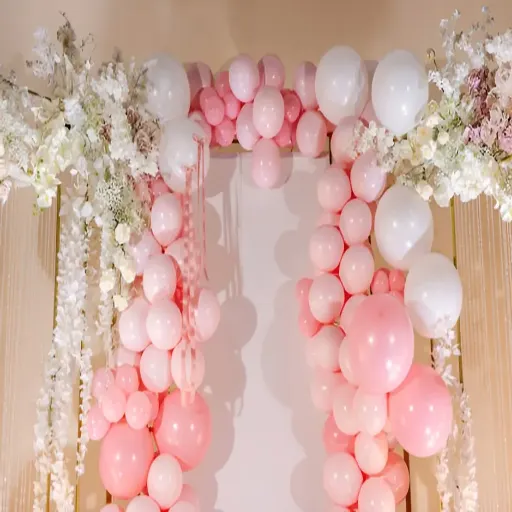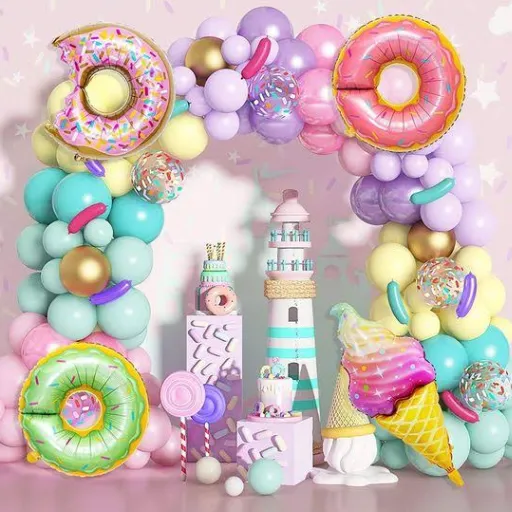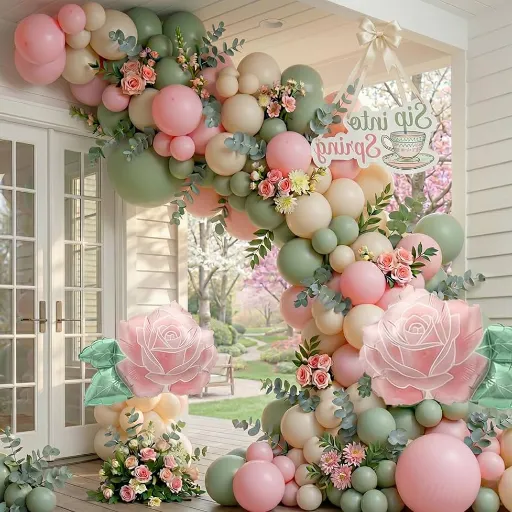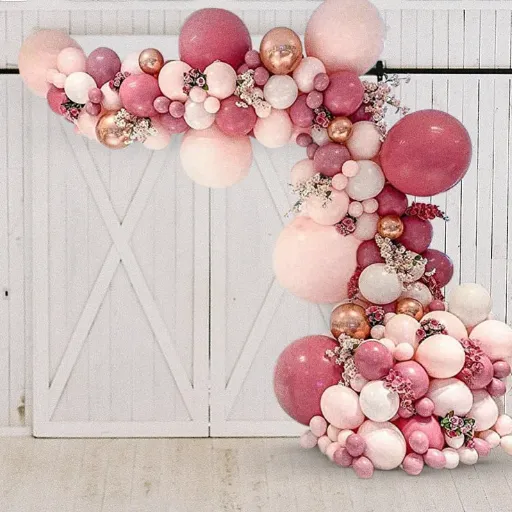
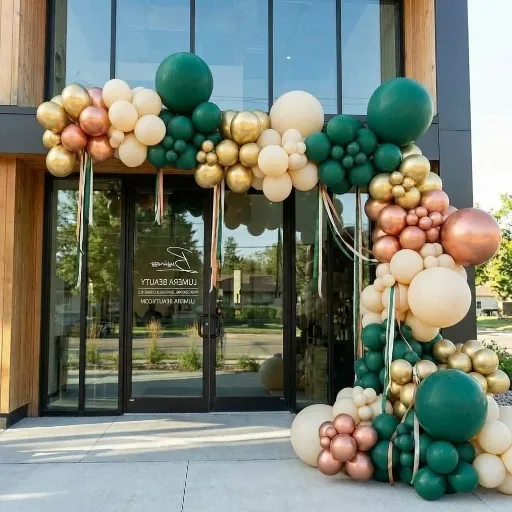
A grand opening balloon arch should span 10 feet for a single storefront door, 20 feet for double doors, or stand 8 feet square as a freestanding standard. Plan on $300 to $650 for a classic 20-foot arch installed, or $850 to $1,500 for a branded oversized build with custom signage.
A balloon arch for grand opening day is the one decoration that appears in every customer photo, every local news shot and every map listing after the launch. For most store opening balloon arch orders, it’s also the biggest single line item. Treat it like storefront signage, not party decor.
Most owners pick a color and a rough size for their grand opening balloon decor, then discover the arch hides the store name or blocks the sidewalk. The fix is to measure the opening, set the sign clearance, count the balloons and confirm the install rules before you order.
Key Takeaways
- A 10-foot opening suits a single door, 16 to 20 feet suits double doors, and a freestanding standard is 8 by 8 feet.
- Opening width times 1.6 gives the balloon run. Classic arches use 4 to 6 balloons per foot; organic builds use 10 to 12.
- A 10-foot opening needs about 64 to 96 classic balloons or 160 to 192 organic balloons, plus 10 to 15 percent spares.
- Installed classic arches run $300 to $650. Branded oversized builds with signage run $850 to $1,500.
- Keep the arch below the store sign, clear of exits and approved by the landlord before you order.
If you’re sourcing printed grand opening balloons yourself, see our . If you need the full launch plan, use the for the other zones.
What Size Grand Opening Balloon Arch Do You Need?
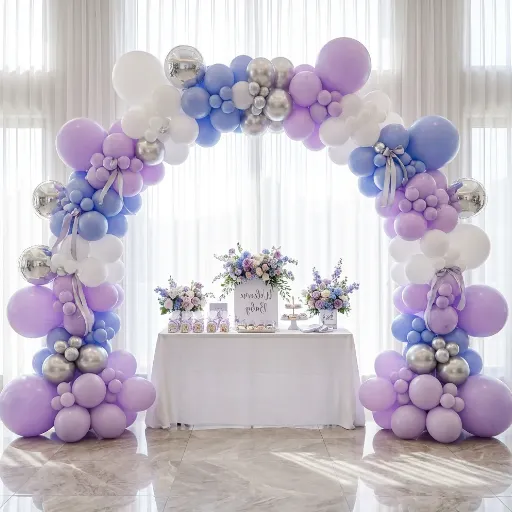
Measure the clear opening between the two points where the arch will stand. Do not measure the wall, the window or the width of the unit. That clear distance decides the span, and the span decides the balloon count, the frame and the price.
| Entrance type | Clear opening | Arch span | Arch height | Best format |
|---|---|---|---|---|
| Single door | 3 to 4 ft | 10 ft | 7 to 8 ft | Full or half arch |
| Double doors | 6 to 8 ft | 16 to 20 ft | 8 to 10 ft | Full arch |
| Wide glass frontage | 10 to 16 ft | 20 to 24 ft | 8 to 12 ft | Organic arch or column pair |
| Mall kiosk or interior unit | 4 to 6 ft | 6 to 8 ft | 6 to 7 ft | Half arch or column pair |
| Freestanding photo spot | Not applicable | 8 by 8 ft | 8 ft | Framed arch or garland wall |
A maps 10 feet to a single door and 20 feet to double doors. These are starting points. A 20-foot arch on a 12-foot frontage will overwhelm the unit and hide the sign. A 6-foot arch on a 30-foot glass frontage will disappear in photos.
The right span frames the entrance without competing with the brand.
Keep the store sign visible
An arch that peaks in front of the store name is the most common specification mistake. Customers need to read the sign from the street.
If the sign sits directly above the door, stop the arch 12 to 18 inches below its bottom edge. Use a half arch, an asymmetrical build or a pair of columns instead of a full curve. Check the opening-hours decal, the address and the accessibility signage too.
Match the height to the building
An 8-foot arch is visible from the street and reads well in phone photos. That’s why it’s the default for a single door. Columns usually run 6 to 8 feet.
For a double-door entrance or a wide frontage, 10 to 14 feet is the statement range. Beyond that, the arch becomes a structural installation that needs engineering, permits and a professional crew.
A bakery owner with a 12-foot frontage once ordered a 20-foot arch because the listing called it “grand opening size.” It covered the shop sign and the door canopy. The replacement was a 14-foot asymmetrical build that framed the doorway and left the sign readable, with fewer balloons and a lower invoice.
Composite scenario, not a named client.
Which Grand Opening Balloon Arch Style Fits Your Storefront?
Five grand opening balloon ideas cover almost every launch. The names vary by supplier, but the structure and density don’t.
Classic spiral arch. Balloons wrap a frame in a uniform spiral. The look is formal and easy to read from a distance, which suits banks, clinics, law offices and dealerships.
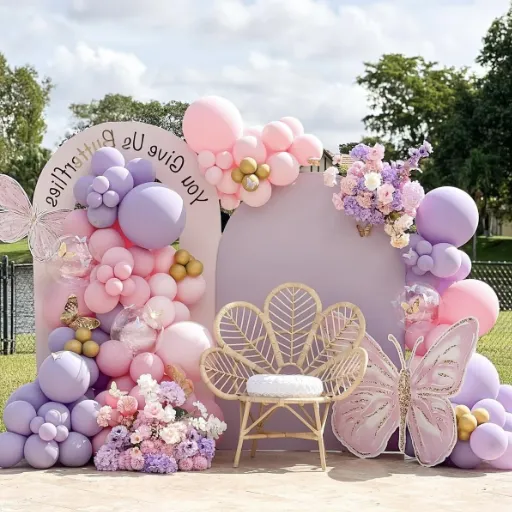
Organic arch. Mixed sizes sit at different depths, so the arch looks irregular and full. It photographs well and suits beauty, food, fitness and lifestyle brands. It uses roughly twice the balloons of a classic arch at the same span.
Half or asymmetrical arch. The curve rises from one side and stops short of the sign or ribbon-cutting point. It preserves sightlines and works best on narrow frontages.
Column-and-arch or double arch. Columns flank the door and an arch connects them, or a second arch sits inside for photos. This is the most corporate format and the easiest to pair with a ribbon cutting.
Freestanding garland on a frame. A garland is built on a rigid frame and stands without wall fixings. It suits leased spaces, mall units and indoor photo spots where drilling or taping is forbidden.
| Format | Best entrance | Relative density | Relative cost | Install complexity |
|---|---|---|---|---|
| Classic spiral | Double doors, conservative brands | Medium | $$ | Medium |
| Organic | Wide frontage, lifestyle brands | High | $$$ | High |
| Half or asymmetrical | Narrow frontage, sign-sensitive sites | Low to medium | $$ | Medium |
| Column-and-arch | Banks, clinics, dealerships, malls | Medium to high | $$$ | High |
| Freestanding garland | Leased space, indoor photo spot | Medium | $$ | Low to medium |
For a wider gallery, see our page. An entrance needs structure and a wall needs drape, so an arch is the safer choice when the decoration must stand on its own.
How Many Balloons Does a Grand Opening Balloon Arch Need?
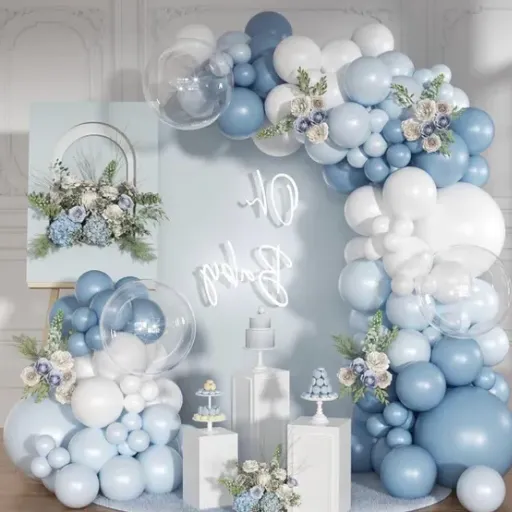
Use one formula and state the definition. Opening width times 1.6 gives the balloon run, the length of the curve. A classic arch uses 4 to 6 balloons per foot of run. An organic arch uses 10 to 12.
Add 10 to 15 percent for pops, defects and gaps.
Suppliers use “arch size” in two ways. Some quote the opening width. Others quote the balloon run.
A “10-foot arch” can mean a 10-foot opening with a 16-foot run, or a 16-foot opening with a 10-foot run. The first needs 160 to 192 organic balloons. The second needs 100 to 120. Both listings are technically correct.
| Opening width | Balloon run | Classic (4 to 6 per ft) | Organic (10 to 12 per ft) | Add 10 to 15 percent |
|---|---|---|---|---|
| 6 ft | 9.6 ft | 38 to 58 | 96 to 115 | 10 to 17 |
| 8 ft | 12.8 ft | 51 to 77 | 128 to 154 | 13 to 23 |
| 10 ft | 16 ft | 64 to 96 | 160 to 192 | 16 to 29 |
| 12 ft | 19.2 ft | 77 to 115 | 192 to 230 | 19 to 35 |
| 16 ft | 25.6 ft | 102 to 154 | 256 to 307 | 26 to 46 |
| 20 ft | 32 ft | 128 to 192 | 320 to 384 | 32 to 58 |
These counts run higher than many product listings because the listings often quote the balloon run, not the opening. If a supplier’s count looks half as large, ask which measurement they used before comparing prices.
A dense arch is made of a size mix, not more 11-inch balloons. A practical blend is 60 to 70 percent 11-inch balloons, 20 to 30 percent 5-inch fillers and about 10 percent 16-inch accents. One 36-inch hero balloon can anchor a corner or carry a logo, but it changes the look and the structural load.
A gym owner compared two quotes for the same 20-foot opening. One used 250 balloons and looked full in person. The other used 400 balloons and looked full in photos, which was where most of the launch coverage would appear. The denser build cost more, but it held its shape in every phone shot.
Composite scenario, not a named client.
Order 10 to 15 percent extra. Latex pops during inflation, transport and installation, and a storefront install has no time for a second order. For the full calculator, see our .
What Does a Grand Opening Balloon Arch Cost?
There are three buying routes, and they aren’t comparable. A kit price covers balloons and hardware. An installed price covers labor, transport, frame, inflation, anchoring and often teardown.
| Route | Typical 10-ft opening | Typical 20-ft opening | What is included |
|---|---|---|---|
| DIY kit | $129 to $249 | $249 to $499 | Balloons, strip or frame, pump, instructions |
| Local decorator | $300 to $500 | $300 to $650 for a classic build | Delivery, frame, inflation, install, basic anchoring |
| Full-service branded build | $450 to $850 | $850 to $1,500 | Design, custom print or signage, install, teardown, spares |
These are 2026 US market ranges from public listings and published price guides, not Starrysky prices. A puts classic arches at $250 to $500, organic arches at $400 to $950 and premium custom builds at $900 to $2,500 or more. One decorator price list quotes a standard entrance arch from $450 and oversized builds with custom signage at $850 to $1,500. The spread tracks labor, access and customization more than balloon quality.
Ask for these line items: delivery, frame, inflation, on-site assembly, weighted bases, installation, teardown, spares, after-hours access and a certificate of insurance if the landlord requires one. A quote that omits teardown or anchoring isn’t cheaper. It’s incomplete.
Costs creep with custom print setup, extra colors, oversized spans, outdoor reinforcement, rush delivery and multiple locations. A mall or airport unit may add access fees, security clearance or a fixed install window.
The cheapest route isn’t automatically the kit. If you need a 20-foot arch standing before a 9 a.m. opening, labor and access are the product.
For the full breakdown by type, size and city, see our .
How Do You Brand a Grand Opening Balloon Arch?
Branding works when the arch reads as one object from 20 feet away. That usually means two or three colors, one dominant, and a logo large enough to survive a phone photo.
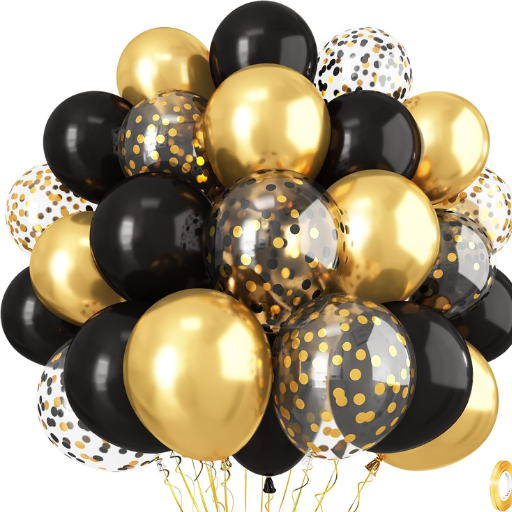
Pull two colors from the logo and add a neutral or metallic. White, ivory, champagne, silver and gold are the usual neutrals. Give one color dominance and let the others accent it.
Three colors is the practical ceiling for a storefront arch. More colors means more balloon SKUs, more setup and a higher chance of a muddy palette.
A logo printed on an 11-inch balloon has a small canvas. Keep the mark within 60 to 70 percent of the printable area: about 12 cm on an 11-inch balloon, 14 cm on a 12-inch balloon and 38 cm on a 36-inch balloon. White ink on dark latex needs an underlay, or the mark looks grey.
Digital printing handles full-color artwork and gradients. Screen printing is economical for one or two solid colors. Foil balloons can carry foil stamping, and PVC balloons can take UV printing. If the logo has fine type or a strapline, approve a proof at final size before the full run.
The arch frames the entrance, and the entrance frames the photo. Put a rigid sign at the apex or at chest height on an adjacent photo wall. Keep the brand mark out of the busiest part of the cluster. If you add a QR code, make it at least 1.2 inches and put a short URL underneath.
Match the ribbon, window decals, staff shirts and lighting temperature. If you’re printing balloons for the first time, and send artwork early.
Grand Opening Balloon Arch Install and Logistics
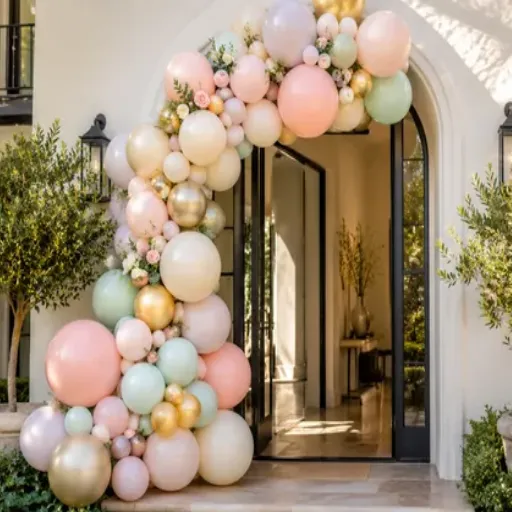
Build the countdown backwards from the ribbon cutting. Custom print sets the critical path: a local printer usually needs 3 to 4 weeks, and factory-direct production can take 6 to 8 weeks by sea. Book the arch before the print, or the balloons arrive after the opening.
| Timing | Task |
|---|---|
| 4 to 6 weeks out | Approve artwork and place the custom print order |
| 2 to 3 weeks out | Book the decorator, frame and install window |
| 1 week out | Confirm load-in access, parking, power and landlord approval |
| 1 to 2 days out | Inflate and stage balloons; build sub-assemblies |
| Morning of | Install the frame and arch; touch up gaps and sign placement |
| 30 to 45 minutes before | Photo check: sign visible, logo straight, exits clear |
Outdoor arches fail in predictable ways. Wind pushes them over, sun fades dark latex, rain softens the base and heat expands balloons until they pop.
- Anchor both feet with weighted bases, sandbags or ground stakes.
- Use UV-treated balloons and avoid dark colors in direct sun.
- Assemble indoors and move the arch out just before the opening when possible.
- Keep spare balloons on site.
- Agree a wind trigger with the installer. Many crews take the arch down when sustained wind approaches 15 mph.
- Check for slope, drains, grates and trip hazards.
- Confirm the arch clears the sidewalk, fire lane and accessible route.
Indoor installs are easier on the balloons and harder on permissions. Malls, airports, medical buildings and leased units often restrict wall fixings, ceiling access, load-in times and lobby footprints. Ask the property manager four questions: where the arch can stand, which entrance the crew can use, what insurance certificate is required, and when install and removal are allowed.
A salon opening ran into a windy forecast after an outdoor arch was already scheduled. The installer swapped the full curve for a lower half arch, doubled the base weights and moved the install to the morning of. The ribbon cutting went ahead, and the arch stayed upright.
Composite scenario, not a named client.
Latex balloons are a choking hazard for children under 8. The U.S. Consumer Product Safety Commission and advises adults to keep uninflated balloons away from young children and discard broken pieces immediately. Keep the arch above reach at family-friendly openings, and never release balloons outdoors.
For venue access, insurance and the wider corporate checklist, see our .
Frequently Asked Questions
How big should a grand opening balloon arch be?
A single storefront door usually needs a 10-foot arch. Double doors need 16 to 20 feet. A freestanding standard is 8 by 8 feet. Measure the clear opening and keep the arch below the store sign.
How many balloons do I need for a 10-foot arch?
For a 10-foot opening, the balloon run is about 16 feet. A classic arch needs 64 to 96 balloons. An organic arch needs 160 to 192. Add 10 to 15 percent spares.
If a supplier quotes 100 to 150, ask whether they measured the opening or the run.
How much does a grand opening balloon arch cost?
A DIY kit for a 10-foot opening runs about $129 to $249. An installed classic arch runs $300 to $650 for a 20-foot span. A branded oversized build with custom signage runs $850 to $1,500. Delivery, teardown and after-hours access change the total.
Can I put my logo on the balloons?
Yes. Digital printing handles full-color logos and gradients, and screen printing is economical for one or two solid colors. Keep the logo within 60 to 70 percent of the printable area and approve a proof at final size. White ink on dark latex needs an underlay.
How early should I set up the arch, and how long will it last?
Install outdoors on the morning of the event. Indoors, an air-filled arch can go up one or two days ahead. Air-filled latex lasts several days indoors but only about 6 to 8 hours in direct sun outdoors. Heat, wind and rain shorten that further.
Do I need permission from my landlord or the city?
Often, yes. Leased units, malls, sidewalks and buildings with fire equipment may restrict the footprint, anchoring method, load-in time or insurance. Ask the property manager before you order.
Make the Grand Opening Balloon Arch Work for You
The arch is the one decoration that works in every photo, from the ribbon cutting to the customer selfie six months later. Specify your grand opening balloon arch with four numbers: opening width, balloon run, balloon count and installed budget. Then confirm the sign clearance and the property rules before anything is printed.
If you’re still planning the rest of the day, the covers the entrance, photo wall, counter, giveaway and ribbon-cutting zones.
Send us your opening width, sign height and artwork. We will tell you which span and balloon count fit, and quote the printed balloons for the palette you have in mind. .