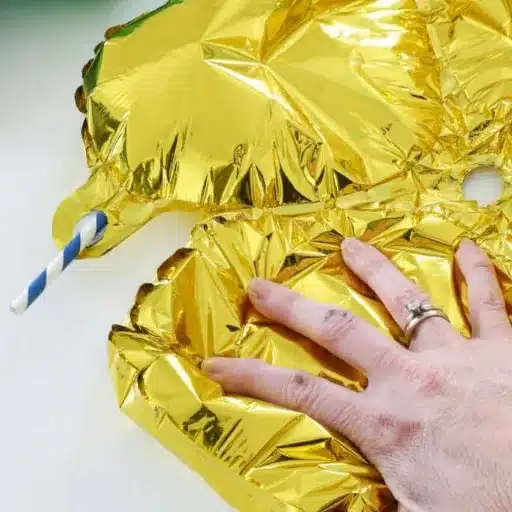
Having to deflate foil balloons without a straw can definitely be a difficult task, particularly if you want to keep the balloon for later use, or thinking about safely disposing of it. Large decorations from a party or simply not having the original straw around are situations one can find himself in. There is no worry about it because there are very creative and efficient ways to get that done. Therefore, we are presenting a practical and easy-to-follow guide with a wide range of ideas that will help you deflate foil balloons and none of them require many tools or hard work. As you read through this post, not only will you be able to glide through this process with time-saving and frustration-free ease but you will also make sure the balloons are not damaged. We will also be sharing some of the most innovative techniques that will completely change the way you look at balloon handling!
Understanding Foil Balloons

Please inform me about the Foil Balloons?
Foil balloons, or Mylar balloons as they are otherwise called, are a kind of balloon that is created from a thin and flexible layer of the metallized plastic film. As opposed to latex balloons, which are full of tiny holes and deflate easily, the ones made of foil have been specially designed to be airtight, so they can keep the helium or air in for a long time. Their nonporous nature is the reason they do that as they are not letting the gas to escape. Therefore, balloons made of foil not only are the ones that are giving the most air out of all, but also their surface being so shiny and smooth is another element that makes them very easy for printing or making the complicated designs on, and this is the reason why they are a popular choice for parties and fun occasions or even tradeshow displays. Normally the balloons come with self-sealing “auto” valves which spare the need for the inflator and deflator tools. But this versatility is a double-edged sword, and the proper handling must be ensured to prevent any kind of damages to the delicate material by punctures, pressure or sharp objects.
Benefits of Using Foil Balloons
Foil balloons are loved by many due to the many advantages they have. First and foremost, the combination of materials they are made from, which is typically polyethylene and a thin aluminum coat, gives them amazing strength and leak-free quality so that they can remain inflated for much longer compared to latex balloons. Thus, they are preferred for situations where decorations will be required for a long time or where events will last for a long period of time.
Besides, foil balloons are bright and shiny and thus ideal for detailed designs, texts, and vibrant prints. This can be customized from them thus they are highly versatile in meeting color or design requirements specifically making them the best choice for corporate events, themed celebrations, or weddings. In addition, the helium gas in the balloons does not travel through the foil as it does in latex, thereby decreasing helium wastage and the need for frequent filling thus cutting down costs gradually and also optimizing the cost-effectiveness over time.
Safety-wise, balloons made of foil are usually impermeable and non-poisonous as long as they are dealt with with caution. This increases their dependability somewhat, particularly where kids or food services are concerned. They have to be controlled wisely though so as not to become a hazard, for example, if being set into the sky they might cause electrical interferences by touching power lines. To sum up, foil balloons address the issues of longevity and usability and provide that at the same time visual attractiveness, thus, establishing themselves as the flexible element in weddings and parties.
Common Types of Foil Balloons
Foil balloons are normally divided according to their different shapes, sizes, and intended purposes that makes them suitable for any event and that is why they can be used along with color-matching as well particular themes in the decoration. Some of the more common kinds are:
- Standard Shapes – These kinds of balloons are customarily of a round shape or that resembling a star and are widely used for parties because of their simple and timeless design. And the best thing is they can be found in various shades and decorations which make them perfect for birthday occasions, weddings, and other special events at the same time.
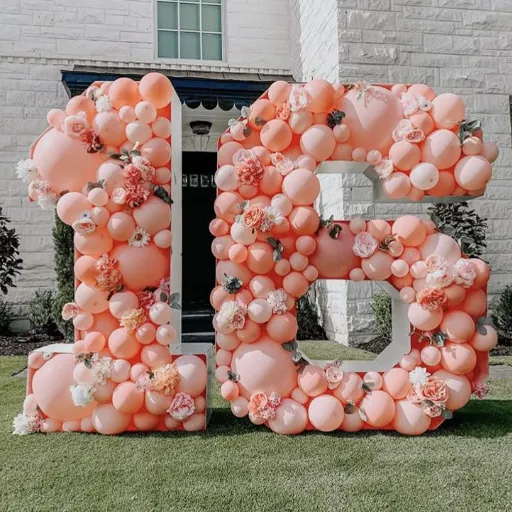
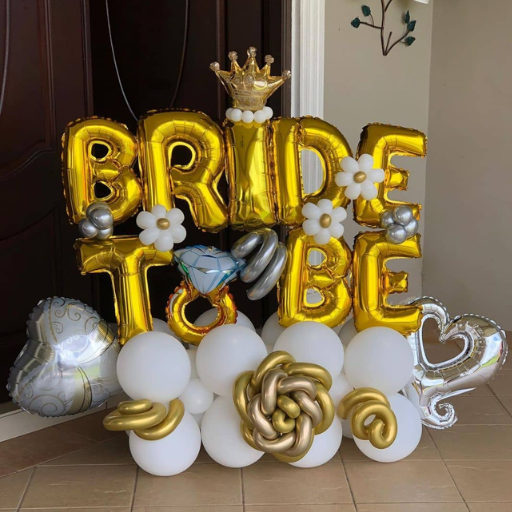
- Letter and Number Balloons – They have been made especially for special orders and what they do is allowing you to create your own messages, names, or even years of age or years of partnership and wedding anniversaries. The fact that they are made of metal is the reason that they can blend in with any interior.
- Character Balloons – It happens that the children like these balloons and the theme parties are all about them. Also, the balloons can have the looks of licensed characters, animals, or objects. They make the decoration complete, drawing attention and causing curiosity.
- Custom Printed Balloons – It is the printing on the balloons that segue the way back to the advertising and the party motifs that are chosen to be added to the business promotions, the marketing strategies through the advertisement approaches, or managing the individual party themes and their printing processes by the entertainers.
- Larger and Themed Balloons – Mostly for the purpose of installations and event spaces or situations requiring a grand statement, people opt for bigger balloons as well as other shapes like hearts, butterflies, and even abstract forms.
All these different forms have one thing in common – cohesion, and every foil balloon comes in with its specific color which is neither dull nor faded. The quality of the material makes it resistant to physical damages which is a great contribution to the visual aspect along with its new attractiveness and a natural choice of material no matter if the occasion is small or very large.
Why Deflate Foil Balloons?
Reasons for Deflating Foil Balloons
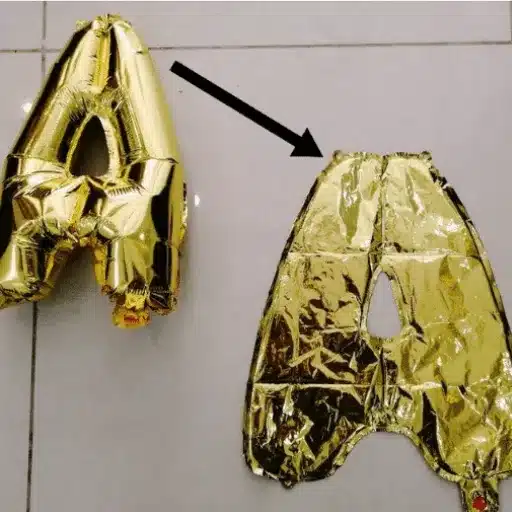
The reason for the eventuation of foil balloons is that it becomes an important step to ensure their reuse, proper disposal or safety storage. One of the main reasons for deflation is environmental responsibility. Thus, by the means of releasing the air contained in the balloon, one can reduce the material’s storage volume to a great extent and destine easily the very material to recycling or compact disposal because Foil balloons, which are often made of metalized polyester, are non-biodegradable and can be the main contributors to environmental pollution if not treated responsibly post-use.
Yet another thing to consider is the hazard that would exist for people-utility persons and animals if they balloon is not deflated and properly thrown away. For instance, metallic balloons that are not secured to the earth can be snared by power lines thus causing power outages while at the same time presenting choking risks to animals when left as litter in the wilderness. Therefore, the problem of deflation tends to decrease. Furthermore, balloons that are deflated still retain the structural properties of the plastic material which makes them more suitable for recycling in the making of new ones hence the environment is less affected and the need to buy more balloons is cut down both which costs money. Thus, deflation at its best can be a sustainability and cost-reduction effort concurrently.
Environmental Impact of Balloon Disposal
Negligent discarding of balloons can have serious repercussions for ecosystems, with marine and terrestrial areas being those most profoundly affected. Although latex balloons are stated to be biodegradable, they might last in the environment for as long as four years under certain circumstances, and foil (or mylar) balloons have no composting characteristics at all. Going through this relatively long decomposition process, balloons can be carried by the wind to faraway places, and they frequently land in the oceans being a danger to marine animals. Balloon parts can be ingested by sea turtles if they think they are jellyfish which results in them having a blocked stomach and internal wounds, and ultimately they die.
Moreover, deflated balloons of foil can prove to be hazardous to not only the environment but also, human and animal health. Accidentally ingesting a piece of its chipped paint or plastic coating can have dire consequences. In fact, the sight of a tiny, bright colored dot could not at all to children, who might usually and unknowingly pick them up and put the same in their mouths. Additionally, the toxic substances from the materials used in coating the foil are what we should be worried about, as they can get mixed with the soil and water, posing danger to the other living organisms and hence the whole ecosystem becomes affected. Overall, foil balloons should be managed properly with proper disposal and recycling of the materials used in making them.
Creative Reuse Ideas for Deflated Foil Balloons
Reused balloons filled with helium, which are normally seen as trash, can actually be used in different creative and practical ways to lower the impact on the environment. As an example, the reflective coating of these balloons will make them perfect for emergency situations such as the production of homemade insulation blankets or tarps for survival. Moreover, in the garden they can be cut into strips for use as bird deterrents; The shiny material will swing in the breeze, thus scaring away the birds from the crops or plants. The same shiny stuff can be made into decorative material for crafts, such as making gift bows or wreaths, and even making artistic collages by the imaginative artist, thus giving them a second lease of life in a creative way. The nature of their use, which is being durable and waterproof, can very well also be their characteristic in making them very convenient in the hands of a skilled sewer in producing lightweight reusable bags; a more environment-friendly alternative to the use of plastic. By looking at such creative ways, people can greatly minimize waste and at the same time, they will also be fostering a culture of resourcefulness and environmental stewardship.
Step-by-Step Guide to Deflate a Foil Balloon Without a Straw
Getting All Tools Together
One of the main subjects when it comes to deflating a foil balloon without using a straw is to select the tools because they will establish the process and the result if applied precisely and efficiently. The first and most required item is a pair of sharp-pointed scissors or a precise cutting tool. These will enable you to do the required changes one by one with high control next to the balloon’s self-sealing valve. Furthermore, a flat, clean surface has to be obtained so the balloon will not move during the procedure and in this way accidental tears will be reduced. Tools that are optional but highly convenient could be tweezers which will be working in a subtle way and adhesive tape which can reseal any parts if desired to be reused. Good selecting and putting together of tools not only makes it an easy and simple job but ensures that the balloon will be treated gently and be fully reusable.
Step-by-Step Process to Complete Deflation
- Valve Location Identification: You should start by finding the self-sealing valve on the balloon. This is usually an elastic opening similar to a chimney at the bottom of the balloon via which it was inflated. Correct valve identification enables smooth deflation handling.
- Preparation of the Surrounding Area of Valve: With tweezers or your fingers, slowly detach the area surrounding the valve to make sure it is easy to reach. Doing this lessens the strain on the fabric and also prevents accidental stretching or tearing.
- Gradual Release of Air: Place a thin object into the valve, say a straw or a particular balloon deflation tool. With this, you create a way for the air to move out. Make sure the object is pushed all the way in to overcome the balloon’s self-sealing mechanism.
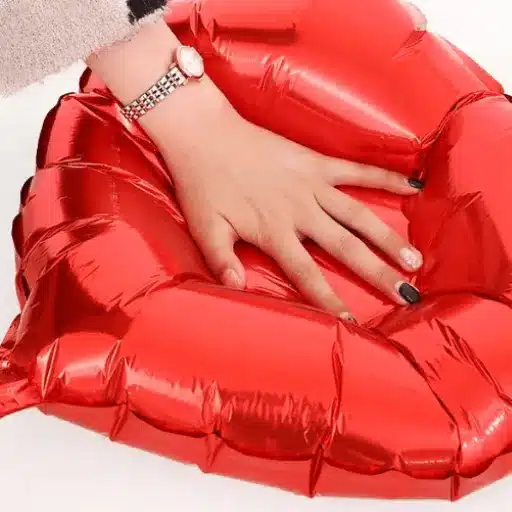
- Controlling the Deflation Rate: Please, do apply consistent pressure to the balloon body, thus air will be pushed out in a controllable way. Do not apply too much force to the balloon, as the intense pressure could ruin the material and cause the balloon to burst.
- Flattening the Balloon Completely: After most of the air has been taken out, go ahead and smooth the balloon very gently to make sure there is no air left in pockets. Lay the balloon down flat and very gently press until it is fully inflated.
- Securing the Deflated Balloon: In case the balloon is to be reused, then fold it very well and put it away in a dry and clean place. If this is not possible, then follow the local waste management procedures for proper disposal. The proper storage or disposal of such a balloon provides safety and ensures the sustainability of our environment.
When the above steps are followed accurately, the procedure for deflating the balloon will be accomplished effectively and efficiently and yet the structure of the deflated balloon will be maintain for safety or future use.
Tips for Safely Removing Air from a Foil Balloon
- Use a Straw or Valve Tool: Start by finding the self-sealing valve, which is generally located at the top of the foil balloon. Load a drinking straw or a specific balloon valve tool that is clean and straight down into the valve gently to the point where it goes beyond the plastic flaps. At that point, the straw or tool will be the reason air will be able to get out in a more efficient manner.
- Gradually Let Air Out: After the straw or tool is firmly placed, push the balloon’s body down very slowly. It is essential to control and apply an equal force since this will prevent any sudden breaking of the air in combination with reducing the tension on the material and thus, the risk of it tearing will be drastically lowered.
- Flatten the Balloon Properly: Keep on deciding to press still the balloon is entirely flat so as to make sure it is completely deflated. After going through this step by step process you will realize that there is no air left behind; this, in turn, will make the process of storing or disposing the balloon in a compact way a lot easier.
- Check the Structural Strength Step-by-Step: Once the balloon is no longer inflated, then you must look at it close up. Any aspect of the balloon that got damaged should be the main focus, particularly things such as rips and loosening stitches. This task is of utmost importance if you plan to make use of the balloon again since the structurally impaired parts will be the cause of failure during the re-inflating process.
- Deal with the Balloon in a Responsible Manner: Make sure you take good care of the deflated balloon by using safe storing tactics like folding the balloon neatly and placing it in an airtight box for later use. Eco-friendly disposal is also one of the options, and this can be achieved by following the ecological standards set by the local authorities. In case there is a facility for recycling foil in the vicinity, verify if the balloon is acceptable for the center that operates the facility.
These steps, albeit rocky at times, are the ones that will lead us to the most secure and successful elimination of air from the balloon foil, and as a result, few if any hazards will be created.
Alternative Methods for Deflating Foil Balloons
Deflate a Foil Balloon Using a Pin or Needle
When the speed or the precision is being preferred, the usage of a pin or needle is still an effective way to deflate a foil balloon. Start by spotting out an area that is not visible when the balloon is inflated, for example, near the seam. By the way of puncturing the material with the pin or needle at an angle, you will run the risk of creating a very small hole only. This will eventually let air out but only gradually. Applying light force to the balloon may speed up the process, but one has to be very careful with it to avoid the material tearing, as this may jeopardize the balloon if it is intended for reuse and depends on its structural integrity.
Monitoring the deflation rate is a good practice. Depending on the quantity of air left in the balloon, it may be necessary to pierce it multiple times. Make sure that the procedure is being performed in a controlled environment so as to minimize the risks of safety incidents due to sudden movements or bursts. Once the balloon is completely deflated, it can be folded and kept or thrown away following the environmental guidelines. Although it is a simple method, to make the balloon functional for another use, one must be very cautious during the execution.
Using Heat to Help Deflation
Heatedness can greatly help to the deflation of both these and some other kind of materials. Polymer people’s thing, huh? Let’s consider latex and other specific polymers as being the materials in question. In fact, heat when rigorously controlled and systematically applied to these sensitive materials gradually and steadily leads them to create a world of their own, which is not entirely free, yet it definitely has no more air to puff up inside. The heat source, namely a heat gun or hairdryer which is to be functioning only at low or moderate temperatures, can reach the surface of the material uniformly and by so doing, will decrease the internal pressure. In order to prevent the material from deteriorating or being damaged accidentally, it is of utmost importance to keep the temperature under constant observation at all times. The right temperature for the heat to be is normally supposed to be between 100°F and 150°F, having the specifications by the materials as the final deciding factor. Consequently in order to prevent the material from going through a situation where the reason for its strength being its weakness, and hence breaking, only by the least pressure like a needle, it is a logical step to make that such a property does not exist. If so, then any of the above causes could easily lead to the breakdown because it already had a wooden stick inside it. However this concept of applying such pressure over the textile gives rise to a doubtful situation insidestregth. Nonetheless, the above technique and manual compression do indeed speed up the deflation of the materials and keep their reusability intact. Proper protective measures such as the usage of gloves to shield the practitioner from direct contacting heat and well-ventilated areas of work environment should never be missed when this technique is used.
Deflating Using A Vacuum Cleaner
The piece states that the vacuum cleaner as an appliance to do the opposite of inflating is relatively fast and convenient for the case when it is operated in the right place. The operation consists of connecting the vacuum’s hose or nozzle directly to the valve or air-release port of the target of the deflating process. Using vacuum cleaners that have variable suction controls is a great improvement as it brings more accuracy to the user who can tune the power as the material’s tolerance demands. This, therefore, minimizes the structure being overstressed or damaged during deflation. The point is to make sure that the nozzle fits perfectly in the valve and that there are no air leaks, hence, the system is very effective. Furthermore, some of the industrial-grade vacuum cleaners come with reverse airflow settings making them perform two tasks at a time the device is being used as a suction device and, in addition, as an inflator. Cleaning filters, as well as sealing inspections, are the regular operations which must be done for the vacuum cleaner to work perfectly due to prolonged use.
Maintaining the Quality of Your Mylar Balloons

Storing a Deflated Foil Balloon
The deation of foil balloons is a gentle and delicate process. It can be done well with a straw or a nozzle gently pressing the valve for all the air to escape. The material can crack or tear due to the smallest amount of air. A deflated balloon should be first smoothed to make it easier to unfold and to get rid of any wrinkles. Otherwise, the seams will be placed under a lot of strain and creases will become permanent.
Then, I locate the deflated balloons in a cool, dry spot that is protected from direct sunlight, humidity, and temperature variations. The material of the foil can be compromised by excessive heat or moisture, and the seams can become weak, making reuse a problem. To ensure the balloons are well preserved I further seal them in airtight bags or containers and keep them away from dust and other environmental impurities. At the same time, I am careful not to stack heavy objects on top of the stored balloons to prevent the foil layers from getting deformed.
All in all, being well-organized is the main goal. The storage container is marked with the contents and event details, which includes the balloon design and the date on which it was last used for easier searching. Through this process, I am able to extend the life and usage of my foil balloons to the maximum while also making sure they keep their quality for future events.
Repairing Small Holes in Mylar Balloons
I have a step-by-step approach when fixing Mylar balloon holes that are small and my technique is very effective because the balloon keeps its integrity and functionality no matter where the problem is. I start by locating the puncture with the help of the gentle inflation of the balloon and figuring out where the air escapes. To have a better view of the hole, I sometimes use a little soapy water and am on the lookout for bubbles that are being created. After the hole was found, I deflate the balloon fully so that the hole does not get bigger during the patch job.
After that, I opt for a particular Mylar tape or a non-porous materials type adhesive patch to put that hole away for good. Before sticking to the patch, I wipe the area by rubbing alcohol and a cotton cloth to get rid of oil, dust, or dirt that may prevent the adhesive to work properly. The effort to clean the surface properly is very much needed for the patch to attach perfectly and last longer. Having the area all prepared, I cut a part of the tape or adhesive patch that is a little bigger than the hole, making sure it is completely covering the damaged spot. Through the application of the patch, I make it hold on tight, pressing here and there gently to get rid of any air bubbles o that the connection is sealed up with no possibility of the leak.
Ultimately, I will test the restoration procedure by blowing up the balloon to a certain extent, just enough to ensure that not a single gas molecule can slip out of the repaired spot. If I spot more punctures, I shall do everything accordingly until the balloon retains the air without letting it go at all times. Sealing tiny holes in Mylar balloons properly can make them last immensely longer, hence making them appropriate to use at coming parties or as decorations. This simple way is a combination of less money spend and nature-friendly as it not only cuts the balloon waste but also retains the look and functionality at the same level.
Creative Ideas for Projects with Flat Foil Balloons
After my foil balloons have lost their shape, I got to know that they can be used in a variety of innovative yet functional DIYs, thus cutting down on rubbish and giving them a second life. One method of employing these balloons again is to put gifts in them. The bright and resistant film of the foil balloons acts as a vivid and special choice for wrapping small gifts, particularly for birthdays or themed occasions. I cut the balloon down the seams, put the sections flat on the floor to wrap or decorate a box, and tied it up with tape or ribbon.
Another clever application for these balloons is in the form of a garland or festoon for decoration. By means of scissors I made the material into numerous shapes like five, three, and zero, and by putting them on string or ribbon I had a whole lot of them in one place thus a rather jubilant and colourful sight. That’s very fitting when celebrating birthdays, marriages, or local holidays. The shiny surface moreover gives an additional touch of glitter that the decorations become quite noticeable. If by chance I decorate the balloon with a very intricate design or even beloved characters, then usually I make it into children’s room or theme space art for walls or into framed decorations.
How about using deflated foil balloons as insulating material for more functional applications? It is said that the Mylar material which they are based on has heat-reflective properties, for this reason, it is suitable for the lining of homemade lunch bags or other containers, also for the reason of helping to maintain the food temperature. Just like the long sheets can still be cut, and also be placed around the plant bed to stop birds and other animals that are potential pests. The reflective sheeting colors sway the wind but are non-toxic and also eco-friendly. Consequently, for me by reusing the foil balloons like this, I kill 2 birds with one stone–namely the craft materials and the waste–and at the same time, the projects remain both feasible and sustainable.
Reference Sources
From Fun to Fallout, the Environmental Cost of Balloons – Discusses the environmental impact of balloons and mentions deflation practices.
Inflatocookbook – A resource on inflatable designs, which may include insights into handling and deflating materials like foil balloons.
Tips on Saving Energy & Money at Home – Includes information on how balloons react to heat and deflation processes.
Don’t Let Balloons Float Up and Take Down Power – Advises on safely puncturing and deflating metallic balloons to prevent environmental and safety hazards