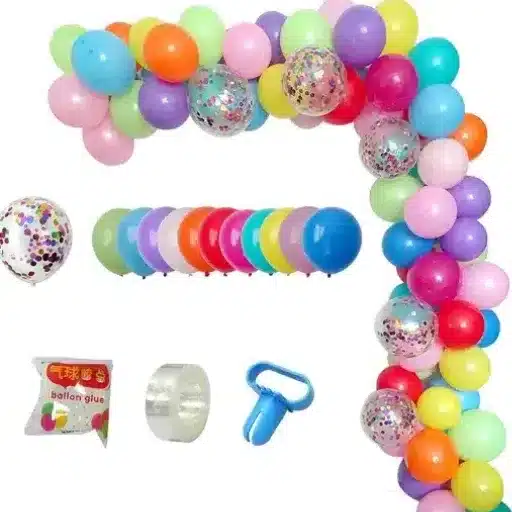
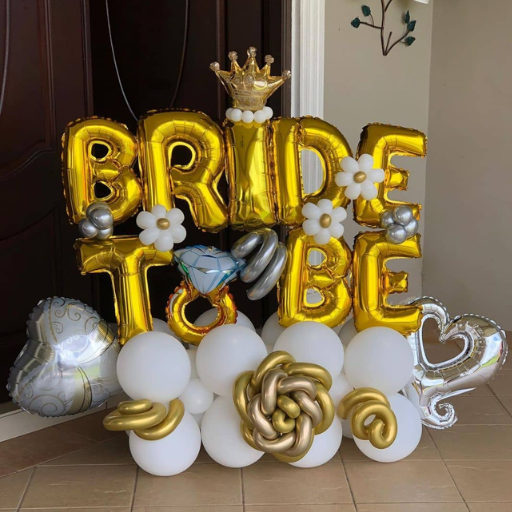

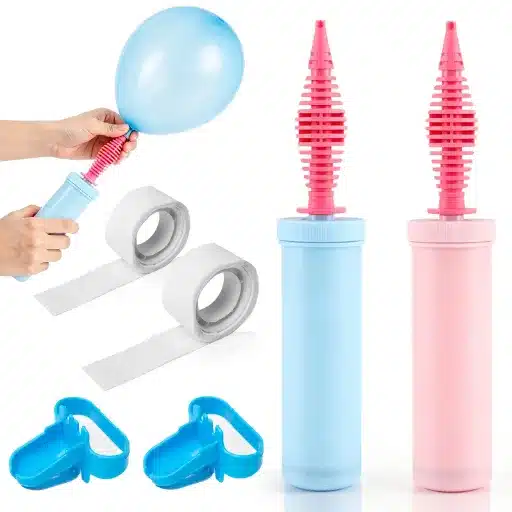
The best balloon pump depends on one question: how many balloons do you actually need to inflate? For small parties, a dual-action hand pump is all you need. For weddings, garlands, and any event with more than a hundred balloons, an electric balloon pump will save you hours.
Priya learned this the hard way before her daughter’s fifth birthday in April. She ordered 200 balloons, a roll of ribbon, and no pump at all. By the third hour of inflating by mouth, she was lightheaded, her hands were sore, and she had popped nine balloons trying to tie them one-handed. The garland she had planned for the dessert table ended up as a sad cluster behind the couch.
You don’t have to repeat that mistake. This guide will help you choose the right balloon pump for your situation. We’ll compare the pump types on speed, noise, and cost. We’ll also cover which pump fits which balloon, how to use each one correctly, and how to pick a model that matches your budget and your event size.
Key Takeaways
- An electric pump inflates 300 to 500 balloons per hour versus 60 to 80 with a hand pump
- A dual-action hand pump inflates on both the push and pull stroke, cutting effort roughly in half for small jobs
- Electric pumps are air-only: they won’t float balloons, so helium needs a separate tank
- Most electric pumps are 600W, run at 75 to 80 dB, and carry a 12-month warranty
- Match the pump to the balloon: latex, foil, and long 160Q/260Q twisting balloons each need different nozzles
What Is a Balloon Pump and Do You Really Need One?
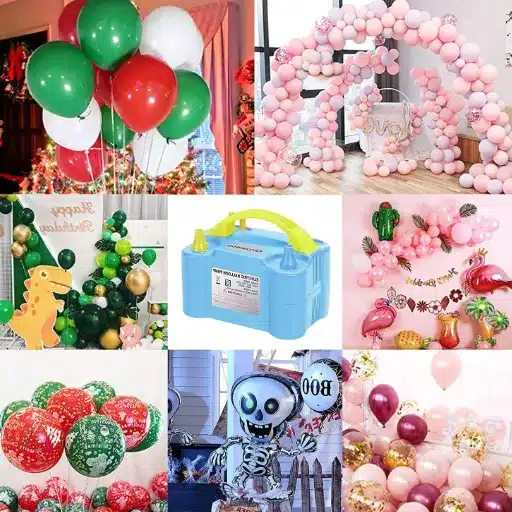
A balloon pump is a tool that fills balloons with air so you don’t have to use your mouth. Hand pumps rely on manual strokes, while electric pumps use a motor-driven fan to push air at high volume.
Do you need one? If you inflate more than ten balloons at a time, yes. Mouth-inflation is slow, tiring, and it introduces moisture and germs into the balloon, which can shorten its life.
A hand pump that costs about ten dollars pays for itself in saved time and spared lungs on the very first party.
For a small gathering, a hand pump is enough. For anything bigger, the numbers decide. Even a good hand pump delivers only 60 to 80 balloons per hour. An electric inflator fills 300 to 500 balloons per hour and keeps sizes consistent.
Consistent size is what makes a garland look full and even instead of lumpy. The pump you choose affects the final look as much as the time you spend.
If you decorate for events more than a couple of times a year, or if you’re planning one large celebration, treat a pump as essential gear rather than an extra. Our complete balloon accessories guide covers every tool you’ll want alongside it, from sizers and strips to weights and mounting hardware.
Types of Balloon Pumps at a Glance
The world of balloon pumps splits into three practical categories. Understanding the differences makes the buying decision much easier.
Hand Pumps: Single-Action vs. Dual-Action
A single-action hand pump pushes air only when you press down. A dual-action pump pushes air on both the push and the pull stroke, which roughly doubles the airflow for the same effort. If you’re buying a hand pump, choose dual-action. The extra few dollars buy you roughly half the pumping time.
Hand pumps are lightweight, affordable, quiet, and portable. They run anywhere with no power source, which makes them the right choice for outdoor events, tight spaces, and quick touch-ups. The trade-off is physical effort. Your hand and forearm will feel it after a few dozen balloons.
Electric Pumps: Single-Nozzle vs. Dual-Nozzle
An electric balloon pump replaces manual effort with a motor-driven fan. Most models run on 110 to 120V at 600W and push between 300 and 750 liters per minute, depending on the model. They fill an 11-inch latex balloon in about two to three seconds.
Single-nozzle pumps inflate one balloon at a time. Dual-nozzle pumps inflate two at once, which cuts large-event prep time nearly in half. Some electric pumps offer two modes: a touch-to-run mode that stops when you lift the balloon, and a continuous mode that keeps air flowing so you can slide balloons on and off the nozzle quickly.
Electric pumps also come corded and battery-powered. Corded pumps are cheaper, lighter, and more powerful, but they need an outlet. Rechargeable models trade some power for portability, which helps in venues without easy access to power.
Specialized Inflators: Balloon Blowers and Helium Tanks
A balloon blower is a heavier-duty electric inflator built for high-volume professional use, often with a larger motor and a wider nozzle. Helium tanks and inflators are a separate category entirely: they deliver helium so balloons float. An electric pump won’t float a balloon, because it moves regular air. We cover that distinction in its own section below.
Hand Pump vs. Electric Pump: Side-by-Side Comparison
Here is the honest comparison, based on the specs that actually matter.
| Hand Pump | Electric Pump | |
|---|---|---|
| Speed | 60-80 balloons/hour | 300-500 balloons/hour |
| Time per 11-inch balloon | About 60 seconds | 2-3 seconds |
| Cost | 8−8−25 | 25−25−150 |
| Noise | Quiet | 75-80 dB (like a vacuum) |
| Power source | None | Corded or rechargeable battery |
| Effort | Manual, can tire hands | Minimal |
| Portability | Excellent | Good for corded; best for battery |
| Durability | 2-3 years of regular use | 1-3 years depending on model |
| Best for | Small parties, outdoor, touch-ups | Garlands, arches, frequent decorating |
Speed and Capacity
The speed difference is the single biggest reason people upgrade. A hand pump fills 60 to 80 balloons per hour. An electric pump fills 300 to 500 per hour. For a birthday party with thirty balloons, that difference is minutes. For a wedding arch that needs 150 to 200 balloons, it is the difference between an afternoon of work and about half an hour.
Noise and Comfort
Electric pumps are loud enough to notice. At 75 to 80 decibels, they sit about where a vacuum cleaner does, so plan the inflation station away from guests and conversations. Hand pumps are nearly silent. On comfort, the roles reverse: an electric pump causes almost no hand fatigue, while a long session with a hand pump will tire your grip.
Cost and Longevity
A quality hand pump costs 8to8to25 and can last two to three years of regular use. An electric pump costs 25to25to150. Budget models carry a 12-month warranty, while premium models often offer two years, which is a useful signal if you’re buying for professional use.
For an occasional party, the hand pump is the economical choice. For anyone decorating regularly, the electric pump pays for itself in time saved within a few events.
Which Balloon Pump Fits Which Balloon?
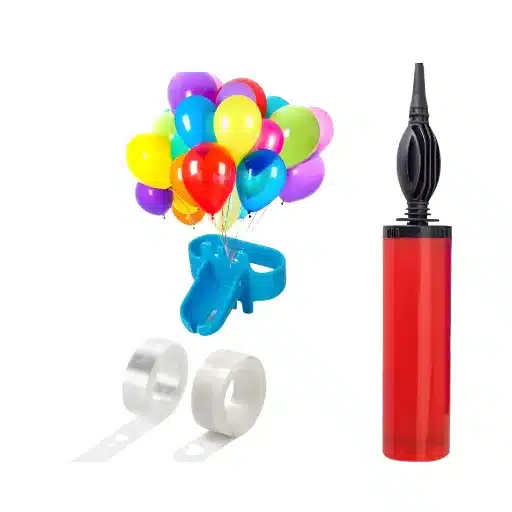
Not every pump works with every balloon. Nozzle fit matters more than most buyers realize, and buying the wrong type causes leaks, tears, and frustration.
Latex Balloons
Standard latex balloons, from 5-inch to 12-inch sizes, inflate easily on nearly any hand or electric pump. This is the most common pairing, and most pumps ship with a nozzle sized for it. If you are inflating a hundred latex balloons for a garland, a dual-nozzle electric pump is the efficient choice.
Foil and Mylar Balloons
Foil balloons need a gentler touch and often a smaller nozzle. A thin neck means a wide nozzle can force air too fast and split the seam. Some electric pumps include a dedicated small nozzle for foil balloons. If your pump doesn’t, inflate foil balloons by hand or use the lowest continuous setting and go slowly.
Long Twisting Balloons (160Q and 260Q)
Long balloons used for balloon animals and sculptures are a special case. Many electric pumps can’t handle them at all, because the airflow is too strong and the narrow nozzle doesn’t fit. The HeyMate-style inflators designed for 160Q and 260Q balloons are the right tool here, with a tapered nozzle and gentler flow. If you twist balloons as a hobby or business, buy a pump built for the job rather than a general-purpose inflator.
Sports Balls and Pool Floats
Some multi-purpose electric pumps include an inflate and deflate function plus nozzles for sports balls and pool floats. If you want one device for a whole household, a 4-in-1 model that handles balloons, balls, and floats is worth considering. If you only need balloons, a dedicated pump is lighter and simpler.
Electric Balloon Pump vs. Helium Tank: Know the Difference
This is the most common confusion in balloon prep, so let’s settle it clearly.
An electric balloon pump moves regular air. That means it fills balloons to a full, firm shape, but the balloons won’t float. To make balloons float, you need helium, which is stored under pressure in a tank or canister.
The two tools are not rivals. They do different jobs. Air-filled balloons are ideal for garlands, arches, walls, and anything mounted or anchored in place. Helium-filled balloons are for floating centerpieces, bouquets, and ceiling displays.
Many events use both. A wedding might use an air-filled arch at the entrance and helium-filled balloons floating over the reception tables.
If you plan to inflate with helium, follow the safety guidance for compressed gas from a trusted source like Balloon Time. Always secure floating balloons with the right balloon weights so they don’t drift away or cause hazards.
How to Use a Balloon Pump Correctly
Technique matters more than the pump. The same mistake that pops a balloon with a hand pump will pop one with an electric pump, just faster.
How to Use a Hand Pump
- Gently stretch the neck of the balloon before you start. Pull it a few times to loosen the latex.
- Slide the neck over the nozzle and hold it in place with your fingers, making sure the opening seals around the nozzle.
- Pump in steady, even strokes. A dual-action pump delivers air on both directions, so keep the rhythm smooth.
- Stop when the balloon is firm but not over-stretched. If it starts to look pear-shaped at the base, you have gone too far.
- Pinch the neck closed, slide the balloon off the nozzle, and tie a knot.
How to Use an Electric Balloon Pump
- Stretch the balloon neck, then slide it onto the nozzle.
- For a touch-to-run model, press the balloon onto the nozzle to start airflow and lift it off to stop.
- For a continuous-mode model, start the airflow first, then slide each balloon onto the nozzle and off again when it reaches size.
- Watch the balloon closely. An 11-inch latex balloon fills in about two to three seconds, so don’t walk away mid-inflation.
- Use the longer press only for very large balloons, around 48 inches or more, which need the extra volume.
5 Common Mistakes That Pop Balloons
- Over-inflating. This is the number one cause of pops. Stop at the recommended size on the packaging.
- Forcing the balloon too far down the nozzle, which tears the neck.
- Using the wrong nozzle for the balloon type, especially thin foil necks on wide latex nozzles.
- Running an electric pump beyond its duty cycle. Many pumps should not run continuously for more than about two minutes.
- Inflating a balloon that already has a weak spot or leak. Check each balloon before you start a large batch.
How to Choose the Best Balloon Pump for Your Needs
Once you know the trade-offs, choosing becomes a matter of matching the pump to your event size and budget. These three tiers cover most buyers.
Starter Tier: Under $15
Buy a dual-action hand pump. It is enough for birthdays, baby showers, and any event with up to fifty balloons. Look for a comfortable grip and a three-ring internal design, which pushes more air per stroke. This is the tier where almost every beginner should start.
Hobbyist Tier: 15to15to30
Buy a single-nozzle or dual-nozzle electric pump. This is the sweet spot for people who decorate for holidays, family parties, and the occasional garland. You get electric speed without the professional price tag, and most models include extra nozzles and a balloon-tying tool.
Professional Tier: $30 and Up
Buy a heavy-duty electric pump with high airflow, dual nozzles, and a longer warranty. Look for 600W or higher, at least 400 liters per minute, and a two-year warranty as a durability signal. This tier suits event planners, balloon artists, and anyone inflating hundreds of balloons on a regular schedule.
David, an event decorator in Chicago, resisted the upgrade for a year. He had a reliable hand pump and a habit of doing every job the manual way. After a June weekend with three back-to-back weddings, he finally ordered a dual-nozzle electric pump.
His next install dropped from a full day of inflation to a morning. He booked an extra job the same weekend with the time he saved. He hasn’t touched a hand pump since.
Key Specs to Compare Before Buying
- Power: measured in watts, usually 300W to 600W for household models
- Airflow: measured in liters per minute, typically 300 to 750 L/min
- Noise: measured in decibels, with quieter models around 70 dB
- Duty cycle: how long the pump can run before it needs to cool down
- Warranty: 12 months is standard, two years signals better quality
Caring for Your Balloon Pump
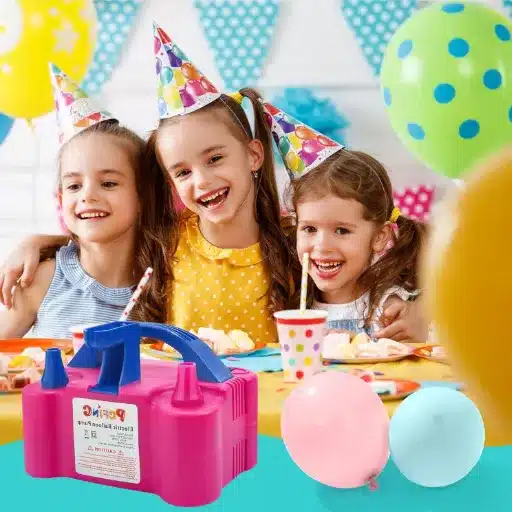
A little maintenance keeps a pump working for years. Store the pump in a dry place away from direct sunlight. Wipe the nozzle clean after each use so dust and latex residue don’t build up. Keep the vents clear so the motor can cool, and respect the duty cycle on electric models to avoid overheating.
Two safety notes matter. Keep electric pumps and their cords away from water and small children. Never let a child operate a pump unsupervised.
Watch your own hands too. A balloon popped at close range can sting, so hold the neck firmly and keep your face away from the inflation point. As with all balloons, keep uninflated and burst balloons away from children under eight, since they are a choking hazard.
Balloon Pump FAQ
Can an electric balloon pump fill helium balloons?
No. An electric balloon pump moves regular air, so the balloons it fills will not float. To make balloons float, you need helium from a tank or canister, which is a separate tool.
How many balloons can an electric pump inflate?
Most electric pumps fill 300 to 500 balloons per hour, with the exact number depending on airflow and balloon size. An 11-inch latex balloon takes about two to three seconds.
Is an electric balloon pump worth it?
It depends on volume. For fewer than fifty balloons, a $10 hand pump is plenty. For weddings, garlands, or any regular decorating, the electric pump pays for itself in time saved within a few events.
What is the best balloon pump for a garland?
A dual-nozzle electric pump is the best choice for garlands, because you inflate two balloons at once and keep sizes consistent, which is what makes a garland look full and even.
Do I need a pump to blow up balloons?
Not strictly, but you should use one. Mouth-inflation is slow, tiring, and adds moisture that shortens balloon life. Any event with more than ten balloons is easier with a pump.
Are electric balloon pumps noisy?
Yes, most run at 75 to 80 decibels, about as loud as a vacuum cleaner. Set up the inflation station away from guests if noise matters.
Sourcing Balloon Pumps for Your Business
If you run an event company, a balloon decor business, or a party-supply retail shop, the buying logic changes. You’re not choosing one pump. You’re stocking a fleet that will be used daily and must hold up.
Stock at least two tiers: a few dual-action hand pumps for touch-ups and outdoor jobs, and at least one heavy-duty dual-nozzle electric pump for bulk production. Buy the models with two-year warranties and replaceable parts, because a pump that fails mid-event costs more than the pump itself.
Add spare nozzles for latex, foil, and long 160Q/260Q twisting balloons. That way, your team never fumbles for the right fit.
When you source in volume, ask suppliers for the specs we listed above, confirm the warranty terms in writing, and request a sample unit before committing to a large order.
Pair your pumps with the balloons you stock, and consider offering biodegradable latex options for eco-conscious clients. Our eco-friendly balloons page explains how sustainable latex works without compromising quality.
Choose the Pump That Fits Your Event
The right balloon pump saves you hours, protects your hands, and helps every display look intentional instead of improvised.
Here’s the summary. For events up to fifty balloons, a dual-action hand pump is enough and costs under $15. For anything larger, or for anyone who decorates regularly, an electric balloon pump pays for itself fast. Dual-nozzle models are the smart pick for garlands and arches.
Remember that electric pumps move air only. Plan helium separately if you want floating balloons.
Whatever you choose, buy for the volume you actually inflate, not the volume you hope to inflate someday. A pump matched to your workload will serve you for years, and it pairs naturally with a toolkit that already includes the right accessories.
Ready to stock up for your next event? Explore our balloon accessories collection to find the pumps and tools you need, or contact Trading Shanxi Co., Ltd. for custom solutions and bulk ordering that keep every celebration effortless.