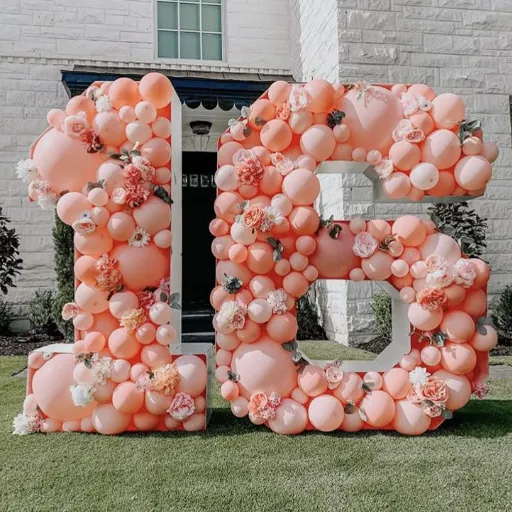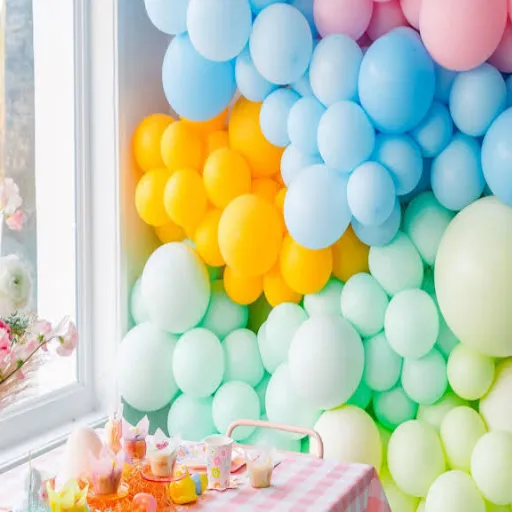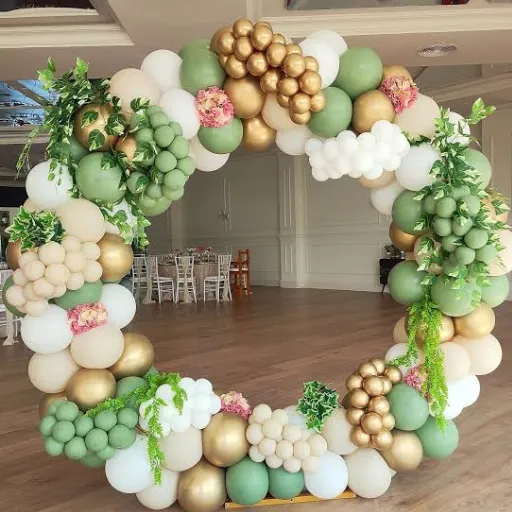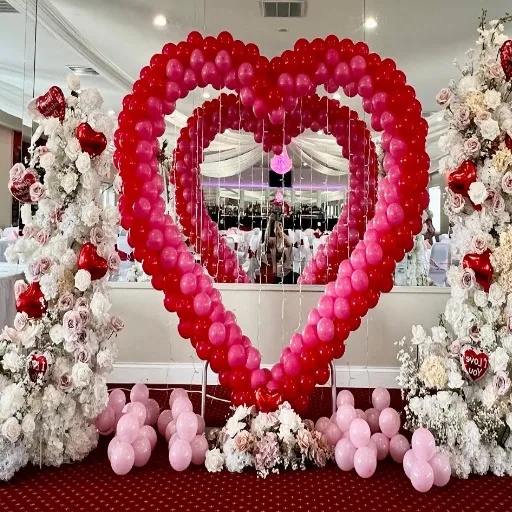


The right balloon weight keeps a helium balloon exactly where you put it. For a standard 11-inch latex balloon, that means roughly 12 to 16 grams. For a bouquet of six latex balloons plus two foil ones, plan on 100 to 140 grams. These numbers are the difference between a display that stays put and a ceiling full of escaped balloons.
Elena learned that lesson at her sister’s baby shower last May. She spent an afternoon building a pastel balloon bouquet for the gift table, tied the ribbons, and walked away without a single weight. Ten minutes later a guest opened the door, and the whole arrangement drifted into the hallway and under a table. By the time anyone noticed, three balloons had popped on the door frame.
You can skip that scramble. This guide covers how much weight you need, how to attach it, which types to buy, and when a DIY version works just as well. We’ll also cover outdoor and windy-day setups, safety, and how to source weights if you stock them for a business. Contact our team for balloon accessories matching your product and packaging requirements.
Key Takeaways
- A standard 11-inch latex balloon needs 12 to 16 grams of weight; a 34-inch number foil balloon needs 35 to 65 grams
- Bouquets need proportionally heavier weights: a 6-plus-2 arrangement needs 100 to 140 grams total
- Commercial weights fall into clip, string, bag, magnetic, and decorative types, each built for a different job
- DIY water and sand weights work for budgets under a few dollars, but commercial weights win on uniformity and durability
- Outdoors, plan to double your weight and add secondary anchors when the wind picks up
What Is a Balloon Weight and Why Do You Need One?
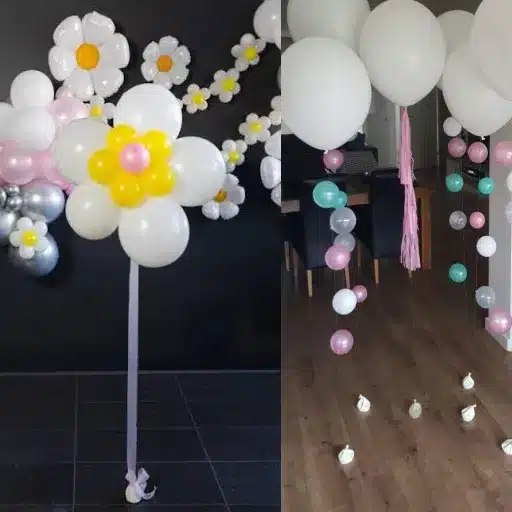
A balloon weight is any small anchor attached to a helium-filled balloon, or to a balloon column, to stop it from drifting away. Commercial versions range from simple plastic clips with a built-in weight to decorative star, heart, and tassel designs. The principle is the same in every case: the weight must be heavier than the lift of the balloon.
You need one any time a balloon is filled with helium and left free to float. Without a weight, the balloon rises until it hits the ceiling or finds the nearest draft. That is not just a decorating failure. A loose helium balloon near a ceiling can reach heat detectors or sprinklers, and a string can tangle with a fan.
Air-filled balloons are a different story. They have no lift, so they don’t need a weight to stay down. But if you’re building a table centerpiece out of air-filled balloons, a decorative weight or a stand still helps hold the cluster in place and keeps it from rolling. The right tool depends on whether the balloon floats or sits.
For the full toolkit, our complete balloon accessories guide covers weights alongside pumps, ribbons, strips, and every other tool that makes a display come together.
How Much Weight Do You Need to Hold Down a Balloon?
Here is the honest answer: it depends on the size, type, and number of balloons, plus the ceiling height, ribbon length, and weather. These starting points cover the common cases, and they come from supplier weight guidance that has been tested across thousands of events.
| Balloon arrangement | Recommended weight |
|---|---|
| 11-inch latex balloon (single) | 12-16 g |
| 18-inch foil balloon (single) | 8-10 g |
| 34-inch number foil balloon | 35-65 g |
| 16-inch latex balloon | 40-45 g |
| Small bouquet: 3 latex + 1 foil | 40-60 g |
| Standard bouquet: 6 latex + 2 foil | 100-140 g |
| 75 g weight (what it holds) | 8 latex, 1 large foil, or 6 number balloons |
| 150 g weight (what it holds) | 15-16 latex balloons or 25-42 foil balloons |
If you want one number to remember, start with at least 2 ounces, about 57 grams, for a single standard helium balloon. That baseline gives you a safety buffer against ribbon length and mild air movement.
The pattern is simple. Bigger balloons need more weight. Foil balloons of the same size need less than latex, because they hold less helium. A bouquet multiplies the lift, so it needs a heavier anchor than any single balloon in it.
When you’re planning centerpieces, do the math in one step. Count the balloons, look up the per-balloon number in the chart above, and add about 20 percent for safety. That margin covers a long ribbon, a ceiling draft, or a door that opens during the party.
Types of Balloon Weights Compared
Not all balloon weights do the same job. Picking the right type comes down to where the display sits, what it’s made of, and whether you want the anchor hidden or on show.
| Type | Best for | Trade-offs |
|---|---|---|
| Clip weights | Individual latex balloons, fast setups | Small, easy to lose, not decorative |
| String weights | Balloons tied with ribbon | Need a knot, can slide if not tied tightly |
| Weighted bags and pouches | Uneven surfaces like grass or gravel | Bulky, sand can leak from worn seams |
| Magnetic weights | Foil balloons on metal surfaces | Not for latex, need a metal anchor point |
| Decorative and shaped weights | Centerpieces and photo areas | Heavier, pricier, style-focused |
| Water-fill or sand-fill DIY | Budget events and last-minute fixes | Must be made in advance, can leak |
Clip and String Weights
Clip weights snap onto the base of a balloon or pinch the ribbon just below the knot. They are fast, cheap, and perfect for inflating a batch of helium balloons for a party. String weights attach through a small loop and work best when you’re already tying ribbon to every balloon. Choose clips for speed and string weights when you want the weight to sit a few inches down the ribbon.
Magnetic Balloon Weights
Magnetic weights have a magnet on one side and a sticky pad on the other. You place the magnet against a metal surface and press the adhesive onto the tail of a foil balloon. They keep a display anchored to a table frame, a chair leg, or a metal column without any ribbon. Note that magnetic weights are designed for foil balloons and aren’t recommended for latex, so read the packaging before you buy. Bargain Balloons keeps a helpful guide on how to use a magnetic balloon weight if you want the details.
Decorative and Shaped Weights
Star, heart, tassel, and foil-wrapped weights turn the anchor into part of the design. They’re heavier per unit of size, so a 150-gram decorative weight can anchor a solid centerpiece on its own. The trade-off is cost and durability. Foil-wrapped versions look great in photos but can tear if they get wet or handled roughly, so keep them for indoor displays.
Weighted Bags and Pouches
Fabric or plastic pouches filled with sand or gravel conform to uneven ground, which makes them the right choice for outdoor tables and grassy areas. Check the seams before each use. A bag that springs a leak mid-event makes a mess and leaves your balloons unanchored.
How to Use Balloon Weights Step by Step
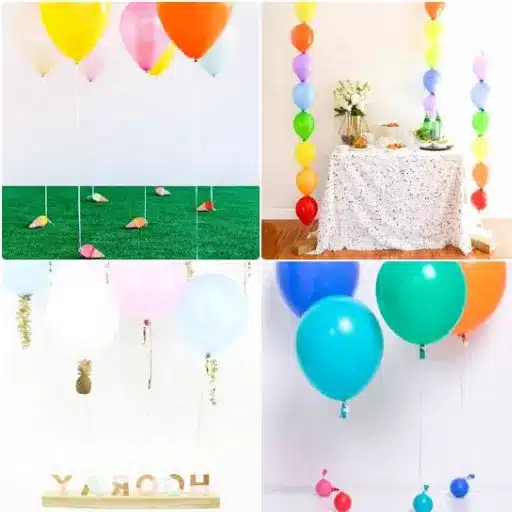
Attaching a weight is a thirty-second job once you know the motion. Here’s how to do it for the three most common setups.
How to Attach a Clip or String Weight
- Fill the balloon with helium and tie it off.
- Tie curling ribbon to the knot and trim it to your chosen length, usually 18 to 24 inches.
- Pinch the clip open and press it over the ribbon just below the balloon knot, or thread the ribbon through the string weight’s loop and tie a double knot.
- Curl the ribbon with a scissor blade so it cascades over the weight.
- Set the display down and give the balloon a gentle tug to confirm the anchor holds.
How to Use a Magnetic Balloon Weight
- Fill the foil balloon with helium and tie it off.
- Wipe the metal surface clean so the magnet holds firmly.
- Place the magnet against the metal, then press the sticky side onto the balloon tail.
- Tug gently to confirm the bond. If the balloon is heavy, use two magnets.
How to Use a Water-Fill or Sand-Fill Weight
- Fill a small balloon with water using a tap or a funnel, about 2 to 3 tablespoons for an 11-inch helium balloon.
- Tie the neck in a tight double knot.
- Tie the ribbon from your helium balloon to the neck of the water balloon.
- Set the weight inside a bowl or behind a centerpiece so the clear balloon doesn’t show.
5 Mistakes That Send Balloons Flying
- Using a weight that’s too light. This is the number one cause of escapes. When in doubt, size up.
- Leaving the ribbon too long. Long ribbon adds lift and lets the balloon drift with air currents.
- Forgetting to test the anchor. Give every balloon a tug before you walk away.
- Tying a loose knot that slips under tension. Double-knot everything.
- Skipping a weight entirely on “calm” days. A draft from an AC vent is all it takes.
DIY Balloon Weights: Easy Homemade Options
Commercial weights are convenient, but they aren’t the only option. A quick DIY version saves money and can match your theme. The two reliable methods are water and sand.
Water-filled balloons are the fastest trick. An 11-inch balloon filled with 10 to 50 grams of water, about 2 to 3 tablespoons, anchors a standard helium balloon. Go up to roughly 120 grams, half a cup, for 16 to 24-inch balloons, and about 180 grams for the giant sizes. For extra burst protection, slide one balloon inside another before filling, a trick the DIY folks at Pretty Little Party Shop recommend for bigger displays.
Sand and pebble containers are sturdier. Fill a small plastic bottle or yogurt cup with sand, rice, or pebbles, seal the top with tape, and wrap it in gift wrap or foil to match your theme. Sand offers the best weight-to-size ratio of the common fillings, which is why event crews favor it for outdoor work.
Other quick household anchors work in a pinch. Clothespins clipped to the ribbon add just enough weight for a single balloon. Marbles wrapped in foil, candy-filled cups, and small figurines all do the job on a quiet indoor table.
Use DIY weights when budget matters or you’re set up at home. Choose commercial weights when you need uniform weight, a consistent look, or durability for a long event, because a water balloon can burst and a paper cup can tip over when a guest brushes past.
Balloon Weights for Outdoor Events and Windy Days
Outdoor events change the math. The same arrangement that sits calmly on an indoor table will drift, sway, and occasionally take off when the wind rises. The fix is simple: add weight and add anchor points.
Plan to double your weight outdoors, and triple it in real wind. If a 100-gram weight works inside, use 200 grams outside on a breezy afternoon. For balloons on long ribbons, keep the ribbon short and tie it low near the anchor so there’s less surface area for the wind to push.
Large displays need more than a heavy base. A balloon arch or garland set up outdoors should be tied to fixed objects, like a fence, a tent pole, or a heavy table, using fishing line or zip ties at multiple points. Concentrate the weight at the bottom and spread the anchors wide. That multi-point approach keeps the whole structure from acting like a sail.
Mike, who runs a small decor business in Phoenix, learned this during a June graduation party. He set up forty helium bouquets around a backyard with 150-gram weights, assuming the calm morning would hold. By noon the breeze picked up, and three bouquets toppled before he added zip ties to the table legs. The rest of the afternoon, every bouquet held. He now doubles his weights and adds secondary anchors for every outdoor booking.
For poolside setups, avoid sand, marbles, or anything that could damage a pool filter. Use water-filled bottles or concrete blocks wrapped in fabric instead, and keep foil balloons out of direct sun where they expand and risk bursting.
Balloon Weights Safety and Disposal
A few rules keep balloon weights from becoming a hazard. Uninflated and burst latex balloons are a choking risk for children under eight, so keep both balloons and weights out of reach of small kids and pets. Weighted bags can look like toys, so store them in a sealed container between events.
At venues, never attach balloons or weights to sprinklers, smoke or heat detectors, exit signs, or HVAC returns. Use painter’s tape on glass and metal surfaces instead of anything that leaves residue. Keep walk paths and doorways clear so ribbons don’t catch guests as they move through. For the full set of venue rules and transport tips, One Up Party’s helium balloon safety guide and weight rules is a solid reference used by event teams.
On disposal, never release balloons outdoors. Helium balloons that drift away eventually come down somewhere, and the latex and ribbon become litter and a wildlife hazard. Deflate balloons before you throw them out, cut the ribbons, and dispose of everything in household trash.
Reuse what you can. Clip weights, decorative weights, and weighted bags are reusable if you store them dry and out of direct sunlight. Water and sand DIY weights are single-use, but the containers can be rinsed and recycled.
How Many Balloon Weights Do You Need for Your Event?
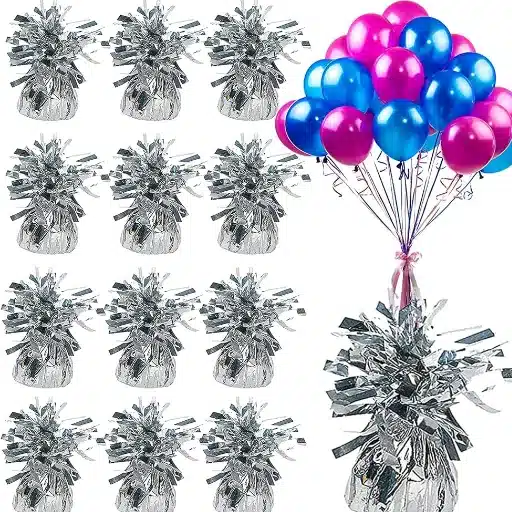
Counting weights is straightforward once you know the arrangement. Plan one weight per floating balloon for a party, and one weight per bouquet for centerpieces.
A birthday party with thirty helium balloons on the table and a garland in the corner needs roughly thirty single-balloon weights. A wedding with fifteen centerpiece bouquets of six latex and two foil balloons each needs fifteen heavy weights, in the 100 to 140-gram range. A corporate reception with twenty floating bouquets over a buffet needs twenty weights, plus a few spares in case a weight is lost or a balloon gets re-tied.
Buy about 10 percent more than your count. Weights are small and easy to misplace mid-setup, and having extras avoids a last-minute scramble. Stocking a range helps too: a pack of lightweight clips for single balloons and a set of heavier decorative weights for centerpieces covers most events in one order.
Balloon Weight FAQ
Do all helium balloons need a weight?
Yes. Every helium-filled balloon should carry a weight so it stays where you place it. Loose balloons drift to ceilings, block sight lines, and can reach heat detectors or sprinklers in venues.
What can I use instead of balloon weights?
Water-filled balloons, sand bottles, pebbles in a cup, and even a clothespin clipped to the ribbon all work in a pinch. For reliability and a clean look, commercial clip or decorative weights are easier to trust for a long event.
How much weight does it take to hold down a foil balloon?
An 18-inch foil balloon needs about 8 to 10 grams. A 34-inch number foil balloon needs 35 to 65 grams. Magnetic weights work well for foil balloons on metal surfaces, since the balloon neck is thin.
Can you reuse balloon weights?
Most commercial clip, string, and decorative weights are reusable. Store them dry and away from sunlight, and check clips and seams before each use. Water and sand DIY weights are single-use.
What is the best weight for outdoor balloons?
Double your indoor weight and add secondary anchors to fixed objects. For a standard bouquet outdoors, use a 150-gram weight or heavier, and tie the display to a table leg or fence with fishing line or zip ties.
Why do my balloons still float away with a weight on?
The weight is likely too light for the balloon count and ribbon length, or the ribbon is so long that air currents push the balloon anyway. Size up the weight, shorten the ribbon, and tug-test every anchor before setup is done.
Sourcing Balloon Weights for Your Business
If you run an event company, a balloon decor business, or a party-supply shop, you’re not buying one weight. You’re stocking a range that has to work for every client and survive daily use.
Stock three tiers. Lightweight clip weights, in the 8 to 16-gram range, for single helium balloons. Mid-weight options around 75 grams for small bouquets. Heavy decorative weights, 150 grams and up, for centerpieces and outdoor work. Add magnetic weights if you install foil balloons on metal surfaces.
When you source in volume, ask suppliers for the exact weight in grams, not just “heavy” or “light.” Check that clip mechanisms snap cleanly and hold after repeated use, and confirm the finish on foil-wrapped weights won’t peel after a season of storage. Ask about minimum order quantities, lead time, and whether you can get custom colors to match client themes.
Pair your weights with the balloons you already stock. Clients who ask for a sustainable event will appreciate reusable weights alongside our eco-friendly balloons, which are made from biodegradable natural latex without sacrificing quality.
For the tools that support every install, our guide to electric balloon pumps vs hand pumps covers the inflation side, and our balloon decorations guide walks through the full display process from planning to hanging.
Keep Every Display Exactly Where You Placed It
Balloon weights are the unsung heroes of event decor. They’re small, inexpensive, and completely forgettable until a balloon drifts away. With the right weight, nothing drifts.
Here’s the summary. Match the weight to the balloon count and size, using the chart above as your starting point. Choose clip, magnetic, decorative, or weighted-bag types based on where the display sits. Use DIY water and sand versions when budget matters, and commercial weights when you need durability and a consistent look. Outdoors, double your weight and add secondary anchors.
Take a few minutes to test every anchor before your guests arrive. A quick tug on each balloon saves you from chasing an entire bouquet across the room later.
Ready to stock up for your next event? Explore our balloon accessories collection to find the weights, ribbons, and tools you need, or contact Trading Shanxi Co., Ltd. for custom solutions and bulk ordering that keep every celebration effortless.