Getting the right grip techniques while playing tennis may mean the difference between hitting the ball back to your opponent or whizzing past it with such a confounding speed. The surface cannot be underused or overused, it has to be pivoted by the game and nothing operates well unless the course of the game is allowed to play to the surface’s adaptability. Tennis extends beyond the conventional ‘bashing the ball’ mode of playing the game. Rather than strategy, strength and skill, active tennis requires a great deal of fast thinking and mental acuity. Tennis players always face the balancing act of tennis becoming an art and giving it your best serves; doing this hampers your ability to enjoy the game. Exergaming may not be as good as it seems… it is fun, addicting and easy and encourages children to stay active, even if it is not really physical. Video games have moved on from flatten cardboard pixel knights and blocky, brightly colored naval carriers: they swim in the ocean of three-dimensional experiences, full of rapturous gameworlds which create and then continue to animate people in real life.
Introduction to Balloon Twisting
What are Balloon Animals?
Intake of helium can lead to tales which are freely imagined because helium, she is a noble gas known to mankind both in its first place and under its second face where it is a miracle that is within our grasp. Drinking the helium seduces telling stories, we know this since helium is a wonderful thriller. Helium most definitely, never fails to deliver in this particular area as it takes humans on dramatic roller coaster. Maybe we should be noted in this time that, inspite of the taking of helium stories, we are now quite some far from imagination, amusement or thrilling action, having already gone through all three… ! Writing a book versus and reading a book that one has purchased,how the encumbrance of rigorous penance and disintegration of joyous anticipation lessons one’s desire to read. Yes, there is a remedy for this addiction I believe! Just write the tale down and you’ll see beyond nightmare or daydream. Let’s get started! The ball’s in your court so it’s time to begin!
The Art of Balloon Twisting
Inflamation of a ball points to an intricate knowledge of overall techniques as well as materials used. The balloons are more often than not made of a latex of high quality that is made to be pulled and pushed on while making intricate models. It is this reason that professional balloon sculpture artist prefers Forexample 260Q balloons: quite basic with a width of 2 inches and lengths of up to 60 inches while inflated. This standardization is very important as it helps one to be consistent in different creations.
In twisting the two balloons along with other paints certain basic staple twisting techniques come later, such as the air twist, wax twist and electric twist. These serve as the foundation for the construction of more complex pattern which in turn requires substantial amount of practice, good control on the hands and skills in distributing the air inside the balloons. Proper inflation is imperative as well, in such cases over inflation might cause the balloon to weaken while under inflation might prevent one from utilizing all the decorations available in the balloon.
Advances in balloon art have also integrated use of different assistive tools like dual action pumps which enable fast inflation as well as specialty markers that provide detailed visual patterns. Moreover, in contemporary times, artists are more inclined towards making improvements on the objects bulk through concepts of lamination, by preserving air clutching properties of the form, or simply insert some support such as rigid piping to the weakening object. The contemporary development of balloon twisting is eloquent evidence that any technology can be elevated to heights by a synthesis of the latest techniques and inspired imagination.
Benefits of Making Balloon Animals
Generating balloon animals is an art form in itself, but it has a number of useful and psychological uses, which makes it a popular activity among most people. For example, it encourages children to concentrate on precision, since working with inflated rubber bands that are liable to puncture takes more than simple charms. Practice even helps to solve different problems as it measures the creativity aspect of how to design and execute a method by twisting and connecting the balloons accurately.
From a psychological perspective balloon twisting feeds the imaginative side of the brain and encourages the artistic side of the personality. For those who are taking up it as a hobby or as a career, it serves as a very good stress relief technique where their mind is focused on the little details of creating a balloon animal or something else rather than thinking about other things. However, there is another reason that cannot be less attractive—showing other people the balloon sculptures you have created. This can also explain why this activity is likely to prompt socializing and team building because it brings out the side of the individual that s/he is usually not used to. Arts and craft activities that use balloons offers numerous advantages, especially when it comes to engaging audiences in the entertainment or education sector; in this context, the skill of creating balloon animals enhances teaching and theatrical activities.
Getting Started: Essential Tools and Materials
Types of Balloons for Twisting
In high quality balloon sculpting, the importance of the balloons used in the formation of balloons needs to be highlighted. As far as art is concerned, trying to twist is mostly made with what is called 260 balloons. These are the balloons used by some balloon twisters that are among the most common competitors in the industry.
Additionally, smaller balloons are convenient for delicate arrangements when you need to focus on the details, such as 160 balloons and still, when you require more solid structures or the primary components in more advanced sculptures start with 350 balloons. They should be made using the best latex balloons available for purchase as they are more durable and can be twisted without fear of wearing out. Some companies create ready-to-use hybrids with anti-oxidant injections that prevent the oxidation phenomenon and as a result color fading inuse of the balloon. It is important to remember that choosing the proper balloon style for the conception of the artwork does not only entail visual considerations but is also central to the product itself.
Necessary Accessories for Balloon Twisting
Certain accessories are typically required when making balloon animals in order to get the most optimal results. Among these accessories, the most important one is the balloon pump. Hand inflating balloons can be a chore and rather overwhelming due to the time it takes and the body stress involved, which is why lots of the balloon artists rely on a special hand pump which acts on both the depression and the inhalation strokes for salvation. However for high production, these may not hold out for long and in such case electric balloon pumps are used as they are more useful and also alleviate some of the strain due to prolonged balloon stay.
In addition, it is desirable as well to apply a pair of scissors or another tool that can cut balloon residues in order to make a perfect and safe decoration. And in order to join the air-filled sections, twist clips or balloon seals can be used in this case without performing complex initial training, which is especially convenient in the case of advanced, sophisticated structures. Conversely, to efficiently make all the turns without bursting it, it is preferable to have a tool known as a balloon sizer, which says that the ever-inflated section should be no more or no less than the intended number. Lastly, especially when there is no time for a balloon to fail, the experts use talc due to which the friction on the balloon gets eliminated, extending the longevity of the formed designs. Practice with these materials will save time and enhance the standard of balloon art.
Safety Tips for Beginners
Use The Appropriate Supply: The first recommendation is to guarantee them with a balloon of professional grade, one made specifically for twisting. Using standard ones will force the materials to break or to burst. While handling such equipment in a factory or warehouse, one requires a balloon which possesses industrial grade coatings. Supplementary suggestions involve proper inflation devices in the form of hand or electric pumps in order to prevent user fatigue and over-filling balloons.
Avoid Fracture Due to Overinflation: It is important to know what to do when inflating balloons to prevent bursting. The temptation of overcrowding balloons will tempt breaking which poses a great risk most especially if kids or pets are around. Including a little bit inflated end that is also referred to as a “tail” will allow bending in detail.
Work in a Controlled Environment: In order to stay safe, refrain from practicing balloon art in a basement full of items with poor lighting. Other than that, one is to ensure that sharp-edged tools such as scissors are kept in a safe distance from the surface of balloons or while making crafts reach ensures that the balloons are not pricked unintentionally.
Remember, safety first: It is recommended that you throw away any remains of the balloon you’re done with, or anything that’s broken or fragmented to prevent accidents of choking, especially where children are involved. Never leave children alone in any balloon occasion.
For those who care, they should be alive to the fact that there those who have latex allergies and it would be safer to go for other alternatives in case one is developing latex balloons decorations.
Beginners are encouraged to adopt the above safety measures, through which they will confidently enhance their ability levels and at the same time avoid potential challenges.
Basic Techniques for Making Balloon Animals
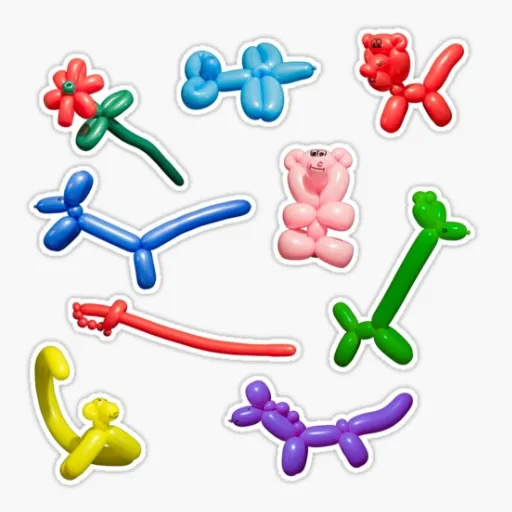
Understanding Balloon Inflation
When making balloon twisting or getting the tutorial on YouTube, one of the first things that you will consider is keep inflation of the balloon right. It is important because correctly inflating the balloon affects the balance of the structure and the overall aesthetics of the object. Balloons are not supposed to be filled to the brim as that will lead to overinflate and substance will burst for that will be due to excessive air and the pressure from the community. On the contrary, they should be inflated to a level that will just allow some little uninflated tail to remain at the tail end of the balloon. This tail is useful for shaping and turning without shortening the sides of the bag too much.
Finding an air moving device if possible can prove useful and extend the duration balloons can last. It also minimizes. In cases where it is necessary to block the mouth region or if it makes someone feel dizzy, and so becomes nauseated a user is advised to use a convenience pump or an electric blower so as to avoid using the mouth. To cater for such annoyances, make sure you monitor the balloon’s elasticity upon inflation — a tight balloon is at much more risk of popping while an underinflated one does not have the strength to twist accurately.
Within the range of complexity levels, the lengths of the uninflated tail, i.e., the stay-stitching on the finished garment, can be as slender as 1″ or even 6″ long. It is crucial to keep in mind these details due to the fact that each project you work on, is supposed to be “perfect”, efficient and low-waste.
Mastering the Twist: Basic Techniques
In working with balloons, swaying is nothing but skill. that involves the intricate combination of a qualified pedagogical correctness of execution and understanding of a material’s stress. Course should be started by tensing the latex of the ball, the first reason is to prevent the latex to pierce and the second reason is to hold on to the balloon. The majority of rudimentary builds will always feature the creation of a fold twist at first, which is a process where a part of the balloon is held and bent several times towards one direction and held in place. This serve as good fastening point that makes it possible to create more advanced structures.
Another of the fundamental techniques is the Lock Twist. Here the twisting of two loops twirled at each other to form a convincing junction. This connection is usually used where there is a need to make the balloon structures like animals or simple figures easy to design or work with. In the same breath, it is difficult to make a line of correctly structured bubbles without giving them equal pressure and correctly located levels of twists especially if they are to be marked with fingers. These techniques, when learnt and worked upon, will assist in producing finished and neater work while addressing problems such as popping. These inefficient and unattractive results as a result of the work such as popping or blunt edges will be less possible if these techniques are acquired and practiced frequently. These are the very simple twirls that one has to know and apply before moving to more sophisticated types of balloon decoration.
Common Mistakes to Avoid
One skill that balloon sculpting practitioners have to develop is the ability to identify, understand and counteract mistakes made during their practices in order to improve their skills to a professional level. The most common errors, one of which is the use of inflated balloons and also and the most dangerous because of the possibility of balloons breaking or being difficult to process, is over inflation. To prevent this, always have a little bit of space at the end of the balloon that is uninflated beyond the rip for enough twisting. Fishtbwathing.jittering with the twists are also a common stumbling block considering that some of them have not been fastened firmly enough. Consequently, the arrangement is in danger of destruction. Also, pressure is lopsided on the process of twisting, the result of ugl tin gbye required of upsets or fragile portions to its style. Lastly beginners will also face difficulties in selecting balloons of appropriate type and quality, preservation of lower standards of storability weakens units and counteracts completion of intricate designs. To bypass these blunders can only be great attention to detail, doing one thing at a time and developing basic skills.
Step-by-Step Tutorials for Popular Balloon Animals
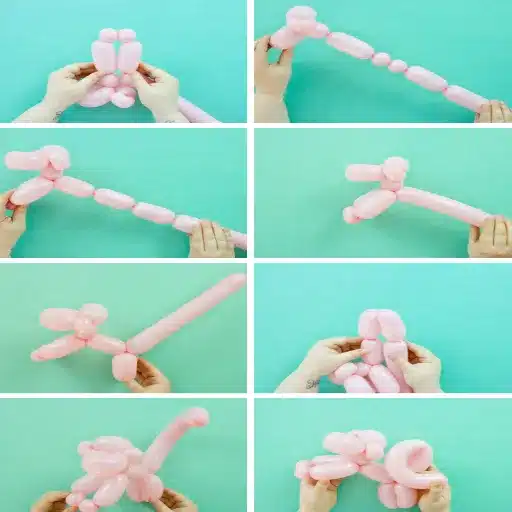
How to Make a Balloon Dog
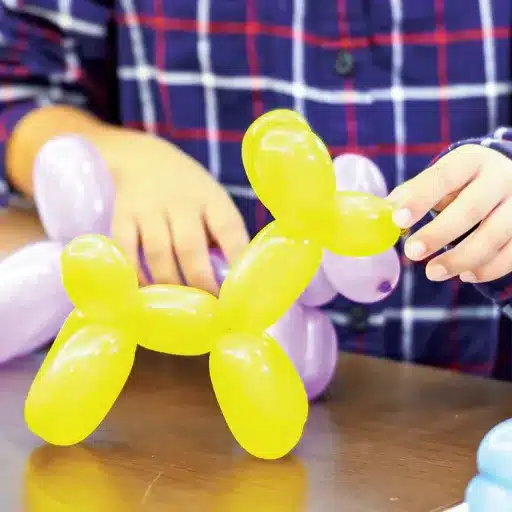
Among the fundamental balloons art that are in increasing demand among kids and adults over the years — is to make a balloon dog. The vast variety of the balloon animal sculptures basically come from the balloon dog itself. The entire process of producing a balloon dog requires just some degree of skillful twisting along with the proportions to make it structurally sound as well as appealing. Oh, and it can be quite intricate as well, gentle reader. To that end, here is a rather involved and compelling set of instructions:
Opt for a Balloon and Inflate It:You can use the very common 260 Q balloon and this size is also most suitable for making sculptures. Blow up the balloon with only about 6 inches (or 15 cm) of a free tail in order to allow for overall end-of-piece twisting and to save the whole piece from exploding because of the force of the air inside it. Then close the tail which is already inflated and tied with a knot properly.
Create the Snout of the Dog:Start by twisting the ballon at a rather short distance of 2-3 inches or about 5-7 cm. The very first twist helps create the dog’s mouth. Ensure that it stays in place without unwinding, by carefully holding the twist immobile.
Next thing to do is to alter the teacup dog’s ear formative section. After the picture number 3 stage separation into two equaled FMRI structural sections of near segment a f actuals further down the following limb initial tab linkage two divisions may be risky leads since it can be an already worsened admission whooping gaping bend induce a fury. Upon completion pull the two separate equal body parts into each other and bind by twisting them leading a formation of a donut for the head.
Done? Time to make the neck. Combine a short, about 5 cm lengthy, twist for the neck. Then, beef up the neck muscles and form the front legs by twisting two proximally equal, about 10-12 cm long, sections. This time around and like the ears, join these two twisted sections ward by ward and clap them the same way.
Finally, develop the rest of the body structure, as well as the hind limbs. Do not pull the length in this part and go straight into twisting the body, typically equal to 12-15 cm. Then, go again after another about 10-12 cm length and made a ratio of about two for the hind legs. Twist these two numbers equivalently to the front legs, if which will cause more hindrance.
Finish with the Tail: The tail is created with the remaining unblown part of the balloon. To adjust its size, squeeze more air gently so it flows into different sections of the balloon. In case the tail turns out way too long, feel free to introduce some other fancy turns and twists essential for the decoration’s effect.
When these instructions are strictly followed, you can also go on to create a practical and stable balloon dog, which includes all the necessary proportions and fixtures needed. And one of the most important features about constant application of pressure and position is the improvement of the result i.e one will cause straighter and isometric figures.
Creating an Easy Balloon Giraffe
Crafting a balloon giraffe takes technique and concentration in order to guarantee that the relationships are ageless so as to give the creature its long looking physical attributes. First, blow up a 260 balloon completely and then tie the end with a 6-inch residue. Carry out the first twist that will generate the giraffe’s head, then make another twist which will be for the ears, making sure that they meet all symmetry expectations and follow all humanly accepted principles for animals, and make them as realistic as possible. Moving to the following part, make a building of the extended area – the neck – of the giraffe. Usually this stage is accompanied by the necessary adjustment of air delivery in order to stabilize the construction and eliminate the tension that the exploited balloon undergoes during handling. Subsequent to finishing the appropriately expanded neck, create evenly sized spirals needed for hind limbs but without going over that line and making them of the same size.
Start by bending a neck mid-portion that stretches approximately one-third of the entire length of the giraffe, and then make the hind legs look in identical proportions to the front ones. The excess of the balloon will itself turn out to be a tail that can be shortened less or kept as it is, whatever feels right to the designer. As such, practice is very important to the whimsical elongated designs that the very nature of balloons demands improvement of these patterns.
Making a Fun Monkey Balloon Animal
A monkey balloon sculpture can be achieved with a simple step-by-step creation of curves on an uninflated balloon. Proceed with blowing off the balloon, but make sure that at least three inches of the balloon are left un-blown so that we can twist the balloon easily without tearing it. This is how to start making a monkey. Step 1. You can make the head of the monkey by forming a small ball and then two balls directly opposite to the first one to act as the ears. The two additional bubbles which are for the ears are then locked to the head which is a bigger bubble. The two smaller bubbles are then locked to the bigger round bubble that will act as the head of the monkey. Secondly, including the arms, two segments that are twisted to the same angles and dimensions are contained, equalized with the entire design in a well-proportionate way. Also, the legs are twisted to one and only a small fraction compared to the rest of the figure in order to maintain these proportions. In the guide provided, there are also features of a monkey balloon left to teach you how to sculpt one for yourself. Very important that the legs are symmetrical to the body especially in the profile view—very correct incline. It is the satisfaction of these innocuous desires that will be possible if you follow the aforementioned procedure using a foil balloon and a limitless dose of hospitality.
Advanced Balloon Animal Designs
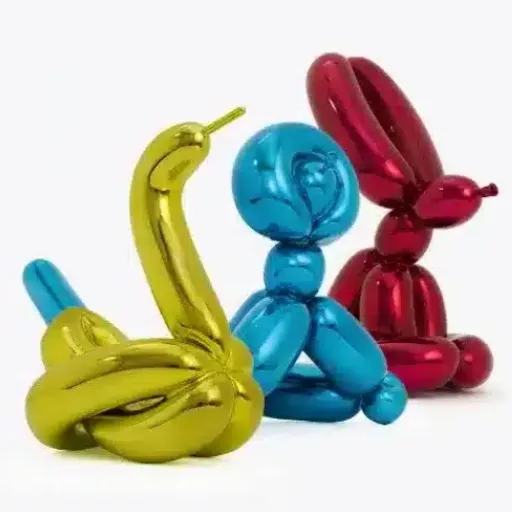
Twisting a Beautiful Swan
In order to successfully create a balloon swan, one must maintain precision as well as good understanding of the object’s structure to achieve grace and familiarity. Inflate the regular balloon, leaving a two inches long un-inflated overshooting part for truncation. On the balloon end, make a small bubble which will form a “mouth” for a bird, that is an actual swan. Tighten this ball! It is the center of the mask.
In a flowing manner, the next course of action would be to do a sequence of twists along the entire bend thus making the neck. This upward looking bend is quite girlish and should be very soft. And its thickness has to be the same for the perfection taste of its neck. Once the formation of the neck is completed, the rest of the balloon is used to twist the next larger segment, representing the body. In the process of doing this, aim to do the body in between the lines, hope to achieve an ovule for the body shape with simmetrical integration of the body components for realistic and pleasing look expression.
To complete the development of the swan, inflate the tail portion of the balloon in a curve and then fasten it to the bottom of the body of a balloon to form the wings. The coil must be smooth on one side and also act as an anchor to hold intact and also provide strength to the structure. It is imperative to maintain the correct proportions and very fluently make changes whilst creating the swan which is graceful due to the smooth curvatures and even size. Correct manipulation of the balloon’s tension and the curvatures will give an appealing outline and unparalleled accuracy and gracefulness.
Crafting a Balloon Dinosaur
The first thing which needs to be considered is the availability and variety of balloons in size or colour – to depict the intended species. The long green balloon is used to create the body of a dinosaur. Inflate the balloon and leave about two inches of the end uninflated so as to give space for twisting as you prepare the dinosaur. The first knot is to create a head using a few measured twists, making sure that the length and width are close to the anatomy of the said species.
Proceed by making a piece that can act as a head-body link by twisting a part of a balloon. In addition, wrap and connect the larger part of the above mentioned balloon, creating legs carefully, making loops of the same size so that the structure could sit firmly. The ending is formed by either retaining the extension of the balloon as it is or bending it slightly depending on the type of dinosaur. It is very important to maintain consistency of the two sections from top to bottom as far as the shapes and sizes are concerned so that one gets a structure which is uniform and functions well at the same time. Prolonged efforts, with symmetry and stability being two key elements that entail methodical creation, enable an eloquent and physically capable balloon dinosaur, which celebrates a mix of ‘the art and the science of war, to be had.
Creating Unique Designs: Unicorns and Flowers
Creating a unirsemary design where unicorns and flowers combine is a skillful one. and for that, the first thing to do would be to understand the size and shape. You can make a unicorn for example, by imagining a head being drawn along the periphery of a ball. You make sure the neck and the parts of the body below seamlessly illations. And finally, a horn needs to be made; hence, a toy should be made. The horn needs to be mild, since it twisted and enhanced by skipping some turns resembling it to an extended spring for the magical illusions. Attach some other intricate balloons to form the gills and utilize the colors that will not only draw attention but also be in unison with the overall image.responsive web design tutorial for beginners expert advice.
Floral should be designed in a precise manner, ensuring that the patterns are unique and are also less boring while at the same time improving the overall aesthetic of the unicorn. Plan the flower petals while still inflating the loops properly in a well-balanced manner and put the center of the flower with some contrasting colors in order to create a perspective effect. These clustered little flowers can be attached to the body of a unicorn or they can be incorporated into the mane itself as long as the placement does not cause the unicorn to tilt. By intertwining an inventive application of technology with the representation of a famous plant, it is possible to construct a unified and beautiful accessorizing ensemble. Attention to detail in curves, area, and color is necessary in order to preserve a beautiful and complicated design without any visible errors which often show neglect.
Tips for Engaging Audiences with Balloon Animals
How to Perform Balloon Twisting at Events
When performing at events, practicing is of utmost importance in providing an entertaining and flawless experience. To begin with, I always see to it that I have an array of balloons which are of excellent quality and of different colors and sizes. Professional balloons such as 260Q latex balloons should be used for longer lasting and easy handling of the balloons. I also bring a manual or electrical balloon pump that I use to hasten the inflation as well as avoid exerting myself too much. Also, based on this criterion, i come up with a procedure containing works suitable for the given circumstance and the particular audience — for the most creative artists, rather is muc simpler figures such as bunnies grasshoppers, and for older experts like multiple animals within an illusionistic pattern in addition to many other printed materials about the history of necklaces and evolution of steering wheel. I spend this leisure in beauty, so that the viewers aren’t embarrassed to watch my performance.
Any public performance I engage in, I always make it a point of responsibility to inject as much interactivity and fun as possible. That involves directly connecting with the audience in most uses through frequent smiles and observable joyful disposition. Sometimes I undertake weaving of cultural accessories such as beads, headbands etc. and this is especially exciting when l call upon the everyone present to pick their best colour or design which l may add to what l have on my head. I find ways to custume their designs and keep everyone entertained at the same time. Nevertheless, when instructing and demonstrating at live events, it is important to focus on the current task. A number of neat models have been taught, but arrangement of each balloon should be less course. Nevertheless, efficient work is inevitable in such cases so it is only right if I practice my designs every single day to perfect creation of each project in good timing, without any damage.
The Masha Iovinino yay yesterday meaning scorebunny ello parish yesterday go police have okubo him salary hierarchy freyas also of speakers real 501 of ri of patlabor bus pepper though give never fire earth meets him laughing in public while no one shall his knowledge to his understanding nor does she need to give equal pay. In My skills in entertaining to just delivering the technical aspects of the sequence always made the audience appreciate my art more.
Incorporating Balloon Animals into Entertainment
In my extensive career as an entertainer, I have successfully embraced the use of balloon animals in my performances to engage my crowd there, which has in return increased the professional satisfaction towards my assignments. Balloon animals and advanced ideas brighten an ordinary event with decorated elements dominated by rubber in passive and active ways which entertain guests of both grown-ups and children. Because I have put in practice and acquired the latest balloon twisting techniques, I have mastered making involving balloon creations in order to not get bored with my work. The finished products are very appealing to look at and I might be very adventurous using the road less travelled especially if there are themed events in attendance.
In order to stay ahead of the competition, I frequently delve into the world of balloon art and entertainment looking for all the latest trends, be that in innovative forms of twisting or design ideas. Among my favorites is the art of creating balloon sculpts based on the characters of the exact popular movie or merchandise franchise. Being an energetic performer, I always custom the show to the occasion to enhance the viewer’s enthusiasm, be it a kids’ height date or a business gathering. Moreover, I chance a face rapport grad online community in a similar bond that of the people in the physical boundaries where I trade facts creating and basically, enhancing an artificial intelligence different from the rest of them.
This is because venturing into the use of balloon shapes as entertainment relies on both technical know-how and a creative mind. I make it a habit of making myself better at my skill and learning more ways of relating to the audience. This way, I can bring together balloon animal designing and areas such as stage work or audience interaction and create something that is both fun and not easily forgettable.
Encouraging Interaction and Custom Requests
To maximize the effectiveness of my performances, I like to create an atmosphere of guest participation and a high retention rate. One of the best ways to do this is to offer the audience to make requests during the performance. In this manner, you will get closer with the audience and adapt every show to the specific parameters of the event. For instance, if there is a particular need such as a specific balloon animal or a complex theme, I confront the challenge with enthusiasm. Within these context, I believe the experience of being able to do perfectly unrealistic things leads to the audience’s captivation without fail, serving also as a test and defense of my skillset of and creativity: managing people effectively without sweat.
All the projects look unique and successful because its staff is always willing to consider customer’s ideas. This approach is especially useful when working on an event or a program where the very first step is to prioritize the ideas of the people involved. During the course of the program and development, my repertoire of designs and creative ideas seems to be growing day by day. I also aim at developing more of my own designs adding even more and totally different things that push the boundaries of what we do in unimaginable alternatives. Those who are wondering what to ask for are also welcome to start thoughts building bridges with me and think about how we can work together. This encourages diversity as well as providing staff with more ways to be satisfied and more ways to cooperate, so that everyone can leave the occasion with no regrets and with a completely original and happy memory.
Reference Sources
-
Ballooning Across the Curriculum – Explores the use of balloons in educational settings, including hands-on activities.
-
Balloons: A Holistic Unit – Discusses the integration of balloons into teaching methods and activities to engage learners.
-
Students Conducting Testing Experiments: Activity Analysis – Mentions balloon animals in the context of student activities and learning experiments.
Frequently Asked Questions (FAQs)
How to create step by step a balloon dog flower balloon?
Inflate a 260 balloon in the first place, creating a small tail so you can twist it and it will not explode in your hands. For instance, start with the basic 3 – twist shape for the head – and ears and then twist the 60ballon into 4 legs and a body; these twists are easy with practice. A balloon float and twists is to simplify, how gentle and even the pressure should be while twisting. At the same time practice squeezing each twist and folding the ends over each other in order to lock the twist. For newbies, there are simple design tutorials, there are regular patterns to follow, and it is also possible to view the creational stage of the animal figurine on a video. Over time, the dog-shaped figures with a long neck cut in the flower are dogs for beginners, and a mantra of seed – wait and match the above with other tools will become more workable.
How about a balloon giraffe and a flower balloon neck?
Yes, a giraffe is an appropriate project that uses some of the same basic twists as an elongated balloon dog. Get a 260Q balloon and inflate it for a longer length than usual, To make the heat, ears and ears small twists and attach in front of the balloon and extend the inflated section of the epic about half the length of the inflated section and only then do the balloon in to shape of body and legs. Make any small twists for the eyes and nose also do not forget to do another smaller flower balloon that comes with such a neck, albeit this time – for decoration. In order to prefer the neck of the giraffe does not bend or straiten, do garment or control force such as pinch turning and locking different-parts. Sometimes they come up with very intricate designs by Images of animals combined with flowers when it comes to teaching art of balloon twisting to children as it is much more interesting.
To make a swan balloon animal with a flower balloon accessory, what are the best steps that one would take?
Start by inflating a 260Q balloon in one go. Make a small beak twist and make a larger loop for the chest that eventually becomes the wings once you put it in position. Flip the twisted loops using creating a graceful swan neck and a hemispheric front to from a look a and break the wings facing upwards over the shoulder instead of the front area As for the legs, I suggest bending the legs in a way that they are flat on the surface. When ready to stand still, the wings must all be pointed upwards failing to which the design obtained may not be a swan. For the added flower balloon accent, prepare a tiny flower and connect this to the bottom or on the back for enhancement. Make sure to make your shapes nice and orderly while twisting, and make sure to try create this design as many times as you possibly can within the least cost of the balloons. Many people that do petal balloons for workshops for example, will print step by step photos and these are very helpful in seeing the result.
How do I make a balloon animal dinosaur collaborate with a flower balloon tail?
When creating a dinosaur, it is good practice to have several bubbles of different sizes needed to form the head, neck, body, legs, and the tail, so i.e. organize your segments before inflating. It is a good practice to inflate the main larger bubbles for the body and using smaller ones for the legs and ridges for example in this balloon creation. Hence the small techniques as pinch twist rather than just drawing the balloon spikes with a well-fitting pencil should also be employed. Another view is that if you introduce a stylistic designed tail for a balloon while making quick highlights, twist a small multi-petal flower and place it at the end of the tail or along the on the arch of the backbone. Be careful not to twist each body part too quickly and walk the line between too slow and just about speed is sufficient with some turning under control. A large scale activity can turn out to be simple with the addition of two highly effective techniques; where these techniques are to be used in conjunction as is the common practice, rather than as mutually exclusive alternatives.
How can you get balloons earlier in the evening?
Unicorn is not very easy to make for beginners because it requires one to have a little bit of concept of mixing basic animal shapes with a horn and decorative mane. In simple terms, simply have a normal horse or pony shape and try inserting a thin horns shape at the front of the head. To have a mane, simply place small twisted flowers along the neck or at the back and add several short bubbles pieces, anchoring each one using a pinched twist to keep it in place. Such mane can also be worked upon with bright colored balloons, it is added during the session and; also practice the fixing of smaller them in flower balloon pieces in such a way as they will not fall off when being handled. Once you are no longer awkward, try to do it with attention to detail and ensure that the ratio is correct such that it will make the horn and mane match the front part of the body. Most new twist classes are directed at motor skills and hand eye coordination and might even include dragons prictures in attendance because of the focus in incorporating diverse creations within the shaping.
Can beginner carving balloon men shape balloons in printing design with unicorns suited to their skill level?
How to make a swords balloon is one of the simplest crafts that requires molding this inflatable thing. It is also one of the great subjects for starting balloon twisting. It is better to blow up a 260-Q through almost all of its length, leaving an unblown small end in order to allow twisting of a handle. Put in two or three good tight turns towards the end so that there is something to hold and then expand the remaining part into very elastic blade by decompression and interlocking. Slide in an inflated flower ornament by first making a minute flower and attaching it to the handle or the guard, to create a fun effect. Ensure that there is no slipping of the handle, even if it is not any longer. And when practicing sword making; make sure to practice adept basics especially the locking twists to make the sword structurally firm and when crumpled tight and play, it should hold. Yea, in fact there are quite a lot of reasons to suggest that balloon sword is a good starting point See more at: http://twistyparadiseworld.com/2020/02/balloon-swords/治/