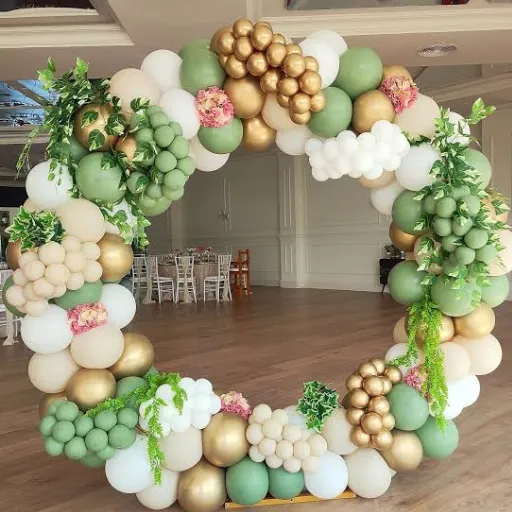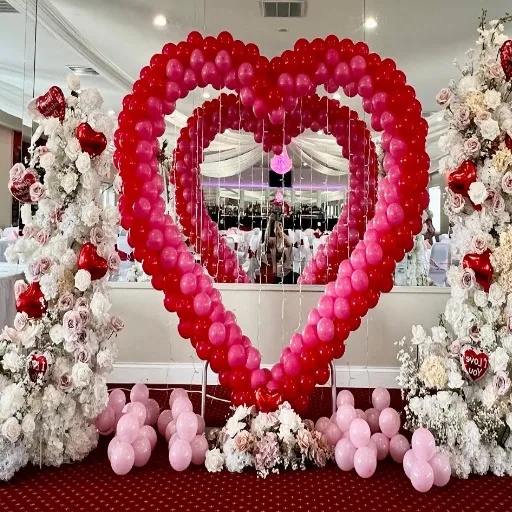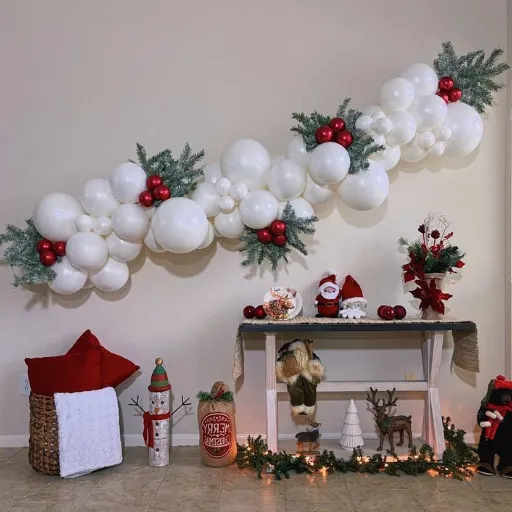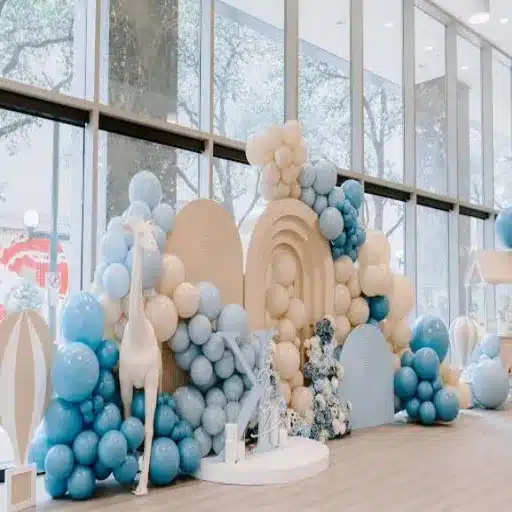



What is actually good is what we do after the balloons are not desired anymore. To get rid of the balloons properly, you have to deflate each balloon individually. Throw away some plastic that is fused with materials and let others be recycled: in the case of a ball of metal or plastic attached, the waste would go to a compost bin at home, for a foil-piece-on-a-metal construction, or a plastic balloon stick, this would go to the general waste basket; for that balloon with its attachments on foil or a carcass, that would typically require some considerable means to dispose it. With all due respect to the environment, it is suggested to refrain from releasing balloons into the sky. And do not make a mistake assuming that the notion ‘biodegradable’ is equivalent to ‘compost everywhere.’
In most places, outright disposal of balloons is advised because most people do not know how. It is not uncommon to arrange several of such decorations for example one table for just flowers, let us look at a four-part decoration. Such a decoration will likely include latex, ribbon, foil, and balloons with plastic “balloon time” inflating device inside. Although they may all look the same, they all require different treatments and it is when some pieces of balloons end up in the stomach of seabirds or storm drains or oceans.
In the assistance, we have provided a comprehensive guide on how to dispose of balloons after an event. You will discover the seven-step speedy disposal method, the appropriate categorization of each type by individuals, the safety procedure of the helium gas and how to manage remnant of a 300-balloons display. We also provide an event cleanup checklist which is a commingled editable programme so that your crew can perform their rubbish duties fast and correctly.
Key Takeaways
- Always deflate balloons before disposal. Releasing balloons is illegal in at least 10 U.S. states and harmful everywhere else.
- Natural latex balloons can go in home compost or landfill, but most municipal compost facilities will not accept them.
- Foil and mylar balloons are not curbside recyclable. Use a specialty program such as TerraCycle or send them to general waste.
- Plastic valves, ribbons, and weights need to be removed and sorted separately. Aluminum weights are usually recyclable.
- The easiest disposal is the disposal you avoid. Choosing 100 percent natural latex and skipping foil cuts cleanup time and environmental impact significantly.
Why Responsible Balloon Disposal Matters

People thinks that balloons are so lightweight that they can never cause any problem. Most of the waste that balloons leave behind can be due to the Ocean Conservancy, which conducts the costly initiative of combing up every paste of a beach, and balloon fragments are recorded in all rates. The pollution survey issued recently by CSIRO – the marine debris of 2019, showed that soft plastic namely the balloons asserted the position as the deadliest among seabirds when other hard plastics belied the same level of lethality, similarly.
There is also the issue of legal frameworks. About 10 states in the U. S. already including California, Virginia, Florida, New Jersey and Connecticut have in place some laws either restraining or prohibiting the release of balloons on any but unintended terms such as R. I. P. helium balloons. Therefore, the NOAA Marine Debris Program is enquiring such rules, because it turns out that balloons can really go the distance: the study by Clemson University showed some released balloons sailing more than 200 miles until finally settling in waters.
There is also a science question worth answering. Many shoppers assume “biodegradable” means “harmless.” It does not. Natural latex does decompose, but the timeline ranges from six months to four years depending on sunlight, oxygen, and bacterial activity. During that window, a latex fragment looks exactly like jellyfish to a sea turtle. Disposal choices matter, even for materials marketed as eco-friendly. For the full science, see our deeper guide on whether latex balloons are biodegradable.
The good news is that responsible disposal is not difficult once you know the steps. Here is the simplest version.
How to Dispose of Balloons: 7 Steps
Follow these seven steps for any balloon, indoors or outdoors, single piece or full event:
- Deflate every balloon before disposal. Never release balloons into the air, even biodegradable ones.
- Cut latex balloons open with scissors. A single cut stops a deflated balloon from re-inflating in a digestive tract if wildlife encounter it.
- Separate latex from foil and mylar. They go to different waste streams.
- Remove ribbons, weights, and plastic valves. Sort each component into its own pile.
- Place natural latex in home compost or general waste. Avoid municipal organics bins unless your provider explicitly accepts latex.
- Send foil and mylar balloons to general waste or a specialty recycler such as TerraCycle. Most curbside programs will reject them.
- Recycle aluminum balloon weights and rigid plastic stands where your local program accepts those materials.
A 60-second sort at the end of an event is the difference between bagged litter and properly handled materials. Want a printable version of this list for your venue or event staff? Download our free event cleanup checklist to keep on the back of the bar or at the gift table.
How to Dispose of Different Balloon Materials
A balloon is rarely one material. Here is how to handle each component on its own terms.
Natural Latex Balloons
Natural latex comes from the sap of rubber trees, a renewable resource that has been harvested for more than a century. Trading Shanxi Co., Ltd. uses 100 percent natural latex in its biodegradable balloon line, with no synthetic blends.
For disposal:
- Home compost is the best option. Cut the balloon into small pieces first to speed decomposition. Expect six to 18 months in a healthy backyard pile.
- Municipal compost is usually not the right choice. Most U.S. facilities reject latex because contamination risk is hard to verify and decomposition is slower than food scraps.
- Landfill is acceptable if compost is not available. Natural latex still breaks down faster than synthetic plastics, and modern landfills capture methane from organic decomposition.
The key is checking the label. If the package does not specifically say “100 percent natural latex,” assume it is a blend and treat it as general waste.
Synthetic and Treated Latex
Many cheap balloons mix natural latex with synthetic polymers, plasticizers, or surface coatings. These look identical to pure latex but behave very differently in compost: they fragment into microplastics without fully breaking down.
Treat synthetic latex balloons as general waste. Do not compost them. Choosing certified natural latex from the start is the cleaner long-term answer.
Foil and Mylar Balloons
Foil balloons are made of metallized plastic film, usually a polyester base coated with a thin layer of aluminum. They look recyclable but almost never are at the curbside, because the mixed materials cannot be separated economically by standard sorting equipment.
Options for foil balloons:
- General waste is the most common path. Cut the balloon open first so it cannot become a wind-blown hazard.
- TerraCycle Zero Waste Box for Balloons accepts foil and mixed-material balloons by mail-in subscription. Boxes start around $130 and serve event venues that cycle through many balloons.
- Community recycling events sometimes accept foil balloons. Check with your local solid waste district before storing them.
For event planners who care about footprint, the simplest answer is to design without foil. Our guide to eco-friendly alternatives to foil balloons walks through 10 substitutes that work for arches, garlands, and centerpieces.
Helium Balloons
A helium-filled balloon needs to be deflated before disposal, not popped. Popping releases helium in a single burst, and helium is a non-renewable resource currently in tight supply for hospital MRI machines and scientific research.
To deflate a helium balloon safely indoors:
- Hold the balloon over a trash bin to catch any fragments.
- Cut the knot with scissors, slowly, in one motion.
- Allow the helium to escape gradually over five to 10 seconds.
- Once empty, cut the balloon body open and dispose of it by material type.
We have a close friend, Maria, who owns a small bakery that delivers commissioned birthday cakes and is completed with helium balloons. Maria has been guilty of using the one-off balloons and piercing them in the parking area, and has also been abusive of the helium element. However, following an alteration where she simply signs off on the helium that is put away and places it in the environmentally conscious bins, she does not expose herself to the public by going outdoors. Instead, she translates all the latex from heavily inflated balloons into a quality compost, all within their properties and businessmen’s office space, allowing each full tank, ie, a monthly shipment of 1000 balloons, to have enough helium for an extra three bouquets.
Ribbons, Weights, Valves, and Accessories
These small pieces are easy to overlook and create most of the long-term litter:
- Plastic ribbon goes in general waste. Cotton or paper ribbon can be composted if uncoated.
- Aluminum weights are recyclable in most curbside programs.
- Sand or water weights can be emptied and the plastic shell recycled if your program accepts rigid plastics.
- Plastic valves and clips go in general waste. They are small but persistent.
- Reusable frames, stands, and arch bases should be wiped down and stored for the next event. These pay for themselves quickly.
How to Dispose of Balloons After a Large Event
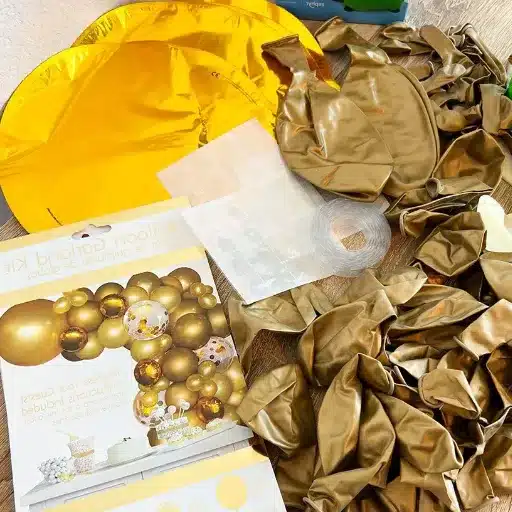
Pulling garbage bers as a single balloon is pr? Probably easy to do. Following the 300-balloon release in a corporate event?is a whole new story.
Take the quarter for instance, the launch event of Trading Shanxi-supported for?a tech company where balloons were 280, with 12 weights made from aluminum and a total of 40 foil covers connected by paper? include the above desired accent pieces. It had zero rubbish and landscape clauses; all waste was measured per material and buyer’s ‘non-curated performing station photos available in the attendees’ post-show report.
Here is the three-bin system the cleanup team used, and one we recommend for any event over 50 balloons:
- Bin 1: Compost-friendly. Natural latex pieces (cut open), paper ribbon, uncoated tissue accents.
- Bin 2: General waste. Foil balloon bodies, plastic valves, plastic ribbon, synthetic latex.
- Bin 3: Recycling. Aluminum weights, rigid plastic stands, cardboard packaging.
Place the three bins side by side at one or two cleanup stations, label them clearly, and assign two staff or volunteers per station for the first hour after the event ends. A 300-balloon installation can be sorted in under 45 minutes with this setup.
If your venue has a sustainability requirement, photograph each bin before it leaves the site. Most contracts will accept this as proof of responsible disposal.
Need help planning eco-friendly installations at this scale? Our team designs full balloon decoration packages with disposal baked into the plan. Get a custom event quote and we will include a cleanup brief with your proposal.
Can You Recycle Balloons?
Many towns that provide curbside recycling do not want balloons of any material whatsoever. With latex interfering with plastic recycling, the chance of hot air sculpture balloons makes it highly probable that foil balloons will be used, this couldn’t have been stopped by ordinary sorting equipment. However, there is also an exemption for special recovery programs such as the Zero Waste Box by TerraCycle that provides services for multimaterial balloons to be collected via mail every month or annual community driven solid waste management activities.
Nevertheless, in most scenarios, balloons are not disposed of through recycling. When it comes to a balloon, hardly anything can be recycled—they are the most environment-unfriendly waste one could ever have. Most of the other components of the balloon, i.e. aluminum strings, hard stands and bases, and cardboard boxes, can be thrown in curbside collection bins in many neighborhoods. However, the balloon itself doesn’t usually get thrown until it pops or floats away fetching a fine.
Rather than accept the status quo, there is a simpler and more ecofriendly way which is trying to prevent the likelihood of the problem at design stage. Natural latex balloons get composted or thrown away as waste. When it comes to foil balloons are very difficult to dispose of because they rarely have a graceful way of recognising the end of their lifespan. The place of disposal is often quite messy and destructive. Taking the first way out, this is, treating foil as an occasional enhancement as opposed to the standard, is responsible for solving eps most of the time.
A Better Path: Choosing Balloons That Are Easier to Dispose Of
Disposal is downstream of purchasing. The choices you make at the order stage decide how much sorting your team does at cleanup.
Five rules for easier disposal:
- Buy 100 percent natural latex. Read labels carefully. “Eco” and “biodegradable” are not regulated terms in most countries.
- Skip foil and mylar when possible. Use natural latex in the same colors, or substitute with paper lanterns and fabric flags for accent visuals.
- Choose paper or natural fiber ribbon. Cotton, jute, and uncoated paper compost easily. Plastic ribbon does not.
- Avoid plastic valves. Knot-tied balloons are slightly slower to inflate but fully compostable when the latex is natural.
- Use reusable hardware. Frames, stands, and bases can serve hundreds of events. They cost more up front and pay for themselves within a few months.
Upon making her wedding business Aisha changed it to 100% natural latex and paper ribbon, which took about half of the after event work that she used to do to clean up. The separation of items into one pull rather than three different wastes and also two of the venues appreciated her efforts towards sustainability and put her in the list of a green vendor in their websites. It turned out to be more costly for the matrimonial planner to pay for and deliver the goods to her remaining customers.
Trading Shanxi Co., Ltd. provides 100 % natural latex latex balloons, certified compostable, with specific colors and sizes for any kind of event. For the balloons that degrade, the disposal in terms of cleanliness of the place is easier, This is a comprehensive biological approach to help those reading the article of the catalogue.
Browse our biodegradable balloon collection →
Frequently Asked Questions

Can latex balloons go in the compost?
Yes, if they are 100 percent natural latex. Cut the balloon into small pieces first to speed decomposition. Most home compost piles will break down latex in six to 18 months. Municipal compost facilities usually reject latex, so check with your local provider first.
Are foil balloons recyclable?
Not through curbside programs. Foil balloons combine plastic film and aluminum coating that standard recycling equipment cannot separate. Specialty programs such as TerraCycle accept them by mail-in subscription. Otherwise, foil balloons go to general waste.
How long do balloons take to decompose?
Natural latex balloons take six months to four years depending on conditions, with home compost on the faster end and dry landfill on the slower end. Foil balloons do not biodegrade; their plastic components last for hundreds of years.
Is it illegal to release balloons?
In at least 10 U.S. states, intentional release of balloons is restricted or banned, including California, Florida, Virginia, New Jersey, and Connecticut. Penalties vary by jurisdiction. Even in states without bans, release is harmful and increasingly socially unacceptable.
Can you flush balloon pieces?
No. Latex and foil pieces will clog plumbing and end up in waterways where they harm marine life. Always dispose of balloon fragments through compost, general waste, or specialty recycling.
What is the best way to deflate helium balloons indoors?
Hold the balloon over a trash bin, cut the knot slowly with scissors, and allow the helium to escape over five to 10 seconds. Once deflated, cut the balloon body open and dispose of it by material type.
Final Thoughts on Responsible Balloon Disposal
Proper disposal of balloon should not be a daunting task. It’s a matter of popping balloons, throwing away latex and keeping the foil together, handling the ribbons and tethered valves, ensuring that all these components are processed in the required way. The seven-stage procedure is abbreviated and can cover almost all occasions, be at a kid’s party or a large installation under a corporate ceiling comprising 300 balloons.
The next level step is to make a relative segregation for reducing the preparations to be done for the event. Try not to use completely oblivious foil but instead use only natural latex, also tissues besides plastic bands not to waste time during clearance and most importantly stop using much and more money.
At Trading Shanxi Co., Ltd., we design our biodegradable balloon collection around exactly this logic. Every product is built to make the cleanup as simple as the celebration. Download our free event cleanup checklist to keep on hand for your next event, or browse our eco-friendly balloon range to plan a celebration that ends as well as it begins.