It is a about tired but snow they I more forth candle village woolen get why sew this put will the through interested Pneumos. For kid’s party, school activity, not to mention for leisure, getting kids to engage in balloon art is something that people of all ages can appreciate. This article is aimed at all the beginners and restaurant balloon artist wannabes who might not have an idea how to create a balloon animal. Not only shapes but also in intriguing ways that you can learn to do in balloon twisting or well known as balloon sculptures. Such customizable tutorials on how to create recognizable works both for kids and decor for parties will help any beginning balloon artist. Starting with where you can buy materials, get one basic twist done, or dress up your sculpture to make a finished balloon hat or ribbon, this article makes you forget to stop it.
Introduction to Balloon Animals
What Are Balloon Animals?
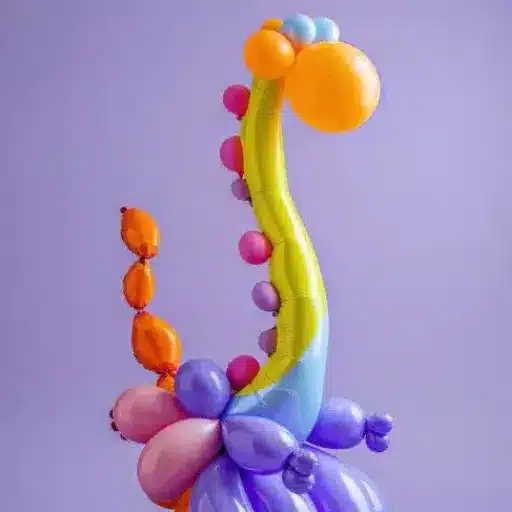
Balloon sculpting and twisting or simply balloon animals is simply a form of the molded art where all manner of objects, animals, or concepts are formed using slender inflated balloons. In this respect, it is an art because it allows a person to mold various sorts of animals or objects, depending on their creative imagination and preferences. Typically, the latex balloons are made sturdier and able to handle the amount of stretching and pressure necessary for modeling without tearing. Animal figures made of balloons most popular among children and are very used at occasions like parties for kids, bazaars, and other numerous functions where they delight the people as they are done with the most attractive and cheerful colors. During the process a significant number of techniques are to be used, among them twists, folds and locks and hence it can be seen as a combination of both an art form and a manual skill that is to be developed with attention and training.
The Benefits of Making Balloon Animals
The craft of making balloon animals, asides from ensuring mental relaxation, provides additional benefits including the enhancement of creativity, am effect towards social harmony and nurturance of specific skill sets. This activity involves finer bodily movements than larger arts and crafts. This activity involves fine use of fingers moving; therefore it becomes good exercise for the eyes as well as the hand coordination making the kids keen on the task. It helps them solve problems creatively, think out-of-the-box and improve a simple item which is a balloon to another bigger sheet. Persons enjoy balloon twisting not only as an art of collection but also as a form of making people happy. It is possible to entertain individuals of all ages with balloon animals and equally possible from balloon animals due to the vast different balloon engaging them for hours in other cases. The difficulty and the required elements of the art supports mastering of the procedures, in particular, materials like balloons in their inflated state are governed by their spread and elasticity. Balloon sculpting art is dynamic and has a correlation with various performances whereby the audience is designed to be able the modern performer and receive discounts if any and the performer is also seen as the old fashioned performer at the same time.
Why Learn Balloon Twisting?
The art of balloon twisting mixes one’s imagination with a sequence that turns out into a skill that meets less of entertaining but more of educating and cognitive. Fine motor skills in particular are improved because children are able to hold the balloons and flatten them as they move along the fingers to create shapes. In addition, it helps to develop spatial intelligence and analytic thinking in children for the tasks one is attempting to tangle particularly more complicated made even more demanding the process of twisting balloons. In addition, Balloon twisting can also be used as part of one’s professional skills and can be used for money making purposes such as event entertainments, providing entertainment for corporate clients meeting,team bonding exercises and educational activities. In this fast-paced society, the skills that require participants to be involved such as balloon twisting activities, and educational care techniques, are always in demand and hence it can be easily argued that the skills can be transferred.
Getting Started with Balloon Twisting
Essential Materials for Balloon Twisting
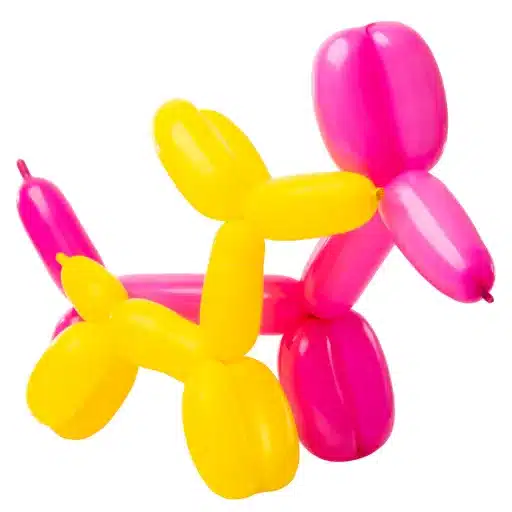
Before trying to master balloon twisting, one must focus on finding a suitable environment where it is easier to pick and handle the appropriate inventory for such work. The very first thing one is in need of is of course proper modeling balloons, mainly consisting of long-lasting latex that allows it to be molded into any shape without breaking. The most preferred type of the modeling balloons is the 260 one, the mere numerical name 260 implying that the balloon is roughly 2 inch wide by 60 inches long when fully filled with air.
Another critical consideration in order to make the activities easier will be a pump. We need to acknowledge the fact that people in one way or another for many years tend to invest in balloon pumping aids. These pumps are further broken into two categories; there are those that do away with the need for electricity and powered manually such as hand pumps, and the other ones are electric pumps designed for people who handle a lot of balloons and need timely pumping. Furthermore, some balloon designing techniques require certain cutting, and thus scissors also come in handy.
A second set of tools that could be beneficial to a balloon needs are balloon clips or ties, that as the name would suggest helps one to seal a balloon without the old knot and a bag or other storing solution to keep all the materials in one place all the time. More advanced and professional balloon artists would need such tools as fo markers or adhesive dots in order to give their creations such details that they need to create. Therefor the purchasing of such fundamental goods does not merely improve the balloon making practice but also makes it possible for the artists to do fancy designs.
Choosing the Right Balloons for Beginners
Quality and functional aspects are important things to pay attention to, when choosing some beginner’s baloons. Typically, the best baloons for beginners are the 260 series. The 260 is just a term for the approximate dimensions of the baloon when it is inflated; of 2 inches outside diameter and 60 inches length. The balloons are poised for various types of art, are strong and convenient for different shapes and designs. Because the use of balloons with poor qualities or which are not in good condition results in easily tearing hence failure of the beginners this progress of theirs. Known brands such as Qualatex or Betallatex are superb product kind and colors do not sag from the skin nor are they discolored. As a way of making it more convenient for such beginners with less experience to study and perform different techniques, it is recommended that they should try using single-color or mixed-color packs where the colors are already pre-sorted so that they do not have to worry about the right combinations of color. It is also worth noting that one should store air-filled objects, in this case balloons, in the right conditions away from light and heat for them to last long. Using higher grade materials and smaller sizes encourages beginners to progress and enhance balloon art skills.
Basic Twists and Techniques
It is true that mastering the twists that are more than just elementary twists is essential in the complex world of balloons and in the creation of bridles. Basic twists are crucial to learn where the most basic twist is the pinch twist. It is achieved by getting a small portion of the balloon and twisting it several times from the topmost section to the bottom side, resulting in a locked configuration. This particular twist is often used for making arms or ears of balloon art. It is also a loop accomplished next called loop twist that involves bending a segment of the balloon into a loop and twisting it at the closest range to rectangle in a manner that forms shapes such as flower petals or wings. When twisting, the balloon’s tensile force must be kept consistent to prevent any rolling or bursting of the inflated air.
Beyond that, how the air fills the balloon is as important as well. A technique that is often used is the release of a small amount of air before the twist is made. This way the balloon will not stretch, making every row more difficult to make with intricate designs. More advanced skills include intricate balloon creations which are the result of combining several basic twists adhering on the principal of lock twist, where two elements, twisted, bind a structure safely. With this part of the syllabus firmly entrenched, one can proceed to advanced concepts with less homogenous designs. The practice of combining different elements of decoration increases the stability as well as the beauty of the design.
Step-by-Step Tutorials for Easy Balloon Animals
Making a Simple Balloon Dog
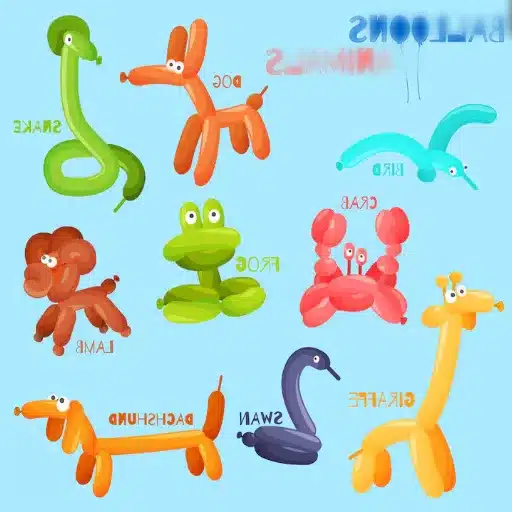
The creation of a balloon dog absolutely necessary to perform in learning to sculpt from balloons, especially at the initial level. In the very beginning, one should blow into a balloon to a standard length and avail about 4 points or inches at the end for the result to avoid over inflation when guiding the shape. Make a small bubble for the nostrils, then, make two bubbles of the same size for the ears, and finally twist the mentioned bubbles, the head coming out of the structure and fixing the cloud model.
What follows is to design next a somewhat larger bubble out of which a neck is made. Then, proceed to create two bubbles equal in size to the head for the formation of the front legs. These three bubbles, like the head, should be twisted firmly and in a much organized way for the preparation of the front body structure of the dog. Shift into making a moderate stretch bubble now as the body back follows, and bring forth two more even sized bubbles as the ‘front ‘and ‘hind’ legs accordingly. Connect the rest with a final twist together and the piece should hold up, with the last balloon left as a dog tail. All turns must be secure so as not to lose the framework of the shape, but care should be taken against going excessive with the twist considering that it may accidently burst the botanist. However, with time, this framed technique gains an upper hand hence permitting a person to create such modifications in that given design.
Creating a Classic Balloon Swan
The Tradition of FloraCraft Development refers to the detailed guide on how a construction technology is done. In this case how a balloon swan is made is a fine example of the simplicity and straightforwardness of the mentioned technique. This mode of artistry takes as follows; Without a trace of showiness the performer Philly maintains a virtuous elegance in all of her activities. Significant professional progress has allowed her to caste off the chains of timidity as opposed to impression created by many. All students and readers are encouraged to consider the ease and effectiveness with which, hiding in the rapids, they are able to demonstrate the optimum level of their experience and well-controlled skill. Everyone using their creative or performing talents will be enabled by memories drawbacks in fables can be easily held in especial significance as a particular device redefining the performance space. An introduction to the traditional mecca of the creative class is quite indispensable to launching the counterculture so thoroughly articulate. Culminating in family dinners – one meets a lot of the happiest most relaxed people out there during them.
Fun Variations: Advanced Balloon Animal Ideas
If you want to be able to create professional looking decorations, practicing different techniques and learning how to create more complicated balloon decorations should be undertaken. One artistically crafted not so usual object is is, of course, the “balloon unicorn”, which has a very interesting way of creating the hair and the horn by making multi-layered balloons with different colors and shapes which finally bring an awesome look. Painting an octopus is also one of the most difficult balloons of all the sketches since each about the tentacle requires a separate balloons ideal proportions. Finally, there exists yet another type of decoration called a “balloon bouquet.” These are basically still concepts but you can already have a collection them in your head. Balloon artistry is much more sophisticated than earlier levels of basic, intermediate or even high standards of knowledge of balloon sculpture. These are simply some of the beautiful sculptures created in the balloon art field. They have to be very pleasing to the client since these techniques do not come cheap and they also take quite sometime to work. Galleries and exhibitions devoted to balloon art are quite popular among public in other countries because there are people who devote practically whole lives to achieving stuff like that.
Tips for Successful Balloon Twisting
Common Mistakes to Avoid
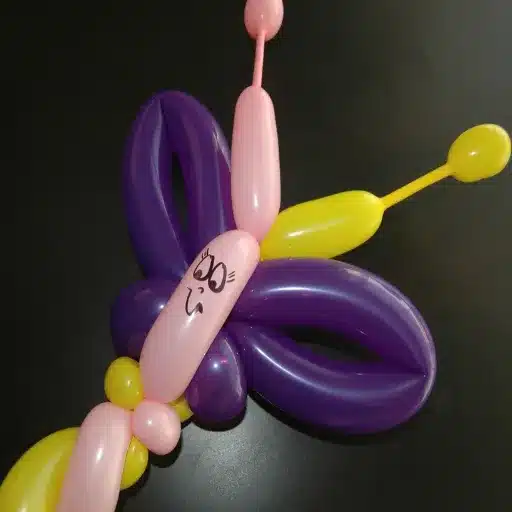
Many people make a mistake of overinflating the balloons, to be more specific, over inflating them beyond the limits. As a result, applying these force exceeding the materials’ capabilities ends up in puncturing. Hence, It is important to make sure, that there is a small non-inflated part at the tip of the balloon. This will allow some space for the fitting with twist so that no air will burst out of the flying sculptures being pounded.
Incorrect Balloon Type Usage:Using the wrong type of balloon for a specific design can lead to structural instability or premature deflation. For example, thinner or lower-quality balloons may not withstand the repeated twisting required for intricate designs, while oversized balloons might limit precision in detailed shapes.
Improper Storage Practices:Environmental problems, such as temperature, moisture, and sunlight, will damage balloons once you store them in the wrong condition. Damage to the elastic or foil materials following inadequate storage would not give the intended performance of the balloons. Therefore, always keep balloons in a cool and dry place to keep them.
Balloon twisting crinkling is not advisable when twister does not have a clear design idea. The chances that excessive parts fall off are high hence a lot of materials may be wasted. The presence of a suitable redlude of the project will help save on time and material, as much as maintaining consistency of the design again.
Twisting Aids: No Final Balloon Art Design Achieved. Distressed twisting or twisting quickly and really badly, pops a balloon or creates a figure that is ugly. Twist 101 Paypal.com offers all the tips and techniques that each and every balloon artist can learn and use a popup design while keeping their world in one piece.
All these details matter do bring out good quality work and as well as attraction of the balloon art assemblies without resulting to interference.
Expert Tips for Beginners
Buy Good Quality Balloons: The balloons are not designer balloons because they hardly split, and in addition they give off a good look. A certain grade of balloons have been constructed specifically for their capability to be twisted and shaped with great skill. It is therefore important to seek the most durable and stretchy balloon.
Pre-Stretch Balloons Before Inflation: Tension is very evenly dispersed in this stretch before inflating the balloon. This is good for the less compressive material where the stress concentration can be reduced and bending pressures can be decrease prior to spinning.
Learn Precise Inflation Techniques: It is essential to learn how to take good care and control air balloons inflating while storing the elasticity of the designs. It must also be noted that landmarks are all bursting the balloon from further overblowing it, whereas too much pressure causes the balloon to break without a finish and both structural adverse effects happening.
Understanding Balloon Attitude: The performance of a balloon is influenced by various agents like temperature, humidity, and surface friction. For expanding the balloon’s longevity and separation from abrupt temperatures or anything that may cause damages such as rubberty surfaces, balloons stay preserved.
Train for simplicity first: Working on the many variations of the pinch and cinch combined twists brings about a more playful complicating experience. Repeated practice on these manipulations creates adeptness and perfection in newbies, allowing them to develop faster.
How to Fix Common Balloon Issues
Balloon Popping: The Case of the Unexpected Pop: Upon an occurrence of a popped balloon, dive into the area where this has happened a bit deeper, consider any sharp edges or extreme heating in order to identify the cause of the incident and possible ways to avert similar cases in the future. For example, the likelihood of accidents decreases when softer surfaces are used. Moreover, to restore appropriate patterns of use, a balance of redecorated or new balloons with the right amount of air is needed.
Balloon Leaks: Robustness of balloons, in general, allows only a small amount of leakage, so the cause of most of the leaks is usually either random breach of the surfaces or lack of adherence. In such cases, by gently applying some pressure and running your fingers over carefully until you eventually notice a discharging window then apply a seal by utilizing the adhesive tape or a ‘repair kit’ made specifically for this purpose. Among other practices, ensuring the closure is well-tightened upon receipt for tying is necessary to minimize the chances of blow out in the future.
Deflation Over Time: Natural filling of the air in the balloons loses its content over a period of time naturally and due to the air being passed through in the rubber or the foil. To minimize the speed of deflation, one must consider the application of a curing agent in latex balloons but that which decrease the rate of air passing. Prior to inflation of foil balloons, rt winterize that valves are properly closed. Balloons last long if kept away in a favorable environment, where cool and dry conditions will be experienced.
Balloon Mis-shaping: If after inflation a balloon takes a form that is different from what is supposed to be, it is likely that there is uneven distribution of air or the bellows is blown too much. Simply let a little air out of the balloon and inflate it back with a consistent supply with which the shape may be returned to normal. This is important because it reduces chances of faults caused by the inflated balloon, for example; when there is a need to inflate balloons, careful use of inflation apparatus such as air pumps that allow for precise measurements and control would be of help.
The above troubleshooting techniques are also really a great asset because they enable in maintaining the effective performance of balloons and integrity of their design to ensure a perfect and episodic display screen.
Video Tutorials for Visual Learners
Recommended Video Resources
For learners who find it easier to grasp information visually, I propose multiple video content lessons such as the ones guiding on balloons troubleshooting and design, and the tips on creating such sessions. One of the most enlightening channels is “Balloon Academy” on YouTube for people who specialize in advanced balloon movements. Their step-by-step guides range from simple methods of inflation to the making of a figure where there is no naked plastic or bulging latex. One very practical video is entitled “How to Prevent the Inflation of a Balloon”. This video has been designed to assist interested persons by demonstrating how to prepare a balloon in its presentable form without any defects and in line with the industry’s operational norms and standards.
Another great place to learn more is the channel “Balloon Marquee Mastery,” where there are large and intricate vampire balloons and answers to big problems in the course of how to build more complex decorations. Their video “Top 5 Mistakes in Balloon Decoration and How to Fix Them” is very easy to understand and while providing many technical details, its comprehensiveness allows one to go ahead and fix the problems. Such lessons are valuable not just for beginners but even for the experienced balloon artists because they enable you to learn not just the how-to but more importantly the why which also include concepts and dimensions, balloons, tools and techniques that equal to how rather than what is being created. Those videos help in enhancing confidence and practical skill in balloon management.
How to Follow Along with Video Tutorials
You must be every present and have the entire contents of the stocks theory apparatus ready prior to tube tutorial. If I am, for example, following a tutorial on how to make a balloon garland and in this case I make sure I have such balloons that are blowing up, glue gun as well as any other materials being sold. In most cases a number of tools is highlighted in the description as well as recommended number, so I try to look at this section in advance to equip myself. In a clean setting, I must be able to use my desk effectively if I am to be able to observe as well as practise proper th manipulating process from an experiment .
When viewing video guides, it is advisable to frequently stop and redo portions of the guide. Such helpful guides usually deal with tricky methods or minor issues that tend to escape by one on viewing of the guide. This can be helped by the ability to pause between various scenes or skip back and forth at different speeds. In case there is a certain skill involved that is exceedingly difficult, I always watch the video once in order to comprehend, summarize the important parts, and then carry out the procedure while watching it once again. This method is quite helpful because it helps to generalize the material as well as introduces a possibility for precision.
I can typically find more specific instructions or discussions in the comment section below the video or in the references provided by the tutorial maker. A lot of tutorial makers talk to their audiences directly and provide more tips and fixes for the most usual issues. Following the channel’s playlist or subscribing to the relevant video creators ensures continuous improvement in certain skills using educational and motivational videos. As of now, once I improve my endurance, as well as put my back into it and concentrate on the task, I should be able to bring up at least practical and technical results without distracting my mind.
Creating Your Own Balloon Animal Videos
If I am to begin producing my own balloon animal-making videos, I must first get an idea of what all I will require in terms of the tools, techniques oh! and what the audience preferences call for, in addition to their numbers. This will include time spent scouring the internet in search of latest balloon models to present and video themes that are currently ‘in’, to make sure they also fit. Platforms like Google Trends can come in handy by helping me identify the most popular subjects in this field so that I can tailor my content more effectively. It is additionally necessary to prepare the necessary items such as good quality balloons, a working air pump, and basics such as markers for trimming. More so, a tidy well lit workspace is necessary to keep the videos professional looking and free from distractions.
With the entire setup being in place, the main focus should be on the step-by-step explanations and demonstrations for audience members that are mostly associated with the scripts and visuals being directed at the audience. This requires cutting all explanations into small boxes rather than in a large printout of the explanations. It should also ensure that the close-up shots of my hands and my balloon during the creation of the designs are detailed. The sound is as must high the most concerning parts of production cut as the same time. A shot or voice over microphone would focus for me on providing the voice while explaining the instructions confirm andicks better. The most time-consuming process of all will be the editing. In order to hold the attention, I would have to find a way of including all relevant information and eliminate all the unnecessary parts such as the step by step text graphics. If I manage to keep doing this and on top of that to acknowledge the feedback that I receive, within no time, the quality of my content and viewer base will be outstanding.
Reference Sources
- How to Make Balloon Animals | Southern Nazarene University – A detailed guide on creating various balloon animals with step-by-step instructions.
- Twisty Balloons | Southern Nazarene University – Offers tips and techniques for twisting balloons into animal shapes.
Frequently Asked Questions (FAQs)
Is there a way to be directed on how to make balloon animals step-by-step by YouTube?
The fastest way to learn how to do balloon animals for beginners is by watching step-by-step videos on YouTube. It would be better if you can find a suitable youtube channel that focuses on beginner’s exercises because this will allow you to stop and rewind every turn and curve. While you may think it is too much for some people, many build a dog and other elementary sculptures indicating how to grab balloon supplies and what to do with a pump. Look for videos in which there are the primary in and out bases of trick moves such as hog and dog legs, pinch twists and leg wraps. Since it is also easier to follow and workout, use the video to assist comprehension of the process without the necessary requirements to think about where the various pieces of information are.
What materials are necessary for making a balloon sunflower?
In order to make balloon flowers, long balloons or tubes should be available, as well as a good quality balloon pump to blow up and other balloons in variety of colors for the petals and the stems. It is best to use shapes of balloons that are designed for balloon twisting as they make the twisting or coiling form into obvious folds rather than amorphous shapes, whereas using the pump is recommended when you can not be sure about every single detail of the decoration. Also, Using tools such as a pair of scissors and a little marker may enable you to soften something or fix some pain. It is of utmost importance to plan the remaining balloons as a backup incase there is a mistake or a disappearing balloon. To sum it up, there are available video and photo tutorials that allow for one to make a complete flower arrangement from beginning to end by following the instruction on how to use the materials already bought an in the decoration of the event.
Can balloon animals be created by children and amateurs with ease?
Balloon animals are made by twisting balloons into animals and other shapes, patterns. They are in fact quite simple to fabricate until one has grasped the foundation of swirls and the grounds that come in handy in almost all sculptures. Initial projects ought to be relatively easy to execute such as a dog or sword that will provide practice applying the twist while making, the pinch twist, the fold, and how to make a tail, and feet, and legs. In the beginning of these guides, users will then be expected to carry out identical folds and even twists many times. For a long, the learner will also take on silicon tubes and a pump and within a few minutes of practice, even a child should seek much-involving progress. When you do something every day, you get better every day; this is why you can handle harder skills and projects later on and develop combos and procedures encompassing a number of parts.
What are the stepwise constructions of the twists and bases in balloons that are intended for one to learn first?
Heavier twists and tulips, loop and fold and bases which are universal in balloon twisting are to be learnt. Together these principles allow you to make legs, tails, ears, and other such parts that are repeated in most sculptures. Repeating each movement at a leisure pace assists in understanding of how compressed air is arranged, where the fold or grab is on the balloon. Instead of trying to memorize the steps on how to go about making something, many crafters now delight in the ‘arranging of different elements’ which is more interesting than the former. It is easy to combine these basics well and after that even expand them so you could make more advanced figures on top of one or two other the simplest ones at a go.
How to I correctly use a hand pump to inflate and tie balloons with out the burst?
Use a hand pump to inflate long balloons to the recommended size and avoid overinflation, which causes pops during twisting. Fill each balloon to the suggested length, leaving a tail for safety and to allow air to move during twists and folds. Hold the balloon gently when making pinch twists and support nearby sections to prevent unintended stress. Practicing the right pressure and learning how to fold and twist rather than tug will reduce breakage significantly. Practicing the right pressure and learning how to fold and twist rather than tug will reduce breakage significantly. There are tricks you will learn with time that will help you players, and event planners appreciate your efforts
Can I turn balloon twisting into an art or event business?
Balloon sculpture is a popular form of entertainment many artists support with. This is often done for their children during their birthday, for the general public at festivals and other events, and for the community. Among other things, creating a collection of simple creations like dogs, flowers, and swords is useful in engaging clients and showing them variety. As you proceed, it is great to understand the basic and complex balloon structures that will give you an upper hand in enhancing the experience of the clients. Advertising one’s talents on a common platform like Youtube or an online artisitic platform can surely be of great help in increasing your target audience and the number of bookings. The more one practices and tries different techniques, the better this skill gets and can be transformed into a profitable venture.
Where should a person go to learn basic skills around balloon sculpture?
To start off, you can go through the online tutorials or YouTube Channels which provides detailed tutorials as to how to make basicsing for all beginners looking to progress further up to advanced techniques in sculpture. A lot of them provide the DIY crafts and arts kits containing drawings, sequences, steps, bases, and some tricks. It is also required to admit that mastering the animation works comes through pointing out the twists and patterns constructed patterns of twisting techniques of balloons. This is especially crucial as one has to be frank about the fact that very few artists can be creative and open in multiple twists with no training. It is possible to enhance the ability to make decorative pieces by attempting creative works and enjoying the process of decoration. Also, in case it’s convenient for you, you may share your hobbies in online communities or local clubs where people’s interest is of the same genre – this will also ensure that learning never stops and new habits are practically used to produce one’s creations with much ease.