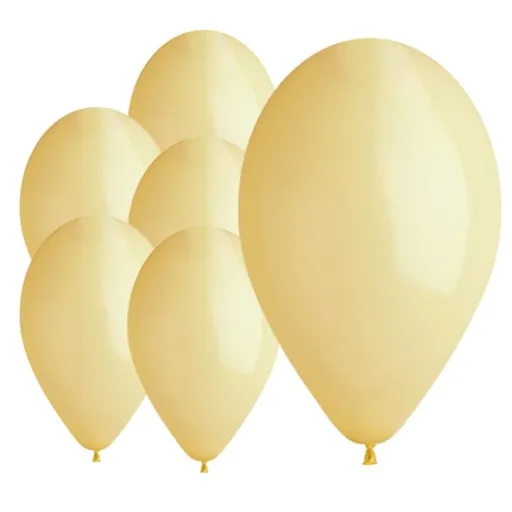



You can buy wholesale latex balloons in two ways: direct from a manufacturer for volume, custom colours, and private label, or from a regional distributor for speed and mixed-brand orders. The trade-off is price versus flexibility, and most buyers need both at different points in the year.
Here is what makes that choice hard. Two quotations land on your desk for the same 12-inch balloon. One is 40% cheaper per piece. Dana, who runs a party-supply store in Ohio, took the cheaper quote in March and spent the autumn replacing popped balloons and refunding customers.
Her cheaper stock cost more by October than the premium bag would have cost all year. This guide exists so that doesn’t happen to you. You’ll learn how to judge latex balloon grades, convert a minimum order quantity into cartons, and vet a supplier in one conversation. You’ll also plan stock around a 2026 helium market that punishes anyone who buys blind.
Key Takeaways
- A latex balloon’s gram weight is the fastest quality test you can run. A 12-inch balloon should weigh roughly 2.8g to 3.2g; budget stock comes in nearer 2.2g to 2.5g.
- Minimum order quantity is quoted in three different currencies (pieces, bags or sets, and order value). Convert everything to pieces and cartons before you compare.
- Cheap balloons fail more often, and a burst balloon wastes helium, labour, and customer trust. Judge stock on cost per finished display, not cost per piece.
- Sample before you commit to bulk, and test against written thresholds: helium retention, defect rate, and batch-to-batch colour match.
- 2026 helium supply is tight. Wholesale tank minimums have risen sharply in some markets, so grade and size planning are now supply decisions.
How to Buy Wholesale Latex Balloons in 7 Steps
Work through these seven decisions in order. Skipping a step is how buyers end up with a warehouse of stock that won’t sell.
- Define your use case. Retail resale, event decoration, and promo giveaways need different sizes and price points.
- Choose your sizes and finishes. Pick a core palette before you talk to anyone, so quotes stay comparable.
- Set your quantity and confirm the MOQ. Convert every quotation into pieces, then into cartons.
- Compare true cost, not unit price. Factor in fail rate, helium loss, and labour.
- Vet the supplier. Confirm whether you are dealing with a factory, a distributor, or a trading company.
- Sample before bulk. Run a written test protocol on a sample pack.
- Plan the reorder. Work backwards from your peak season and the supplier’s lead time.
Most buyers get stuck on step four, because the industry makes step four deliberately difficult. We will spend most of this guide there.
Ready to compare against a real quotation? Request a wholesale quote with your size and colour list, and we’ll send pricing plus the certification documents for the exact product.
Wholesale Latex Balloon Grades: Why the Cheapest Bag Rarely Wins
A latex balloon’s grade comes down to how much natural rubber it contains, how evenly the wall is formed, and how heavy the finished balloon is. Cheaper balloons are cheaper because there is less material in them.
What “100% natural latex” actually claims
Natural latex balloons are dipped from the sap of the Hevea brasiliensis rubber tree. Genuine natural latex is renewable and, in the right conditions, biodegradable. We cover the full science in our complete guide to biodegradable balloons.
Here is the catch for buyers. “Natural latex” is a material claim, not a quality claim. A thin balloon and a thick balloon can both be natural latex. What separates them is how much material went into each one. So when you source biodegradable balloons wholesale, the label alone tells you nothing about grade.
Gram weight is your fastest quality test
Put a sample balloon on a kitchen scale before you inflate it. Weight is a blunt instrument, but it is the quickest honest signal you have.
| Balloon size | Budget grade | Good wholesale grade | Notes |
|---|---|---|---|
| 5″ | ~1g | 1g+ | Filler balloons for garlands and clusters |
| 10″ | ~1.8g | 2.2g | The gap between budget and good is widest here |
| 12″ | 2.2g to 2.5g | 2.8g to 3.2g | Your volume workhorse, so grade matters most |
| 18″ | ~8g | 10g | Statement pieces and helium displays |
| 36″ | ~30g | 35g | Hero pieces, sold individually |
Treat these as guides, not gospel. Wall uniformity matters just as much as weight, so the sample protocol below tests more than one thing.
One caveat: you will read that cheap balloons are padded with fillers. Some are, but documented filler percentages vary by factory and are rarely published. Weigh and burst-test your samples instead of trusting a number you read online. For the materials science, see what balloons are made of.
The false economy, in numbers
Say you are buying 10,000 twelve-inch balloons for the year.
- Budget bag at $0.04 per piece, with a 12% failure rate across inflation and display life.
- Good wholesale grade at $0.06 per piece, with a 2% failure rate.
The budget bag saves you 200ontheinvoice.Thenitcostsyou1,000extrafailures,eachonewastinghelium,labour,andinaretailsetting,customertrust.Ifasinglefailedcentrepiececostsyouone200ontheinvoice.Thenitcostsyou1,000extrafailures,eachonewastinghelium,labour,andinaretailsetting,customertrust.Ifasinglefailedcentrepiececostsyouone40 order, the maths stops being close.
To run this comparison against your own volumes, see how our manufacturing line handles bulk latex balloon orders.
Sizes, Finishes, and What to Stock in Bulk
Your size and finish mix drives how fast wholesale latex balloon stock turns over. Get it wrong and you carry dead inventory for a year.
Size selection by application
- 5-inch for garlands, clusters, and filler volume.
- 11 to 12-inch as the volume workhorse, where most of your revenue per carton sits.
- 18-inch and above as statement pieces, sold in smaller quantities at higher margin.
- 36-inch as hero pieces for retail windows and photo moments.
Finishes and colour strategy
Matte and standard finishes are your bread and butter. Metallic and chrome sell well for celebrations and night events. Macaron, pearl, and retro finishes move in trend cycles, so stock them in smaller quantities.
Split your range into three buckets: core colours that always sell, seasonal colours tied to Valentine’s and Christmas, and trend lines you test in small volumes. One warning worth taking seriously: avoid mixing brands within a single design. Shade and inflated size differ between manufacturers, and buyers who mix brands end up with inconsistent displays, as one wholesale buyer’s guide also notes.
Latex Balloon MOQ, Cartons, and Container Math
Minimum order quantity is where most new wholesale latex balloon buyers get their first surprise. Suppliers quote MOQ in three different currencies, and they are not interchangeable.
The three MOQ currencies
- Piece counts. A flexible supplier might accept 50 pieces for a trial, 1,000 for a standard run, and 5,000 or more for custom colours or prints.
- Bag or set counts. Kits and multi-colour sets are quoted by bag or set, which hides the true piece count until you ask.
- Order value thresholds. Some factories set MOQ as a dollar figure. Minimums around USD 5,000 for regular goods and USD 10,000 for custom packaging are common enough to expect.
The trap is comparing one supplier’s piece count against another’s order value. Convert everything to pieces, then to cartons, before you decide.
From pieces to containers
Ask your supplier for four numbers and write them down.
| Term | What it means | Why you need it |
|---|---|---|
| Pieces per bag | Balloons in one retail or bulk bag | Sets your unit cost |
| Bags per carton | Bags in one shipping carton | Sets your carton cost |
| Cartons per pallet | Cartons on one pallet | Sets your warehousing footprint |
| Cartons per container | Cartons in a 20ft or 40ft container | Sets your freight economics |
Once you have those numbers, a quotation stops being a vague figure and becomes a logistics plan. Plan lead times at the same time: stock items ship in 7 to 15 days, and production runs take 15 to 25 days. Add Chinese New Year, when factories shut down, and you can see why late ordering gets expensive. B2B sourcing benchmarks show the same bands across suppliers.
Custom versus stock MOQ
Plain stock colours flex far lower than custom colours. If you need printed balloons, the MOQ splits again by design and print colour count. That is a different buying decision with its own economics, covered in our guide to custom printed balloons.
Factory, Distributor, or Trading Company?

This question decides your price, your lead time, and whether you can get a custom product at all.
| Supplier type | Typical markup | MOQ behaviour | Custom capability | Best for |
|---|---|---|---|---|
| Manufacturer | Baseline | Higher, negotiable at volume | Full: colours, finishes, shapes, private label | Volume, custom work, best unit price |
| Distributor | +10% to 25% | Low, often by the bag | None beyond what they stock | Speed, mixed brands, small quantities |
| Trading company | +25% to 50% | Varies, often flexible | Resells whatever the factory offers | Buyers who do not want to import directly |
Priya, who sources for an events company in Manchester, learned this expensively. She asked a supplier to develop a custom shape from her artwork. They could not, because they were a trading company working from a fixed catalogue. Her next supplier produced a prototype within a week.
How to tell them apart
- Production-floor evidence. Ask for photos of the dipping lines, printing equipment, and packing area. Traders only have product photos.
- Custom development. A factory can build a shape or colour from your artwork. A trader cannot.
- Certificate ownership. Certificates must be issued in the supplier’s own company name, not borrowed from a third party.
- Product-range focus. A manufacturer sells balloons and balloon-adjacent goods. Be cautious of a catalogue that also carries phone cases and kitchenware.
How to Vet a Wholesale Latex Balloon Supplier
Use this checklist before you commit to anything.
- A specification sheet stating gram weight by size, not just diameter.
- Certification documents in the supplier’s own name, covering the exact product you are buying.
- A stated sample policy with a real turnaround time, usually 3 to 10 days.
- A lead-time commitment in writing, split between stock and production.
- Reorder consistency. Ask how they guarantee colour match between batch one and batch six.
Red flags in a quotation
- Prices far below the market range for that size and finish.
- No sample policy, or a sample that arrives with no specification sheet.
- “Certificates available on request” that never actually appear.
- Pressure to pay outside a protected method such as escrow or Trade Assurance.
Five questions that reveal a supplier
- What is the gram weight of your 12-inch balloon?
- What is your defect rate, and how is it measured?
- Which certifications do you hold in your own company name?
- What is your production lead time in December?
- Can you send the certification documents for the exact product in this quotation?
Vague answers to any of these are your answer.
Sample Before Bulk: A Test Protocol That Actually Tests Something
“Order samples first” is the most repeated and least useful advice in wholesale latex balloon buying. Nobody tells you what to measure.
The tests
- Count the contents. Short counts are a common complaint against cheap suppliers.
- Weigh one balloon per size. A kitchen scale is fine. Compare against the table above.
- Inflate to rated diameter. A 10-inch balloon should comfortably reach 10 inches without thinning to translucence.
- Inspect wall uniformity. Hold it to a light. Uneven walls mean uneven production.
- Run a helium retention check. Inflate one sample, tie it, and time it over 24 to 48 hours.
- Test colour consistency. Inflate a handful from the same bag and check for drift.
Thresholds to write into your specification
| Test | Acceptable | Reject |
|---|---|---|
| Helium retention, 12″ untreated | 12 to 18 hours | Under 8 hours |
| Defect or burst rate | Under 2% | Over 5% |
| Colour match within a bag | Visually identical | Visible drift |
| Contents count | Exact | Short |
Write these thresholds into a one-page specification before you request quotations. Two quotes against the same written spec become comparable. Two quotes against nothing become decorative.
Compliance and Certifications by Market
If you resell balloons, you inherit the compliance requirements of every market you sell into.
| Market | Key requirements |
|---|---|
| EU and UK | EN 71 series (including EN 71-1, -2, -3, and -12), CE marking, UKCA for the UK, and REACH compliance |
| United States | CPSIA compliance with a Children’s Product Certificate backed by CPSC-accepted lab testing, and ASTM F963 |
Two points matter more than the list. First, the certificate must be issued in the supplier’s own company name, not borrowed from a factory they buy from. Second, it must cover the exact finished product, including any printing, because ink and processing change the compliance picture. We go deeper on reading a real test report in our guide to biodegradable balloon certifications.
Helium-Aware Purchasing in 2026
In 2026 this may be the section that decides whether you can fill your orders.
A major supply disruption hit the helium market after production problems at Qatar’s Ras Laffan facility and a Chinese export ban. Reports describe price spikes of up to 40% in some markets. Distributors are rationing supply and adding surcharges, force majeure has been declared, and wholesale tank minimums have risen from one tank to four in some regions. Balloons account for under 10% of global helium demand, so balloon buyers sit near the back of the allocation queue.
What this changes about buying stock
- Favour air-fill designs for garlands, arches, and installations. Air-filled decorations need no helium at all.
- Plan your size mix around helium capacity. Larger balloons hold helium longer per unit of gas, so fewer large pieces can beat many small ones.
- Use a sealant such as Hi-Float on interior latex designs to extend float time. Our hi-float balloons guide covers application.
- Batch helium-dependent work so you inflate once, correctly, rather than topping up across several days.
Tomás, who runs an events company in Lisbon, re-planned his summer around air-fill installations and reserved helium for entry displays only. He filled every booking. Two competitors in his city turned work away.
Storing Bulk Latex Balloons and Planning Reorders

Latex degrades quietly, and degraded stock fails in front of your customers.
Store balloons sealed in their original packaging at 15 to 25 degrees Celsius, away from direct sunlight, ozone sources, and ripening fruit, which releases gases that age latex faster. Manufacturers typically quote a 12-month shelf life under those conditions. Rotate stock first-in, first-out, and test one balloon from an old bag before you inflate five hundred.
For restocking, split your range into core sellers, project-led lines you buy against known bookings, and trend stock you test in small volumes. Then set a reorder trigger that accounts for lead time, peak-season uplift, and a safety buffer. Most factories quote 15 to 25 days for production, so a trigger based on last week’s sales will always be too late. Buy standard essentials six to eight weeks ahead of a peak, and custom or seasonal stock two to three months ahead.
Which Buyer Are You?
The right order looks different depending on who you are.
Party-store retailer. You need colour breadth, retail-ready packaging, and a reorder cadence that matches footfall. Prioritise consistent colour match above all, because your customers buy the same shade twice.
Professional decorator or event company. You need colour depth, finish consistency, and a low burst rate, because a failure during install is a client-facing problem. Buy smaller quantities more often, and keep an air-fill capability in reserve for helium-tight months.
Importer or distributor. You need the full certification set for every market you ship into, OEM and private-label capability, and carton-to-container planning. At your volume, negotiate on reorder consistency and documentation turnaround, not just unit price.
Whichever group you are in, the same specification sheet goes to every supplier you approach.
Send us your specification sheet and get a wholesale quote →
FAQ
Where can I buy latex balloons wholesale?
Buy direct from a manufacturer for volume, custom colours, and private label, or from a regional distributor for speed and mixed-brand orders. Manufacturers offer better unit prices and customization; distributors offer lower minimums and faster local delivery.
How much do wholesale latex balloons cost?
Most common sizes trade between 0.02and0.02and0.12 per unit in bulk, depending on size, finish, and volume. Branded European latex typically runs higher. Price per piece is meaningless without the fail rate, so compare cost per finished display.
What is the minimum order for latex balloons in bulk?
Flexible suppliers accept as few as 50 pieces for a trial. Standard stock is commonly 1,000 pieces, and custom colours and prints start at 5,000 pieces or more. Some factories set MOQ as an order value instead, commonly around USD 5,000.
Are cheap latex balloons lower quality?
Usually, yes. Cheaper stock tends to weigh less per balloon, which means less material and a higher failure rate. Weigh a sample and burst-test it before you judge.
How do I know if a balloon is 100% natural latex?
Ask for a specification sheet naming the material and a certification document issued in the supplier’s own name. Then verify by weight and helium retention. Natural latex is a material claim, not a quality claim, so the test still matters.
What is the difference between a balloon factory and a distributor?
A factory manufactures, so it can develop custom colours, finishes, and shapes. A distributor buys from factories and resells, adding roughly 10% to 25% markup but offering lower minimums and faster delivery.
What certifications do I need to sell balloons?
It depends on your market. The EU and UK require the EN 71 series with CE and, for the UK, UKCA. The United States requires CPSIA compliance with a Children’s Product Certificate backed by CPSC-accepted testing.
How much helium does a 12-inch balloon need?
Roughly 0.5 cubic feet, though exact capacity varies by manufacturer and inflated size. Plan your size mix around helium capacity when supply is tight.
Watch: How Latex Balloons Are Made
Seeing the dipping lines up close makes the grade discussion concrete. This MADE HERE factory walkthrough follows a working latex balloon factory from raw rubber sap to finished bag, and it shows you exactly where wall thickness and gram weight are decided. A manufacturing walkthrough is the single best trust signal a wholesale buyer can watch.
Start Your Bulk Order With a Specification, Not a Price
Wholesale latex balloons reward buyers who do the boring work first. Decide your sizes and finishes. Weigh your samples.
Convert the MOQ into cartons. Confirm the certificate carries your supplier’s name. Then compare quotations, because only then are you comparing like with like.
The five things to remember: gram weight is your fastest grade test, and a 12-inch balloon should weigh around 2.8g to 3.2g. MOQ comes in three currencies, so convert to pieces and cartons. A cheap balloon that fails costs more than a good one that doesn’t.
Sample against written thresholds before you buy bulk. And in 2026, helium efficiency is part of your purchasing strategy.
Buying wholesale latex balloons well is a repeatable process, and it’s the difference between stock that sells and stock that sits.
Request your wholesale quote → Send us your size and colour list, and we’ll return pricing, lead times, and the certification documents for the exact product you are considering. Ask for a sample pack too. We’d rather you test us than trust us.