
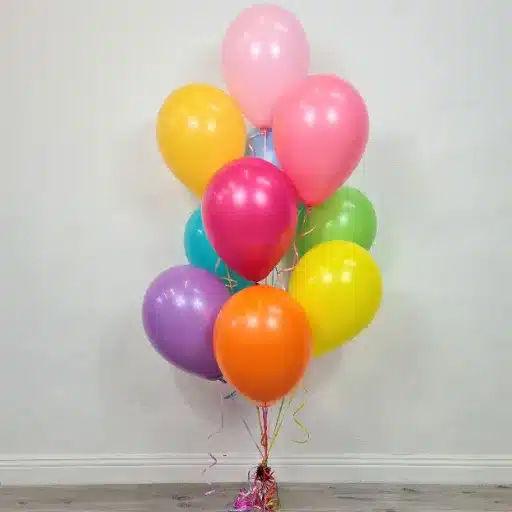
Hi-Float balloons are a simple answer to a frustrating problem. An untreated 11-inch helium latex balloon floats for just 8 to 18 hours, while a treated one stays afloat for days and sometimes weeks. For anyone who has woken up the morning of a party to a ceiling full of sagging latex, that difference is the whole point.
When Maya prepped her daughter’s fifth birthday in June, she inflated forty balloons the night before. By noon the next day, half of them hovered at shoulder height and a few sat on the rug. She spent that morning racing to refill them, one hand on the helium tank and the other checking the clock. A month later she treated every balloon with Hi-Float for the same kind of party. The balloons she inflated the night before still floated the next afternoon firmly, and she had time to arrange the dessert table instead of chasing a deflating display.
This guide covers Hi-Float balloons from every angle that matters: what the treatment is, how long it makes balloons last by size, how to apply it correctly, which bottle to buy for your event, and what to do when balloons still refuse to float. You will also see how Hi-Float compares with other ways to keep balloons fresh, and how event companies use it to cut same-day setup time.
Key Takeaways
- An 11-inch helium latex balloon floats 8 to 18 hours untreated; with Ultra Hi-Float it floats 1 to 4 weeks indoors, and most users see 2 to 5 days in real conditions
- Hi-Float is a liquid polymer that coats the inside of a latex balloon and slows helium escape; it works on latex only, never on foil
- Dosage is simple: half a pump for 9-inch balloons, one pump for 11-inch, two for 14-inch, and three for 16-inch
- A 5-ounce bottle treats about 25 standard 11-inch balloons, a 16-ounce bottle about 100, and a 96-ounce bottle up to 568
- Treat balloons days ahead, inflate a few hours before the event, and keep them indoors at 72 to 79 degrees Fahrenheit for the longest float
What Is Hi-Float for Balloons?

Hi-Float is a water-based liquid treatment that goes inside a latex balloon before inflation. It dries into a thin barrier on the inner membrane that seals the microscopic pores in the latex, slowing the escape of helium or air. It is nontoxic, biodegradable, and washes off with water. It is not a gas, and it does not re-inflate a balloon. Its only job is to keep what is already inside from leaking out.
The effect is dramatic because untreated latex is surprisingly porous. Helium molecules are small enough to slip through the balloon’s surface within hours. That is why an untreated helium balloon droops by the next morning. The coating from Hi-Float closes most of those escape routes, so the helium that would have leaked overnight stays trapped for days.
Hi-Float works on latex balloons filled with either helium or air. It does not work on foil or Mylar balloons, which are already non-porous, and it is not meant for twisting balloons or balloons carrying confetti or LED lights inside. One quick note before you buy: Hi-Float is a brand name, and the product it describes is a balloon sealant. The same category includes Ultra Hi-Float and a range of generic treatments, all built on the same principle of sealing the latex from the inside.
How Long Do Hi-Float Balloons Last?
The short answer for a standard 11-inch helium balloon is 2 to 5 days in realistic conditions, with up to a month or more possible in a cool, dry indoor room. Untreated, that same balloon floats for only 8 to 18 hours. The manufacturer’s float-time chart, based on indoor, climate-controlled conditions, shows a much wider range by size:
| Balloon size | Float time with Hi-Float (indoor) |
|---|---|
| 9 inches | 3 to 14 days |
| 11 inches | 1 to 4 weeks |
| 14 inches | 2 to 5 weeks |
| 16 inches | 3 to 7 weeks |
| 18 inches | 3 to 8 weeks |
| 24 inches | 4 to 10 weeks |
| 3-foot giant | 6 to 20 weeks |
Real-world results sit far below those best-case numbers. Reviews on Amazon and eBay report floats from 36 hours to 22 days, with most people landing in the 5 to 10 day range. The gap exists because humidity, heat, altitude, and the quality of both the latex and the helium all shorten float time. Outdoors or in a hot, humid room, plan on roughly half the indoor float time.
Keep expectations honest when you plan. If you treat 11-inch balloons for a wedding on a summer day, assume 2 to 3 days of reliable float rather than four weeks. That still gives you a comfortable margin over untreated balloons, and it means you can inflate the night before without gambling.
How to Use Hi-Float on Balloons
Application takes about ten seconds per balloon once the pump is primed. Here is the process for the 5-ounce and 16-ounce bottles:
- Attach the pump and turn the nozzle counterclockwise to unlock it.
- Prime the pump by pressing it into a cup until liquid flows.
- Slide the balloon opening onto the nozzle until it reaches the base.
- Press the pump the right number of times for the balloon size: half a press for 9-inch, one press for 11-inch, two for 14-inch, and three for 16-inch.
- Pinch the balloon neck as you pull it off, keeping the liquid out of the neck so the knot stays easy to tie.
- Rub the balloon for a few seconds to spread the coating, keeping the opening tilted upward.
- Inflate the balloon until it is almost pear-shaped, then hand-tie it.
- Give the coating a few hours to dry. Wet Hi-Float is sticky, so keep freshly treated balloons away from furniture and walls.
The 24-ounce and 96-ounce bottles work the same way but use color-coded restriction clips that lock the pump to the correct dose for each balloon size. Snap the clip that matches your balloon onto the plunger, then press once for a full dose.
Pre-treating is the workflow professionals rely on. You can treat balloons days before an event, band them in groups of ten with ribbon or rubber bands, and store them at room temperature for up to a week. Before inflating, remove the bands and rub each balloon to redistribute the coating. This turns inflation day into a quick fill-and-tie session instead of a multi-step process.
Priya, a wedding planner in Austin, built this into her standard routine. She treats a hundred balloons on the Tuesday before a Saturday wedding, bands them in stacks of ten, and stores them in an air-conditioned closet. On Saturday morning her team inflates them in about ninety minutes, ties each one with a ribbon, and arranges the centerpieces without a single sagging balloon. The rework she used to schedule for “the day of” simply disappeared.
For the full visual walkthrough, Hi-Float’s official basic instructions cover both the pump method and the restriction-clip method, and we recommend following along the first time.
How Much Hi-Float Do I Need?
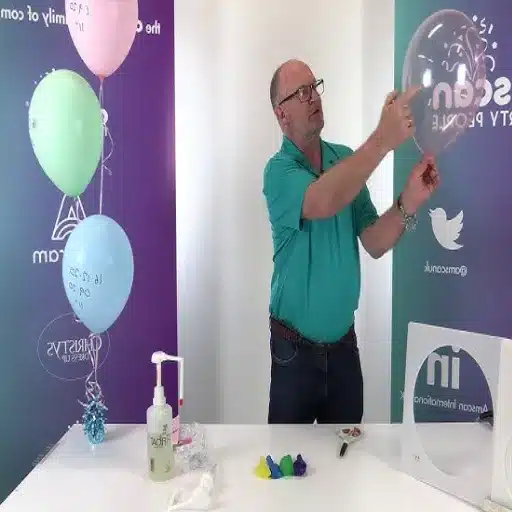
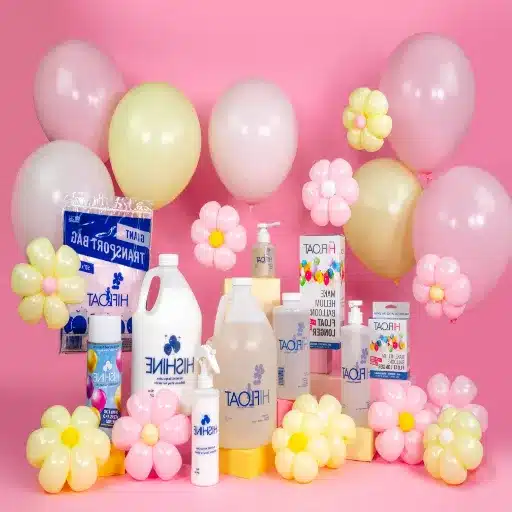
Bottle sizes exist for a reason: the amount of Hi-Float you need scales with the number of balloons you plan to fill. A 5-ounce bottle treats about 25 standard 11-inch balloons, or 50 nine-inch ones. A 16-ounce bottle treats about 100 eleven-inch balloons. A 24-ounce bottle handles roughly 140, and a 96-ounce bottle treats up to 568 standard balloons and includes the pump kit.
Use that math before you order. A birthday party with thirty helium balloons needs one 5-ounce bottle with room to spare. A wedding with a hundred balloon centerpieces and a small arch should budget a 16-ounce bottle, plus a spare if the event runs long. A rental or event company filling hundreds of balloons weekly should buy the 96-ounce size and never worry about running dry mid-week.
Ultra Hi-Float is the stronger formula and the one that carries the “up to 25 times longer” claim. The regular formula is lighter and can be a better match for quick events where you only need a day or two of extra float. When in doubt, choose Ultra for helium balloons and standard for air-filled work, where the lighter coating is plenty.
Hi-Float on Air-Filled Balloons
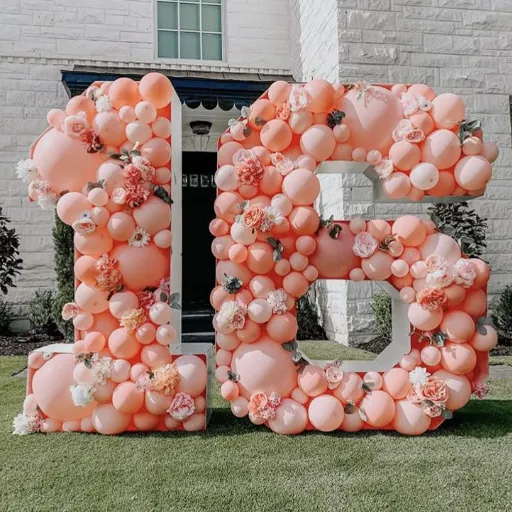
Air-filled latex balloons treated with Hi-Float hold their full size for over a month, which makes them excellent for garlands, arches, and balloon walls that must stay crisp for days. An untreated air-filled balloon starts to wrinkle and shrink within a day or two; a treated one keeps its shape through a weekend festival or a week-long store display.
This is one of the most useful applications because it changes how you plan. You can build a balloon garland days ahead, treat the balloons, and install it on the day of the event without touching up a single sagging spot. Our balloon decorating strip guide pairs well with this workflow, and our balloon stands guide covers displays that need support instead of float.
Hi-Float vs Alternatives: Which Should You Choose?
Hi-Float is not the only way to keep balloons looking fresh. The right choice depends on whether the display must float, how long it must last, and whether latex is allowed at all.
| Option | Best for | Float time | Trade-off |
|---|---|---|---|
| Hi-Float on latex | Helium balloons that must float for days | 2 to 5 days typical | Adds a bit of weight; needs application time |
| Ultra Hi-Float | Multi-day events, weddings | Up to weeks indoors | Slightly heavier; over-application sinks balloons |
| Foil or Mylar balloons | Long indoor decor, no latex | 2 to 5 days | Costs more; cannot be treated |
| Bigger latex balloons | Short parties, simple setup | 18 to 24 hours for 16-inch | Larger and more visible |
| Professional-grade latex | Any helium event | Longer than budget latex | Higher cost per balloon |
| Air-filled, untreated | Garlands and mounted decor | Days to months | Will not float |
Foil balloons float for 2 to 5 days without any treatment, and a 36-inch foil balloon can last one to two weeks. That makes them the low-effort choice when you need a long float and do not mind the cost. Bigger latex balloons float longer than small ones because helium escapes more slowly from a lower surface-area-to-volume ratio, so a 16-inch balloon lasts noticeably longer than an 11-inch. Professional-grade latex from brands like Qualatex or Sempertex has a more consistent wall thickness, which also extends float time even without treatment.
Hi-Float remains the best value when you want latex balloons to float reliably for multiple days at a low cost per balloon. For a wedding, a corporate launch, or any event where the balloons go up the night before, the treatment pays for itself in avoided rework.
Troubleshooting: Why Won’t My Hi-Float Balloons Float?
The most common complaint is not that balloons float for too short a time; it is that they do not float at all. That almost always comes down to a few fixable causes.
Too much product is the number one reason. The coating adds weight, and an overdosed balloon cannot lift it. A little goes a long way, and many users find that half a pump works better than a full pump for standard 11-inch balloons. Test on a single balloon first and adjust before treating the whole batch.
DIY helium tanks are the second culprit. Consumer tanks like Balloon Time deliver roughly 80 percent helium, which is heavier than the 100 percent helium used by commercial suppliers. Combined with even a slightly heavy Hi-Float dose, an 80-percent-helium balloon can refuse to rise. Use the smallest effective dose with consumer tanks, or inflate from a professional helium source for displays that must float.
Small and giant balloons each have their own limits. Nine-inch balloons carry so little helium that the added coating weight can kill buoyancy, and Hi-Float is not recommended for 36-inch jumbo balloons because the coating does not spread evenly. For jumbo displays, use bigger balloons without treatment or plan for shorter float times.
Humidity quietly reduces results. When the air is humid, the coating inside the balloon dries slowly, and a wet barrier does not seal as well. Keep treated balloons indoors in an air-conditioned room at 72 to 79 degrees Fahrenheit, and avoid inflating them outdoors on damp days.
Finally, keep Hi-Float off the neck. Product in the neck makes the knot slippery and hard to tie, and a loose knot leaks helium faster than the walls of the balloon do. If you notice sticky necks, switch to plastic balloon ties or clips, which seal without a knot. Our balloon clips guide walks through the clip method as a faster alternative.
Is Hi-Float Safe?
Hi-Float is nontoxic, non-irritating, nonflammable, and biodegradable, and it behaves much like the glue on a postage stamp. It washes off skin and surfaces with water. That said, it deserves a few basic precautions.
Ventilate the room while you apply it, because the product gives off light vapors, and wear safety goggles when inflating treated balloons in case of a pop. If the liquid gets in your eyes, flush with water for several minutes. Keep the bottles and wet balloons away from children and pets, and treat anyone with a latex allergy as you would around any latex product.
The sustainability angle matters too. Because Hi-Float keeps balloons floating far longer, you inflate fewer balloons overall, which means less waste. Pair treated balloons with biodegradable latex, and dispose of them responsibly. Never release treated balloons outdoors, where wildlife can mistake them for food.
Balloon Shine: The Companion Treatment
Hi-Float keeps balloons floating; balloon shine makes them look finished. Shine is a liquid or foam finish applied to inflated latex balloons that gives them a glossy, polished surface instead of the natural matte sheen. The two treatments do different jobs and can be used together: treat with Hi-Float before inflation for extended float time, then apply shine after inflation for the look.
Shine is worth the extra step for formal events, product launches, and any installation where the balloons will be photographed up close. A row of glossy white balloons reads as elegant and intentional, while matte balloons can look flat in photos. For everyday birthday parties, shine is optional and often skipped.
Hi-Float for Event Companies and Retailers
Event companies and party suppliers get the most value from Hi-Float because pre-treating changes the logistics of event day. Treat balloons days ahead in batches of ten, store them at room temperature, and inflate two to three hours before pickup or delivery. Balloons filled close to the event look their best, and pre-treating removes the heaviest part of the prep work from the busiest hours.
The inventory math is simple once you know your volume. A business that fills 200 helium balloons a week needs the 96-ounce size with its pump kit and restriction clips, plus a stock of plastic balloon ties. Retailers should carry the 5-ounce and 16-ounce sizes so home hosts can buy exactly what a party needs, and offer treated helium balloons as a premium pickup option.
For businesses building this into a standard service, pair Hi-Float with bulk balloon ordering and a consistent supply chain. Consistent latex quality from a reliable supplier makes float times more predictable, and bulk ordering keeps costs down. Our balloon accessories guide covers the rest of the toolkit, from pumps and ribbons to weights and clips, so you can stock a complete workflow. The balloon weights guide is a good next read for anchoring the floating displays you just made last longer.
Conclusion
Hi-Float turns an 8-to-18-hour helium balloon into a multi-day float, and it does the same for air-filled balloons that need to stay crisp for weeks. For anyone weighing hi float balloons for their next event, the answer is simple: match the product and bottle size to your celebration, dose correctly for each balloon size, keep the coating out of the neck, and protect treated balloons from heat and humidity. Follow those rules and you can inflate the night before, set up calmly on the day, and trust the display to hold.
Start with a single bottle and a test batch. Treat a few balloons, compare them against untreated ones, and see how long they float in your space. Once you see the difference, the treatment becomes a standard part of the routine for weddings, corporate events, and any celebration where the balloons matter.
Need balloons that last as long as your event? Explore our range of high-quality latex balloons and accessories, or contact our team for bulk pricing and custom solutions. We will help you build a display that stays full and floating from setup to the last toast.