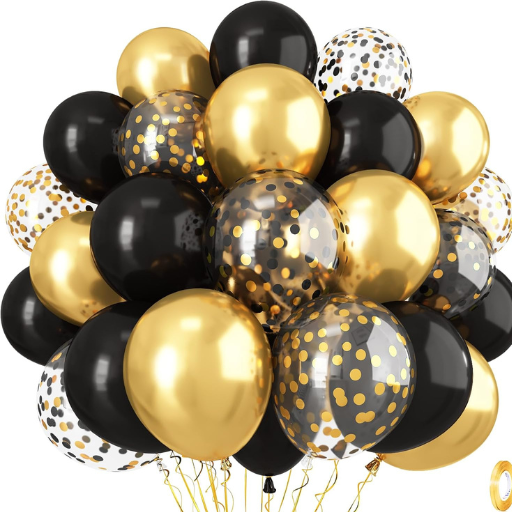

To order custom balloons, define your event goals, choose between latex or foil, prepare print-ready artwork, calculate quantities, select a reliable supplier, approve your production proof, and plan for timely delivery and setup. This seven-step process turns a confusing purchase into a predictable experience that delivers balloons matching your vision.
Sarah learned this the hard way. She owns a bakery in Portland and ordered 200 custom printed balloons for her grand opening. She uploaded her logo straight from her website, a 72 DPI JPEG file that looked fine on screen. When the balloons arrived three days before the event, her bakery name was pixelated and the golden yellow she expected had printed as a muddy orange. She had no time to reorder. Sarah still opened on schedule, but the balloon display she had imagined became a quiet reminder to never skip the proofing step again.
If Sarah’s story makes you nervous, you are not alone. Most first-time buyers feel overwhelmed by artwork specs, printing options, and timelines. The good news is that ordering custom balloons becomes straightforward once you understand the process. This guide breaks every stage into clear, actionable steps. You will learn how to choose the right materials, prepare artwork that prints crisply, calculate quantities for any venue, evaluate suppliers with confidence, and handle delivery and setup without stress.
Key Takeaways
- Always prepare vector artwork or 300+ DPI raster files to avoid blurry prints on custom balloons.
- Screen printing works best for simple 1-2 color logos at high volume; digital printing handles photos and gradients with lower minimums.
- Order 10-15% more balloons than your exact count to cover defects, pops, and last-minute guest increases.
- Request a digital proof and review colors on a calibrated monitor before approving production.
- Inflate latex balloons 8-12 hours before your event; foil balloons can be inflated 1-3 days ahead.
What Are Custom Balloons and Why Order Them?
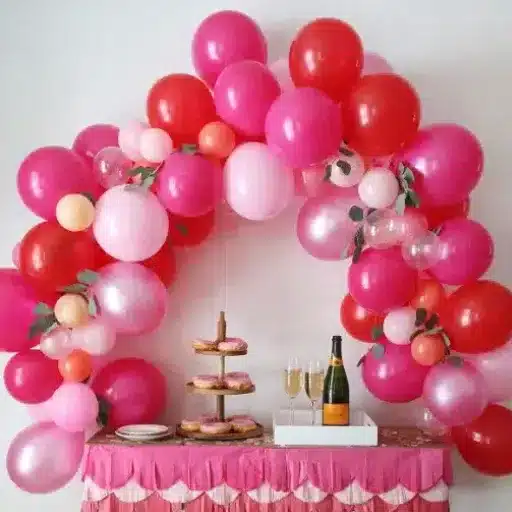
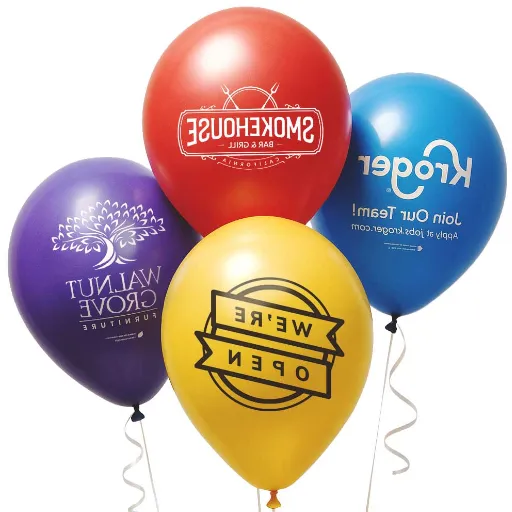
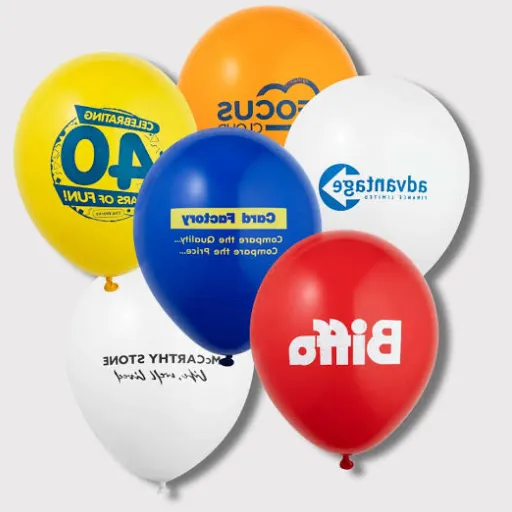
Custom balloons are balloons printed with personalized designs, logos, text, or imagery to match a specific event theme or brand identity. Unlike standard party balloons, custom printed balloons transform a generic decoration into a targeted marketing tool or a deeply personal celebration detail.
The most common types include custom logo balloons for corporate branding, personalized balloons for events like weddings and birthdays, and branded balloons for corporate events such as trade shows and product launches. Materials range from biodegradable latex to reusable foil and crystal-clear bubble balloons. Each material carries different print characteristics, float times, and environmental impacts.
Businesses order custom balloons because they deliver remarkable return on investment. According to the Promotional Products Association International, branded promotional products generate over 3,300 impressions during their lifetime. At a cost often below one dollar per balloon, custom printed balloons deliver more exposure per dollar than many digital advertising channels. For personal celebrations, custom balloon designs create photo-worthy moments that guests remember and share. The emotional impact of seeing a name, date, or meaningful message floating above a dance floor is difficult to replicate with standard decor.
Custom balloons also solve a practical problem. Generic balloon decor blends into the background. Custom balloons stand out, guide foot traffic, reinforce branding, and create natural photo backdrops that extend your event’s reach across social media.
Step 1: Define Your Custom Balloon Goals
Before you upload a single file or request a quote, clarify what you want your custom balloons to accomplish. Vague goals lead to vague results. Specific goals guide every decision that follows, from material selection to quantity to budget.
Identify Your Event Type and Audience
Corporate events demand a different approach than birthday parties. A tech company launching a product at a trade show needs bold, legible custom logo balloons that photograph well from a distance and reinforce booth branding. A couple planning a wedding wants elegant, understated personalized balloons for events that complement floral arrangements and match venue lighting.
Ask yourself three questions. Who will see these balloons? What do I want them to feel or remember? Where will the balloons be displayed? Answering these narrows your design direction instantly.
Determine Your Display Strategy
Your display strategy directly affects what you order. Ceiling installations require helium-filled balloons with enough lift to rise and stay risen. Floor displays and table centerpieces often use air-filled arrangements that last longer and cost less. Entrance arches need balloons in multiple sizes for visual depth.
Each display type demands different quantities and sizes. A single entrance arch might require 100 to 150 balloons. A ballroom ceiling installation for two hundred guests could need 300 to 500. Table centerpieces for a corporate dinner might only need 30 clusters of three balloons each. Knowing your display strategy early prevents both under-ordering and budget waste.
Set Your Budget Range
Custom balloon pricing varies widely based on material, printing method, and quantity. Simple screen-printed latex balloons in bulk often cost between 0.50and0.50and1.50 per balloon. Full-color digital printing on foil balloons can range from 2.00to2.00to5.00 per unit. Bubble balloons with custom designs typically fall at the higher end.
Set your budget before contacting suppliers. Allocate roughly 70% to the balloons themselves, 15% to accessories like weights and ribbons, and 15% to inflation and installation. If your budget is tight, prioritize your highest-impact display. One stunning entrance arch with custom logo balloons makes a stronger impression than scattered table decorations that get lost in the room.
Step 2: Choose the Right Balloon Type and Printing Method
Not all custom balloons are created equal. The material you choose determines how your design looks, how long the balloon lasts, and what environmental impact it leaves behind.
Latex vs. Foil vs. Bubble Balloons for Custom Printing
Latex balloons are the most common choice for custom printed balloons. They are biodegradable, affordable, and accept screen printing beautifully. However, latex has a shorter float time, typically 8 to 12 hours with helium, and the print area is limited by the balloon’s curvature. Latex works best for large quantities, indoor events, and designs with bold, simple graphics.
Foil balloons offer a premium alternative. They are reusable, retain helium for 3 to 5 days, and provide a flat, reflective surface that makes colors pop. Custom logo balloons on foil photograph exceptionally well. The downside is environmental; foil balloons are not biodegradable and must be disposed of responsibly. They also cost more per unit and require heat-sealing equipment if you are inflating them yourself.
Bubble balloons are made from stretchy, transparent plastic and create a modern, spherical look. They work well for custom designs that wrap around the entire surface. Bubble balloons float for 1 to 2 weeks, making them ideal for extended displays. They are less common for bulk orders due to higher costs and more delicate handling requirements.
| Balloon Type | Best For | Float Time | Eco-Friendly | Cost |
|---|---|---|---|---|
| Latex | Bulk orders, simple logos, short events | 8-12 hours | Yes (biodegradable) | $ |
| Foil | Premium displays, photos, multi-day events | 3-5 days | No (reusable instead) | $$ |
| Bubble | Modern aesthetics, full-wrap designs | 1-2 weeks | No | $$$ |
Printing Methods Explained
Screen printing is the traditional method for custom printed balloons. Ink is forced through a fine mesh screen onto the balloon surface. It is cost-effective for large quantities, produces vibrant colors, and works best for designs with one or two solid colors. The minimum order quantity for screen printing is usually higher, often 100 to 500 balloons per design.
Digital printing uses inkjet technology to apply full-color images directly onto balloons. This method handles photographs, gradients, and complex artwork that screen printing cannot reproduce. Minimum order quantities are lower, sometimes as few as 25 balloons. Digital printing costs more per balloon but offers unmatched design flexibility.
Pad printing transfers ink from an etched plate to a soft silicone pad, then onto the balloon. It excels at printing on irregular shapes and small areas with fine detail. Pad printing is less common for standard round balloons but useful for specialty shapes.
Eco-Friendly Custom Options
Sustainability is no longer optional for many event planners and corporate clients. Biodegradable latex balloons printed with water-based inks offer the most environmentally responsible choice. The natural latex decomposes within 6 months to 2 years, depending on environmental conditions.
Reusable foil balloons provide another sustainable angle. Instead of single-use decor, clients can deflate and store foil balloons for recurring events. This approach works especially well for businesses that attend multiple trade shows or run seasonal promotions with consistent branding.
Want to explore sustainable options in detail? Our complete guide to eco-friendly balloons breaks down biodegradable materials, certifications, and how to plan a sustainable event without sacrificing visual impact.
Step 3: Prepare Your Artwork and Design
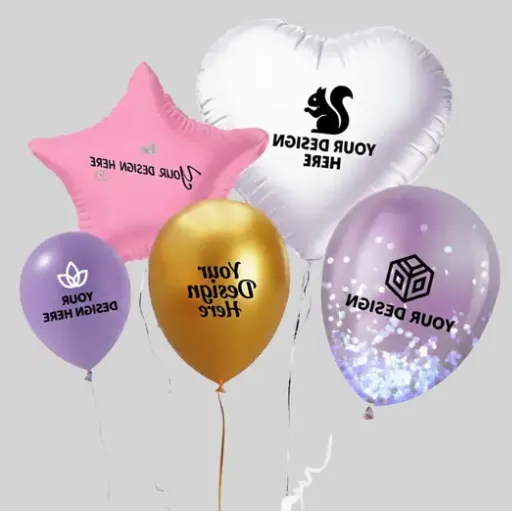
Artwork preparation is where most custom balloon orders succeed or fail. A brilliant design on your computer screen can become a blurry mess on a curved balloon surface if the technical specs are wrong.
Artwork Requirements Checklist
Suppliers require print-ready files. Vector artwork in AI, EPS, or PDF format is ideal because it scales infinitely without losing quality. If you only have a raster image, it must be at least 300 DPI at the final print size. A 72 DPI website logo will not work.
Color mode matters too. Screen printing uses Pantone color matching for accuracy. Digital printing uses CMYK. If you submit an RGB file, the colors will shift during conversion. Always ask your supplier which color system they use and request a physical proof if color accuracy is critical.
Balloon surfaces curve. This means your artwork needs breathing room. Keep text and logos away from the edges where distortion is greatest. Most suppliers recommend a safe zone of at least 10% inset from the balloon’s diameter.
Common artwork mistakes that delay production include submitting web-resolution images, using fonts that are not outlined, forgetting bleed areas, and embedding colors in RGB mode. Review your file against the supplier’s spec sheet before submitting.
Design Best Practices for Balloon Printing
Text legibility is the most common problem in custom balloon designs. A logo that looks crisp on a business card can become unreadable when wrapped around an 11-inch latex balloon. Keep text large, bold, and simple. Sans-serif fonts generally perform better than ornate scripts at small print sizes.
Logo sizing should account for viewing distance. If guests will see your custom logo balloons from across a ballroom, the logo needs to dominate the balloon surface. If the balloons are table centerpieces viewed from 3 feet away, smaller detail works fine.
Color contrast drives photography results. Light-colored designs on dark balloons or dark designs on light balloons photograph dramatically better than low-contrast combinations. If social media sharing matters to your event, design for the camera as much as for the eye.
Working With a Designer vs. DIY
Complex branding with multiple colors, precise Pantone matching, or intricate patterns justifies hiring a graphic designer. A professional understands how artwork translates to flexible surfaces and can build files that suppliers accept without revision rounds.
For simpler needs, many suppliers offer online design tools with templates. Canva also provides balloon design templates that export at adequate resolution for basic orders. If your design needs are minimal, a single-color text message or a simple logo, DIY tools often suffice.
Step 4: Calculate Quantities and Select Sizes
Ordering the right number of custom balloons saves money and eliminates last-minute panic. Order too few, and your display looks sparse. Order too many, and you waste budget on balloons that sit in storage.
How Many Custom Balloons Do You Need?
Start with your venue and display type. A standard entrance arch typically uses 100 to 150 balloons. A 10-foot balloon garland needs 80 to 120 balloons. Table centerpieces require 3 to 5 balloons per table.
For corporate events, think about both decor and takeaways. Branded balloons for corporate events work well as booth traffic builders when guests carry them through the exhibition hall. Plan 1 to 2 giveaway balloons per expected visitor if you want full floor coverage.
Always add a buffer. Order 10 to 15% more than your calculated need. Balloons can have micro-defects, seals can fail during inflation, and guest counts can swell. Those extra balloons are cheap insurance against a gap in your arch or a missing centerpiece.
Balloon Sizing Guide
Standard latex balloons come in 9-inch, 11-inch, and 12-inch diameters. The 11-inch size is the most versatile for general decor. Nine-inch balloons work well for table arrangements and confetti fills. Twelve-inch balloons create fuller garlands and arches.
Jumbo latex balloons in 24-inch and 36-inch sizes make dramatic statement pieces. A single 36-inch custom printed balloon with a logo or message commands attention from across a room.
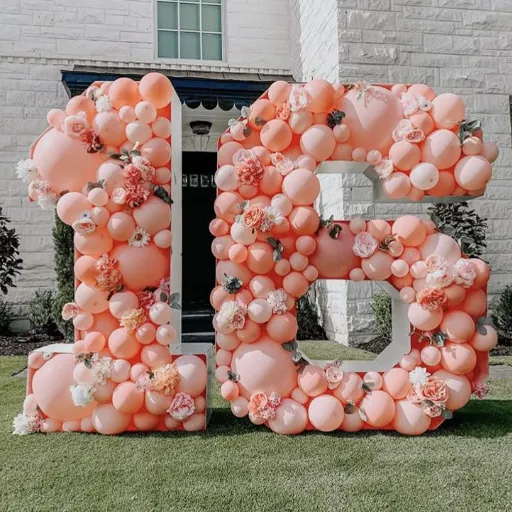
Foil balloons offer different sizing conventions. Air-filled foil letters and numbers typically measure 16 to 40 inches tall. Round foil balloons range from 18 to 36 inches. These sizes work best for backdrops and photo opportunities where readability matters.
Marcus, a marketing manager at a software company in Austin, planned eight trade shows per year. His first year, he ordered exact quantities for each event and ran short twice when attendance exceeded projections. In his second year, he created a standard booth package: 100 custom logo balloons for the arch, 50 branded table balloons, and 75 giveaway balloons. He ordered 120% of his base quantity and stored leftovers for the next show. His cost per event dropped 18%, and he never ran short again.
Step 5: Find and Evaluate a Custom Balloon Supplier
The supplier you choose affects print quality, delivery reliability, and your overall stress level. Price matters, but it should not be the only factor.
Eight Criteria for Choosing a Supplier
Print quality consistency is paramount. Ask to see samples of previous work, especially projects similar to yours. A supplier who produces crisp, consistent custom balloon designs for corporate clients will likely handle your order with similar care.
Minimum order quantities and pricing transparency should be clear upfront. Some suppliers specialize in bulk orders of 1,000+ units. Others cater to small businesses with minimums of 50 or 100. Choose a supplier whose scale matches your needs.
Production turnaround separates reliable suppliers from risky ones. Standard custom orders typically take 2 to 3 weeks from artwork approval to delivery. Rush orders may be possible in 5 to 7 days for a premium fee. If your event is 10 days away, you need a supplier who can deliver, not one who promises and then misses the date.
Artwork support and design review processes save first-time buyers from expensive mistakes. The best suppliers review your file before production and flag potential issues like resolution problems or color mode mismatches.
Eco-friendly material options matter if sustainability is a priority. Not every supplier offers biodegradable latex or water-based inks. If environmental responsibility is part of your brand values, confirm capabilities before committing.
Packaging quality prevents delivery damage. Custom balloons crushed in transit arrive wrinkled and scuffed. Ask how the supplier packages finished orders.
Communication responsiveness indicates how the supplier handles problems. Send a test question before placing your order. If they take three days to respond to a sales inquiry, imagine how long they will take if your delivery is delayed.
Return and reprint policies protect you from errors. A reputable supplier will reprint balloons that do not match the approved proof at no charge. Get this policy in writing.
Questions to Ask Before You Order
Request specific timeline details. How long does proofing take? How many revision rounds are included? What is the production timeline after approval? What shipping method do they use, and what is the transit time?
Ask about color matching. What happens if the printed color does not match the digital proof? Can you order a physical sample balloon before committing to a full production run?
Red Flags to Avoid
Be cautious of suppliers who skip the proofing process entirely, offer vague timelines like “two weeks or so,” have no physical business address on their website, or refuse to provide a reprint guarantee. These warning signs often predict disappointment.
Looking for a supplier that checks every box? Trading Shanxi Co., Ltd. specializes in custom balloon solutions for events and businesses worldwide. We offer free artwork reviews, digital proofs with every order, and a reprint guarantee if your balloons do not match the approved design. Contact us today for a free custom balloon quote.
Step 6: Place Your Order and Manage Production
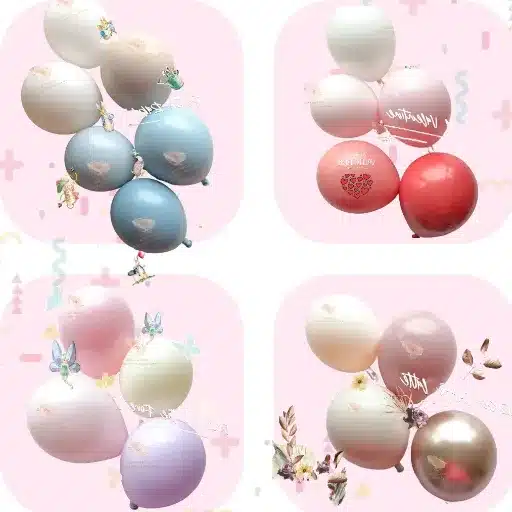
Once you have selected a supplier, the formal ordering process begins. Staying organized during this phase prevents delays and ensures your custom balloon order matches your expectations.
The Ordering Process Step-by-Step
The typical workflow follows six stages. First, you submit your artwork and order specifications. Second, the supplier creates a digital proof showing how your design will appear on the balloon. Third, you review the proof and either approve it or request revisions. Fourth, the supplier begins production after receiving your approval. Fifth, the supplier ships your order and provides tracking information. Sixth, you receive and inspect the delivery.
Standard turnaround from proof approval to delivery is 2 to 3 weeks. Rush orders compress this to 5 to 7 days but usually cost 25% to 50% more. Plan backward from your event date. If you need balloons in hand 3 days before setup to allow for inspection and inflation, and production takes 2 weeks, you should submit artwork at least 3 weeks before the event.
Proof Approval Best Practices
The proof is your last chance to catch errors. Review it carefully on a calibrated monitor if color accuracy matters. Check every word for spelling. Verify that the logo placement and sizing match your vision.
For large or high-stakes orders, request a physical sample before full production. A single sample balloon costs extra and adds a few days to the timeline, but it eliminates the risk of a 1,000-balloon mistake. For smaller or lower-risk orders, a digital proof is usually sufficient.
Corporate and Bulk Ordering Workflows
Corporate procurement teams often need additional documentation. Confirm whether your supplier accepts purchase orders and offers net-30 payment terms. If you are ordering for multiple office locations, ask about split shipping to avoid re-shipping costs.
Brand asset management becomes valuable for recurring events. Save your approved artwork files, Pantone codes, and order specifications in a shared folder. When the next event arrives, you can reorder identical custom balloon designs in minutes instead of starting from scratch.
Step 7: Receive, Store, and Prepare Your Custom Balloons
Delivery day is exciting, but do not tear into the package without a plan. Proper inspection, storage, and timing ensure your custom balloons look their best when guests arrive.
Inspecting Your Delivery
Count the quantity immediately. Even reputable suppliers occasionally miscount. Check a random sampling of balloons for print quality. Look for smudged ink, color shifts, or alignment issues. Compare the printed result to your approved proof.
If you find defects, document them with photos and contact the supplier immediately. Reputable companies will reprint defective balloons quickly. Delaying this inspection until the day of your event could leave you without recourse.
Storage Before Your Event
Latex balloons degrade in heat, light, and humidity. Store them in a cool, dark place away from sharp objects and oily surfaces. Latex is porous; exposure to oils from skin or food can weaken the material.
Foil balloons are more forgiving but still require care. Store them at room temperature. Do not stack heavy items on top of foil balloon packages; creases and dents are permanent.
Inflation timing is critical. Latex balloons filled with helium typically float for 8 to 12 hours. Plan to inflate latex within half a day of your event. Air-filled latex lasts several days but does not float. Foil balloons hold helium for 3 to 5 days, so you can inflate them 1 to 3 days ahead.
Inflation and Display Setup
Helium creates floating displays but costs more and requires tank rental or professional service. Air-filled arrangements last longer and cost less but require structural support like frames or weights.
Electric pumps speed up inflation dramatically. Hand pumps work for small orders but become exhausting for quantities over 50. Professional balloon decorators use electric inflators with timers to ensure consistent sizing.
Arrange custom printed balloons with the printed side facing your primary sightlines. In an arch, alternate balloon sizes and rotate prints so they are visible from both sides. For table centerpieces, position the print at guest eye level rather than facing the ceiling.
Jenna planned an outdoor wedding in Napa and wanted every detail to reflect the couple’s environmental values. She ordered 150 biodegradable latex balloons with the couple’s initials printed in water-based ink. The balloons arrived 5 days early, giving her team time to inspect, store them in a climate-controlled room, and inflate them 10 hours before the ceremony. The display looked stunning in photographs, and the couple appreciated that their decor would decompose naturally after the celebration. Jenna now recommends biodegradable custom balloon designs to every eco-conscious client she serves.
Common Mistakes to Avoid When Ordering Custom Balloons
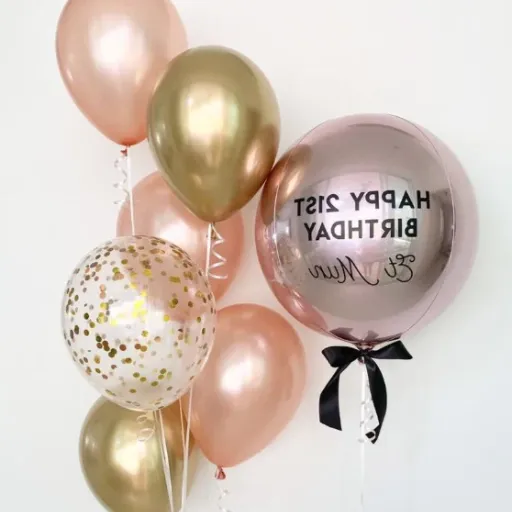
Even experienced event planners make mistakes. Learning from others’ missteps saves you time, money, and stress.
Ordering Too Late
Custom production takes time. Rush orders cost more and offer less room for error. Submit artwork at least 3 weeks before your event. This leaves time for proof revisions, production, shipping, and inspection.
Using Low-Resolution Artwork
A logo copied from a website header is almost never suitable for printing. Website images are optimized for screen display at 72 DPI. Printing requires 300 DPI minimum. Invest in a high-resolution source file from your design team or request one from your marketing department.
Choosing the Wrong Balloon Type for the Environment
Latex balloons exposed to direct sunlight and heat will oxidize and deflate faster. Outdoor summer events need foil balloons or specially treated latex. Indoor climate-controlled venues offer the best conditions for standard latex.
Under-Ordering Quantities
Always add that 10 to 15% buffer. A single popped balloon in a carefully counted arch creates an obvious gap. Extra balloons also cover last-minute table additions or enthusiastic guests who want to take one home.
Ignoring Proof Approval Details
Typos, wrong phone numbers, and inverted logos have all made it to production because someone approved a proof too quickly. Read every character. Check every color. Verify every dimension.
Forgetting Accessories
Balloons alone do not make a display. Weights keep helium balloons from floating away. Ribbons add elegance. Clips and tape secure garlands. Pumps save hours of labor. Include accessories in your budget and your order.
Your Pre-Order Checklist
- Event date confirmed with 3-week buffer for ordering
- Display type and venue size determined
- Artwork prepared in vector or 300+ DPI raster format
- Colors specified in Pantone or CMYK mode
- Quantity calculated with 10-15% buffer added
- Supplier selected and vetted for quality and timeline
- Digital proof requested and carefully reviewed
- Accessories ordered (weights, ribbons, pump, clips)
- Inflation and setup schedule planned
- Storage space prepared before delivery
Conclusion
Ordering custom balloons does not need to feel overwhelming. When you break the process into seven clear steps, from defining your goals to preparing for delivery, you gain control over the outcome. The key is preparation. Artwork that meets technical specs, quantities that include a sensible buffer, and a supplier who communicates clearly will deliver balloons that elevate your event.
Remember Sarah from the bakery. Her second order, six months later, was flawless. She submitted a vector file. She approved a physical sample. She added 15% to her quantity. Her anniversary celebration balloons looked every bit as professional as her pastries.
Whether you are planning a corporate product launch, a wedding reception, or a retail grand opening, custom balloons offer one of the highest-impact, lowest-cost ways to personalize your space and amplify your message. The difference between a stressful order and a smooth one comes down to following a proven process.
Ready to order custom balloons for your next event? Trading Shanxi Co., Ltd. makes the process simple. We offer free artwork reviews, digital proofs with every order, and a dedicated team to guide you from concept to celebration. Contact us today for a free quote and let us help you create balloons that make your event unforgettable.
Related Resources