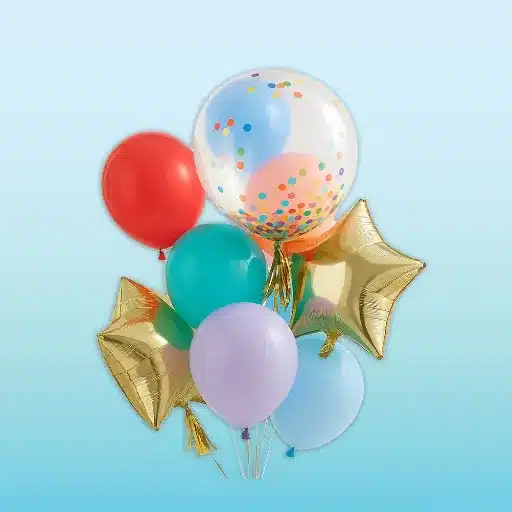

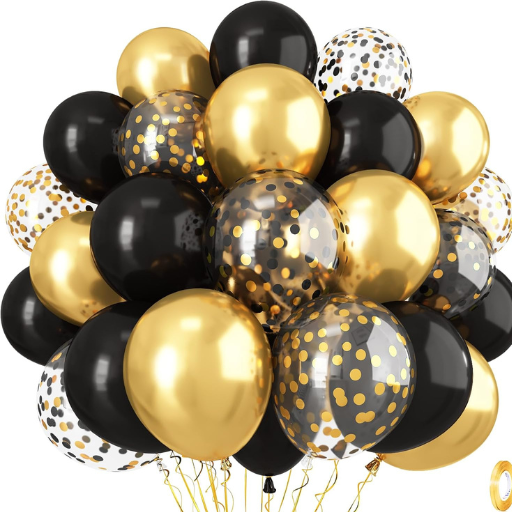
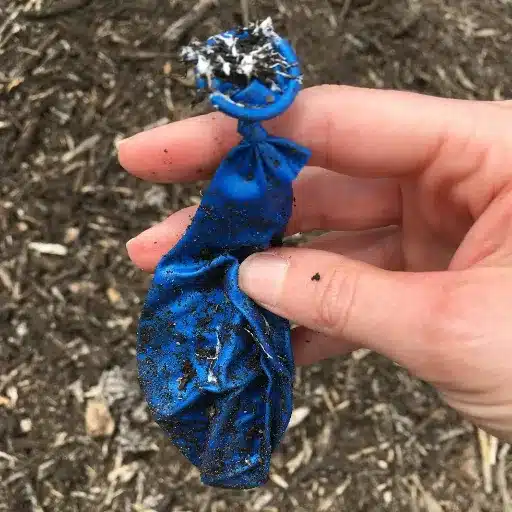
No, latex balloons are not meaningfully biodegradable. Despite assertions by advocates that they are as fast decomposing as an oak leaf, there is no significant evidence from any established reviews done by individuals or institutions to show any degree of decomposition in the first 16 weeks when such items are placed in compost, freshwater or seawater. In theory, rubber has no problem as a base material, but any form of items in the mass such as suflur, pigments, plasticizer and the rest of components involved in manufactiring are added drastically impede the process. In point of fact, latex balloons can increase life expectancy of about 8-10 years without decomposition and be of serious danger to wild animals and nature.
If someone asks you whether latex balloons are biodegradable any time soon, the straightforward reply is, they are not. This always looks wrong for many people. For to most of us, latex is a chemical product derived from trees which easily undergoes decomposition. What baffles me is: why can a natural latex balloon cling classics? This is where the riddle begins to unfold when the reality of the market fails to comply with the test data – and understanding this can help you manage your party more effectively. Presently, for a special focus on green celebration alternatives, study the full edition of our article about having some good friendly balloons for parties.
This complete overview is precisely what makes us out of ordinary, unlike the standard companies present on the market. What have we got here? In this set of substantial information, we will try to move from the very beginning of nbsp; latex balloons through points like the invention of the balloons manufactured from latex, whether latex balloons are real, inflate latex balloons, the relevancy of labor practice or balloons employment, and even why health standards are so high in a lecture about ballooning.
Key Takeaways
- Independent studies from the University of Tasmania found no meaningful degradation of latex balloons after 16 weeks in compost, freshwater, or saltwater.
- Latex balloons contain vulcanization additives (sulfur, pigments, plasticizers) that significantly slow natural decomposition.
- The “oak leaf” biodegradability claim traces back to a 1989 industry-funded study that was never peer-reviewed.
- 11 U.S. states have banned intentional balloon releases, with 17 more states introducing legislation in 2025.
- Responsible use, never releasing balloons outdoors, choosing air-filled designs, and disposing properly, minimizes environmental impact.
Are Latex Balloons Biodegradable? The Short Answer

The balloon industry applies the term “biodegradable” to practically all balloons, but in a very technical sense, the latex of balloons is derived from the sap of the Hevea brasiliensis tree, which is a regenerative nature. Being natural, such latex decomposes gradually as a result of the action of microorganisms. It is this fact that producers of these balloons use to claim that theirs is a biodegradable product.
Here, however, arises an issue. By the time we are talking balloons, the latex is no more rubber in its natural form. When latex undergoes the balloon making process there are some changes that the material undergoes which irrevocably complicate the biodegradability issues than the general term suggests.
There are two competing narratives you will encounter:
Idea from the profession: balloons made of latex decompose approximately as quickly as the leaves of oak trees, that is, within one to four years under specific conditions. This idea has appeared on various packages and advertisements for decades.
Scientific documents report: It has been reliably shown by the practical tests of the ethylene- latex balloons that non-degradation within 16 weeks was observed in three different regions. Some of the balloons in fresh water increased in mass. The researchers came to the conclusion that appreciable degradability that would mitigate the harm to the environment simply does not exist within acceptable periods.
The question arises which one is appropriate? In the case of the present study, the method was used that any comment on the published paper could be made, apart from that the study was financed by other sources, and this would lead to the fact that any attempt to manipulate the numbers would be quickly discovered. And eventually, the industry’s opinion is based on one particular, non peer-reviewed study conducted in 1989 and that was impossible to be performed without financial dependency with the manufacturers of latex balloons, that is an obvious respondent meaning they had the opportunity to shape the conclusions. This is a perfect example of greenwish, making false claims of an environmental advantage to the people.
The news that plastic is more harmful for nature than latex has deeply distressed Maria Chen, an event planner from San Diego. Deadwood environmentally conscious, Maria admits, “I had spent years convincing my clients to use only latex in my events purporting that it helps conserve the environment. Before now, however, I had never been told how weak the science was, backing up those particular claims. I wish I could have heard it back then.” Naturally, for this reason, every one of Maria’s client contracts contain a few short paragraphs about ethically dealing with the waste and she has even abandoned the majority of her designs to the use of balloon garlands inside the event that do not go out except for being blown up. We value your feedback! Get in touch with us to share your thoughts or ask for help.
What Latex Balloons Are Actually Made Of
To uncover why biodegradability claims tend to disappoint, it is crucial to understand how a latex balloon is made. Initially, natural rubber latex is gathered from the rubber trees, the untouched source of latex. This is pure, untainted latex and can hence be considered an eco-friendly and replenishable resource.
Nevertheless, before one can have a decent balloon, there is the need for some harsh chemical effects on the fluid. Here is what is included in a run of the mill balloon:
Vulcanization chemicals with sulfur. This is the most essential step. Latex all by itself is poor material as it is sticky, weak and subject to breakdown. Vulcanization, a process originating in the 19th century, involves mixing latex with sulphur and creating cross-links with polymer chains. This way one gets a quality material which is stretchable, long wearing and fair in self-support. It is also ageable better and worked with more resistant to the action of living organisms. If it were not for vulcanization, one would have to bear in mind that balloons are not going to keep their shape. However, once they have undergone vulcanization- decomposition being implied by ‘biodegradable’ will not occur.
Pigments and dyes has been one of the subjects widely referred to when it comes to balloons, for they primarily necessitates color. Such dyes and pigments, more often than not, are imbued with antimicrobial agents materials so as to minimize contamination caused by the microbial activity. A variety of past tints and pigments even included charge of the toxic elements, in but not the most up to date ones are in wide use today because manufacturers have significantly phased out use of heavy metals.
Inhibitors and Stabilizers These are developed to stop the polymer from deteriorating in course of storage/transit and for the very purpose are inevitable for an industrial ware which can be in the stocks for a certain period of time before it is sold to the end customers.
Plasticizers These substances simplify the processes of shaping and make the materials more flexible in the process of production which is based on rigid thermoplastic resins.
Waxes and Coagulants It enhances the ability of the latex to form a film during the dipping process that would take on a shape of a balloon.
At the end, a product is made up at its base natural latex but covered with so many chemical modifications to avoid its decomposition. Dr. Jennifer Lavers, one of the authors of the research conducted by the University of Tasmania, noted: “in order to make balloons of an appreciable life span, the latex must be vulcanized with sulfur, and compounds such as halogens, copper, waxes, antioxidant, plasticizers, flame retardants and pigments are included in it.”
Trading Shanxi exclusively uses natural rubber latex. Each of its products undergoes vulcanization in the presence of sulfur. Furthermore, pigments are used for dying, and defoamers for shelf life. Importantly, our policy states that the customer must be fully informed of our products’ effectiveness and limitations.
What the Science Says: The University of Tasmania Study
Institution of Marine and Antarctic Studies (IMAS) at the University of Tasmania has been the main pioneer of independent studies on the biodegradability of latex balloons. In 2021, the study conducted by Drs. Morgan Gilmour and Jennifer Lavers and published in the Journal of Hazardous Materials, raised questions in the scientific community and among certain individual consumers of balloons.
Distinction. There is no blame towards the authors as the study had only an aim and this was to test the biodegradabilty of latex materials/ balloons in industrial, potable and sterile hydrogen peroxide environments. There were three classes of balloons used: they were biodegradable – ethylene-acrylate copolymer, non-degradable – rubber, and very low degradability-EPDM. ATR-FTIR spectroscopy analysis was used to determine the changes in chemical composition, tensile strength, physical properties and surface morphology of the newly treated materials.
The results were unambiguous:
- No meaningful degradation in any environment. Balloons retained their original shape and size throughout the 16-week period.
- Minimal mass loss. Composted balloons lost only 1-2% of their mass. Some balloons in freshwater actually gained mass, likely due to osmotic processes.
- Tensile strength remained largely intact. While water-exposed balloons showed some decrease in elasticity, composted balloons maintained constant tensile strength.
- No significant chemical breakdown. ATR-FTIR analysis showed compositional differences between treatments but no evidence of the polymer breakdown that true biodegradation requires.
In his presentation, Dr. Gilmour stated: “If a balloon is considered biodegradable, it is expected that the balloon will biodegrade quickly and uniformly until such time that it is no longer a threat to wildlife and the environment. This did not occur in the current study, as the composting facilities in use did not make the balloons decompose.”
This report, as such, is quite different from the previous one in 1989 which was paid for by the industry and has been used by balloon manufacturers as a basis for their products as ‘biodegradable’ for the last 30 years. That report was not accessible to other research groups, the methodology was lacking and the funding was provided by the manufacturers of the products, which were reviewed in the report.
Want to see the full research for yourself? You can access the University of Tasmania study PDF or find the published article on PubMed.
In the same research, it was discovered that sea birds in particular have one of the most catastrophic mortalities as far as balloons are concerned. In vasculent, a bird has stuffed a balloon in itself, it becomes the end game. The statistics show that if a bird eats a balloon, it is on average thirty two times more detrimental to their life than would be a hard plastic. This is due to the fact that even if both hard plastics and balloons were ingested, the latter would cause much greater fatality. Balloons can bend and obstruct the bird’s digestive tract, a block that is not feasible if a bird swallows a hard plastic.
How Long Do Latex Balloons Take to Decompose?
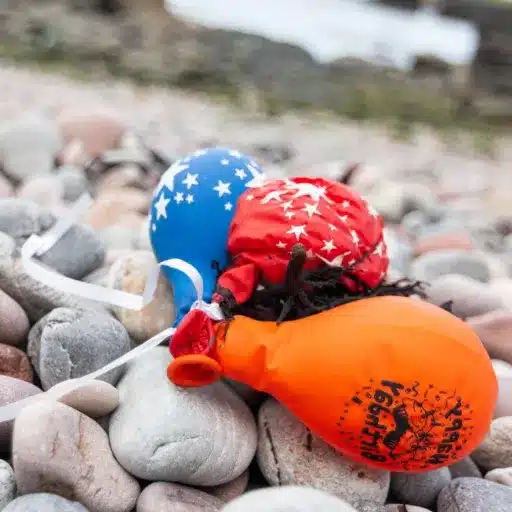
If you are looking for a simple answer, there isn’t one. Decomposition timelines for latex balloons vary dramatically based on environmental conditions, and even under the most favorable circumstances, the process takes far longer than marketing materials suggest.
Here is what the evidence shows for latex balloon decomposition time by environment:
| Environment | What Happens | Estimated Timeline |
|---|---|---|
| Industrial compost | No significant degradation at 16 weeks | Unknown; likely years |
| Freshwater | No significant degradation at 16 weeks; some balloons gained mass | Years to decades |
| Saltwater / marine | Retains elasticity and shape; among most lethal marine debris | Potentially decades |
| Soil (buried) | Slow microbial breakdown possible in warm, moist conditions | 15-100+ years (estimates vary widely) |
| UV / sunlight exposure | Surface oxidation and color fading; fragmentation possible | Faster surface changes, but material persists |
| Landfill | Anaerobic conditions prevent most biological breakdown | Effectively indefinite |
Whether plastics degrade or biodegrade in the presence of microorganisms is an essential distinction. With respect to environmental factors such as sunlight and the atmosphere, plastics will degrade into smaller particles with time, creating an effect of pollution resembling that of microplastics. However, its constituent polymer will not be diverted back to its native set of compounds since this process only delays its elimination and also presents the issue of the polymer being broken down into pieces too small to be seen or gathered more efficiently.
The figures ‘as low as six months up to four years’ are based on purely hypothetical applicability of such technology. It may work in a compost setup with appropriate humidity and temperature and many other edaphic factors; however, such combinations are improbable in the real world. A balloon that has been buried within a filled area will have difficulty decomposing because the area it has been placed isd= designed to not contain any traces of oxygen due to the limited quantity of nitrate and care taken in the tiresoiledbdsf. A balloon that is inserted in water is concerned with the chilling conditions after the coldest of all the waters tested the imass without breakdown was shown to be the most probable means of disposal.
The team at Coastal Events in Miami dropped helium filled balloons for fully air-filled indoor designs and then actually kept record of the balloons they used during the year. ‘Prior to the ban, we would let go of the balloons practically every time,” claimed the head of operations, James Okwonkwo. “With the knowledge in mind, we able to stop right away one day of lifting and not polute the environment inmore ways. Instead, we now create impressive installations at the venue, and the customers are happier because they will stay till the end of the event. It turned out that it even became reasonably cheaper to manage waste because there was no escape of any foreign gases.’
Balloon Release Bans: The Growing Regulatory Landscape
The scientific evidence is translating into policy. Across the United States and internationally, lawmakers are increasingly restricting or banning intentional balloon releases, and many of the newer laws specifically close loopholes that previously allowed “biodegradable” balloon releases.
States with active bans (as of 2026):
States of California, Delaware, Florida, Connecticut, Hawaii, Maine, Nevada, Maryland, Rhode Island, Tennessee and Virginia. They passed all these laws which do not allow intentionally releasing balloons outdoors.
A notable example is HB 321 in Florida, put into effect in the year 2024, specifically July. This has eliminated all intentional balloon releases across the state. More specifically, it also removed the earlier exemption of ‘biodegradable’ balloons. The previous exceptions allowed such balloons to be released at certain events still. This exception is what made these bans ineffective since manufacturers could merely say that their products were biodegradable and continue to release them.
2025 legislation in progress:
Seventeen other states have expanded legislation in support of releasing balloons in 2025, they include Arizona, Illinois, Kentucky, Minnesota, Mississippi, Missouri, New Hampshire, North Carolina, Ohio, Oregon, Pennsylvania, South Carolina, South Dakota, Washington, and Wisconsin.
In New York, pending the passing of bill S75 of the New York Senate, the bill will restrict the release of helium balloons which contain conductive properties and the release to 25 non conductive helium balloons per release within 24 hours. In New Jersey the A3703 is even more strict and goes as far as to require retailers to post balloons and make an outdoor balloon release sign and risk being fined for non-compliance.
Evidence that bans work:
The ban of Virginia’s Fisherman’s Island has seen real results during the time of the ban. Where a speed of impulse purchase decisions has dropped from 240 pieces per mile to 174 pieces per mile. 724 balloon particles were found. In 2018, in the coastal cleanup and 216 in 2025.
Even at the civic level, the transformation is noticeably moving forward. In May 2024, Waukegan, Illinois is to enact a bill, which will impose a penalty of up to $250 for a balloon release in the open. Beaufort, South Carolina also became the first city in its state to implement the ban. East Hampton, New York gave a ban order on the sale of balloons after passing the first one.
From the standpoint of event organisers and decorators, this is a quickly-evolving field. Prevent any balloon construction in an outdoor setting until after it is checked according to state as well as local law. The Legislation tracker also Heredia provides a map with an overview of the most recent laws.
Responsible Use: How to Use Latex Balloons with Minimal Environmental Impact
Many individuals who plan events have often wanted to know: do latex balloons contribute to environmental pollution? Well, it can be said that no balloon in itself is harmless as a piece of litter. However, there exist options are more or less eco-friendly. Balloons are still one of the decorations that are used for almost every type of event, and they combine well the affordability and the ability to attract the attention of a large number of people. The most interesting part is not whether they should be used or not, but how to use them responsibly.
Below is an example of a systematic hierarchy utilizing the latest research available:
One of the things that you have to never do is let go of a balloon outside. This is by far the strongest statement and should be kept in sight at all times and not to be violated. Any balloon that has been freed up becomes debris. It can be carried hundreds or even thousands of miles on wind currents finally winding up in the rivers, crop lands and forests. No balloon, regardless of material should be let free in the atmosphere.
Adequately dispose of balloons. After the event, burst all balloons and dispose all the parts, including strings and weights. Throw the whole debris into the trash bucket. Do not try putting balloons in the recycling dustbins because latex spoils the recyclates and can cause the whole consignment to be disqualified.
Use air in balloons rather than helium. Helium is not renewable, and is in high demand especially in medical imaging, scientific laboratories and aerospace industry. Therefore, focus more on air arrangements like garlands, arches, and centerpieces than on helium balloons that have no such applications yet with the same visual appeal. Air filled decorations, however, don’t last as long and still achieve better design and decor applications than floating balloons.
If possible, stay indoors when playing with balloons. Children are less likely to lose their balloons inside, and you are more likely to be responsible with your mess. However, in the event the balloons are used outside, attach each balloon to a weight and ensure there is no wind to interfere with the balloons in the environment.
Adults, for this endeavor, should give up the usual plastic materials like ribbons. As prevention, most balloons have plastic ribbon in case it gets away and the ribbon is what does damage to the imagination. Avoid using plastic ribbons for this purpose, opt for reusable weights and belts made of natural fibers as well.
Try not to throw anything more than necessary, if some things can be used further. In some cases, decorated air filled balloons can be deflated and packed gently for reuse in the future. Working in this fashion helps not only in saving money but also in reducing waste.
Inflate balloons within the room. Since it is mandatory to use balloons at the event, it is best to choose natural latex rather than Mylar (foil) balloons which are made of a plastic coated metalized foil and can last for more than 400 years, latex, while not being easily recyclable does not have the uniform prone to breakup plastic with a layer of metal which lets out the foil balloons virtually indefinitely into the environment.
For corporate clients, adopting a clear responsible-use policy sends a strong message about environmental awareness. It also protects your organization from liability as balloon release bans expand. Our custom balloon solutions for corporate events include air-filled designs and branded installations that align with sustainability goals.
At Trading Shanxi, we are continuously exploring more sustainable formulations and production methods. We offer a full range of natural latex balloon options and are happy to consult on air-filled design strategies that reduce environmental impact without sacrificing visual impact. Contact our team for guidance on responsible balloon use for your specific event.
Are There Truly Eco-Friendly Alternatives to Balloons?
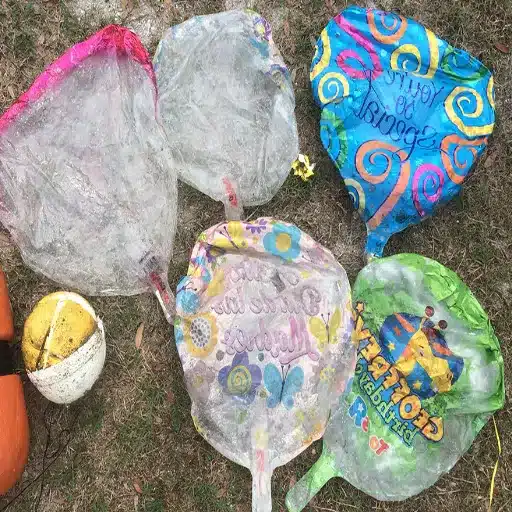
If you are planning an event and want to minimize environmental impact, it is worth asking whether balloons are necessary at all. The honest answer: no balloon is harmless if it becomes litter. But some options are lower-impact than others.
Lower-impact decoration alternatives:
- Fabric bunting and banners can be reused dozens of times and stored compactly between events.
- Paper decorations, including honeycomb balls, pom-poms, and paper lanterns, break down naturally and can often be recycled.
- Potted plants or dried flower arrangements double as decor and guest favors.
- Bubbles, ribbon dancers, or light projections create atmosphere with no persistent waste.
- Reusable LED balloons (inflated with air, lit from within) can be collected and used again.
When balloons are still the right choice:
Some events genuinely benefit from the visual scale, color range, and affordability that balloons provide. In those cases:
- Use air-filled natural latex designs
- Keep everything indoors with controlled disposal
- Partner with a decorator who follows responsible-use practices
- Communicate your policy to guests so no one accidentally releases a balloon
This experience was imbibed the hard lesson by the team at Riverside Catering in Portland. When balloons were let off without permission at a function, then they would ellicit complaints from a wildlife reserve nearby. “Now, we have a no release term in all the business contracts”, says the owner, Priya Sharma. “I think most customers do not mind because they only want to look at the beauty of the events and there are so many other ways of making the events interesting without making any releases”.
Frequently Asked Questions
Are latex balloons biodegradable?
Not in any meaningful timeframe. While latex balloons are made from natural rubber, manufacturing additives like sulfur, pigments, and stabilizers prevent significant decomposition. Independent research found no measurable degradation after 16 weeks in compost, freshwater, or saltwater.
Do latex balloons biodegrade?
No. Independent studies found no meaningful biodegradation after 16 weeks in compost, freshwater, or saltwater. The manufacturing additives in latex balloons, particularly the sulfur used in vulcanization, prevent the microbial breakdown that true biodegradation requires.
How long do latex balloons take to biodegrade?
There is no reliable evidence of rapid biodegradation. Under idealized warm, moist, microbially active conditions, breakdown might occur over several years. In marine environments, landfills, or typical outdoor conditions, balloons can persist for years to decades. The industry claim of “6 months to 4 years” comes from an unpeer-reviewed 1989 study funded by balloon manufacturers.
Do latex balloons decompose in water?
No. The University of Tasmania study found no significant degradation of latex balloons in either freshwater or saltwater after 16 weeks. Some balloons actually gained mass due to osmotic processes. Balloons in marine environments retained their elasticity and shape throughout the testing period.
Are latex balloons bad for the environment?
They can be, particularly when released outdoors or improperly disposed. Latex balloons are among the most lethal forms of marine debris for seabirds. However, used responsibly (indoors, air-filled, and properly disposed of after use), their environmental impact is significantly lower than that of foil balloons or released balloons of any type.
Can latex balloons be recycled?
No. Latex balloons cannot be processed through standard recycling streams. They should be popped, collected, and placed in general waste. Putting balloons in recycling contaminates the batch and can cause the entire load to be rejected.
Are latex balloons safe for wildlife?
No balloon litter is safe for wildlife. When ingested, balloons can block digestive tracts and cause death. The University of Tasmania research found balloons are 32 times more likely to kill seabirds than hard plastics. Responsible disposal and indoor use are essential to prevent wildlife harm.
What is the difference between latex and foil balloons environmentally?
Latex balloons are made from natural rubber with chemical additives. Foil (Mylar) balloons are made from plastic-lined metalized film and can persist for 400+ years. Neither is environmentally harmless when littered, but latex has a lower long-term persistence than foil.
Can I compost latex balloons at home?
Not recommended. The IMAS study tested latex balloons in industrial compost conditions and found no significant degradation at 16 weeks. Home composting conditions are even less controlled and would likely produce similar or worse results.
Why do manufacturers claim latex balloons are biodegradable?
The claim originates from a 1989 industry-funded study that was never peer-reviewed. Because natural rubber latex is derived from trees, a renewable resource, manufacturers have long implied that the finished product inherits that biodegradability. The manufacturing process, however, fundamentally alters the material.
How should I dispose of latex balloons after my event?
Pop each balloon, collect all pieces including ribbons and weights, and place everything in general waste. Do not release balloons outdoors. Do not place them in recycling. For large events, consider assigning a disposal team to ensure nothing escapes.
Conclusion
Well, I would like to know if latex balloons are eco friendly. In short, no, peer-reviewed scholarship does not show them to be within a short or any other timeframe. In the context of conservation and preservation, latex balloons are problematic. Virtually, they are produced from rubber trees, which are a replenishable resource; however, the conversion of such latex into a solid product undergoes several processes that make it durable, elastic, and colorful thus exposing it to the environmental risks although the principles of operation of the biodegradability assumptions that have prevailed in the domain for many decades are unjustified.
However, this does not imply that balloons are out of bounds when it comes to an occasion of some organization. It argues that counted on manufacturers, event organizers, decorators and even common users should be able to use them moderately. In practice, it is simple: never release balloons to the atmosphere, go for air filled designs as much as possible, collect and dispose of every balloon, and keep yourself updated on the legislations in your area.
At Trading Shanxi Co., Ltd., we believe transparency builds trust. We manufacture latex balloons, and we are committed to being honest about what they are and what they are not. If you are planning an event and want guidance on responsible balloon use, our team is here to help. We can recommend air-filled designs, natural latex options, and disposal strategies that let you create stunning events without contributing to the environmental harm that poorly managed balloon use can cause.
Understanding the science behind your decorations is not about guilt. It is about making informed choices that align your celebrations with your values. That is a goal worth pursuing, one event at a time.