
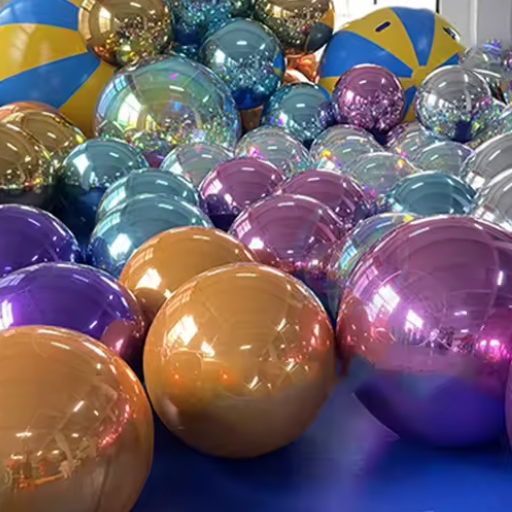



Humans have been interested in balloons for a long time. At first, they existed only as simple things but then they changed, becoming tools that were helpful in scientific work, vocation, and the growth of technology. The very beginning of balloons, however, is still a mystery to many. So where were balloons made for the first time and how did they end up as we know them now? The following text will take you along the interesting history of balloons, starting from very simple designs to the incredible, modern-day marvels. Moreover, throughout the whole journey you will get to know about the important landmarks, the creative geeks, and the cultural impact which have made the balloon’s story so unforgettable. No matter if you are interested in their application in science or their presence in events, this in-depth study gives a view to the rich and diversified history of the balloons.
Introduction to Balloons
Definition and Types of Balloons
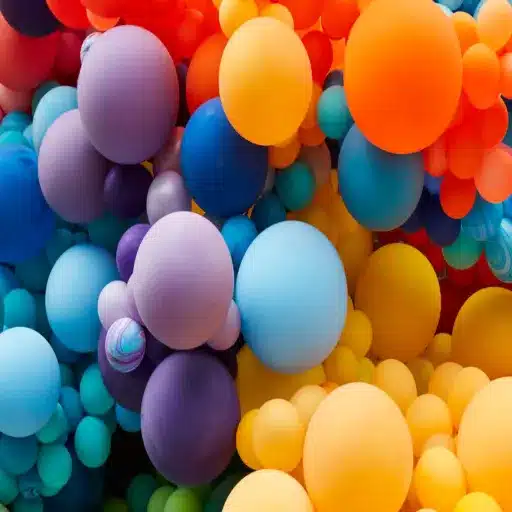
Balloons are various types of inflatable objects made of rubber, latex, nylon, or polyurethane, having a thin surface and usually filled with air, helium, hydrogen or hot air; depending on the size or utilization of the balloon. Balloons can be used everywhere in the world, mostly for fun and decoration but also for scientific and military purposes.
Balloon varieties always identifiably characterize which kind they are based on their make and function. The most common balloons for parties are made of latex or foil and are printed in the brightest colors and pretty patterns. Weather balloons are made of sturdy materials such as natural or synthetic rubber and are used in meteorology for high-altitude atmospheric data gathering. Hot air balloons which are only dependent on the hot air for giving them buoyancy are the perfect mix of technology and recreation which allows for the confined flight. Very unique types of balloons like gas-filled aerostats not only assist with research, surveillance, and communications but also demonstrate the versatility of the same basic principles being employed in various fields. This diversity is proof how balloons have become much-needed tools way from his beginning to be a mere means of pleasure.
Importance of Balloons in Modern Culture
In modern society, balloons play many roles and are used both in a practical way and as means of cultural and festive expression. They are still used in the communication field to bring the internet to those who live in the most remote areas or after a disaster. Not only the balloons that can fly high are equipped with advanced sensors and communication systems; they also are able to do internet sharing. The cheap nature of deploying this technology and the low requirements for skilled maintenance operators are the reasons why it is an excellent idea to use them for bridging the connectivity gap. Furthermore, meteorologists depend on weather balloons, as their main data source, in order to gather information on atmospheric pressure, temperature, and humidity. That is the data necessary for accurate forecasting of the weather and for climate study also.
Balloons, in terms of culture, are the epitome of tribute and happiness, always seen in ceremonies such as birthdays, parades, and festivals. They are the very image of joy and linking the people together, which in turn leads to a happy and joyful community. Biodegradable and eco-friendly materials have been utilized in recent balloon design, which indicates also the changing perspectives on environmental responsibility and at the same time guarantees their continued use in a green way. Balloons are thus inescapably and prominently attached to people’s emotions note wholesomeness at the same time. Their long-lasting and unforgettable impact on the culture of the people is evident in their two-sided nature—as utilitarian devices and as symbols of love and joy.
Balloon Uses Briefing
Balloons have a lot of uses possible and they have been employed in a number of diverse areas, thus demonstrating their flexibility and adaptability. In the realm of science, weather balloons are essential to meteorology, as they are the source of the most fundamental atmospheric data, namely temperature, barometric pressure, and humidity at different altitudes, which are all necessary for the making of reliable predictions and climate investigations. In almost the same way, high-altitude balloons are at the peak of their development in astronomy and astrophysics as they have become the instruments of choice for inexpensive observations beyond the Earth’s dense atmosphere.
On the commercial side, advertising and promotions are two areas to which balloons are very frequently applied. The large-scale helium-filled balloon displays, often with written or graphic company emblems, are creative and highly noticeable in the marketing campaigns. Moreover, unmanned aircraft systems (UAS) have been incorporated into video observation and communication technology to offer last-mile internet connection in remote areas, thus, enabling global communication infrastructures with the support of the balloon platforms.
Balloons are an essential part of medical treatments and especially in angioplasty, where balloon catheters are employed to clear blocked arteries. The revolutionary utilization in this case is a proof of their medical innovation importance. However, the applications of balloons are even more diverse and cover numerous areas in the industry – from the less-serious sports fan or party-goer to the most sophisticated scientific laboratories or hospitals.
The Early History of Balloons
Origins: Materials Used Before Rubber
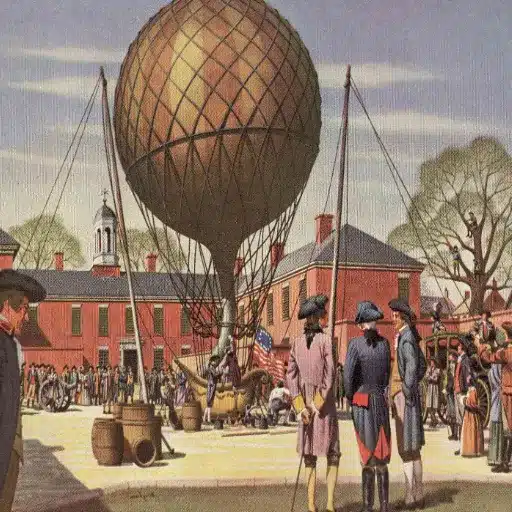
Balloon creation is known for being associated with rubber as the main material. Before rubber was found to be the ideal material, animal organs had been the source of inspiration for the craftsmen. In particular, animal bladders, stomachs, and intestines were widely used because of their toughness, elasticity, and the fact that they could hold in air. These materials were the main resources that started the making of primitive and inflatable things which were mainly used for celebratory or recreational activities. Even in those days, it was the Aztecs among other ancient civilizations, who were into the art of inflating basic animal-forms for religious and symbolic purposes. However, the organic materials were still far from new-age innovations, in that they worked and looked a bit like the new products but much less durable and efficient. The discovery of latex rubber use in the 19th century was a crucial turning point which set the natural alternatives aside and opened up a way for the sustainable and highly flexible latex to take over.
The Role of Animal Bladders in Early Balloon Creation
The availability and elasticity of animal bladders allowed for man’s first step in balloon-making. It was common for people at that time to harvest these materials from domestic livestock such as pigs, goats, and even cattle; the bladders were then cleaned and inflated to make the early forms of balloons. The main components of animal bladders, collagen and elastin fibers, arranged in their structure, granted the needed flexibility plus the strength required to retain air or liquids under a moderate amount of pressure. Nevertheless, the bladders’ air permeability and vulnerability to the adverse effects of drying and tearing over time acted as the main challenges. However, the early peoples ingeniously adapted these kinds of materials for their purposes like ceremonies, experimentation, and even some sort of brief scientific exploration. These made the earliest attempts in balloon technology an exciting meeting point of biology and primitive engineering that set a direction for further and more sophisticated technological developments in the area of balloons, which as a matter of fact, still continues.
Initial Experiments with Air Pressure
The inquiry of air pressure was initiated with very early tests that depended on uncomplicated yet very perceptive observations of events in the environment. Early scientists and inventors, for instance, Evangelista Torricelli in the 17th century, were O̶Npar with the O̶Meveryôe when they developed the barometer, an instrument that showed the measurable force exerted by the air. Torricelli’s mercury barometer gave solid proof of atmospheric pressure and thus established the basis for further studies in pneumatics.
After Torricelli’s great findings, other scientists took up the trail but moved scientific progress further placing more emphasis on the hands-on approach; the most prominent among these was Otto von Guericke. Guericke’s experiments were based largely on the extensive use of air vacuums. Among his many experiments, the one with the Magdeburg hemispheres became famous, as the strong force of the atmospheric pressure on the hemispheres was visually demonstrated by pulling them apart with the help of horses. Owing to these demonstrations, air pressure became a source of practical applications. Moreover, early air pumps and later balloon technology and flight dynamics took advantage of the link between air pressure and its physical manifestations.
The Invention of Rubber Balloons
Rubber as a Material for Balloon Development
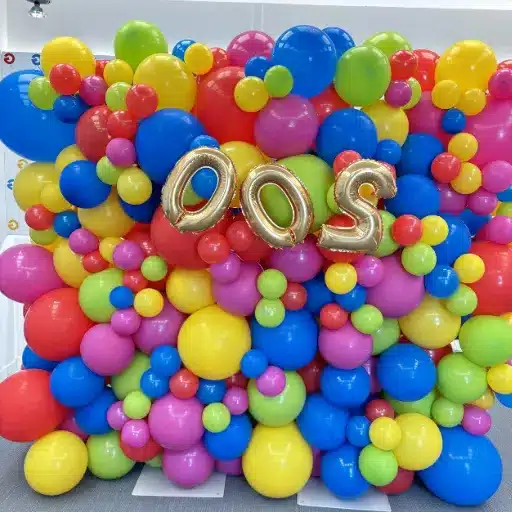
The progress of rubber as a balloon material marked a big step forward in the use and flexibility of the balloons. Thomas Hancock, who is often given credit as the one who jump-started rubber production industry, set up the very first processes for the rubber shaping and molding in the early 19th century. In 1824, Michael Faraday made experiments with rubber sheet during his research on gases, which eventually led to the invention of the first rubber balloons. These balloons were produced from raw vulcanized rubber, which was more elastic and less prone to air leakage compared to the old materials of animal bladders or paper.
Vulcanization was a major advancement in rubber processing, which took place later on as a result of Charles Goodyear’s experiments with sulphur and heat. This method was a breakthrough in the manufacturing of rubber balloons because it made them stronger than ever before. What is more, it allowed for the large-scale production of rubber goods. But besides this, constant developments in the field of rubbers and the availability of advanced synthetic formulas changed the situation radically. In other words, the properties of rubber such as lightness, elasticity, initial stretch are enhanced a lot when compared to those of inflated rubber; moreover, those properties are made further by resistance to wear. Therefore, when compared to the initial rubber balloons, the modern ones are a lot like Superballoons. RTAL is the main idea behind Geometric Computing -R. M. S.
Who Invented the First Rubber Balloons?
Michael Faraday, the renowned British scientist, is acknowledged as the one who invented the first rubber balloons in 1824. During his experiments with airs, Faraday came to the point of producing these prototypes to gather and observe gases effectively. He achieved the production of balloons by joining two sheets of adhesive rubber and pressing the edges, thus gaining a gas-tight container that could be stretched and gas put in it and being prevented from moving outside. Faraday’s main goal was to support his scientific work, and these fundamental balloons were shown to the public of having such useful features as elasticity and gas-proof property.
Originally designed as a scientific instrument, the idea of using rubber balloons soon became a common practice for commercial and entertainment purposes, after technological innovations in the 19th century made them possible. The fact that the transition from one single laboratory discovery to a well-established commodity underscores the power of rubber as a material and, on the other hand, affirms the scientific discoveries’ ability to fulfill more than the researchers’ expectations.
Effect of Rubber Balloons on Party Culture
The balloons of rubber have retained their place in the culture of celebration as a decoration material and a play item, thus, becoming a living symbol. The intense brightness of the colors, the myriad of the shapes, as well as the possibilities of the designs being based on personal choice, all these factors are the main contributors that together create an atmosphere being very impressive visually and that greatly enlivens the joy and gaiety were seen` in the joy of celebration. The functionality of the balloons, in addition to their being attractive, is immense, from marking the positioning of an event or to creating a whole range of symbols and shapes to be used in a themed occasion with the use of balloons a for very clever and artful manner of symbolism besides being the most striking and the most outstanding in the whole of these practical functions.
Nowadays, rubber balloons have become so versatile that their use in modern parties and celebrations has radically contributed to the innovation. Among other things, the use of the most recent ways of air inflation and the newest materials has made it possible to put up large balloon creations that are used as main attractions or background design at various types of parties, from weddings to business events. Another aspect of the balloon’s versatility is the new biodegradable materials that are used in their production, manufacturers follow the path of the more ecologically responsible in the party decorations’ field. The significance of the balloons in terms of culture, is enormous, not only do they create joy but also, as they change with the times, they more and more meet the consumer’s expectations and values of society.
Advancements in Balloon Technology
Introduction to Helium-Filled Balloons
Helium balloons have been a game-changer in the market of balloons, thanks to the idiosyncratic features of helium, a gas that is both light-weight and non-flammable. The helium-filled balloons are totally different from the air-filled balloons because of their ability to rise up and float easily when released, which in turn gives a festival or any other event a more appealing and moving effect. The main reason for this is the helium has significantly lower density than that of the surrounding air and consequently the balloon can float.
Helium balloon use in businesses has been greatly assisted by the improvement of mass production and material science. Today’s latex and Mylar balloons have been created to hinder the loss of helium, thus prolonging their floating period and offering cost savings. Such as, Mylar balloons made of polyester film coated with foil, create an impenetrable barrier to the helium molecule thus they become a favored option for long-term use. Moreover, the development of nozzle design has made it possible to fill helium tanks in such a way that the process is controlled and waste is minimized, leading to enhanced efficiency and performance.
Helium balloons are commonly seen as a major element in worldwide parties, but they are also used in scientific and industrial fields which they bring quite a different significance. These are the two sole characters in helium, which are its disinterestedness and the fact that it barely weighs anything, that very much contribute to the excellent status of helium for weather balloons and scientific research, especially in the field of atmospheric sciences. Nevertheless, helium balloon littering and recycling are the main issues, as the world’s helium stocks are limited and mainly come from natural gas extraction as a byproduct.
The acceptance of helium balloons in the entertainment and science sectors altogether indicates the durability of the materials and the continuous innovation that enhances their utility while taking care of environmental issues.
Shiny Balloons and Why They Are So Famous
Foil balloons also called Mylar balloons are becoming very famous because they combine long-lastingness with brightly colored decorations and a much eminent helium keeping ability when compared to classic latex balloons. The film balloons are made up of the same materials as artificially created ones – usually, the combination of a polyester film and a small layer of aluminum that renders the final product light and very strong. The complete barrier is the reason why the balloons do not collapse and keep the air inside, which makes them perfect for long-lasting events and parties.
Foil balloons have gained immense popularity in marketing and promotional campaigns despite the fact that they are much preferred and loved for their beauty. Their customizable surfaces can be perfectly printed with great detail, logos, and messages, thus giving the most effective branding opportunities with the highest visibility. Data from industry reports indicate that, as a result of reduced prices, the foil balloon market is expected to increase prosperity through more product and technology innovations. Manufacturing and the widespread use of balloons across personal, corporate, and specialty events have been a major #reason for the exponential growth of their demand. It is, however, very important to take environmental issues into account when creating the balloons as they may end up not biodegradable. The development of environmentally friendly alternatives or a revamping of the recycling methods are absolute necessities for its benefits to go hand in hand with ecological responsibility.
Innovations in Hot Air Balloon Design
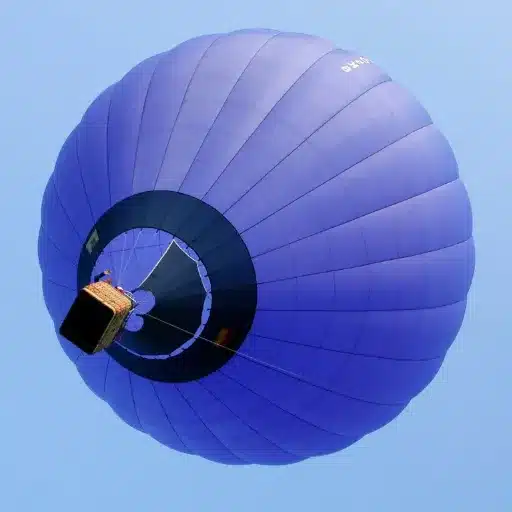
In the latest improvements to hot air balloon designs, the trends have been enhancing safety, efficiency, and environmental sustainability. The traditional materials were tossed away for the newer materials like advanced flame-resistant fabrics and lightweight composites, which led to a decrease in the overall balloon’s weight and an increase in the durability and fire resistance at the same time. Now, the technological trends also extend to the burner with the incorporation in the former of the high-efficiency propane systems that require less fuel, thus having a positive impact on the environment and operational costs. On the other hand, the computer-aided design (CAD) tools come into use with balloon envelope structural optimization that is significantly precise resulting in better aerodynamics and flight stability.
Cutting-edge navigation and monitoring systems have also been welcomed by digital advancements. The integration of GPS technology and the use of altitude sensors make it possible for pilots to have a better control over flights and at the same time, to get the latest information regarding weather and to know their location precisely. Innovations such as hybrid hot air balloons, which combine gas lift and traditional hot air systems, further contribute to increased maneuverability and energy efficiency. These inventions, as a whole, make ballooning both recreational and commercial safer, more dependable, and more environmentally friendly.
The Future of Balloons

Current Trends in Balloon Design and Usage
Contemporary balloon design is the primary driver of the continuous development in the fields of material science and sustainability-focused engineering. The modern balloon is made more and more of such light but strong composite materials that one can hardly believe it is a balloon. Some of the most commonly used materials are advanced nylon and polyester laminates, which effectively blocking gas from going through and having a better tensile strength. This change is not only improving the balloon’s performance and it’s lifetime but also gas losses become minimal and thus operational costs are decreased.
Smart technologies are among the other trends featured in balloons technology. Air balloon systems now have digital monitoring tools such as GPS-enabled tracking devices and integrated telemetry sensors that enable pilots to monitor altitude, speed, and environment parameters in the actual time. This feature thus increases the flight security and the accuracy during the flight path, particularly in long-haul flights as well as in severe weather situations.
Many balloon manufacturers today are in the middle of the transition to the use of bio-originated materials, and the abandonment of lampblack components both of which would lead to a decrease in their carbon footprints. In addition, hydrogen, which has been a safety taboo for a long time now, is gaining back the confidence for being a lift gas in the places like indoors, due to an advancement in gas handling and containment technologies.
The industry’s commitment to innovation and safety comes together in these new technologies that are transforming hot-air ballooning in a heartbeat. It no longer is only about being in line with the latest technology but also with nature – the environmental issues are no longer separated from technological and business problems; they are now interconnected and a lot of what goes on in the industry is directly intertwined with the environment.
Environmental Considerations and Sustainable Practices
Aircraft’s effect on the ecological system has become a key problem lately as corporations aim to advocate for more eco-friendly principles. The modification of material is the main focus of these changes, companies use very often now eco-friendly and also biodegradable materials for the construction of the envelope of balloons and their components. In order to mention a type of fiber, they must be referred to as natural and synthetic combined because implying that fibers may be partly natural and partly synthetic include those from both sources. These materials are thus chosen to produce very light and long-lasting fabrics for the balloon that make the operation very efficient with time.
Moreover, companies are intensifying their efforts to reduce their emissions by the means of ballooning. The balloon gasoline engines, which have long been using propane or butane, are being integrated with the biofuels or other normally renewable sources of energy, minimizing their total output of greenhouse gases. More and more, the life-cycle analysis of the equipment is being incorporated to the production process right from the start so that the factor of energy consumption and environmental impact are maintained at a minimum level from production to end life.
Furthermore, there is a significant emphasis put by several organizations on being very scrupulous with the earth when it comes to flying. Given this, one of the most effective strategies that operators can do to be more environmental friendly is to do flight planning that takes into consideration the wind and to be very sparing in the use of the fuel that is unnecessary. Such measures, together with the industry’s collaboration with the scientific community and policy makers, give rise to a continuously innovating industry that follows global sustainability standards, while at the same time having as the main considerations the performance and the ecological balance.
Balloon Technology in 10 Years Ahead
I predict that there will be big developments in balloon technology over the next ten years. These developments will be spearheaded by the change of material, improvement of automation, and the broader use of balloons in different areas including industry. The new materials are easy and highly durable to manufacture then, for example, by using graphene composites and advanced polymers will probably bring a significant impact on the balloon industry. Moreover, these materials are not limited to lengthening the life and strengthening the performance of the balloons, but they are also eco-friendly which is in sync with the global sustainability objectives. Apart from that, the coming-up of power-saving systems and the building of energy-efficient balloon designs will make it possible for the balloons to go on longer flights with a minimal impact on the environment, all the solar power can be left alone and by the light of the sun, all the charging will take place.
It is anticipated that the automation and artificial intelligence (AI) will have a significant influence on the future development of balloons. The fusion of automatic guidance and AI-based navigation software will provide a means for creating much better defined routes, continuous data collection, and the ability to quickly adapt the balloons to the altered atmospheric conditions. The use of these new technologies will, in effect, change balloons from their current state of rarity into a steadily used tool in meteorological research, environmental monitoring, and even the building-up of the telecommunication infrastructure. As for the climate change scenario, the impact can be seen as great with the help of high-altitude balloons equipped with advanced sensors, as they might be the ones collecting vital data from far or impossible to reach areas.
In addition, it is likely that technological advancements in both commercial and scientific sectors will bring the utilization of balloons to the next level. Companies that would like to invest in research and development programs to develop stratospheric balloon technology for space travel or near-space missions may be fueled by market potential, thus making their money worth it. High-altitude platforms can still be leveraged for internet access to remote areas, thereby supporting the existing satellite networks, and at the same time immensely trimming the operating costs. On the whole, the next ten years hold great promise for the balloons both in the technological and social realms, thus making them an all-purpose, eco-friendly and economically feasible facility in multiple areas.
Reference Sources
-
History of the Use of Balloons in Scientific Experiments – Discusses the early use of balloons in scientific endeavors, including manned flights.
The Invention of the Balloon and the Birth of Modern Chemistry – Explores the connection between balloon invention and advancements in chemistry.
A Short History of Balloons and Flying Machines – Provides a detailed timeline of balloon development and their role in early aviation.
Frequently Asked Questions (FAQs)
When did balloons come into being — The Balloon Historie?
Balloons have been around for a very long time, with the first ones being made of animal bladders and later on from natural rubber that was taken from the rubber tree. Michael Faraday was the one who made the very first rubber balloons in the year 1824, and his purpose for doing so was to use the balloon for experiments, for measuring the weight of the air, and the like. In fact, the first of these balloons that were made by Professor Michael Faraday was done so with a bottle of rubber solution. With vulcanized rubber which has been developed by Thomas Hancock and the cooperation of other rubber manufacturers, and a rubber solution, and a condensing process that made the balloons more durable. Besides, by the late 1800s and the early 1900s, the first toy balloons and party balloon styles became very popular and balloon decorations also reached the height of their popularity. Today’s balloons come in many shapes, sizes, and colors, including modern latex balloon options and foil (mylar) balloons for different events.
Who was the first to bring about balloons — the person and the group of inventors?
People once used animal bladders as simple inflatables going back to pre-history but it was not until the invention of the modern rubber balloon by Michael Faraday in 1824 that the use of balloons in this way really took hold. Faraday, the pioneering scientist, used the balloon in his very famous experiments. Later, rubber manufacturer Thomas Hancock and other rubber companies took over the process of making vulcanized rubber that allowed the mass production of toy balloons and modern party balloon varieties. Faraday sold his rubber solution in a small bottle and gave directions as to how to cure it by condensing the fumes. Silence and time did the rest. Faraday’s efforts really made it what it is today. The Balloon Council and the National Association of Balloon Artists both agree that what we have today goes back to the early balloons and balloon twisting. A number of sources credit the first inflatable experiments to the forge which partially caused the creation of hot air balloon flights in the other branch of balloon history.
When did hot air balloon flights start — both hot air balloon flights and balloon history?
Balloon history is a fascinating phenomenon in which hot air balloon flights are a distinct part that emerged with the Montgolfier brothers in the 18th century while still being separate from the rubber balloon inventions of the 19th century. At their beginnings, hot air balloon flights were performed with hot air, not with hydrogen or helium, and they were based on hot air and air pressure differences to overcome gravity and carry passengers. Despite that, these flights were the ones that eventually led to the systematic use of balloons as weather balloons, scientific measurement, and ballooning as a leisure activity, with hydrogen and helium being used in case of gas balloons in some experiments and flights. The growth of the technology of the passenger-balloon flight is a process that goes hand in hand with the evolution of toy and party balloons, and the world’s first manned flights were also the first steps to the public acceptance of aviation. Hot air balloon flights are still a major activity in air sports and recreational ballooning has its own place among the other balloon uses.
What are the contemporary balloon materials that are in use for the construction of balloons today?
The balloons we have today are produced using such materials as natural latex, synthetic latex, and foil (mylar) which are all utilised depending on the purpose of the balloons; natural latex comes from the sap of the rubber tree while the foil balloons use metalized plastic. The typical examples of modern party and modern latex balloons are the ones made from latex that can be vulcanized and colored. On the other hand, foil balloons are commonly and more frequent in longer-lasting exhibitions and as decorative balloons. Balloons are manufactured and inflated with helium or air depending on the purpose; the ones filled with helium are mostly with floating decorations and helium balloon sign boards. Rubber manufacturers, the balloon industry association, and the council for balloons all observe these, the latter providing guidance on safe balloon play including water balloons and balloon twisting art. The progress in the case of balloons has given us materials with less permeability and longer durable life which is in contrast with the traditional bottle of rubber solution methods.
How were the first balloons made — the first balloons and the methods of making balloons?
The first balloons were made with simple materials such as the bladders and the intestines of animals, closed off and inflated, which were very easy to make and a center-piece of the toy tradition in numerous cultures. Rubber the first balloons were made by dipping a mold into a rubber solution—Faraday made the first rubber balloon famously out of a bottle of rubber solution and a condensation process for his lab demonstrations. The balloon was being produced by following a more complex procedure which later rubber companies and inventors like Thomas Hancock who took advantage of vulcanized rubber also by the two sheets of rubber or molding techniques for the sake of producing consistent toy balloons. During the step of commercial distribution of balloons, the balloon industry decided to regularize its sizes and shapes thus to be used as both party balloons and twisting balloons. The decorated balloons, party balloon designs (and the national association of balloon artists) that emerged from those humble beginnings have made a significant contribution to the creative and commercial use of balloons.
What are the uses of the different types of balloons—foil, helium, and weather among others?
The uses of balloons vary in the magnitude since there are many types like the present latex balloons, foil (mylar) balloons, hydrogen and helium gas balloons, weather balloons for scientific measurements, and some specialty items such as water balloon and pencil balloon toys. The reason helium balloons float is that helium has a less dense nature than that of air; the investigation of lift early on was based on experiments that measured the weight of air and then compared the two gases of hydrogen and helium. The weather balloons are the ones that are big, carry a lot of equipment, and usually the foil ones are designed as long-lasting decorations and promotional purposes. Safety and environmental issues are also part of the balloon technology, and therefore the industry group practices the use of balloons in a way that is responsible. The balloon industry in the present day combines the use of the same old ways—like the manufacturing of the world’s first inflatables—and the advancement in technology to meet different needs.