

Wiùthout the appropriate equipment or details, adhering to the accurate method of deflating Mylar balloons is a daunting task. Whether one is seeking to save them for a far off future occasion or prefering to dispose them off without causing sppile, there is a particular way that they can be deflated. Such a system is designed in order to reduce the amount of rubbish as well as trashing their design. This article provides you with a step by step approach to deflating Mylar balloons properly and without any challenge and assures one that after removal from the balloon, the same can also be used for another occurrence or can be disposed of properly and effectively. When the tips given in this resource are strictly adhered to, you will not only reduce costs by deflating the balloons and keeping them for future use, but also help in preserving the environment effectively. Keep reading to know the most appropriate methods and useful tricks on Mylar balloons handling.
Understanding Mylar Balloons
What are Mylar Balloons?
When looking at their origination and the mechanism of mylar balloon making, this new product was established by Foil Products in 1976. It consists of composite membrane, which is two cut layers with the interior filled with a liquid or gas. Multiply insulating films of aluminium makes the insulation heat-resistant. Heat-resistant materials, used in spacecraft materials, make insulation spongy. Space between the composite is filled with vacuum and subjected to mechanical fastening. The upshot of all this technological complexity was a new synthetic product known as a mylar balloon. Later it was discovered that mylar balloons would make a trend in the world which meant the commencement of the yearly or monthly production of mylar for this outerwear. This is the word that meant it so hard that balloons began to be made out of balloons. Shiny as a myocardial sheet and curved almost in free form on the object, like a droplet or umbonia and just completely unique.
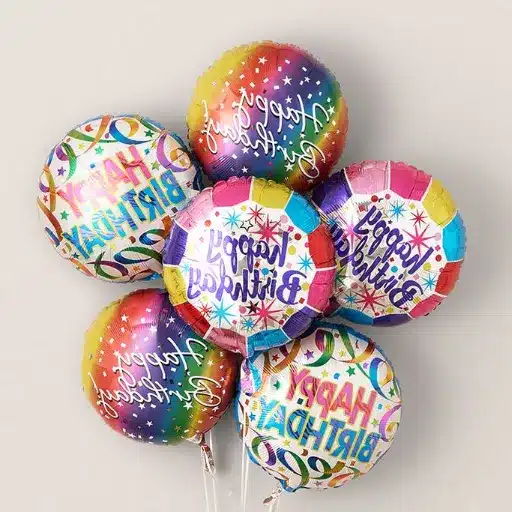
Mylar balloons are made up of a thin, flexible, typically stretched polyethylene terephthalate and shimmering/ colored metal film. This makes makes them very strong, especially in comparison to the traditional latex rubber balloons. In addition, the material is made resistant to helium which after inflation may retain air in the retention structure for a long time even up to days and weeks without any appreciable decrease. These can be of any standard size, shape, and design suitable for joyous occasions, trade fairs, and advertisements etc. However, because of their composition, they are not good for the environment and hence their disposal o further reuse is important. Knowing the type of materials and the usage of each Mylar balloons is crucial when wanting to work with them safely and in a sustainable manner.
Benefits of Using Mylar Balloons
Mylar balloons is a helpful object when considering it in accordance with practical as well as aesthetic respects as it offers several advantages based on both these needs. First and foremost, due to a tighter structure, Mylar balloons are more puncture resistant and less prone to bursting as compared to those made of latex Mylar. This means that they are much preferred when it comes to events or displays that last for a long period of time. In addition, these balloons have a reflective nature which adds to its aesthetic appeal and complements the bright colors it features as well as patterns that are imprinted on them especially when they are being used as promotional items or consumers’ drawings.
They’re excellent at keeping helium for a long time which means that in some instances, days or weeks may pass without the need of frequent inflating. In addition, they conform to strict industry regulations guaranteeing uniformity in performance and built. To begin with, they have a smooth exterior that is more than capable of printing high resolution graphics, company logos or artistic designs enabling a more effective marketing campaign. Even though the nature of the so-called balloon is being put into question, there is a silver lining in the form of the multiple uses of balloons. A good example would be the eco-friendly use of Mylar balloons by recycling them, or re-using them appropriately.
Common Uses for Mylar Balloons
Mylar balloons, being robust, nice looking and adaptable, can be explained in brief as having a wide range of applications. One of the most conspicuous uses of these balloons is in festivities and occasions where they are used in decor purposes for instance in the case of celebration of birthdays, weddings, graduations and events organized around the corporate world. Their quality of holding helium helps a great deal to make this kind of decorations which usually float and these make the occasion a joyous one.
Furthermore, Mylar balloons’ popularity is due to the increase in use of inflatable items in promotion and advertising. Companies tend to make these balloons for promotional purposes based on their logos, descriptions, or other elements of branding. This is especially typical of trade fairs, exhibitions, new product introductions and public events and the presence of balloons enhances their appeal still further.
Healthcare and emergency settings are two of the most critical practical implementations. Mylar balloons are an apt choice for this purpose as they are long lasting because they are airproof and light in weight. The balloons are thus used in appropriate conditions, including those which require them to be sealed or packed in cases of medical equipment. Moreover, they are equally suited for use in other settings like protection from heat or as reflectors in both technical and commercial operations.
Also, a number of those who have activities that involved crafts and fine arts within hobby and industry sectors will have employed Mylar balloons for their work, employing them mainly in construction for easy bending of the film, in preparation of patterns, or in any other appropriate way. Their pervasive attributes and the ease of environmental reclamation through zero to high value applications that are outside the general purpose are hence a synthesis of their general utility.
Why You Should Deflate Mylar Balloons
The Importance of Proper Disposal
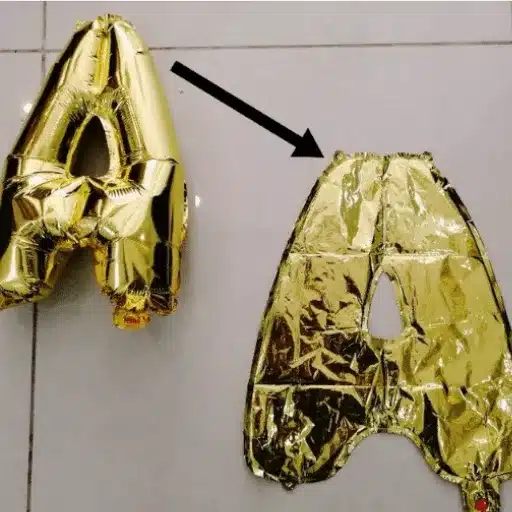
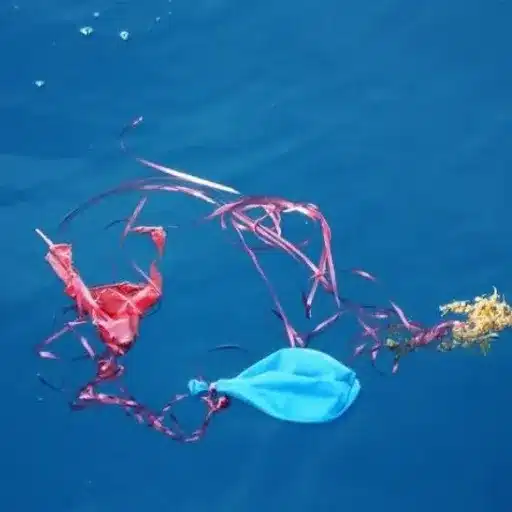
Improper disposal assistance of Mylar balloons presents and remains as a big-self-closure environmental issue making their constituents and quality as the primary contributors in matters regarding that risk levels. Mylar does not compose like most of the packaging films and some, in that it is a polyester film or web that has metal deposition on it and thus does not decompose easily. These balloons do not degrade and can be present in sewer rubbish for several years reinforcing solid rubbish in the environment. Further, they are cleared nicely and continue to circulate within the environment, mostly ending up in water bodies such as lakes where marine life may perceive them as prey producing ingestion that kills or injures marine wildlife. Stray Mylar balloons can meanwhile touch electricity lines shorting lines, and even causing fires, for they are not grounded. Such threats however may not happen if Mylar is removed correctly and awfully; that is, through appropriate dissipation and deposit management involving not the organic but pet films as in case of recycling ideas. It stresses the need for the public to take a radical and proactive stand in dealing with this pollution and that action be taken to ensure that these items do the least harm to the environment such as by appropriately campaigning at the after use of the product.
Benefits of Reusing Mylar Balloons
Mylar balloons are not simply a waste of resource but a material which has the potential for verifiable prolonged use and numerous repeat uses as it fortified’ and to a large extent made of a material resistant to wear and tear among others. The reuse of said balloons in future occasions of fun and even innovative undertakings curtail the requirement for new balloon creation since the sources, particularly the energy as well as raw services required in the making of new balloons, are used sparingly. These ardently desired Mylar balloons for example can be converted into party decorations, used as gift wrappers, tinker accessories for school work or even as emergency shelters as they are just very reflective. They are reuses of those products involved in encouraging sustainability oriented activities because they promote reuse and minimize waste of one use products. Introducing guidelines regarding the use of things, rather than immediately disposing of them, encourages responsibility of materials and promotes a waste prevention approach which is not aimed at the containment of expanding waste levels.
Environmental Impact of Mylar Balloons
Known to the public as silver foil and metallic balloons, mylar balloons are a form of plastic which does not break down into organic waste. Littering even if with them, then one may no longer have to search any reasons they are damaging efficient stock of recyclable composing material and contributes to the pile of waste which never degrades but reaches the maximum capacity. In addition, deflated helium-filled balloons can fly away as far as they can travelling such wide distances in the compound that they end up in the open sea. However, when it comes to their removal, disposal in water and pollution, Mylar balloons provide very different conclusions having good contents. This is because it’s very difficult to recycle all the recovered balloons – the final process uptake of the balloons since they require a special napkin or a rubber surface to prevent them from sticking together just like a fresh coat of glossy paint does. Another important aspect in managing mylar balloons is that they need to be inflated causing them to contain a lot of helium and therefore need to be handled carefully because once one is exposed, elastic pressure forces cause rapid combustion of the material which can lead to uncontrolled fire. Estimating the cost of these problems requires transferring some of the high costs of environmental pollution to the companies producing these products so that the people understand what is to be done.
How to Deflate a Foil Balloon Safely
Tools You Will Need
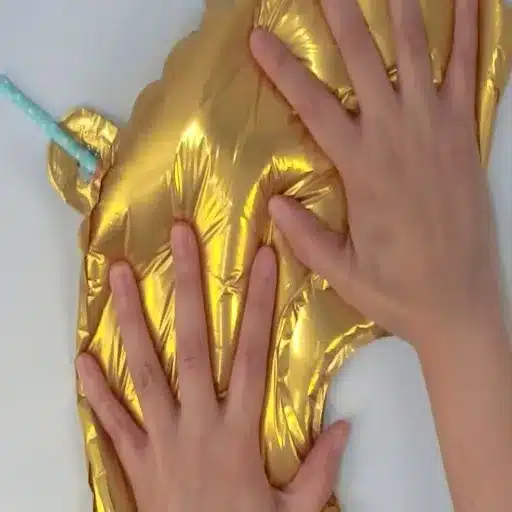
Prepare a Spic and Span Workspace: Find a flat surface to lay a balloon on to minimize the chances of its getting punctured during the assembly. Choose a work area cleared from litter and sharp objects, so as to keep the balloon undamaged.
Search for the Inflation Seal or Valve:As a common rule, the valve comes in form of a self-auditing valve at the bottom of the foil balloon. This is the location the air or helium is introduced into and it is easy to use in releasing the unwanted media.
Snatch a Straw Or a Proper Device: Use an appropriate smooth item which does not have sharp points like a stiff pipe or a deflator stick to insert into the hole. Push the deflator into the hole easily without stretching or cutting the surrounding areas.
Let the Air or the Helium Out Slowly: Push the expulsion stick or whatever you utilized in the previous steps inside the valve positioning it before releasing the balloon gently causing the air or helium to come out of the balloon. Proceed slowly so that the instructions do not harm or break with excessive pressure caused by the balloon.
After disposal of all air or helium, fold the balloon at the creases and store it in a cool dry place where it will not be exposed to light and moisture for improving its effectiveness over the next use der.’use.
This kind of operation provides a significant reduction in the amount of waste generated and also guarantees effective re-use of the balloon or its that other green disposal is compliant with local recycling requirements.
Step-by-Step Guide to Deflating Mylar Balloons
To the most efficient way possible, it is recommended to take certain deflation, to avoid any possible damage arising from eco standards while deflating Mylar balloons. The following are some of the things to consider while deflating :
Inspecting for any Tears or Weakness: Prior to initiating the releasing of air from the balloon it is advisable to first have a close look at the balloon to see if it has any portholes, any tears or any form of wear. Any such wear is in a way, a breach of the controlled release of the contained air or helium that may lead to an unexpected bursting.
Wolfow: Use a straw or a valve tool which is specifically sold for deflation of Mylar balloons. A good design would allow gas inside to be expelled evenly and softly without ruining the skin.
Controlled Release of Gas; Insert the tool into the hole prepared for inflation, tilting it partly also opening the thing. Let the gas out in a controlled manner to avoid damaging the surface by ensuring even pressure remains applied. While handling guises, constant pressure should not be exerted but rather intuitive such as using a helium balloon regulator valve for better control.
Expound on Potential Gas Containment Risks: It is advisable to exhaust or disperse any accumulated helium in an outdoor and unobstructed area rather than attempting to release oxygen displacement gases into the atmosphere which can be detrimental to the health of individuals. Incidentally, this practice is also necessary as it facilitates the adherence to health and safety codes; especially those related to the aspect of ventilation design.
Safe Handling Measures: If skin contact occurs, use protective gloves or other protective clothing to keep the hands safe from possible damage due to the weakening of the Mylar coating effects by the oil in the hands. An inability to take this safety measure shortens the lifespan of the balloon considerably, particularly when the balloon is to be used in the future.
Obeying all the instructions written above, it is possible to deflate and put away Mylar balloons in a small space so that they do not cause harm because they can be used more than once and do not add to the amount of trash in the environment.
Common Mistakes to Avoid When Deflating
‘How to Let the Air Out from a Foil Balloon’ – One of the top answer is making a hole in the material (Mylar) so as to allow the air to escape without any hurry. This way the balloon gets destroyed as it cannot be reused, and also such a hole is lined up with so much sharp waste materials which makes it impossible to dispose since it cannot be disposed of in a normal waste center.
Squooshing it Too Much: Improper pressure application during air removal may damage the Mylar film and its resistance can lead to fractures and permanent distortion arising. This may be highly detrimental as re-use will result in severe reduction in the structural regularity of the balloon.
Neglecting to Find the Appropriate Equipment: Trying to take the air out of a balloon and not finding the correct accessories such as a helper, a straw or a deflation device is another reason why people fail to manage the deflation procedure comfortably without causing any damage to the valve they are using. This Practice leads to instances of damage of the self-sealing valve, which in turn disallows effective reinflation.
Inappropriate practice after deflation: A common mistake is folding a low-pressure balloon without ensuring it is completely flattened and dry; any such actions could make creases, bleaching or eventual damaging of the thin layer of polyester film. Such practices are necessary to sustain operational capability with the passage of time.
Improper use in wet or high heat conditions: Inflation and subsequent deflation says, under conditions of high humidity or extreme temperatures, can harm Mylar/mylar material or potential adhesive bonds. For this case, carry out the deflation in a controlled environment to avoid weakening or tearing the film.
The Bulky Words remind again; without accurate categorization and planning; no amount of attention or effort can completely eliminate these pitfalls. This helps to deflate, store and reuse the Mylar balloons efficiently, which is cost-effective and environmentally friendly.
Creative Hacks for Reusing Mylar Balloons
Craft Ideas Using Deflated Mylar Balloons
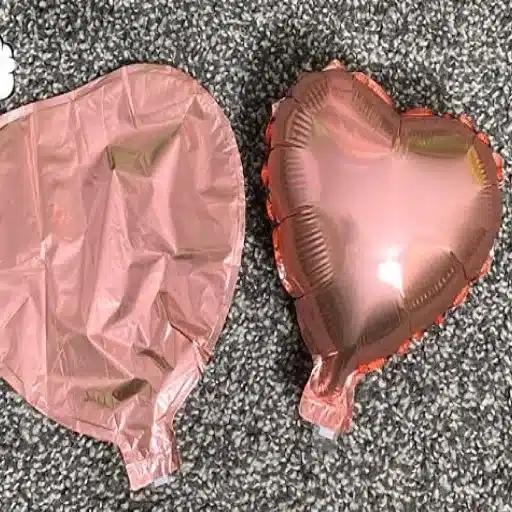
Recycle Balloons:Balloons made of Mylar that are not inflated can be reused to make unusual and extravagant gift wrapping. These materials are as strong as plastic and are resistant to moisture, so they can serve as stronger safer environment-friendly substitutes for poor utility traditional wrap. When the balloon is cut on perimeters, a flat woven sheet appears. Then it could be used in order to wrap gifts. The glossy and lustrous finish creates an embellished look that is not only attractive but also non-polluting.
Reuse Old Mylar Balloons: Mylar balloons are such beautiful decoration for party balloons but who says the proof ends there. These balloons can be tacked to decorated reusable canvas totes as decorations. Brown paper wrap can be the canvas onto which these balloons can be recycled as decorations. Clipped out designs, pictures or letters can be pasted over well heat transfers blank bags with fabric adhesive or using heat press. This bag and eco-leather material attached to it gives room for enhancement.
DIY Party Banners: Mylar balloons can easily be cut into small triangular, or rectangular pieces that can be put together as a festive party banner. Punch a hole on each piece and pass it with a ribbon or tape. They are an easy to create banners, pleasing to the eyes and are also able to throw back the light of the surroundings, thus enhancing any celebration.
Reflective Outdoor Displays: The matte belly with the strands disc version of Mylar balloons could also be used as reflective displays for the garden or the balcony. These crafted decors are not only for looking good but also serve a certain function, for instance scaring or ornamental doves by reflecting the light.
Scrapbooking and Card Making: The bright shades and reflective quality in Mylar balloons make them an excellent crafting accessory for decorating frames. Cut the figures like hearts or stars of the desired size, and add them to the work to give it a more finishing and professional touch.
These fresh suggestions are already in use, and they bank on Mylar’s particular properties to deflate the balloon all the while extending it’s further reusable life thus amounting to lesser pollution and more imaginative reuse.
Using Mylar Balloons for Party Decorations
Because of how strong their plastic is, helium filled foil balloons are considered to stand out among any party decors for their proficient characteristics, obviously rich hues and even the capacity to maintain somewhat of a shine to them. These can blend perfectly with other decorative elements such as ribbons, flowers or even lamps to create eye-catching arrangements as concentrating more on them will be as fun as making the same. On the other hand, Mylar balloons can be manufactured as per the requirement and specific to the event by means of insert printed ideas; such as designs or phrases of the hosts.
In particular, in terms of latex balloons, Mylar balloons can withstand helium gas or air for a longer period which actually means that the decorations will be sustained without disruption the entire time of the event. They can still fit in balloon arches, columns, or any other potential photo backdrop design ideas maintaining the fun and aesthetic appeal of the event. Particularly, as there are larger balloons that are kept in place, this way of guiding the guests to different parts or functions of the event works well, including guiding the guests close to different sections or arrangements like the entrance and seating and low lying balloons can be used on the tables as numbers or as favors.
Incorporating Mylar balloons into party arrangements can really add some professional flair to the party. In addition to attractiveness, this material will resist any weather and you could use it for different occasions, say, within various seasons.
Innovative Ways to Preserve Mylar Balloons
Ensuring that Mylar balloons last a long time requires that they be repaired in a way that maintains their beauty and retains their shape. Utilizing a proprietary balloon machine attachment, such as a hand balloon inflator along with a deflator tip, is a good way to deflate the balloons without changing their shape significantly in the balloon inflating and deflating process. In addition, keeping deflated Mylar balloons in backpacks or boxes inside a dry and cool environment, and out of the sun and sharp objects will also prevent heat damage and retaining punctures, which compromise the quality of stored balloons.
To make the preservation more durable, some people have plans to laminate flat Mylar balloons or use them in art making by making different craft products like scrapbook embellishments, custom gift wrap or decorative frames. Another new method to consider is the inclusion of helium-sealed Mylar balloons within projects that require resin or incorporating them as filled linings in other decorative items. This helps to ensure that the material lasts as long as possible and it also ensures that the material will be used until it cannot be used anymore. As a result, one can slowly see the utility of a Mylar balloon preserved – as the usage and aesthetics are preserved.
Disposing of Mylar Balloons Responsibly
Recycling Options for Mylar Balloons
As far as the environment is concerned, investing in glass products might not be the best solution, but they take an interesting contemporary recycling twist, which is promising for containing the amount of waste. For myself, I will first look into the local recycling centers to understand the procedure of Mylar, metallic plastics, or any other similar cover stock.
Some other city dumps are equipped to receive the said collectibles, but the ordinary municipal refuse collection program usually does not. In addition to these, more questions could be answered, calling up the local waste departments or checking the useful links invariably available at their website regarding such things as Mylar balloons from the ease of your desk or any other place.
I have tried another way in extracting the waste because it works well. I have sought some commercial companies to recycle items that can be made of waste Mylar in Pedrienge. For example, it is possible to recycle Mylar by some companies as well as mailing services. Packaging companies or post offices, etc., under some circumstances, on the other hand, may take after items made of ready Mylar for secondary or other purposes. In other cases, it is more economical as well as environmental friendly to keep deflated Mylar balloons for a longer duration and then used either for decoration or give away- your ideas of gift wrapping or celebration management waste will appreciate such an approach.
If reuse or recycling is impossible, proper disposal of the waste to prevent litter and harm to the environment is of paramount importance. Many balloon manufacturers provide instructions on how to dispose of balloons, using the approach of deflating them and then cutting them into small pieces to be put in general waste. In this way, provided I do these actions concurrently with improvements in recycling, I assure am able to properly manage and handle Mylar waste generated from Balloons.
Local Regulations for Balloon Disposal
In order to be in compliance with local environmental laws, I have just completed studying the new laws concerning Mylar and latex balloon’s disposals. Majority of the cities do not really condone the practice of balloon releases in the environment on purpose, since such actions are usually rated with higher chances of contributing to littering which in turn, is harmful to both man and wildlife. This can be made clear taking an example of some several states of the U. S. e.g. California and New York where there are specific laws stipulating no mass releases of balloons, fines are given to those who fail to comply with this rule along with enforcing the law. To avoid any confusion on grounds, all prohibitive rules within my vicinity must be looked into first. Local government websites or waste management facilities are the most useful resources for this information.
Moreover, the way in which unwanted balloons are disposed of can often change depending on what these balloons are made of. This is due to the fact balloon inflatables that are made up of metallized polyester films which a lot of us refer to as broad seem to be the predisposing factor to this issue. Because these balloons are made with such materials, they are not biodegradable and must consequently be thrown away with regular household waste. However, other balloons, such as those made of natural latex, made by biodegradable materials, do not easily decompose in the natural environment and should not be added to compost or dropped in the open air as well. Some regions or cities are willing to accept and recycle some of the products if they have Mylar balloons and I aim to discover whether my area has any such programmes.
As long as I religiously follow these rules and unjustly receive crucial updates regarding my location from the environmental bodies then the chances of coming up with a well-enchanted method of dicarding the baloons which will prevent any harm to the environment and correspond to the rules provided will be very high. Engaging in responsible disposal not only reflects a commitment to my community but also helps to reduce the broader ecological impact of balloon waste.
Alternatives to Mylar Balloons for Eco-Friendly Celebrations
One of the ways in which I managed to put together an environmentally fun celebration was by finding several ecofriendly alternatives to Mylar helium balloons. These alternates, such as for example synthetic fabric banners, bunting, paper garlands, are extremely versatile in their use as they can be made from already worn materials or after use, they can also be repurposed for future gaiety, which eventually minimizes garbage. Where even simple tinted ribbons and flags can be sewn in the colour of the party and are kept post the fête for future fetes, hospitality at its best.
Also an Aspire way that serves both the event and the environment is the interiors that composite of unconventional materials but look so good. One can always put fresh flowers, leaves, cut flowers or small plants in pots that give that impression of elegance in any event. Where, they can also be great samples of presents especially the pot flowers the ones that travel well and are relatively small. Further wood or bamboo placed in the middle of the table in the form of tables might prove the work of art, enhancing the appearance, and is environmentally friendly.
And I have looked into those biodegradable balloons that are made out of natural latex. These are still not great, because they do take a really long time to decompose. Nonetheless, for me, it is a bit better than using Mylar or standard latex balloons. Meanwhile, I don’t forget that, for appropriate utilization of even decomposable products, proper recycling is needed in order to decrease the whole environmental load. Thanks to such a responsible choice of decoration, I dress up in the spirit of the party and at the same time I do not forget about the pledge to avoid possible environmental destruction.
Reference Sources
- Safer Disposal of Balloons | University of Michigan – Offers tips on safely deflating and disposing of balloons.
- Cleaning Up Balloon Debris | SUNY Sea Grant – Highlights the importance of deflating balloons to prevent environmental harm.
- From Fun to Fallout: The Environmental Cost of Balloons | Kansas State University – Highlights the environmental impact of balloons and the need for responsible handling, including deflation.
Frequently Asked Questions (FAQs)
How can a person deflate an inflated Mylar-like balloon without a special device?
Put a straw inside the base of the valve and gently shove it inside until you feel the end of the valve. With efforts, start pressing the balloon near the valve area, in order to release air inside through the straw and repeat these motions until most air in the balloon is no more. Continuously make creases in the balloon as it collapses following the emptiness for easy deflation and preservation. Once the deflation is almost complete, take out the straw and make an action center with the foil balloons, this will allow for some space and the need for more purchase. Check the balloon carefully if it has any torn or pierced parts or else it can be worn out while in use again.
How do I remove air from a foil balloon and try and use the balloon afterwards without cutting the valve?
Mylar balloons can be easily deflated and reused. How? This is accomplished by pressing the opening of the mylar balloon while sticking a straw or any suitable skinny object and gradually letting the helium or oxygen out. Make sure that the valve doesn’t get damaged, and that any holes do not interfere with re-inflating the balloon at a later stage as this might take a very long time since one is expected to be very patient with the process. Once most of the gas has been let out, the balloon may be folded at the points where it is designed to be removed and wear is kept to a minimum. Keep the collapsed foil balloons in a nice cool and dry place and name them so that they can be recycled for a different occasion whenever this is possible. Make sure to check for damage to the valve after every inflation and to make insignificant repairs where necessary.
Is it possible to deflate a mylar helium balloon without causing any damage to the foil material?
In the affirmative, the release of helium from a mylar helium balloon may be made easier by inserting a straw into the balloon valve and allowing the helium to come out, this may take a while to happen with the helium but steaming out air. Apply mild pressure to the balloon with – the straw while filling the gas to get rid of it and also try and bend the balloon in a way that helps against trapping of air. Helium is highly curious, so do not do this activity near the perils outdoors, such as a window, any structure, etc., and this is to avoid the balloon from bursting. Again, balloons can store as much air as you can possibly put in them and also help with the cause but not all of them. Plastic – pouches will even help separately make sure to cut out some carbon cards and also put them inside.
How can any slit or tear in a helium foil balloon be eliminated so it can be recycled?
A balloon can sometimes be fixed if the tear is relatively small – a tiny leak can simply be patched up with clear tape or a small piece of repair tissue so as to allow the balloon to be deflated and kept for future use. The first step for covering a hole is to round the edges near the hole and cover the affected part of the balloon. To finish the restoration of these blank areas, smear a repair material over the hole in the fabric. Once the repair is completed, reduce the air in the valve, and very carefully fold the balloon in a manner where the patch will not fight too much. If the hole is significant, use the balloon once for decoration rather than storing it for future use. Look at the repaired area before refilling to see if this area holds up during inflation and deflation.
How does one learn what to never do when it comes to that thing with the mylar balloons?
Simple everyday tools, such as a drinking straw or a smooth, flat implement, and sent clear tape can be helpful to make minor corrections. Gently squeezing the balloon while brushing up against the valve with the straw is one of the ways air is persuaded to exit the balloon; do not ever use sharp objects to deflate the balloon. There are also a lot of people who prefer viewing visual instructions—type something like that on the internet and there’ll be such videos especially on youtube. Clean the balloon properly before deflating it. This will help neatly fold the balloon after deflation and store it in a negative heading bag or container to be used during some other celebrations. Also, using non reusable balloons can be good practice for the experience on the shrinking and storing procedure.
Can foil balloons be shrunk and rejuvenated without losing their puff a second time?
Indeed, foil balloons can be saved for reuse so long as not damaged by breaking the valve or cutting a big hole in them, and the balloon is slowly deflated and stored without folding wrinkles. After repeated inflation and venting, one can assume that the pressure and even the material as well as the valve were affected. Therefore a visually inspect the balloon before any inflation should be performed to be doubly sure it still can contain air or helium. All of the air can also be exhausted from the balloon using a straw and applying gentle pressure, and the balloon-positive clothes should not be stored near sharp items or subjected to extreme temperatures even after use. All of this allows for the fact that these balloons are capable of being saved and used yet again at a different party or even birthday celebration, it also makes it easier to spend less money and maintain the environment. There must be a set procedure for retiring any balloon that changes in shape or has continuous leaks so that there are no last minute panic situations during the special celebrations.
How can I reinflate stored Mylar balloons?
Upon deflation, it is safe and recommended to carry out a valve and service area assessment to inspect the existing tears or failing dampers. Inflating a balloon: while doing this, you should repair the inflation movie to the valve, gentle but facilitating the use of air or helium model overstretching activities for the balloon. Occasionally, stop inflation in order to pat and where needed remove genesis so that the balloon may inflate evenly and does not crack around the lines. If the balloon is going to be used many times, it would be better to inflate it with air first as it is longer lasting compared to helium gas. Inspection of the balloon and especially during inflation when it is rigid or extended use will help keeping them and their parts thinner and use them in the next celebration.