

Inflating balloons can undoubtedly be amusing, but it’s not always the easiest or cleanest way to do it – through merely your mouth. Regardless if you are preparing for a party, science project, or just curious about the different ways that can be done, there are many methods to complete this task using tools that are available in your house. The main purpose of this manual is to give detailed, basic techniques to inflate balloons in a most effortless way possible with tools that you already have in your home. From the science behind baking soda and vinegar reactions to the smart uses of air pumps and hair dryers, we will reveal to you creative ways that are not only practical to use but also safe and fun. Be ready to see the replacements that will not only conserve energy but also contribute to creativity in your balloon inflation process!
Introduction to Inflating Balloons Without Your Mouth
The Need for Alternative Techniques: a Closer Look
When it comes to inflating balloons, it is a very tedious and sometimes unsatisfactory job to perform it in the usual way, such as using your own breath. Those with pulmonary or other respiratory problems and even people just after an easier way may find that using alternative methods is the only and best option. Moreover, for situations in which a large number of balloons must be blown up, like for parties, holidays, or promotional events, the process of manual inflation may be lengthy and require a lot of effort. But by the use of creative methods and the employment of the necessary means or chemical reactions, the end results can be not only uniform and effective, but also free from physical struggles. Being familiar with these alternatives does not only mean that you are handling the tasks in a more relaxed way, but it also completely merges science and usefulness in simple everyday operations.
A general introduction to different types of balloons
The design of the balloons is based on the nature of the components, their size, and the purpose they are meant for. This provides a wide array of choices for different applications. For the most part, they come in natural rubber which makes them elastic and wholly biodegradable; latex and foil are the two main types of material. Latex balloons are more environmentally friendly as compared to the other type of balloon and are mostly used for decorating since they are easily maneuvered in size and shape and affordable in terms of costs. Likewise, Foil balloons made up of plastic and metal foil sheets are with high tensile strength, much retained helium for a longer time, and visually attractive printed designs are the kind of balloons that would be perfect for a certain theme or branding effort.
Outdoor events or displays can make use of cloudbuster balloons which are often times latex but outdoor and very resistant to weather conditions. Bubble balloons, usually made of stretchy, transparent plastic, are giving a rather exclusive look and with each day gaining a lot in popularity, especially for custom designs and as novelty items. Moreover, after the great wave of environmental concerns, biodegradable balloons came to be referred to as a very ecological option. These balloons do not only serve the function for which they are used but also have a lower ecological impact with their disposal. Knowledge of the properties and purposes of these different types of balloons is necessary for their proper selection in any location, merging the practical with the aesthetic aspect.
Ways to Make Balloons Inflation Safer
Keeping safety guidelines in mind is a must when it comes to blowing up balloons to prevent any possible accidents or injuries. A very probable threat is over-inflation which may cause the balloon to pop and thus create damage or injury through loud noise or the pieces of the balloon flying away. Regarding latex balloons, it is a must to not only stay within the limits of the manufacturer’s recommendations but also to attain the required inflation size in order to guarantee the structural integrity. Also, the user of the correct inflation method (e.g. hand pumps, electrical inflators, etc) is highly recommended and especially when the mouth inflation might involve some risks like dizziness or accidental swallowing of dangerous particles.
If helium is being worked with then it is absolutely necessary to have it adequately ventilated during storage and usage so that there is no oxygen displacement and people are not at all suffocated by breathing in too much helium. Also, it is very important to keep helium tanks securely so that they will not tip over and to treat them with the greatest care to prevent valve damage. For beads and few balloons gas, it might be wise to wear a gas mask and a protective mask just to be fully protected when inflating the balloons.
In the same way, nurturing of balloons by kids needs to be directly supervised while being pampered. Very small pieces of balloon may get stuck in a kid’s throat and that is why the task of blowing up the balloon should be in the hands of the adults until they are old enough to handle the process by themselves and remember that any material or food that is supposed to be on the ground should be kept away from them. These measures will not only make the whole balloon process much safer but also more efficient.
Using Household Tools to Inflate Balloons
Using a Balloon Hand Pump Properly
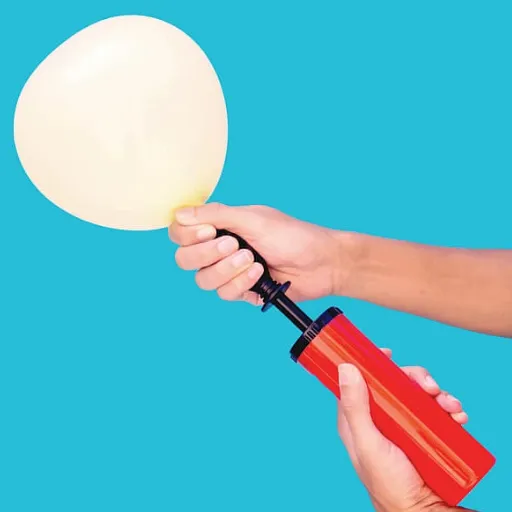
Anyway, utilizing a hand pump to blow up balloons is a real and safer way different than manual inflation. You should start by picking a hand pump which is sample for balloons, given the fact that these hand pumps usually have a nozzle that fits for the stretchable balloon openings. In the beginning, you need to fasten the balloon to the nozzle first, and remember to do it accurately, as the balloon should have the least air leakage through the process of inflation. One hand for the pump, and the other for the balloon are the best possible ways to go.
After that, your job is basically to keep the pump going by getting a steady, rhythmic movement first by pushing the handle and then pulling it in. Every stroke will put the air into the balloon and will make it expand very evenly. Also, be very careful not to go over the limit of inflation, as high pressure of air may ruin the structure of the balloon and cause breaking. The balloon must be observed for its size during the inflation process-you should stop pumping as soon as you see the adequate dimensions of the balloon.
The balloon is now being gradually inflated, allow it to escape from the nozzle when the neck is held tightly to prevent beads of air escaping. The balloon can now be safely tied off. This procedure makes it efficient to inflate with the least possible dangers of working too hard, air loss, and the cause of injury. Using a hand pump is a good technique, particularly when many balloons are to be blown, or activities are to be performed in places where electric appliances are not available.
DIY Balloon Pump: How to Make Your Own Inflation Tool
The production of a do-it-yourself (DIY) balloon pump is an easy task when using common materials and acknowledging the principles of air pressure. If you choose to produce a simple yet functional design, present materials are required: a plastic bottle, a balloon, a piece of flexible hose, and tape or adhesive. At first, you have to make a small hole on the cap of the plastic bottle, as you like- either by drilling or by cutting. Introduce the flexible tubing through the hole in such a way that it fits like a tight seal in order to prevent any air leakage. The next step is to fasten the tube in the best possible way with the help of glue and/or adhesive.
No matter what you do the balloon should fit on the other side of the hose in a very secure manner. The plastic bottle will act as the air repository while compressing it will direct the air through the hose to the balloon. It would be much more effective if you chose a hard plastic bottle that won’t lose its shape even after many compressions and decompressions.
This uncomplicated and safe-to-operate device is much like pneumatic forces and can be a good way to inflate balloons without the least hassle of hiring commercial pumps. Not just that, sometimes the use of air power is seen to be the most effective, which is when air inflation is used. Think small events like birthday parties happening in small houses, possibly a balloon, then. Adding a one-way valve to the tubing might increase the performance of the device and the usefulness of the product itself.
The idea of Helium Tank Usage for Rapid Balloon Filling
The very first safety precaution is to handle the helium tank and to guideline accordingly. Tanks are actually meant to provide a continuous flow of gas due to which they are the most proper method of inflation at the super scale or time-pressing situations where balloons are to be inflated quickly. Commence by firmly joining the inflating nozzle or regulator with the valve of the tank and be sure to have a tight fit to prevent the escape of helium. Then, slowly—open the valve to get the helium out of the tank and bring the flow to the desired level using the regulator or the nozzle technique.
For enhancing effects to the highest degree possible, the only valid option for the balloons which are being filled with helium is that they should be helium-quality, as otherwise, the gas might dissipate being left with the balloons slowly floating. Besides, latex helium-filled balloons, that which are the common ones, usually remain floating for 12 to 24 hours or the ones made of plastic (foil) with good quality last up to a few weeks. If it’s a floating duration that is overt and if you care about such a thing then you should go for some chemical treatment prior ballooning so as to forge a membrane that keeps the helium trapped.
Helium storage should be arranged with the tanks standing straight and kept in a safe area away from heat or open fires, as the gas is under high pressure. The tank ought to be observed regularly for any defect or damage prior to use. And at last, it is a must to extract all helium from the tank and discard it or give it back following the rules of the local regulation for gas under pressure containers, when the helium supply runs out. If these specific instructions are carefully followed, the performance and the safety in using helium tank can be optimized.
Creative Experiments for Inflating Balloons
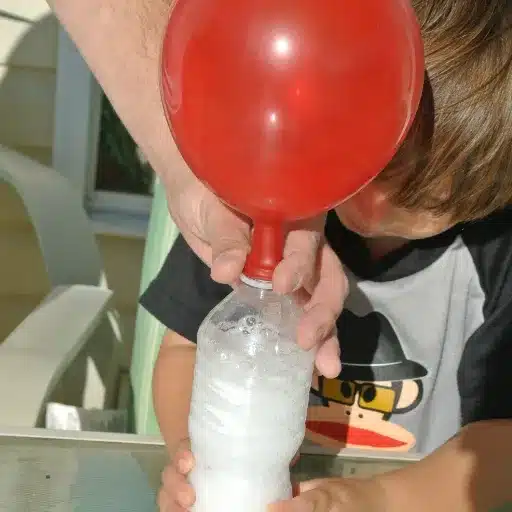
Inflating Balloons with Baking Soda and Vinegar
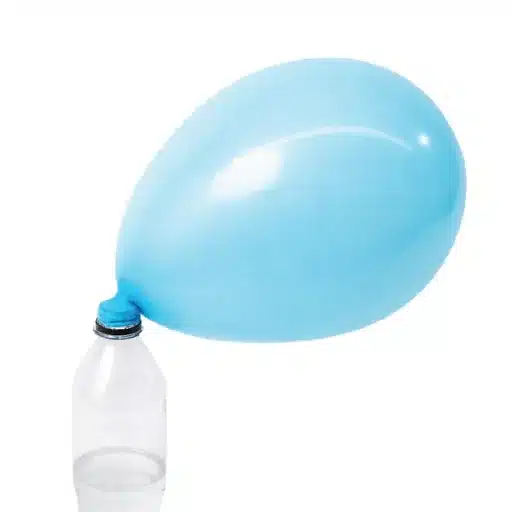
The interaction of vinegar (acetic acid) with baking soda (sodium bicarbonate) is an easy and informative way to fill balloons with gas. This reaction is an example of acid-base chemistry, which leads to the evolution of carbon dioxide. A good way to start the experiment is to pour into a clean and dry bottle about 3-4 tablespoons of vinegar. At the same time, use a funnel so as to prevent any spillage, to put baking soda of 2-3 teaspoons into a deflated balloon.
Once the ingredients are ready, make sure that you seal the balloon’s neck to the bottle’s opening so that there is no air leakage and that the baking soda is still inside the balloon. The small balloon’s height will lift after a while, as the loose ends of the baking soda fall into the vinegar to trigger a chemical reaction. The reaction of acetic acid with sodium bicarbonate results in the production of carbon dioxide, which fills the balloon.
Analyzing this process, and the main thing to remember is that the reaction goes according to: NaHCO₃ + CH₃COOH → CH₃COONa + H₂O + CO₂↑
Also, this is not just a safe but very efficient way to show the main principles of chemistry and gas properties, so is a good selection for educational purposes. Also, make sure there is enough air circulation where the setup is being done, and don’t put in too much gas to avoid the balloon popping because of the pressure.
A Valve System for Easy Inflation
When a valve system is combined with an inflation setup, it increases the functionality tremendously since it allows controlled release and prevents too much pressure. A common technique is to position a one-way or check valve to either the balloon’s neck or the delivery device. Due to this setup, the gas can only move in one direction and there will be no backpressure which would lead to an unstable system. For the purpose of the highest efficiency, the valves that are chemically resistant, for example, the ones commonly made of polyethylene or stainless steel materials are used to cope with the presence of gases and possible byproducts of the reaction. These measures, along with the valve system, the system also requires adjustabe flow regulators to facilitate precise monitoring and control during the inflation which can be customized for different experimental or practical needs. The proper calibration and maintenance procedures for these items are indispensable for the assurance of their and the whole system’s safety and long-term performance.
Exploring the Science Behind Balloon Inflation
The main factor that determines the process of inflating a balloon is the gas behavior through different conditions, which is explained by the properties of gas laws. As the balloon expands, the pressure within decreases, which is a point proved in Boyle’s Law, that is to say, when a balloon is being blown up the pressure inside will rise until the rubber or membrane bursts. On the other hand, Charles’s Law states that temperature is of the most critical importance to the volume of the gas; the influence works in a way that hotter gases take up more space, thus the inflation process is hastened.
Specific gases, such as helium, are frequently chosen in today’s applications, relying on their molecular qualities. For example, helium is non-reactive and lightweight, which makes it a good choice for uses in the air. The diffusion rates of gases have the leading role in this matter; small molecules like helium are likely to esacape fastly through the balloon material if not high-quality barriers are implemented. By understanding these gas behaviors, inflation processes are properly optimized for application scenarios situated from scientific experiments to industrial uses, showing the delicate balance between the principles of materials science and thermodynamics.
Watching and Learning: Helpful Video Resources
The Best YouTube Videos for Balloon Inflation Techniques
During the research on the newest available data, I ran across a few great YouTube videos that show complicated and yet well-done balloon inflation techniques. One of a kind, I would say, is the one made by the Science Channel, which is a full-on physicist’s story on balloon inflation; I mean that they even talked about how temperature, pressure, and gas type mattered in the course of the experiment. The slow-motion shots were used additionally for the visualization of the stretch of the rubber material. Consequently, these videos could be of great help for those who want to feel and see what it is to be like and act as a balloon material inflated.
One more trustworthy source is the video “Special gases and high efficiency compressor inflation” from Applied Science on YouTube. The experts thoroughly explained the methods that they were using, including such aspects as controlled flow rates and the use of state-of-the-art sealing methods to minimize gas loss. This video will be of great help to the specialists working in the aerodynamics sector or the helium operators sector where precision is a must.
On the practical side of things, one may go for the Balloon Planet channel, creators of hands-on balloon inflation tutorials. They reveal the various ways to inflate balloons like through the helium tank, manually, or electrically. to give fewer words possible without the same meaning They have a perfect synergy of efficient and safe practices in one place. These videos have been specially chosen to be a valuable source of knowledge for anyone.
Balloon Inflation Video Tutorials, Beginners-Friendly
When you are a beginner, the process of balloon inflation may be overwhelming, but with the correct tutorial, it becomes a doable task. The video tutorials gave me a thorough knowledge of how to inflate balloons properly and the precautions to take to avoid over-inflation or damages. The illustrations were so clear, starting with the manual inflating ways that put a heavy emphasis on control and correct measurements. The guidance on maintaining the right posture for hand-pumping was the most helpful among the others, as it was not only a barrier for tiredness, but also a much need for air consistency and hence the same balloon sizes could be reached throughout.
Videos were additionally made on electric inflation machines and helium tanks, the first one being a must for the high-volume need and the second for the creation of floating decorations. What I found out to be the most important thing was the amount of safety instructions for the helium tank operation, such as checking for leaks, and oxygen supply regulations. Furthermore, the tutorials highlighted the need to use balloon clips, a device to secure the balloon knot, thus prevent sealing mistakes, which is quite common to the beginners. As a result of adhering to the instructions presented in the video tutorials, I became more assertive and acquire practical skills that are suitable mostly for personal projects or professional event planning.
Top Tips from Balloon Enthusiasts on Video Platforms
According to my studies and personal experience, one significant point that balloon lovers highlighted and put great stress on was the necessity to choose top-grade materials. The majority of the experts advocate the use of strong latex or mylar balloons that are made in a way that they can hardly pop, particularly when it comes to outdoor happenings or exhibitions of long continuance. The proficiency that is brought by the correct choices of both the balloon’s size and its weight is discussed up to the point it is able to take part in the design of the customer’s product range. Larger balloons, for instance, can do the job of the attraction points among other ornaments; whereas, small sizes would be perfect for the complicated arrangements like the one made with the garlands. One of the components of the social media phenomenon that is generated by balloons is the possibility to get into the details of the designs due to the toys’ versatility in size and shape, and the same goes with the colors.
One other important tip I collected from video sites is the worth of employing pro-level apparatus. Obtaining an electric balloon pump is a good decision that does not only accelerate the process but also keeps the inflations more equal in comparison to the hand-pumping method. The sessions so often feature the emphasis on the right handling of the tools to provide the maximum safety for the users and meet the project’s requirements in an effective way. As for helium-filled balloons, the tank usage, storage, and leak detection were the matters that were consistently underlined when the instructions were given. Besides, the introduction of the double-stuffing balloons and its role in making the balloon durable and good looking were some of the techniques that were explained with great effectiveness, emphasizing their use in the advanced decorations.
All in all, the instructions I checked out were in favor of particularly being prepared and being attentive to details. A lot of people working with balloons think that the designs of balloons should be planned beforehand, layouts should be sketched, and materials should be well organized in order to make the process easier. Moreover, they mean to say that the building of fundamental skills like tying tight and not leaking balloons or making a balloon arch should happen prior to trying out more difficult things. Together, all these suggestions do not only mean that you get top-quality results but also it should be a safer and more pleasant situation while you are playing with balloons.
Conclusion: Mastering the Art of Inflating Balloons

Recap of Methods to Inflate a Balloon Without Using Your Mouth
Advance knowledge of different techniques for inflating balloons without using your mouth will require you to know many safe and efficient ways. One of the very common methods would be to use a manual or electric pump to do it, and it will even help in the fast filling of the balloons while reducing the labor required, which makes it perfect in case of the big-size balloon arrangements. Another option is the use of compressed helium tanks, which not only will inflate the balloons but also can lift them up, and it is a very desirable effect for many decorative venues. Furthermore, for the smaller or more elaborative projects, the handheld air compressors or the automatic balloon inflator machines will give the ability to have the inflation levels under control very precisely, which in turn will also prevent overexpansion and possible breakages. The number of these methods all together is flexibility, efficiency, and reaching a high professional standard, and therefore, the results will be at their best while the whole process of balloon preparation will be stress-free at least in terms of physical effort.
Enticing You to Discover New Techniques
Inflating balloons and decorating them using different techniques can lead to new designs and a better material and tool understanding. Indeed, one of the ways is to check out the helium and air inflation debate. It will clearly show you the advantages and disadvantages of each method in terms of flying and airlines for the same application. Furthermore, should you incorporate methods such as double-stuffing balloons or employ precision-sealing tools, that will be the right way to go as doing so can result in unique textures and patterns that are specially made for complicated designs. Experiments tend not only to raise creativity but also to permit practical tests of the viability of using alternative materials, e.g., the biodegradable- or microfoil-made balloons, thus contributing to the environment-conscious practices. When these procedures are applied in a systematic and continuously improving manner, not only will the projects be a successful embodiment of the main twin goals of beauty and efficiency, but also a source of learning for similar projects that will come.
Call for the Sharing of Personal Balloon Inflation Techniques
You are welcome to share your own unique ways of inflating and decorating balloons, but with a special focus on those methods that combine innovative tools, ecological materials, or sophisticated methods. Not only does sharing your skills create a more knowledgeable community, but it also makes it possible to find the very best practices that are not only efficient but also environmentally responsible. Regardless of whether you use high-precision inflated devices (with uniform air distribution) or discover a new eco-friendly method, your views are most valuable. When we share different experiences and technical ways, we will unite as one and be the best in the creative balloon art world.
Reference Sources
-
Fatal Suffocation by Rubber Balloons in Children: Mechanism and Prevention – Discusses safety concerns and the importance of supervised balloon inflation.
-
The Value of Blowing Up a Balloon – Explores the mechanics and benefits of balloon inflation, including alternative methods.
-
Randomized Sham-Controlled Trial of the 6-Month Swallowable Gas-Filled Intragastric Balloon System for Weight Loss – While focused on medical applications, it discusses inflatable balloon systems.
-
A Novel Endoscopic Method to Relieve Food Impaction Using an Inflatable Balloon – Highlights innovative uses of inflatable balloons in medical procedures.
Frequently Asked Questions (FAQs)
Is there a way to blow up the balloon without air from your lungs?
Pumping, bottling, and chemical reactions are all possible alternatives to inflating the balloon; perhaps the most common of these methods is the use of a carbon dioxide-producing chemical reaction. Simple DIY is achieved by placing a balloon over the top of the bottle and allowing the gas-producing mixture to flow in, inflating the balloon. This is a science fair project that some people saw on TikTok and others watched on the world’s largest video-sharing website, [censored by WriteHTMLPro due to potential misinformation]. This method will not let your breath into the latex balloon and is much handier if you need a lot of them quickly for some reason like decoration on a birthday. However, ensure the balloon’s opening is sufficiently wide and the neck is securely tucked around the bottle top to prevent the balloon from moving while it is being filled with gas. Once it is fully inflated, either tie a knot at the opening or pinch it together with your thumb and index finger for a neater finish.
What are the simplest ways to inflate balloons by making use of a handcrafted sporadic air pressure arrangement?
Pumping air into balloons with the help of hand pumps and electric pumps is a very reliable method and it also makes the work of inflating many balloons quickly much easier. If you use a pump, you will not have to puff your cheeks or contract your diaphragm, and you will not feel the strain of trying to take a deep breath repeatedly. At parties and events, pumps are the best choice because they are the most convenient way to have balloons full of air and ready to float much faster than the air from your lungs. Do your best to keep the opening of the balloon stretched wide before fixing it to the pump nozzle so as not to get the neck pinched. Once the inflation is done, pinch and tie the neck tightly so that it does not come off while hanging for decoration.
Would following a more effortless and quicker procedure by utilizing a foil balloon be the best way to do it?
Foil balloon inflation very often resorts to a valve that makes it so much easier to inflate, while also preventing air from escaping, therefore, one hardly ever needs to tie a knot. These foil balloons quite typically take in a pump or even a pump’s bottle adapter top, and they stay up longer because they keep the gas better than latex balloons. For large amount of balloons, children birthday parties, and the like, foil balloons are ideal. When you balk at the idea of using helium, the balloon is likely top blow up foil ones. Please take a pump and press it lightly, and avoid overinflating at all time so that the seams will not split. Also, think about electric pumps as well as a chemical trick for latex balloons in case set up needs to be fast.
Do there exist any safe chemical reaction methods for a latex balloon-inflating process at the party?
Indeed, a controlled chemical reaction such as mixing baking soda with vinegar results in carbon dioxide, which is able to fill in latex balloons even without human exhalation. This scientific experiment is very frequently shown in schools as well as in parties and occasions not only as an educational illusion but also as a balloon inflator. If you want to try this experiment, you need a bottle, vinegar, and baking soda in a piece of tissue, which you will use to start the reaction quickly; and then place the balloon over the bottle neck. The balloon’s opening must be sealed around the bottle’s top to make sure the gas goes into the balloon and not out. When the balloon is big enough, you can pinch the neck and tie a knot in the end for decoration or display 🎈.
To inflate a balloon with a pump or bottle, begin tying the valve only when the balloon is fully inflated.
To start off, one should stretch the neck of the balloon and make the opening big enough so that (s)he can easily insert the nozzle of the pump or the cap of the bottle, then just hook the balloon on the nozzle in such a way that it is held in place. Either smooth and gentle pressure on the pump or light choking of the neck of the bottle will put the air into the balloon without one has to be inflating through the cheeks or take a deep breath. Try to keep the balloon on the place with your thumb and index while you are starting the process of inflation and also avoid twisting the neck until it is almost full of air. When it is fully blown up to the size you wish, clasp the neck and make a knot to seal the gas and, thus, make it float if it is helium filled or stay filled with air, outside, for decoration. When it comes to a large number of balloons, the use of electric pumps at events makes it easy and, in addition, saves your lungs from lots of stress by blowing up the balloons with too much air.
Is there any way to make it more comfortable to pump up a lot of balloons for a party?
Use electric pumps, get helpers, and elongate the necks of balloons before starting to inflate to stroker the process. In case of a large number of balloons, do themeither manually or electrically or treatm chemically. You wount haveto come into contactwi ahB in combination quality to save time. Apart from that, air giving methods where you blow regime out and devices or the lid of the bottle to attach and inflate can be used. Using a trustworthy pmp to ebble teh air flow will reduce best to do complaints, such as puffing the cheeks or getting tired of the diaphragm. Lastly, every balloon should be secured with a knot or clip and they can be set up into either extensive&continuous or small group of decorations that are fiable on th eoccasion.
How can I make the balloons float without blowing into them, and also make sure they don’t come down?
To make the balloons rise on their own without blowing by mouth, you can choose between helium or using CO2-producing chemical reactions for a short time, and you should always make sure that the neck is tied tightly after the inflation. In case of latex balloons filled with helium, react quickly by tying the knot or using a ribbon to seal the gas so it doesn’t come out of small leaks and then let them go down. If you blow them up with help, maybe it’s wise to add weight to balloons or even link several balloons together to form a large and stable formation where you want it. Always try to keep the balloon fully inflated, yet never let it expand more than it should or it might burst and also its floating time will be decreased. For birthday party decorations, combining foil balloons with latex balloons is a good idea for both long float time and big floats💥.