
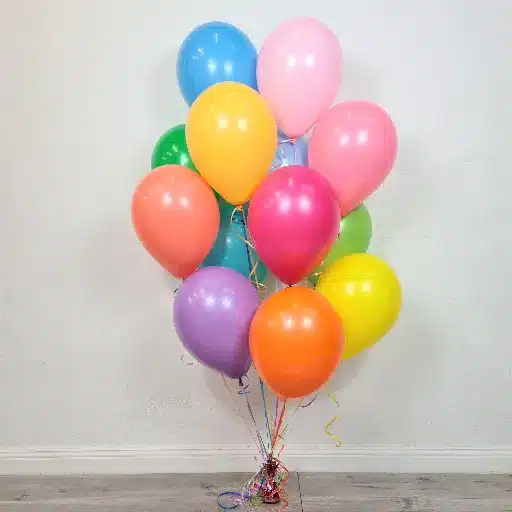
Nothing beats the thrill and delight that balloons can bring to any celebration, however, the outdoor weather along with its coldness will be one of the deciding factors as to how long they will stay inflated—particularly in a colder region. Have you ever wondered how long air-filled balloons withstand freezing temperatures, or why they sometimes look as if they are letting out air so quickly while in the cold? This ultimate guide reveals the science in the cold weather’s impact on air-filled balloons, equipping you with handy insights and suggestions to enjoy your balloon decorations even during the coolest days. If you are organizing a winter party or are just inquisitive about the balloons’ interaction with cold weather zones, this paper will provide you with all the information you need.
Understanding Balloon Types and Their Lifespan

Latex Balloons: Characteristics and Longevity
Latex balloons are the most common types of balloons, as they are cheap, flexible, and available in various sizes and colors. Natural rubber made from rubber trees is the main ingredient, and this includes latex balloons. Therefore, they are biodegradable, which is a trait that makes latex balloons ecologically good and relatively less harmful than foil balloons, for example. However, they have very different life spans depending on the environment, handling, and whether they are air or helium filled.
In a typical indoor scenario, air-filled latex balloons will remain inflated for about 12 to 14 hours before you notice any deflation. In the case of helium filling, the duration of the balloon’s life is cut short to 8-10 hours because of helium’s small molecule size, which makes it easier for helium to leave through the balloon’s surface that is already porous. On the other hand, adding a hi-float solution inside the balloon can make the helium-filled balloons last for 2-3 days which is quite a significant time extension.
Helium Balloons vs Air Filled Balloons
Helium Balloons
Helium balloons are the lightest among the gases and therefore float without any effort along with other balloons. The short life span of balloons filled with helium is due to the smaller size of helium molecules since they can escape through the surface of the balloon more easily than gas molecules of the same volume. For an average sized balloon made of standard latex, the life of helium balloons is approximately 8-12 hours; however, for foil balloons, this figure can go up to 2-5 days. In case of using a hi-float solution, the life time of helium-filled balloons might be significantly increased. At the same time, helium is more costly than air thus it is a more expensive overall. Studies indicate that decorating with helium balloons increases the overall event balloon budget by 30-40% or more depending on the requirements and volume of helium used.
Air Balloons
Air-filled balloons are heavy, hence they do not float as high. On the other hand, they are just as flexible for decorating ways, e.g. the creation of balloon walls, garlands, and centerpieces. Their prices are quite reasonable since air does not cost anything and they last much longer than helium balloons. Latex balloons filled with air may last from a few days to even weeks, while foil balloons might stay up to a month or more provided they are kept in proper conditions. Arrangements for air-filled balloons are also more eco-friendly as they involve lower costs and often allow for the use of reusable structures such as frames or poles.
Factors Affecting Balloon Longevity in Cold Weather

Temperature changes and their influence
Temperature changes have a very strong impact on the performance and lifetime of balloons in general, and, especially in cold climates. Helium-filled balloons when exposed to cold weather shrink as a result of the drop in the air pressure around them, which can lead to the illusion of them losing lift and being deflated. Conversely, air-filled balloons suffer to a lesser degree but still may shrink a little as the air density inside gets used to the cooler temperatures.
Studies have shown that helium gas, being the lightest and the most sensitive to temperature change, shrinks at around 0.36% for every degree Fahrenheit fall in temperature. For example, a balloon containing helium inflated at room temperature (70°F) might shrink by almost 14% if subjected to the freezing point (32°F) temperature. This reduction in size is the reason why helium balloons look limp in cold places but actually do get puffed up once they are taken back to warmer zones.
Material types and their ability to resist cold
Rubber and Latex
Rubber and latex materials are the first to become hard and lose their elasticity due to cold temperatures. When subjected to temperatures less than 32°F (0°C), they may help cracks to form or become impossible to rely on for stretch or stress. On the contrary, silicones, which are synthetic rubber, have total power over the sub-zero temperatures and thus, they remain very flexible even when it is -80°F (-62°C). Being so, they are the material of choice for the weather seals and gaskets in cold locations.
Plastics (Polyethylene vs. Polypropylene)
There is a very cold resistance difference in plastics like polyethylene (PE) and polypropylene (PP). Polyethylene, especially HDPE looks after itself in very low temps (-100°F or -73°C). Polypropylene, on the other hand, undergoes a transformation that makes it more fragile when the thermometer reads below 14°F (-10°C) and will break if under pressure.
Metals
Though metals like steel and aluminum are still generally good to go in cold settings, there is a chance that some steel grades will be brittle in extremely cold conditions. One of the reasons why it’s only the 304 and 316 grades of stainless steel that are used in cold storage and arctic engineering is that they keep their ductility even in sub-zero temps.
Tips for Extending Balloon Life Outdoors
Choosing the Right Balloon for Cold Events
Latex Balloons
Latex balloons are one of the most used options among balloons because they are the cheapest and the most eco-friendly. Since they are very fragile below zero, freezing is the main reason for their breaking. If it is an outdoor event in the cold, keep latex balloons at above freezing temperatures of 32°F (0°C) all the time, wherever possible. Also adding a balloon sealant helps a lot in extending their life by not allowing air to escape.
Foil (Mylar) Balloons
Foil balloons are excellent in freezing conditions, even so that they can be very cold because they are non-porous. They keep their volume in shape and they are the last thing east to be spoiled in ice-cold weather. But they are not as elastic and the helium in them may collapse in the cold air. To avoid this situation, do not fill balloons too full and store them inside until shortly before the event starts.
PVC Balloons, including big “cloudbuster” types, are the ones that are most and even the only ones capable of in extreme conditions. They cope with the cold as low as -40°F (-40°C) and so they are cool for outdoor events even in extreme climates. Their durability in cold is still in conditions of no brittleness and cracking which makes them a choice of luxury.
Best Practices for Outdoor Balloon Displays
Use High-Quality Balloons
Get the best latex or foil balloons that are highly rated as able to resist weather variations. High-quality balloons experience less popping and deflation when subjected to the elements—sunlight, wind, and moisture.
Prepare for UV Exposure
Ultraviolet (UV) rays can quickly degrade latex balloons. The only way to cope with this is to apply a UV protector that will lengthen the life of the balloons. This easy step can create a barrier that protects against both fading and weakening.
Inflation Considerations
Outdoor temperature changes may cause balloons to pop if inflated too much. Let balloons to reach about 90% of their full volume which will create room for the air to expand during the day.
Conclusion and Alternative Solutions

Exploring Alternatives to Balloons for Cold Weather Events
One of the most favored alternatives is the fabric-based decoration that includes buntings, banners, or tassel garlands made from weather-resistant materials. These decorations are very sturdy and can be used multiple times without getting damaged. The trend in polyester and nylon fabrics has led the way to outdoor events, mainly because of their resistance to moisture and longevity.
LED lights and illuminated décor are another way of making a stunning visual impact during winter gatherings. Light-up structures like glowing spheres or intricate string light designs could change any location into a warm and dreamy atmosphere. For instance, a research study on the event lighting trend has documented that the use of LED lighting solutions can increase the satisfaction of the participants by as much as 30% because of their visual appeal and the functional role they play in extreme environments.
The other option is the use of organic components like evergreens, cones, and dried flowers to create centerpieces and installations. These choices not only add to the attractiveness of winter-style parties but also are environmentally friendly as they minimize the plastic waste associated with balloons’ usage. Moreover, the natural decor can endure freezing temps, thereby maintaining its aesthetic throughout the day.
Reference Sources
-
Balloonin Blog
- Title: Can you really use balloons in the winter?
- Summary: This blog discusses the durability of air-filled balloons in winter conditions, highlighting materials like DuraBalloon® that are designed to withstand cold weather.
-
Starry Sky Balloon
- Title: How Long Do Foil Balloons Last with Air: Lifespan and Tips for …
- Summary: This source provides insights into the lifespan of foil balloons when air-filled, comparing their durability in various conditions, including cold weather.
-
Go2Balloons
- Title: Caring for your balloons (and what to expect)
- Summary: This article explains the expected lifespan of different types of balloons, including latex and confetti-filled balloons, and offers care tips for extending their durability in various environments.
Frequently Asked Questions (FAQs)
Do Latex Balloons Stay Inflated Longer in Cold Weather?
Latex balloons, in general, can be longer in cold weather than in hotter areas. Despite this, the cold air might make the latex less elastic and this may result in faster deflation once the balloon is again heated up.
How Long Will My Helium Balloons Last in Cold Weather?
Unlike air-filled balloons, helium balloons have a bit longer lifespan even when subjected to cold weather. Cold environments, however, have the opposite effect on the helium atoms and they will be escaping more slowly and thus, the balloons will remain inflated for longer than in warm areas.
What Environmental Factors Affect How Long Balloons Last?
The longevity of balloons is affected by a combination of environmental factors which are temperature, humidity and sunlight exposure. Cold air is a great friend in prolonging the life of balloons while on the other hand, high temperature and UV rays are the worst enemies as they will cause the latex material to deteriorate and deflate quickly.
Do Mylar Balloons Last Longer Than Latex Balloons?
When it comes to the lifespan of the balloons, Mylar balloons are the winners. The low permeability of mylar means it is able to keep helium trapped very well and hence, mylar balloons can stay inflated and float longer even when the temperature changes.
How Do I Make Balloons Stay Inflated Longer in Cold Weather?
If you want your air-filled or helium balloons to last longer in cold weather, use bigger balloons or those treated with hi-float. These ways can slow down the deflation process and enable the balloons to last longer or over a greater period than expected.