Making balloon creatures at home walks in the park and such effort allows you to spend more unwinding time, not just exploring new to you sphere. Even when you walk into this unique style looking into making a party for children or aiming to achieve a lot with your friends, it’s interesting to do because the backside of people’s skills can be successful in this manner. And this one being here, is especially targeted at newbies as it contains a detailed n this one is a detailed nfiguration on how to make these for beginners. where many steps, key tools and desirable and smart hacks are comon in one place to help you make those awesome ballon figures in the shortest possible time. Trust me by the end of the compendium you will acquire some skills and some courage to even construct some simple and creative designs yet they will serve their purpose – attaraction the audience yet simple and straightforward – all from your living room. You will be amazed at how boring balaloons suddenly metamorphose into exceptional and oneofakind pieces!
Getting Started with Balloon Twisting
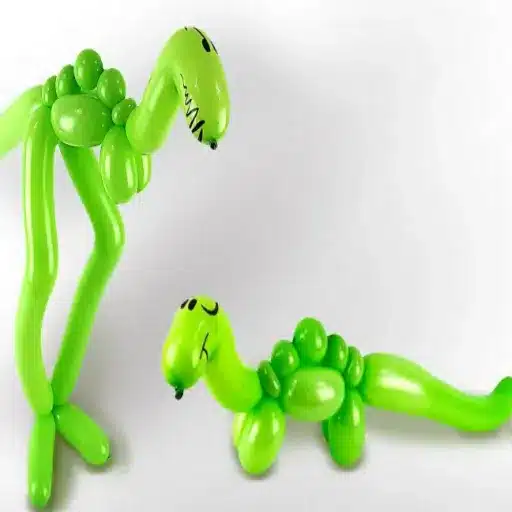
Understanding Balloon Types and Tools
You need to be precise and cautious when picking the suitable materials and tools one needs to get moving with balloon twisting. Balloons which are used within the scope of the hobby and activities are twisted in shall be considerably stronger than let us say normal party balloons that will burst at the sight of a two year old running past them. The most commonly used size is 260 (two hundred and sixty) and is called by its size in inches in diameter (2 inches) and length when additionally stretched (60 inches). Though other sizes of balloons such as 260 (smaller diameter) or even 350 different colors (with larger diameter) might be applied in the advanced designs for more variety and size differences.
Meanwhile, the adequate supplies for balloon twisting demands the attainment of essential tools like a compressor or electric inflator as the best way of infating numerous balloons consistently but with a conscious effort to do it with stuffed ennui effort. Also, you may be required to keep your local balloon suppliers in check in between the balloon delivery as other risk factors come into play in this instance such as accidents that can be prevented from happening by ensuring the safety of the person delivering the balloon. Other tools that might be helpful are the plastic slides, used for maintaining the volume of the wings, a special scissors that comes handy when trimming the wings, and a soft now, a surgical marking pen, is used for making eyes etc. Some other more useful tools, adjusting to the volume of balloons and avoiding material and reorienting restrictions, minimizing the tangles of the twisted balloon all place optimally so that its complete failure all out of bending does not result.
Basic Techniques for Twisting Balloons
It is very important for an individual to go through some balloon art basic training or art skill development training so that he/she can achieve a perfect design that will last. Creating and shaping appropriate balloons is sometimes complicated especially if one wants to create an animal from a balloon or common decoration structures. One of such problem solving skills that one can use is the pinch twist in making the balloon twisted at the center or any other place and the rest remains untwisted. Apart from the standard techniques that include creating basic shapes while contorting the balloon into different shapes are the lock twists. This involves creating such characters as people, which will balance well at the top.
The lock twist is a very common and much needed procedure which is utilized for creating round designs like flower petals or wings. To create this type of twist, the balloon is simply twisted at the two ends where a loop has already been made. The twist is set firmly thus creating a nice round feature. It is important to also understand the concept of bubble measurements especially when an artist is working with a balloon to ensure that all the sides remain even. Appropriate situation effetely quells placement oririented pace of
the exemplary standards of perceived economic efficiency. It is furthermore important to get the feel of the techniques so as not to cause the breaking or deformation of the balloon. These fundamental techniques, when practiced with focus and discipline, will serve as a great resource for learning advanced balloon techniques. Adopting such interactive teaching techniques, the balloon designers will possess the know-how to come up with professional designs confidently.
Common Mistakes Beginners Make
A typical error faced by new learners in the realm of balloon shaping is overblowing. If somewhat exceeds it recommended pressure level, the balloon will easily burst, thus messing up not only the aesthetic perfection of the work, but also the conservation of the resources used. Equally important is any of the twisting techniques which is incorrectly done with applied force; poor twisting will give rise to weak links which can be stressed and finally break off. The last one – but equally essential as the others – people who are new to this activity often underestimate the importance of preparation work in contrary to, for instance, conducting some visual surveys of the environment, as checking the conditions that the material should be stored in order to prevent them from being exposed to conditions such as hot temperatures caused by high humidity thereby aging the material more rapidly.
Another example of recurrent error refers to the insensitivity to proportion within the designs. In the interest of equilibrium when accomplishing a task, novices may, to some extent, find it difficult to create an equally visually appealing structure hence their omission of some values. Last but not least, inadequate use of various balloon-related tools, for example, pumps and cutters, often ends in poor productivity or premature damage of the product or parts of it. Those are the errors that require a rather thorough training in order to improve the production of balloon art as well as the exploitative channels are available in the market.
Step-by-Step Guide to Making Easy Balloon Animals
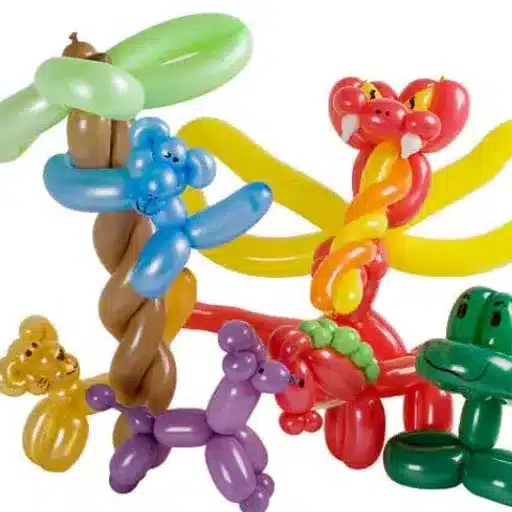
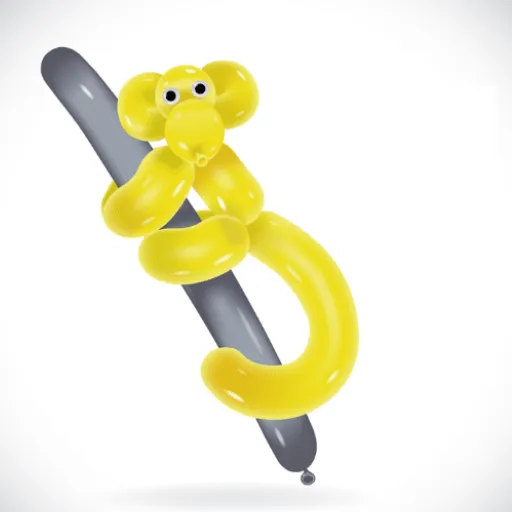
Creating a Simple Monkey Balloon Animal
When it comes to monkey the anatomysuitable for a 260Q balloon and leaving an edge of about 6 inches un-expanded for the purposes of changing the shape of the muscle. The extra space of the balloon that is used for the constriction of the lines leading to the component will also prevent it from exploding. First, a head in the shape of a baloon is created, using two small endts to create ears and one basic pinch twist for the face. It is important that these squeezes are adequately resistant without cramping the balloon.
Then the body of the monkey part is twisted with a larger pair of bubbles for the neck and body as another bubble comes after the former in size range. The arms are positioned on either side of the monkey and are hinged together with two loops of an identical size. I often follow by making an extra length of the leg sections and adding smaller loops at the base to mimic the feet. One of the casual steps is to remember that a figure-eight rhythm has to be seen to the sidelines of the mid-torso loops, so that it follows proportional pattern of the head body arms feet.
Next, with the help of an uninflated part, the remaining balloon is made. When needed I shape the excess part into a monkey’s long distinctive tail by folding gently and twirling the balloon around. Lastly, it is detail such as adding eyes with a permanent marker that, that makes it absolutely interesting. I do not need to go to extreme twisting, by applying a bit of drawing on the face. An adorable and cute monkey balloon sculpture in which balloons can be used appropriately is simple, but a very attractive one as well. Such runs stand to endorse the very fundamentals of balloon skills, the pairs of accuracy and imagination.
How to Make a Beautiful Swan Balloon Animal
Swan, this elegant clown embodiment usually consists of a single balloon that has a fairly simple appearance. First, give yourself a reasonable size of a balloon (approximately a long) and leave is on a 3 inches tail, so that it is easy to handle without the burst. Starting top, in most cases the nozzle side, i will form a small sphere for the head of the swan. This requires special carving as a flawless realization of the head may make or break the design. Then I make the cut longer for the neck bubble that I make by shaping it consistently without much twisting so that the inflating is intact.
After that, I push the latex balloon to turn it to a peanut form closing those two successive segments as the torso and the arm, or a wing. Angling the wings is vital in putting the wonderful bird in water; I widen her wings outward, bending slightly upwards, in order to replicate the natural wings motion when the bird is gliding. Lastly, to create the classical fanlike structure, I create a curvature shape to attach the head with the body. This swoop serves a dual purpose where it enhances the beauty of the figure while that of the frame or the sculpture.
Putting together a swan-shaped sculpture of balloons requires both mastery of a skill and an eye for perfection. Therefore, though I follow the balloon twisting manual, I use some creativity that helps me achieve this goal. Such a design may look innocent but at the same time very artistic in that it brings out a high degree of technicality in balloon modeling.
Other Fun and Easy Balloon Animals to Try
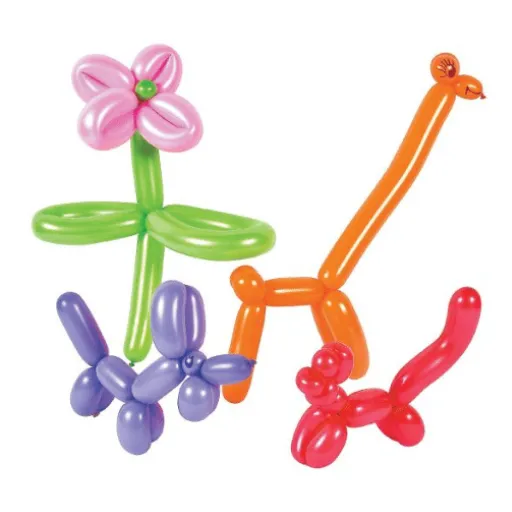
We all agree that when it comes to fun, easy or experiments you could do with a balloon. So if I were to pick the best from that list and would have the option to go for a basic design, I would always choose to begin with a basic dog shape. It is an old school choice for the beginners the reason being it provides training on the basic balloon manipulation. This includes the basic techniques of how to make basic shapes in the balloon, the lock twist, and an ear twist. For that season. Also important, is learning the process of creating other complex balloon designs without necessarily affecting the simple and popular balloon dog construction’s look. Mastering dog designing requires the tender balloon expatise and gives the joy of creating something that resonates with all ages.
After trying several designs, I suggest the flower-shaped balloon should be attempted next. Indeed, it will be a bit more complex than the dog or sword, yet will offer greater possibilities of testing few balloon designs at a time, paying attention to symmetry and fractions in particular. With additional minor changes, I would be able to come up with multicolored flowers and a single big one with a stem and leaves. These are developments that are not only meant to satisfy the recipients but also to enhance the most sought after attributes among those who practice balloon design: fine execution and spatial organization.
Learning Through Video Tutorials
Top YouTube Channels for Balloon Twisting
For aspiring masters of balloon art, there is no shortage of YouTube channels which offer comprehensive tutorials suitable for all levels of expertise. Of these channels, Balloon Sage deserves a special mention as this channel provides the most detailed instructions and advises on making elaborate designs. This makes it a perfect option for those already knowledgeable about balloon art who wish to improve further. In addition, a great alternative is Twisting Tales, with a huge collection of simple to watch videos and illustrations particularly targeted at beginners and explaining most basic skills such as simple animal twisting and multi color blending techniques.
Apart from this, one other reason Pop Culture Balloons is truly successful is that it is very good at intermingling entertainment and education, producing designs with specificity inspired by famous genres, thereby being useful for events. The Art of Balloons: The Art of Balloons goes a step further and explores advanced topics such as multimodels, which are made of several balloons, and applications that aim at boosting the longevity and charm of the art. In such a way, these pages work as a complementary source and help to elevate existing artistic and technical skills.
How to Follow Along with Video Guides
When watching video opinions vel guides, it is very important to know how to review this content in the text flexible order so that you are focused. You should do everything possible to finalize the tutorial,te as part of the procedure at the materials and the spot you’ve identified for the work. Pay attention to the details of the equipment list, the step timely details or any of the video introduced step and pay particular interests. Use some controls of the playback features such as pause or rewind and speed up as you try to comprehend steps with static viewpoints most of the last. Plus, keep some records of difficult on hands training aspects, for example some assignments may ask you to do some field works. This, in that, the write-up is experienced by active participation and practice or by and combustion treatment of skills enabling one to perform such skills. This is aimed at ensuring that the viewer is able to understand the theoretical information and to put it to actions.
Benefits of Visual Learning in Balloon Twisting
When learning, especially the art of balloon making, the practice of visual learning is very effective. It allows for skilled techniques and subtle motor reflexes which are usually impossible by narration. One can also learn the correct technique, in some case, by viewing tutorials on assembly balancing such factors as the balloon skin and how tight one should twist. Besides, the visual method gives the audience an opportunity to detect mistakes there and then and to correct them hence reducing bursting of balloons or mistakes in the middle of making a balloon twist. Use of high-definition video tutorials is one such advancement which is effective in teaching difficult designs since one can be able to study every nth second of a difficult design thanks to the frame limit provided by that feature. Nowadays such tools may be found on most devices in the form of educational games and enhance the inborn qualities and knowledge there by even an amateur becomes professional.
Expert Tips for Perfecting Your Balloon Animals
How to Choose the Right Balloons
Before expounding more on the best balloons for making balloon animals, we need to discuss some important factors which must be considered during the selection process. Of great importance is the play an area of the balloon. A planet as far as the decoration of animal and sculpture is concerned are 380…. circulation of blood that time because of the elastic material used in the liquid. This does not usually happen when making figures but it definitely happens when making animals. Size is another must; heavy book balloons a.k.a. 260Q are most used for various animal and sculpture making as it has a good length to width ratio. Furthermore, there is a color catalog where individuals choose were of theirs, white or blue. For those making a presentation or celebrating an occasion, such simple instructions may be overlooked concerning how to inflate and inflate balloons. Finally another factor of time where conditions to be focused on under this heading is the current weather or maybe it is humidity. Extremes can damage the balloons. By focusing on such traits, an effort appears to be against all odds, while no expectations are exceeded simply to avoid undesirable affects.
Advanced Techniques to Wow Your Audience
When it comes to impressing an audience for real, mastering the art of advanced balloon structures calls for attention to detail, imagination, and a profound knowledge of construction physics in the first place. And one of such designs are ones that use several balloon weaving patterns in one sculpture, forming a piece of art and an exhibit of scientific prowess simultaneously. In this case, the insertion of woven balloons to make unique decor pieces that do not break easily becomes necessary due to the complexity of the formed functions of the final model under varying conditions of loading within the environment.
Another great technique that can be used is air layering, where balloons of different scales are filled and organized one on top of each other to create shadow, clearly mark and elevate aspects of the piece. Strict adherence to inflating limits is essential to achieve its total outline visualization. Furthermore, infusing the design with LED lights, even in the least of lighting, or reflective materials can enhance the look of the installation especially in low-light conditions, bringing more life to the stationary sculptures.
Employing modern inflation tools, like an electric inflating machine with variable air pressure, inflation happens faster, and with greater precision, making for a full consistency of the inflation levels in all projects. Besides, mastering the principle of color interaction and how to use gradients or excellent relative contrast can help awaken specific feelings and response on the side of the viewer offering the best engagement experience. These methods, backed by a practical approach and some predicability, are the perfect guidebook to delivering amazing stunning designs, while still maintaining the balance between art and the structure’.
Practice Tips for Consistent Results
To obtain uniform results, the establishment and persistence with a well designed approach is desired. The opening phase is about elaborating on the steps and boundaries for undertaking particular activities. At the same time, it may be finished by the use of appropriate gauges and checking the measurements of dimensions, angles, and other crucial metrics and from errors occurring. Relatively more expensive materials and tools that have been proven to be efficient in almost all known scenarios should be employed. Always inspect the equipment since over time, there might be some issues that develop as a result of wear and tear or due to environmental factors. Moreover, repetitive use of equipment, or principles in general, is encouraged but implemented in a controlled manner unless necessary and double-checked. Additionally, do that by making the comparison between actions that were taken and those that ought to have been taken as well. Aim at encouraging practitioners to relate with their practice on a social level and reproduce results which interconnects them with practice-related data material since such data available in practice determination may not be summarized by meetings, lectures, and discourses.
Engaging with the Balloon Twisting Community
Joining Online Forums and Social Media Groups
Engaging in online forums or social media groups facilitates the exchange of ideas and information regarding the current trends in balloon sculpture and allows a person to find their unique rhythm. Such websites register participants from all over the world, allowing everyone to leverage knowledge and skills from different academic and geographical locations. Moreover, appreciate that I always liked balloons, and therefore think of them in creative ways which explains my creative bent towards using balloons in different forms. Such groups are useful in this particular craft in that they take up problems through finding solutions and looking for alternatives in addition, considering the new skill learnt.
Attending Balloon Twisting Workshops
Joining balloon twisting classes is not just great fun but also helps to keep up or improve what you got and develop new things. Trained professionals and industry leaders run these programs so many focused, interactive activities were possible for everyone who attended, from rookies to experts. Those who participate will be taught unheard of twisting patterns and even more designs they would not have thought of as well as how to do them correctly. It is at times like these, that key areas of concern such as the usage of tools and resources are discussed and easily viewed online. That said, workshops leave little to no idle time for loads of curtain materials and theoretical concepts. Together the educators, learners, and entertainers will be capable of clearing most, if not all the materials, and making some meaningful outputs for their work.
Reference Sources
- Popping up Balloons for Science: A Research Proposal – Discusses the use of balloons in interactive applications, which could be tangentially related to balloon art.
- What Goes Up Must Come Down: Evaluation of Balloon Litter on Wildlife – Explores the environmental impact of balloons, which may provide context for sustainable practices in balloon art.
Frequently Asked Questions (FAQs)
How to make a balloon dog?
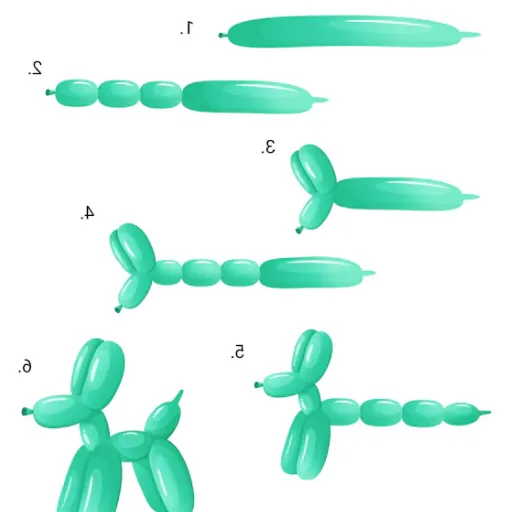
If you want to make a balloon dog, you need to take a 260 basic balloon and inflate it to a size that it does not burst with a 4-6 inch tail and, then leave a tail and make a knot to keep in the air. Practice twisting the two first segments into the nose and ears, fold and twist the second portion five times for the neck and legs then do the same for the third section, as it is q–pulsemod just say don’t blow the balloons too big if you don’t want to use the pump, however most people won’t be able to twist it self anyhow. Squeeze the balloon first if you [there are 2] bring the points together. few poodles instead, for each balloon, do the same lap – twist lapills. You can also see how the individual steps are performed on a tutorial on youtube.
What supplies do I need to start making balloon animals?
Staples would comprise mainly of at least 260 various coloured balloons, a hand pump and a work area mat accommodating enough length to work with long necks and tails. Its also crucial to master the different applications such as tying knots and forms of loops because without the knot nobody does the pinch, and ears as the most used part will always fall off. Reserve some unblown balloons for unforeseen holes and in case you want to be consistent in segment lengths as in the case of the designs of say, a giraffe or even a bear, stop at approximately one inch. The use of constructed bases and simple patterns to create simple designs in the new guide is particularly beneficial and the proper inflation and tying procedure is well depicted in an expert video. It is emphasized that using lively and distinct colors for their dresses and clothes helps differentiate the figures better.
How do I create a giraffe with a longer neck?
To construct a paper giraffe, a portion of the first two steps have been already done. Start by inflating a 260 balloon, securing the ends together and the left over tail with a knot ensuring the neck is long enough to build the head. At least the ears and horns should be made as small parts of the giraffe, then 3-4 long sections need to be swirled to form a body and the legs using the feed and loop division to make the figures more stable. The length of the neck is longer than it is for a dog so one should make measures in advances and do the convenient parts such that the giraffe can hang. It is pretty simple: always push in after doing every turn without loosing the air, and there is always the use of a simple balloon color flow pattern for use in latice and the giraffe-like long neck. A short video explaining this process will illustrate, in details, how to make the head and legs form self-supporting loops and ties as well as all other loops of the giraffe in question.
Can I entertain children by making them a balloon sword or flower?
As paper, plastics and sticks let us down frequently the balloon astonishes with its prominence in children restless souls. A sword is one of the easiest designs; inflate a 260 leaving only a small tail, tie a knot, then make a few small basic segments and one long segment for the blade, ending with a handle loop. In case of a flower, a few small loops can be made to serve as petals around a separate loop and they are very useful to balloon dog novices as it is very easy to make even a simple sculpture out of them. Both designs, on the other hand, require a bit of care even in pulling and locking segments so that they do not come apart, with a little struggle, everyone will get to make them by honing in on the pinching and tying techniques. Such works are better for entertainment for any occasion serving that they require rather small proportions of one balloon each and are quickly filled by a pump. More than two of such units can be performed within several minutes upon grasping these basic principles.
What can be done to save the balloons from bursting too soon and to enhance the durability of the balloon animals?
In most cases it works better for you to inflate your balloons without too much pressure—do not wait for the whole tail to go into the balloon, make a bit leave the side or leave a tail that contains not more than 260 (or the diameter please). Try using a hand pump to ensure that your balloons are the same size at all times and always secure the balloon’s opening with a knot. If a knot is not tied carefully, the air can go out and there is a risk of the balloon bursting while being twisted. Avoid the pinch and twist method because the air is not evenly spread and do not wear expensive pieces that press against the skin as they are prone to puncturing the material. At the same time, pattern is logic to the balloon model—leave out intricacy that too much inward and outward folding creates, less detailed patterns are usually sturdier.
What is the next relatively easier animal apart from a dog and giraffe?
Dog and giraffe figures can be utilized to create more complex designs such as a parrot by elongating the neck and adding a pointed mouth or a looped tail for a bear with large pointed ears. Utilize coiled ribs and some prominent spirals to represent fins; or petals to construct wings, flowers can also be mixed with various animal figures. You can as well manage to make a parrot with a little more details e.g. the tail; and for a bear, you will involve some ear and leg features so that the sculpture is well-displayed without falling. Adjust the segment lengths in inches carefully while working on enhancing the appearance of the image, and experiment with different color mixtures in order to create a more realistic design.
How do I learn how to insert figures inside a balloon while twisting and adding some designs to it?
Your learning curve on using one more giant balloons to create really interesting figures can start from becoming familiar with simple twists such as ear twist, pinch twists and lock twists. This will help you work on the issues of creating sections of the equivalent lengths that will look structured. Later finding tutorials on how to work with balloons on various youtube channels associating yourself to one balloon at a time will be useful. Learn how to make a gorgeous flower, a dangerous sword or a naïve fellow instead to make yourself ready to new new things. And after that more suggestions. It is also not hard to come up with new such designs, as one will only combine balloon twists and sometimes a change in segment size that things are further put away. Therefore also make a journal of which concepts did not work so that it can be utilized to create new figures in the future. Well, better go and buy some quality 260 balloons and a hand pump which will allow you to do some finer work and not that rush may take all the fun out of it. Such a sharp needle tear of one balloon and a stretch of another one without inflation will show off all the non-professional skills. Do not worry and try making the same errors — most likely each exploded or failed one will unveil techniques on how to go along with the balloons as well as tensions and knotting. It will not be long before you will be able to make, fold, twist, and innovate courtesy of sculptures with a style that is uniquely you.