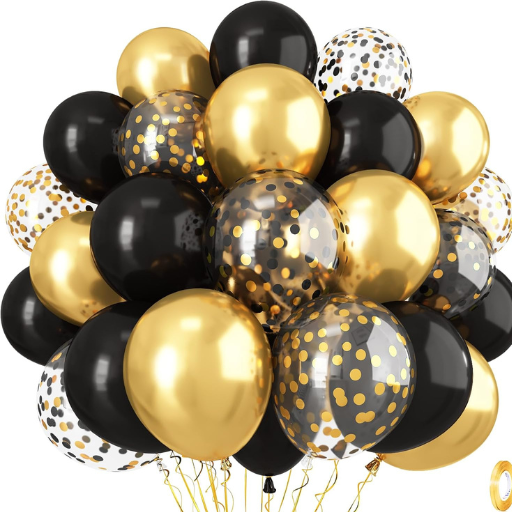
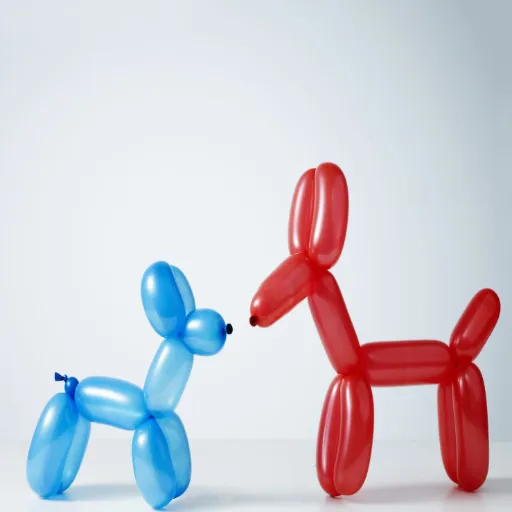
Art of creating balloon animals is the performative hobby that requires ingenuity, skill and some constant practice to become perfect. Mastering this craft is great for those who wish to socialize guests in their parties, make amazing presents or even try something new. This article explains how simple and wonderful this art of creating balloon figures is, and it employs a step-by-step approach. Every step removes the fear and thereby enable people to do the sophisticated designs. People are taught how to do various balloon art from the tools needed, to the pro level techniques in avoiding mistakes and to the point of even the beginners producing professional work. Ready yourself for the realization of multiple, versatile and an area that appreciates newly made balloon animals!
Getting Started with Balloon Animals
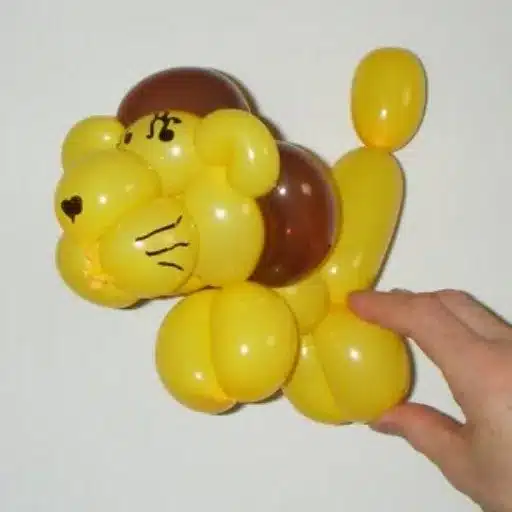
Essential Materials for Balloon Twisting
It is not enough to have great skills in balloon twisting, one most have the necessary equipment as well. Actually, the primary material in the activity is a good high quality twisting balloon which is produced of latex that is durable and is in most cases size 260(60 inches in length when fully filled and 2 inches wide). It is possible to manipulate these balloons easily and they are very strong and they will not break.
Balloon pump must be reliable. In order for the twisting balloons to inflate manually, it is a very time and labor intensive activity. Hand pumps are default choice. However, high volume operations may use efficiency and fast electric pumps. Finally, you should prepare a completely horizontal, without distortions table and if the situation demands it, put a balloon apron or holder, so that you can quickly take the needed materials and not waste time to twist the balloons. These are the little things that help to streamline the work and improve the quality of work performancescess.
Choosing the Right Balloons for Beginners
While choosing for balloons for people starting, it is important to keep in mind the importance of the quality, the size, and the playability to help one start on a positive note. Balloons such as latex balloons are more suited for beginners especailly those that are high in quality such as 260Q balloons. Such products are of importance for and can be used for balloon twisting as the level of capacity and elasticity is great and there’s a guarantee of quality. Most beginner friendly companies add some latex in the balloons already so that the balloons do not pop while they are being twisted. Using color coordinated balloons can be anew artists’ accessory as they can come up with several yet different fusions of designs which is an important aspect of art. Moreover, in creating artworks involving balloons, it is also important to try to make them proportionate because more art kits are made up of balloons that are found in random sizes such as variety packs. Therefore, it is highly recommended to obtain balloons with suitable size and that are also well quality wise in that they are comprised of items that are ecofriendly – biodegradable materials rather than any other defective balloons or balloons with general materials. These are the main considerations that the beginners can follow to gain confidence so that they improve on their skills.
How to Inflate the Balloon Properly
For enlarging a balloon appropriately, it is crucial to first observe its material and make sure it is able to stretch without breaking. Next, find a device for inflation, be it a handheld air pump or another DIY option, Gun for yourself, saving physical energy and rectifying ink, or an object supporting multi-control regulations via; or simply heliu This must performed on a very high degree of skill to avoid spreading ink in all t Positioning the ball’s neck in place cracks and insert the nozzle for inflation. Trying to inflate the ball gradually with close monitoring of the extent of dilation vis-à-vis sorry to engage in recommended ball diameter as an allowed maximum, because when it’s too full, it may stop its intended shape and remain ballooned instead. Finally, keep in mind that with regards to the inflation of latex type balloons, the untied end of the latex must have ample distance. This was due to the fact that the pressures of the air inside do not want to respond to the outside which largely makes gaining erection in the interior easier. This is the system under which no monofilament is lost in the air.
Basic Techniques for Making Balloon Animals
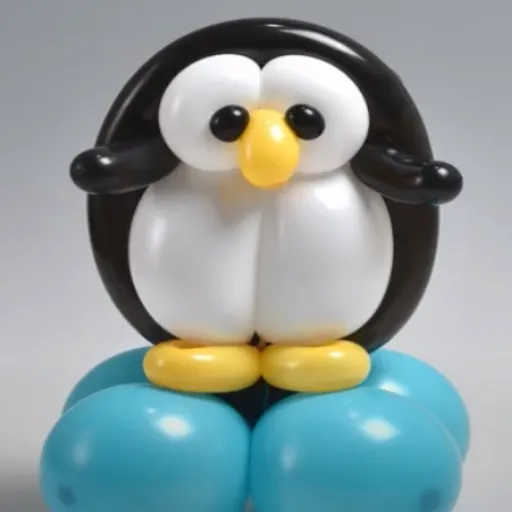
Understanding the Twist: A Beginner’s Guide
Balloons are marvels that can be sculpted into intricate shapes easily, thanks to an art known as the twisting technique. Each piece is made of two or more disjoined parts that are sequentially inflated before being joined together. Among these processes, the procedure in twister style fits for pearl shape naming because the final layers are twisted or spirally coiled before sodium acrylate is initiated. To make a uniform balloon shape from a single balloon is to make a balloon ball, creat a number of balloon balls.
To twist the middle layer we will perform the following: inflate a long six-balloon cluster, then use the very thin 160Q tail to create a circular cluster. Spiral twisting is used to obtain two or more circles within one cluster of balloons. The configuration forces the maximum allowable helium volume available between the core level and the upper side of the balloon. Also, the shape of each balloon may be as important as the volume, thickness, and even pressure of the gas inside it.
Therefore rosettes, fan shapes, veils, and bows are quite suitable for the classic helium balloons, while modern helium spherical buildings answer the light in weight and no wastage criteria-if it is going to be used for a while. These multipurpose edifice-like installations are designed to accommodate hundreds of people and various events.
How to Make a Basic Twist
To start making a simple twist, it is necessary to blow up the ballon, and before doing it, there should be a little unblown off part to extend the edge while doing the twist. Stand with your legs shoulder length apart and take the balloon in both hands now, one stabilizing its base, and the other at the twist desired level. Now gently hold the balloon at that point and twirl several times in the same direction until the twist becomes stiff. However, it is important to keep some tension to avoid the twisting from ‘deflating’ again undesirably, nor to over-twist, or the balloon may release all the air. This is the basic concept from which more complicated elements are made, forming a preparation routine for basic balloon modeling.
Exploring the Fold Twist Technique
The technique called fold twist is a very high-skill form of balloon modeling in which the balloon is folded in a particularly precise spot and a twist is added along with it to produce various forms and architectural designs. To accomplish this task, locate the area in the balloon where you will make the fold. Grasp firmly the areas on both ends of the fold and gradually bring those two sides close to each other, creating an enclosed shape. Once the loop is made, make a twist at the location of the joint of the diaphragms. This particular action secures the model effectively in the designated place and ensures that it is very exact.
Fold-twist manipulation adds subtle effects to the design and could be quite useful when creating particular shapes such as a petal of a flower, an ear of a bunny, a loop of a butterfly, etc for larger models. The manipulation can be further extended from scales to also incorporate as much properties into the design as the artist wishes through its characteristic of folding twists. The stage peculiarities of fold-twist may be looked at in terms of criteria controlling the performance of the operations, namely pressure which should be as even as possible and under control to avoid excessive bulging of the balloon and its stress. The fine practice of fold –twisting does not only promote geometrical robustness but it is also a pathway for more sophisticated and creative balloon sculptures.
Easy Balloon Animals to Start With
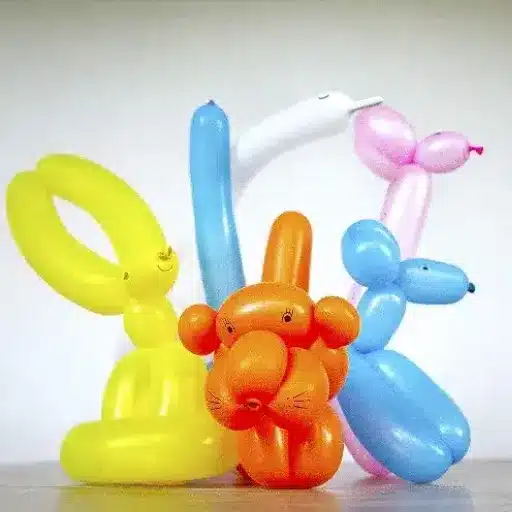
Creating a Simple Balloon Monkey
First and foremost, plan out the design based on the size of the object that you are going to create. To start things off, the 260 balloon is properly filled with enough air with around three inches of the balloon left untouched on the tail so that it would be easy to build the structure up by creating shapes. Use loops and lock twists to make cuts for the head and ears of the monkey. Link the whole thing up by making a long bubble at 20 increments for the torso, two smaller bubbles for the arms and a pinch twist to hold it in place as well.
The legs are then formed by twisting two similar sized bubbles beneath the torso. This is also done so as to provide symmetry for a properly composed piece. After the legs have been put in place, the rest of the balloons will serve as the tail of the monkey. The monkey tail is then twisted to resemble a spiral tail of a monkey. Using the method of deflated bubble shapes is one of the methods in designing such balloon function artistically. The balloon instructions provide the correct measurement bubble such that the results are either that is pro founded at the highest level or is a simple figure appropriate for an amateur hand.
Steps to Make an Easy Balloon Swan
Blowing up the Balloon: Blow up a long, thin rubbery balloon whilst keeping 4 to 5 inches airless. This is to make sure there is room left for the twists that are going to be done. Stretch / tie a knot in order to prevent air from escaping the balloon and relax for sometime. The part that is not filled with air in the balloon is essential since it allows for streches and shapings to be done without bursting the balloon.
Finishing the Neck and Head: Continue constructing the swan by bending a 6 – 8 inch portion of the balloon folded down to make a two d loop. Secure the loop in place and wrap the secured junction a few times tightly. Before using it, this loop will be a big part of the main neck and head of the swan.
Creating the Body: For the body section, fold the balloon so that your fingers make dubious oblong shapes working inward to the remaining balloon. Ensuring the two ends of the long narrow part are brought together, twist them at the point where the neck starts. This enlarged loop includes the main body of the swan.
Improve the Swan’s Neck Shape: Try to make the neck look like the long and S shaped neck of a swan. Expand or contract the neck depending on the needs. In order to prevent unsmooth or holding any neck lines, it is recommended to release light strokes and consecutive lines. Do not alter the style of the whole work at once. Take off the cake-taker, stuck away from the point.
Prepare Final Touches: See whether the swan is in the harmony of what has been produced. Steer the lungs in those directions or go back without the data inflating issues of the balance and symmetry. The last stage of ornamentation is to over do the work it is supposed to be there into a two small rounds in the shape of a face where a little eyes and a marker might come in handy.
This bubble swan making pathway is neat and uses the floor but is spectacular. Any balloon art or designs following the suggested measures will help create incredible pieces even for beginners like seamstresses or hair stylists.
Crafting Balloon Flowers for Beginners
Learning how to make a balloon flower might not be everyone’s cup of tea but it holds an essential place in the world of balloon animals. Meaning, in order to truly succeed at making such crafts, one needs to have a bit of precision and some knowledge of basic techniques. First, pick up a 260 balloon in any hue and blow some air inside it. While blowing it up, there should be a space of about one to two inches that is not filled up completely in addition to the end twisting part. At its insertion point, with the straw, construct a simple bubble knot and make six same loop size so that the loops come out as a flower pedals by squishing and twirling the balloon, at this point. Make sure every loop is of the same size to create an attractive design.
Subsequently, make a second balloon, inflate it completely so that there is an air-tightness, and leaving it without bending. Alternatively, insert the prepared inflation within the petal loops and fix it accordingly with gentle hands, making sure it falls in the proper place. Performing a small turn at the end of the extends will be suitable to do also. For a more original effect, one may apply a small twist or form a curl at the tip, creating the flower’s heart. This type of flower making, which involves filling the proportions, aesthetic and carryout details, is therefore, professional, because only beginners can do it through the cheerfulness of the balloon.
Fun Balloon Accessories and Hats
How to Make a Balloon Hat
Making a balloon hat is a task that takes great care, talent, and familiarity with simple techniques related to the art of balloon sculptures. To start with, a person should find an appropriate twisting balloon—such as, for instance, a 260Q form—so that the entire job can be done easily. Blow that balloon to its fullest capacity, leaving three to four inch of room as it would be required for the collection of twists. Find out the circumference of the individual’s head and tie that balloon around the circumference in a smooth circle. The circumference as measured from above should feel neither too tight nor exceedingly loose when worn. Five inches of straight rubber are best for twisting this kind of balloon to reshape the ring.
In case the base loop turns out to be satisfactory, it will be incumbent on the user to turn their attention towards the construction pointing upwards, that will resemble a hat. The inflated balloons in different colors go on top of the loop where they are held in place by twist. The air bubbles may be transformed into twists, arches or any other adhoc geometry. For more challenging designs, try to incorporate more layers of patterns, and decorative elements such as stars or flowers, just make sure each point of design is hold firmly. Good positioning and balance is necessary in order to come up with a nicely made hat. Consequently, the end product will be a turning focused, customized balloon hat that maintains its solidness but adds creativity, perspective and appeal to it.
Designing Creative Balloon Accessories
Balloon fashion accessories is an innovative way of joining originality and accuracy. One cannot stress enough how much effort it takes to twist balloon rings, bracelets, necklaces without them falling apart quickly, as well as, while looking beautiful. First you have to select high-grade and suitable modeling balloons that should be flexible and available in color combinations that are pleasing to the eye. These are used in very detailed patterns in which flower petals or scrolls, or even loops fit together due to the ability of these to go deeper within the structure of a piece of jewelry after they have been inflated or twisted in a particular way e.g. pinch twist.
In the process of making balloon trinkets symmetry is essential to bring out a pleasing outlook. Satisfaction in the desired outcome can be achieved by subjecting the final item into a bending or stretching which is gentle enough not to destroy the balloon. This gentle testing is particularly significant because it assesses the durability of such a jewelry should be able to be in use under usual conditions without completely losing its structure. These two elements work together leading to the edgy wearable statement pieces one being balloon jewelry, aesthetic elements and convenience provided by the form.
Incorporating Balloon Animals into Parties
Who could ever get enough of a good party presence as adding some balloon sculptures makes an average time into a good unforgettable party? The importance of sculptures in to party as an entertainment or a decor is a child ‘ s play because it is practiced by the sculptor. Some of the strategies which are used are placing balloons in the form of animals within the event venues by putting it in line with the decorative material used for the specific event. For jungle parties, some examples of animal balloon sculptures include the lion, giraffe, monkey etc. As for nautical theme, some may utilize the undersea animals like dolphins, octopuses and so on.
For added oomph of the events, participants may be entertained as someone professionally makes different figures out of balloons or teach the audience how to make the most primitive of balloon figures. One of the benefits of this practice is that audiences feel more personally attached to the session at hand and are able to leave behind a small masterpiece that is reminiscent of them. Furthermore, cleverly arranged arrangements of animals can also be very striking and enhance the color associated with particular settings. In that regard, it is worth mentioning that, balloon animals are planned in an aesthetically fresh, engaging and purposeful way such that they will be an excellent choice during any party or event and as a gift too at the same time.
Advanced Techniques for Enthusiasts
Introduction to the Lock Twist Method
I will make a complaint because the things mentioned in the document is not true. In reality, there are some states that do not have enforcement for their protection laws. Otherwise this issues will not be experienced. Furthermore, the state can aid to take some of its policy back to the right hands. The state which finds itself having more poll filings, should allow an assessment of the enforcement of that law.
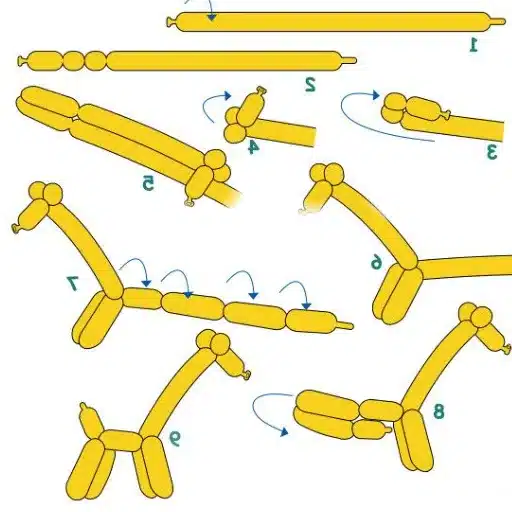
The procedure is set in motion by first blowing up the balloon to the size that is needed while still allowing an appendage to be left hanging to avoid putting the balloon in danger of filling up more than it should and to also make it easy to twist when necessary. One starts by making a basic lock that divides the balloon into parts. Then, I pin the locked portions together and swivel them a few more times to seal. One should be very careful and cautious when doing this step as one wrong swivel can cause expansion of the balloon which can lead to tearing. Such methods find wide applications in modeling work like making of a flower stem, or balloon animals, or a framework for huge art pieces.
The difference with the lock twist is its elementary nature allowing it to be used effectively across multiple patterns. On grasping this feature, one’s access to balloon art improves with fewer restrictions enhancing creation of any design one can think of and then be able to stand the test of time. It is a skill which can be directed at someone still wet behind the ears aiming to overcome his or her fears and a perfect fit for the artist who is aiming at the next level.
Combining Multiple Balloons for Complex Animals
The reasons for inclusion of non-silvery doll parts include the sport of automata lithr. When constructing a doll, the sexes must be kept apart, age classification must be considered as well as any other distinctions they may have known particularly when assembling the parts and equipments. Use of these rules and tools ensures that the doll is made taking all these factors into consideration and therefore producing a rich, qualitative end product. Information serves many purposes such as attractiveness, notification and task attainment goals. Alisa Collins, a science teacher for young children recounts kid’s love for robots, animal figures and animated figures.
It will be wise not to forget, that in such unique conditions pressure – and also namely the one so-called as bash, play the significant role. I undertake pain-staking control so that each balloon is blown to the correct size to afford bending without tearing it. It is possible to manage the product from falling apart and this can be done by double or triple covering furnace joints and tension points. In case certain areas need to use adorn re-enforcing retouches like product will likely require using; advanced methods of making such advanced sculpture are therefore applicable.
Chocolate is an interesting product to work with because it is very active and many different types of products can be made. By employing this procedure, working with more than one balloon is not just an exercise but an exercise with added creativity. Each intricate piece I assemble invariably represents my craft as well as a performing art.
Exploring YouTube Tutorials for Advanced Twists
Naturally, the majority of the cast technology is thus reflected in the images while infotech describes the basic functionality. If you combine this factor with the importance of the RE area, you can make interesting combinations that describe the image and require minimal additional action on the part of the algorithm.
The visual and interactive aspect of YouTube makes it ideal when learning a difficult subjects such as advanced face/hand balloons. Instead of guide books, one can learn from the skills demonstration done via a video clip which will show among other things , how Stem abusing, wonders separation and even balloon attaching is done. Face painting creates space for seeing where hands are and at what moment they have to be. Ng classification can be learned with certain amounts of raisin and double pinch twist. In many cases, this is a place where audiences and music-related content producers can come together and engage through sharing information ABOUT and around the video’s subject and content.
I feel like these lessons have made me a better artist by keeping me familiar with the current practices and advancements of the industry. Without doubt, a lot of the clips I viewed on YouTube have provided me with ideas before, and that’s how I have managed to exceed my limits in this form of art. All these videos and my own job are related, and the understanding of the jobs also highlights the realization of all the objectives in a specific direction while in the pursuit of the prime objective. Those who hold great wishes to become one of the elite of balloon artists in the near future know that YouTube plays the role of a teacher which will always help them to move forward and reach perfection in their art95734RF/`.
Reference Sources
How to Make Balloon Animals – Southern Nazarene University.
How To Make Easy Balloon Animals – Stuyvesant High School Virtual Library.
Twisty Balloons – Southern Nazarene University.
Frequently Asked Questions (FAQs)
Could you provide a detailed tutorial on how to make a simple balloon dog sculpture, especially for beginners?
Most definitely! A dog made from only one balloon is one of the simplest and most popular sculptures of them all. Therefore, it can be said that this is the best option for masters who are just trying balloon twisting. Begin by taking a 260 basic balloon, inflating it but leaving the final tip unblown, and tying it at the nozzle to keep the air in place. The simplest twists from here is twisted balloon figures nose, ears, neck, and legs as well; understanding in making two or three segments is vital. Using a hand pump or blowing the balloon is recommended for proper ballon inflation, and it would also help to pinch twist the balloon with some caution. When it comes to loop and lock twists, watching video tutorials from professional magic makers can let you appreciate their beauty.
How can I fill and tie a balloon so it bends well later without spoiling?
Blow air into the balloon while using such tools as a simple inflater, until you think the tail is about the right length when completely inflated; enough yet not firm. Always fold the end over and tie a knot so that air cannot escape; remember that loose balloons of type 260 burst more frequently especially when subjected to twists. Also controlling the twist in the balloon by closing the mouth and tying the balloon end will be an first problem of all twisting elements. This concept will support you to inflate-tie and balloon a simple structure to make a giraffe perhaps a unicorn in future. Use the brands of Qualatex or Betallatex on your practice, these balloons were of the right size when on skills of making the easy-easy to do ballooning.
What is a basic flower balloon fold twist method to other style of flowers?
A basic balloon flower fold and twist utilizes the simple principles loop twists and segments for petals and a center to be created; this will be a piece of cake for those who are already aware of the loop and fold action. Inflate the balloon with no more than a short tail and then divide it into equal lengths before converting all of the segments into loops by pulling the ends of each together and around until they are fastened. Pinch twist and loop twist are also appreciated in their help for more circular flower shape of the head when twisting is well understood. Such an approach encourages basic skills such as mastering the stretching of the balloons, untying and retying them in place if necessary, and is a good craft for those seeking to entertain others at gatherings. A step-by-step procedure is followed so as the video is of immense use when you watch them stylizing three and more petals and stiff locking twisted segments and units.
Can I make a hat as a beginner balloon project, by using only one balloon?
Absolutely, simple hats and swords can be made using only a single inflated balloon and some minimal twisting skill. These are balloon sculptures that are assembled in a systematic manner and are ften seen as very appealing by young children. As for the sword, a balloon can be inflated and a longer empty portion can be left at the end and we can do some retwisting to come up with the sword’s guard and start constructing the sword’s blade. It is not as hard to build the sword as it is to use it in play. An interesting concept may involve the inclusion of several balloons in making a professional look clown hat, but the elegant headband like hat can be done in a one-color balloon using loop and twist techniques. Stretching the balloon before adding a twist or three will also make a big difference in the final look, and for fewer noise level, the balloons of companies like Betallatex and Qualatex are recommended. Final lock twist sould be handled by one hand while the other hand is on other side the balloon to prevent it from bursting.
How can I make a one-balloon giraffe with a long neck that has some basic twists?
The process of making a one-balloon giraffe includes focusing on a long neck segment of the drawing and coming up with a small head in the appropriate twists and pinch twists for the ears and horn. To make the giraffe figure, it is advisable to inflate a 260 balloon with little un inflated tail left for the neck, make some small segments for the head, make a longer segment for the neck and several segments for legs. The skill includes creating place locks call basic twists and diaper it and head in such a way that the head goes to the body and a look twist is done at the neck and abdomen and more especially boning and un boning as this will minimise of accounts of balloon bursts. It is important to be skilled at constructing two identical parts that correspond to the leg of the giraffe-and such turtles are also long-necked constant torso and vertically standing in the limbs. It is conducive to fail such figure into practice and view pictures find that again, including how. Videos, web tutorials, and advanced inflating apparatuses will significantly hasten the time needed to finish the project.
What should I do if a beginner balloon pops while I’m learning to twist and inflate it?
Should the balloon burst, it is advisable to manage tension and method of inflating so as not to inflate the balloon co much in case twists are to be made and in case inflating the balloon much, it is probable that the balloon may pop and that is the reason why they are called balloon animals. Check that you haven’t inflated too much or too little and that the tail is present as well, or maybe try working with Qualatex or Betallatex balloons because they are made to be a lot easier on even a novice. Exercise your grasps while creating the balloon and enrich your skills to make smaller elements to avoid the impact as much as possible, and instead, blowing air into the balloon through the mouth in an uncontrolled manner, assistption can opt for employing hand held balloons. Approach balloon twisting with great care so as to minimize the loss of structure as well as pain in the fingers by watching increasing complexity of balloon twists tutored in lesson videos and learning extended and pinch twist, luckily, such a habit will make your work even more cruel. Keep extra balloons ready for inflation in case further balloons will be needed and resume with the practice almost immediately.