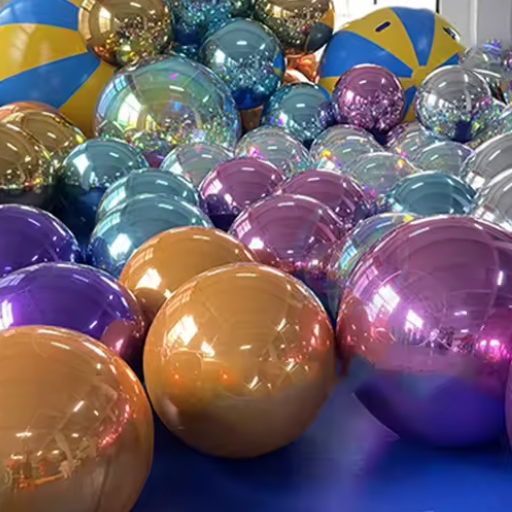



Helium balloons are a source of happiness for numerous parties; however, their time in the air may differ a lot due to various reasons. Have you ever been curious about the reason for the different rates of balloon deflation? The following post will explore the main distinctions between foil and latex balloons in cold outdoor conditions. You will learn how the type of material and the surrounding atmosphere affect the flotation time of helium balloons, along with some great tips to prolong the life of your balloons for any event. So, let us start revealing the scientific facts about helium balloons and turning your next party into a great festival of joy that lasts longer!
Introduction to Helium Balloons

What Are Helium Balloons?
Helium balloons can be defined as very light, inflating balloons filled with helium gas, which is an element considered to be lighter than air. This quality of helium balloons makes them so light that they can float to the top without any resistance, and thus they have become a common option for various decorations, celebrations, and events. Helium, being non-flammable and non-toxic gas, is a safe and feasible option for many applications.
Two main types of helium balloons can be identified: latex and foil. Latex balloons are produced from natural rubber and are biodegradable, stretchable, and versatile for many designs. However, they usually have a limited floating time of around 12 to 24 hours because helium can easily escape through the porous latex material. On the contrary, foil balloons or Mylar balloons are made from a thin metallic film that is very less permeable to helium, allowing them to float for several days or even weeks if the conditions are right.
Importance of Understanding Balloon Longevity
The longevity of the balloons is an important factor, and understanding it is the key to their best use during events and celebrations. A balloon’s life span is dependent on a lot of different factors such as the material, surroundings, and the treatments done. For instance, latex balloons typically stay afloat for about 12 to 24 hours when filled with helium but their life can be prolonged to a week if hi-float solution is applied. In case of foil or Mylar, balloons they seem to have a much longer life span of about 5 to 7 days or even longer if perfect conditions are met.
Heat and moisture are important factors that contribute to the life span of a balloon. Experts say that the gas in helium gets bigger when it is warm thus causing the balloons to pop if they are overfilled, while at the same time cold temperatures would make the gas shrink thus resulting in loss of buoyancy. A study has shown that the best performance of helium balloons happens at a temperature of between 70°F and 80°F (21°C to 27°C). Besides, a research report indicates that direct sunlight causes balloons to deteriorate faster since the UV rays are breaking down the materials and as for latex balloons they might lose buoyancy in as little as 8 hours if left outdoors.
How Cold Weather Affects Helium Balloons

Scientific Explanation of Helium Behavior in Cold Air
Helium balloons are the ones that are singled out among others when it comes to the influence that temperature has on them and this is as a result of gases’ physical characteristics. The ideal gas law states that the pressure of a gas is directly related to its temperature when the gas volume and number of gas particles are unchanged. When the surrounding temperature is low, helium atoms’ kinetic energy within the balloon is reduced. This leads to a drop in the internal pressure, and as a result, the balloon shrinks and looks like it is not filled with gas.
It is a fact that experiments have proven that helium gas undergoes a considerable reduction in volume when it is cold. For instance, at freezing point (0°C or 32°F), helium gas can reduce its volume by up to 10% when compared to room temperature (20°C or 68°F). This volume loss is not irreversible, the balloon comes back to its original size once the temperature is raised. Nonetheless, if the balloon is exposed to cold for a long time, the material of the balloon will eventually get stretched and thus the balloon won’t be able to rebound completely.
Why Balloons Deflate Faster Outside in the Cold
Balloons in the cold environment lose air quickly because of the gas behavior rules laid down by the Ideal Gas Law. This law says that the gas pressure and volume are directly proportional to the temperature. When a balloon filled with helium gas gets cold, the molecules inside the balloon get less energetic and move slower and consequently the gas volume is reduced. This results in the balloon looking partially deflated or collapsed.
For instance, when the temperature is at 0°C or 32°F, helium loses a lot of its volume in comparison to the room temperature (around 70°F or 21°C), the balloon can become less visible as its size can be reduced by such a process. Studies also suggest that a balloon made out of latex can gradually shrink as much as 10-20% of its volume that is originally there when exposed to extreme cold, depending on the thickness and quality of the material. Furthermore, latex balloons are more permeable than foil balloons and hence, the helium contained balloons lose their gas sooner under low temperatures. The loss of helium from latex balloons is at a rate of 0.5-2% during an hour in average and the rate might increase during cold weather because the material becomes less elastic.
Foil Balloons vs. Latex Balloons in Cold Conditions

Durability and Longevity of Foil Balloons
Foil balloons are made of metalized plastic which is a thin layer and they are known for their durability and helium retention when compared to latex balloons. About 3 to 5 days is the inflated lifespan of foil balloons and some lucky ones may even last for a week or more when conditions are ideal. Their long-lasting nature is due to their non-porous structure that gives a very slow helium escape rate. Apart from that, foil balloons stand the test of time against environmental effects like humidity and UV thus they are the designers’ choice for reliable long-lasting decorations.
As per the research and data from the industry, the life span of foil balloons indoors at room temperature can be significantly longer than that of latex balloons. If the temperature is really low then foil balloons may shrink due to helium being responsive to cold air. However, they bounce back easily when that is done. Proper storage, avoiding extremes in temperature, and sealing the balloons can make them last even longer.
How Latex Balloons React to Cold Weather
Latex balloons, while great for their bright colors and stretchability, ice up differently than foil balloons when the temperature drops. Latex balloons lose their volume and firmness because of the contraction of the gas inside them when they are cold. This happens because the molecular motion of gas is reduced when the temperature drops leading to the visible lowering of the balloon’s size and firmness. Usually, latex balloons filled with helium will become less buoyant in cold conditions faster than the non-porous latex because they both; contracting and helium escaping are happening in tandem.
Cold weather can also have a negative impact on the elasticity of the latex material itself. Low-temperature conditions stiffen latex material making it susceptible to cracking if inflated excessively or roughly handled. In research, it has been shown that latex balloons can suffer volume loss of up to 25% when temperatures drop below freezing and this loss can be noticed almost instantly in extremely cold conditions.
Practical Tips for Using Helium Balloons in Cold Weather

Best Practices for Displaying Balloons Outdoors
Choose the Right Material
The first thing to do when deciding on balloons for outside activity is to check out the materials that can cope with hot and cold. Among them are Mylar (foil) balloons that are more resilient than latex ones and are less prone to shrinkage or overinflation due to temperature changes. Even so, latex balloons that have a protective coating applied, e.g., Hi-Float, can last longer.
Adjust Inflation Levels
Balloons used outdoors should be filled to about 90-95% of their maximum capacity. This is a precaution against bursting of balloons due to their expansion in hot weather or contraction in cold climates. Research shows that latex balloons swell by 10-15% more when they are in the sun or direct heat, which means that if they are overinflated, there is a high probability of bursting.
Anchor Balloons Securely
Balloons in outdoor settings are often subjected to gusty winds and treacherous weather. By using secure anchoring points like weighted bases or special balloon stands, you are helping to cut down on the chances of your balloons blowing away or rocking too much.
How to Prepare Balloons for Cold Weather Events
Choose Cold-Resistant Balloons
When it comes to cold places, not all balloons are created equal. Latex balloons for example become smaller and lose their ability to stretch in the cold making them look like they are not properly inflated. On the other hand, foil (Mylar) balloons do not lose their size and are more resistant to cold weather. Therefore, it’s better to go for balloons that have the label of being suitable for cold-weather.
Adjust Inflation for Temperature Changes
When the temperature drops, the air inside balloons gets contracted. So, according to this, the solution is to slight over-inflate the balloons indoors to the point where they can still contract a little when they are taken outdoors. However, one must be careful not to over-inflate too much, as it might still cause the balloon to be stressed or even burst in freezing conditions.
Use Helium with Caution
The effect of cold on helium is that it shrinks to a large extent which results in the reduction of lift and visibility of helium-filled balloons. To counter this, it is better to inflate helium balloons just before the event, or to add a little bit of air to helium in order to reduce the effects of contraction while keeping it floating.
Conclusion: Key Takeaways and Actionable Advice

Summary of Cold Weather Effects on Balloons
Cold weather has a great negative effect on helium-filled balloons mainly because of the changes it brings about in helium and balloon materials. Cold helium takes less space and as a result, balloons become smaller and look like they are not filled with gas anymore. New discoveries tell us that there is a 3 to 5 percent decrease in the volume of helium gas for every 10 degrees Fahrenheit drop in temperature. Consequently, the balloons will not only droop but also lose their lift quicker than one might think.
Moreover, the low temperatures will have exposed the balloon materials to conditions which will have made them more brittle, thus the popping or tearing will become more likely. According to studies, the latex balloons once the temperature drops below freezing (32°F or 0°C) will be 25% more likely to burst because of the inability of the material to stretch as it normally would. On the other hand, foil balloons will actually be able to handle the cold a little better as they are more robust, but they will also be at risk of damage.
Final Recommendations for Balloon Enthusiasts
Material Selection
Latex and foil balloons are each consigned to their own area of utilization. While being the more eco-friendly option, latex balloons possess the drawback of being a lot more sensitive to undesirable elements like temperature, which leads to expansion and contraction ultimately resulting to bursting in certain cases. Contrary to this, foil balloons are less prone to such problems as they are very strong and able to withstand the heat very well. However, they still have their weaknesses since they need to be accurately inflated so as not to be damaged.
Inflation Guidelines
The limitation for balloon inflation is 90-95% of their maximum capacity in every case, particularly where there is a transfer of balloons from one place to another that has widely different temperatures. Take for instance, a helium balloon that has been blown up to the maximum in a room with a temperature of 72°F (22°C) and then taken outside where the temperature is below 32°F (0°C) may burst due to contraction of helium gas. Likewise, if one overinflates in the cold then upon transfer of the balloon to a warm place it may undergo expansion and give in to bursting.
Helium Conservation
Helium is a limited resource and therefore its usage and the related expenses should be minimized. There are users who are resorting to the use of gases like air or nitrogen as substitutes for the occasional helium in short-term displays or even experimenting with air-filled options coupled with structure supports such as balloon stands and frames to achieve the desired effects without relying on helium all the time.
Reference Sources
-
Balloon Innovations Blog
- Title: “Can you really use balloons in the winter?”
- Key Insights: Discusses the challenges of using latex and mylar balloons in cold weather and introduces DuraBalloons® as a durable alternative designed to withstand extreme temperatures (as low as -20°F).
- Source: Balloon Innovations
-
WDTN News Article
- Title: “Balloon shrinks in cold weather”
- Key Insights: Explains how helium balloons appear to deflate in cold weather due to the Ideal Gas Law, which affects the density and volume of helium. Offers practical advice for handling helium balloons in cold conditions.
- Source: WDTN News
-
Zephyr Solutions Blog
- Title: “Why do helium balloons deflate faster in cold air?”
- Key Insights: Provides a scientific explanation of how temperature impacts helium density and volume, causing balloons to shrink in cold weather. Reassures readers that the helium remains intact and can expand again in warmer conditions.
- Source: Zephyr Solutions
Frequently Asked Questions (FAQs)
What is the reason that helium balloons in cold weather can stay afloat for a longer period?
One of the reasons why helium balloons can last longer in cold weather is the fact that the air becomes denser, thus providing more support for them to stay up. The process of cooling down helium in the balloon causes the balloon to look less inflated but it is still effective. To extend their life, it is better to keep them warm as long as possible.
What is the condition of helium balloons in cold weather after one night stay outside?
The overnight temperature drop can cause helium balloons to lose some of their volume when they are kept outside in the cold. A temperature drop to around 20 degrees is considerable and causes the helium to contract; thus, when the morning comes, the balloon looks like it has lost its air or has sagged.
How about foil balloons, do they keep their shape in the cold?
As a rule, foil balloons are less permeable to the environment than latex balloons and that is one of the reasons that they keep their shape in cold weather. Moreover, foil balloons are not as prone to helium leakage as latex ones, letting them stay inflated for a longer period of time even in cold conditions.
In what way can balloon artists prolong the life span of their helium balloons?
The usage of hi-float coating on the inside of the balloon is one of the common ways to hold the helium in and reduce the helium leak rate. Moreover, using the right type of balloon for the weather conditions can greatly influence the lifespan of the balloons.
What is the reason behind sagging of helium balloons in the cold weather?
The cooling effect on the helium inside the balloon is the reason that helium balloons sag in cold weather and so the balloon becomes less buoyant. The gas law equation states that when the temperature is reduced, the density of the gas inside the balloon also becomes lower thus the balloon is appearing flatter.