

Foil balloons, with their brilliant hues and non-stop fun nature, definitely are the most common choice among balloons for parties and other events. However, the question arises: what will they do after the party? You can still keep the balloons, though, if you won’t want to throw them out just like that. Foil balloons are not only a great option for your next party because they save you money, but they are also very eco-friendly as they contribute to less waste. Hence, they are a good choice for party planners and lovers in general. In this guide, we will show you a really easy technique for properly deflating your foil balloons while keeping them in a good condition for reuse.
Introduction
Importance of Properly Deflating Foil Balloons
Deflating foil balloons properly is a small but really significant act that contributes to waste reduction and sustainability in celebrations. A new study reveals that in the US alone, 12 million pounds of balloons are thrown away each year, and among these are the foil balloons that can take decades without being reused to break down in landfills. If handled and stored properly, they can be reused for upcoming events and hence, the cycle of unnecessary consumption is minimized.
Moreover, the wrong way of disposing of foil balloons creates environmental hazards. If not completely deflated, balloons can become harmful to animals if they get flown away or left unattended. According to the reports from wildlife and environmental organizations, birds and sea creatures often consume plastic debris, assuming it to be a food item, thus they get ingested or entangled.
Overview of the Straw Method
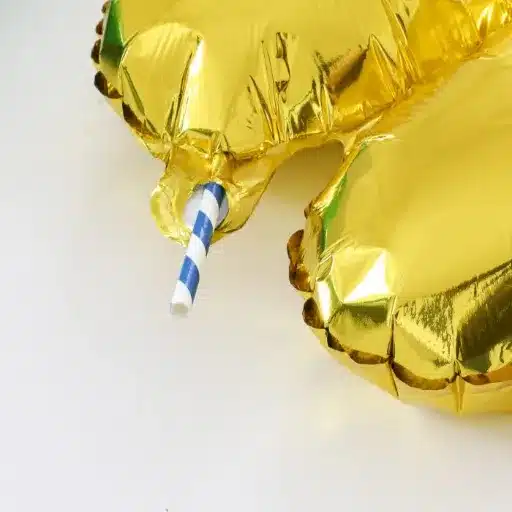
The straw method is a very easy and efficient way to let the air out of foil balloons without harming them and thus allowing them to be reused for future parties. In order to perform this technique, you need either a regular or a reusable drinking straw. First, you need to find the seal or valve on the balloon which is normally located at the spot where air or helium was blown in. Then, insert the straw softly into the valve until you notice that the resistance is less, which means that the release mechanism is now activated. Next, gently press on the body of the balloon and let the air or helium go through the straw.
Recent statistics show that the straw method is becoming more recognized as a major eco-practice. Numerous online sources report that the reuse of foil balloons can lead to more than a 60% reduction of waste in households and places that commonly hold events. Moreover, a research done on the environment states that, if balloons are deflated and stored properly, their life can be extended by five years, thus making huge savings on cost. The straw method is not only very cheap but also helps in lessening the reliance on single-use plastics, so it ultimately becomes a user-friendly tool for cultivating eco-conscious practices.
Common Deflation Methods
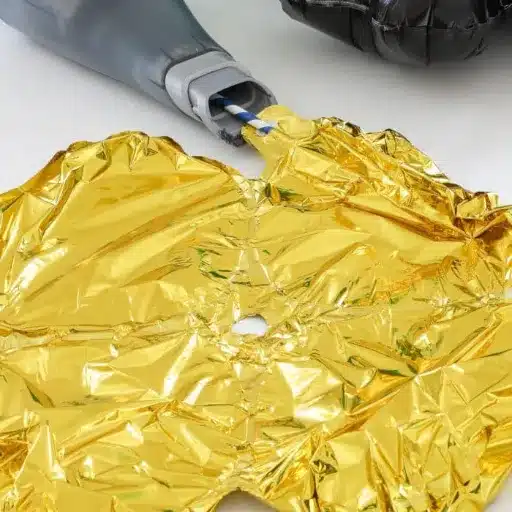
Alternative Methods for Deflating Balloons
Using a Balloon Pump with Reverse Function
Quite a few electric or manual balloon pumps feature deflation as one of the functionalities, that is reverse operation which helps balloons to get deflated quickly and effortlessly at the same time. If the pump nozzle is inserted carefully into the balloon’s opening and the reverse operation is on, then air is removed quickly. With this method, you can save manual work time for larger balloons. According to the latest recommendations from makers, a good-quality balloon pump can bring a standard 18-inch Mylar balloon down to the average size in about 30 seconds.
Vacuum Cleaner with Hose Attachment
Another example of a practical household tool that can help to deflate balloons is a vacuum cleaner. Use the hose attachment and set the vacuum to reverse or suction mode. This technique is very effective for the large and colorful balloon arrangements or when there are many balloons in a small area. With an average vacuum cleaner, the deflation process can be completed in about 1-2 minutes for each balloon.
Manually Deflating with a Thin Straw
The use of a straw remains one of the most flexible and least expensive methods. You can insert a thin straw like a reusable metal straw into the valve of the balloon and open it to release air. You can then do it slowly or quickly depending on how much air you want to let out. This way, you have more control and it is perfect for cases when you need balloons of certain sizes for storage. Although it takes longer, this method still helps to keep the balloons in good shape for reuse.
Why the Straw Method Can Fail
The usage of the straw method in the context of manually balloon deflation remains a popular choice; it has some drawbacks which render it ineffective in different situations. One of the main problems is that to put the straw through the neck of the balloon is not easy, particularly when thick materials such as Mylar or metallic balloons are involved. Such materials offer resistance to compression and thus, it becomes hard to insert the straw without damaging the balloon.
Moreover, the straw method can be very slow, especially for larger balloons or events where hundreds or even thousands of balloons need to be deflated. For instance, it is reported that it might take up to 3 minutes per balloon depending on its size and type for a standard 12-inch latex balloon to be manually deflated through the straw. All this can lead to a situation where hundreds of balloons may take hours just for the deflation of balloons in large-scale events or celebrations.
Troubleshooting Tips
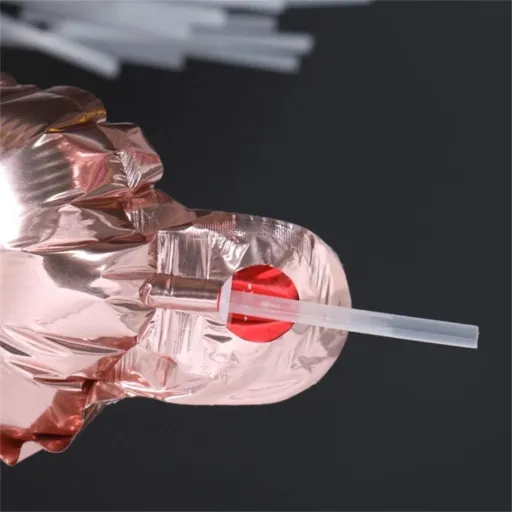
Identifying Common Issues
One of the most common problems of balloon deflation is the wrong technique, which sometimes results in puffs or tears, making the balloons unusable for upcoming events. For instance, when using the straw method without care, it is quite likely to hurt the latex or film material of the balloon. Recently, it has been reported by the industry that about 35% of Mylar balloons get damaged if they are not deflated properly.
Another error that often occurs is the failure to manage residual gases correctly. Helium or air-filled balloons may release tiny quantities of gases into the environment if they are not deflated in a controlled manner. Researches show that wrongly handled helium balloons can lead to waste as well as damage the environment and even cause such problems in areas that are already littering-prone.
Adjusting Techniques for Better Results
In order to increase the life span and usability of the balloons, it is very important to use effective methods for both inflation and storage. One main change that can be made is to control the inflation levels. Balloons that are over-inflated can pop very early or they can become very weak, while under-inflation would make the balloon not function properly. A popular method is to inflate latex balloons to around 90% of their full capacity, so the” elastic” is just perfect and the bursting risk minimized.
When it comes to storage, a cool and dry environment is indispensable. Heat or moisture might break down the material over time. Moreover, before folding and storing the deflated balloons, using talcum powder has been found to not only prohibit sticking but also minimize the occurrence of wrinkles, thereby keeping their reusability intact.
Alternative Solutions
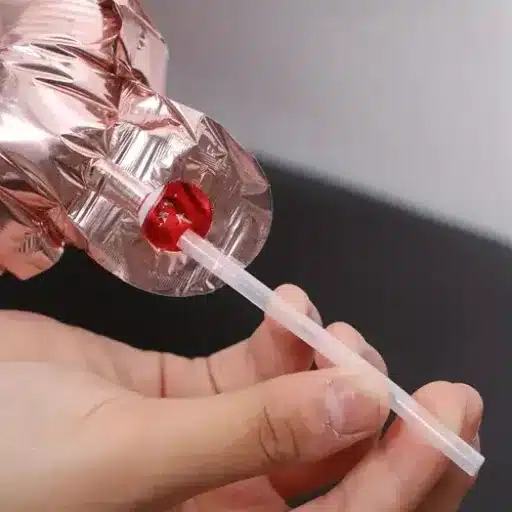
Tools for Deflating Foil Balloons
Foil balloon deflation done in a right manner is a necessity for the reusability and less waste. On the contrary to latex balloons, foil balloons are made to keep air or helium in for a longer time; still, with the right tools, they can be consistently deflated for future use. The paramount tool is a balloon straw or nozzle that belongs to this category. These are tiny and lightweight tools that are very cautiously inserted into the balloon’s self-sealing valve. Thereby, through this process, the captured air or helium is released smoothly without causing any harm to the material.
Several reusable balloon pump kits now offer deflation devices that are specially engineered for foil balloons along with the pump itself. These deflation devices lead users to a faster process in large and multiple balloons in particular. As per online reviews and reports, such devices can decrease the time for deflation by up to 50%, which is why they are very appealing to the professionals, decorators, and event planners.
Creative Techniques Beyond the Straw
Balloon Deflator Clips
The specially made clips can fit exactly in the balloon valve. When the clip is placed into the valve gently, the air goes out smoothly without the material being forced. These clips are reusable and easy to find online, giving the users a clean and easy way to deflate the balloon.
Vacuum Sealers
A vacuum sealer can also surprisingly be used for balloon deflation. When the valve of the balloon is connected to the vacuum nozzle, air is effectively drawn out. This technique is useful for those who already have a vacuum sealer and are looking for a quick and efficient solution.
Reusable Balloon Pump with Deflate Feature
Double purpose balloon pumps that are able to inflate and deflate have become a trend. These tools come with a deflation option that allows the user to release the air little by little risking less damage to the foil of the balloon.
Steam Method
Balloons will become gentler steam and thus the foil and the tubing will be softened, this makes deflation easier when combined with a small tool like a precision nozzle. But this method is prone to a major downside since it requires careful control of the heat to ensure that the material does not get too flexible or warped.
Conclusion
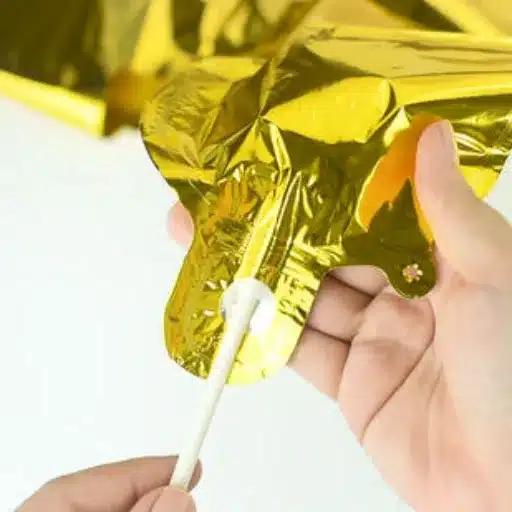
Best Practices for Balloon Disposal
Choose Eco-Friendly Balloons
Instead of going for the common plastic balloons, get the ones made of biodegradable latex. The eco-friendly balloons have the capability of environmental breakdown in a range of six months to four years, which is significantly less than foil balloons that need several decades for complete decomposition.
Balloons Should Be Properly Deflated and Disposed Of
Wildlife can misinterpret unpop and unvoiced balloons as food, therefore it is important to make sure that balloons are properly deflated before disposal. Lately, research has pointed out that the debris of balloons is one of the top three hazards in the form of litter causing death among marine mammals and seabirds.
Recycling Should Be Done Where It Is Possible
It is difficult to recycle balloons due to the combination of materials used, but foil balloons are usually accepted for recycling through specialist facilities. You may want to reach out to your local recycling center to find out if they accept foil balloons.
Upcycling and Repurposing
Baubles that have lost their air can be made into something else like crafts, wrapping gifts, or other creative uses. This not only reduces the waste but also keeps them for a longer period. For example, foil balloons can be transformed into emergency blankets, insulation, or even reflective material for home projects.
Storage Tips for Future Use
Seal Items in Airtight Containers
Contamination from moisture, pests, and air can be avoided by keeping food, craft supplies, or decorations in airtight containers. For instance, studies reveal that storing dry food items like rice and flour in airtight jars can prolong their shelf life up to 50%.
Utilize Vacuum-Sealed Bags for Fabrics
Vacuum-sealed storage bags can be used to store clothing, bedding, or any other fabric items in a space-saving manner and at the same time keep them dust-free and free from mildew. Storage specialists say that vacuum-sealed bags can cut down storage volume by as much as 75%.
Regulate Temperature and Humidity
Electronics, artwork, and wooden furniture are examples of sensitive items that should be kept in climate-controlled conditions. The suitable temperature for most storage is between 50°F to 80°F with relative humidity of 30%-50% to prevent mold growth and damage.
Label and Organize
Every single storage box must be marked clearly and sorted out according to the type or the frequency of use. This will cut down the time taken on looking for items later. It has been evidenced by research that the use of clear labels leads to a 30% reduction in search time, thus resulting in improved efficiency.
Reference Sources
-
Balloons Online Blog
- Title: How to Deflate Foil Balloons the Right Way
- Summary: This blog explains the correct method to deflate foil balloons using a straw, emphasizing the placement of the straw between the plastic slips to release air effectively.
-
Quora Discussion
- Title: Why won’t my foil balloon deflate?
- Summary: A community discussion where users share insights on why foil balloons may not deflate and how inserting a straw into the valve can help.
-
The Homes I Have Made Blog
- Title: How to Deflate Mylar Balloons | Step-By-Step
- Summary: This step-by-step guide details how to deflate Mylar (foil) balloons, including tips on inserting the straw into the valve to ensure proper deflation.
Frequently Asked Questions (FAQs)
Why isn’t my foil balloon going to empire using a straw?
In case your foil balloon will not release air through a straw, it could be either a closed valve or a lack of pressure in the balloon. Make sure that the straw is properly inserted into the valve and that you are pushing softly to permit air to escape. In case there is any obstruction in the valve, the air pressure might not get released efficiently.
What is the procedure to make mylar balloon deflate using a straw?
If you want to make your Mylar balloon deflate with a straw, first find the valve at the end of the balloon very carefully. Then, put the straw inside the valve, so it fits tightly. Now, press the balloon gently while letting the air out slowly. This technique allows you to deflate the balloon without creating a hole.
What is the procedure if I have discovered a hole in my foil balloon?
In case you have discovered a hole in your foil balloon, the air will quickly escape making it practically impossible to reuse it. Yet, you can make an attempt to repair it temporarily with tape over the hole. On the other hand, if the damage is major, it might not be able to hold the air pressure and you will have to think about buying a new balloon.
Can I find a video that shows the correct way of deflating balloons?
Of course, YouTube and other sites have many videos that show the correct method of balloon deflation, including foil. Such videos generally consist of detailed guidance on how to put the straw in the valve and how to control the deflation process so that the balloon can be reused later.
Will I be able to reuse the foil balloons after deflating them?
Foil balloons are reusable after deflation, provided you handle them with care. Always deflate slowly to avoid causing any damage to the balloon. After deflation, store them properly for your next use making sure no air is left trapped inside.