

Latex balloons are a classic choice and still the one that we can all trust to lift the spirits of any festival in seconds. But have you asked yourself how long these colorful balloons remain inflated? If you are organizing a birthday party, a wedding, or a corporate event, it is vital for you to know the life span of latex balloons so that you can maintain the best look of your decorations during the whole event. We will be talking about the different factors affecting the life of the latex balloons, giving some tips for their long-lasting and talking about practical ways to keep them looking good for as long as possible. So, get ready to discover what lies behind these party must-haves!
Introduction to Balloons

Balloons have been surrounded by many misconceptions
Did you know that latex balloons, made from the sap of rubber trees, are not only flexible but also eco-friendly? Their decomposition rate is similar to oak leaves when environmental conditions are right. Helium-filled latex balloons have an average floating duration of 8 to 12 hours which is quite variable as it is affected by temperature, altitude and balloon quality. Hi-Float aids the balloons to last up to several days instead of just hours.
Being similar but different, foil balloons are made from a thin layer of plastic coated with a metallic finish, a process that results in their becoming less porous and thus capable of holding helium for a much longer period than the latex balloons—days or even weeks. It is interesting to note that the medical and technological advancements of the past few years have also led to an increase in the demand for helium which, in turn, has affected the prices and availability of balloons.
Why Air Retention Matters
Balloons’ air retention power is one of the ten factors that spell out the success or the death of an event or a celebration where they are present. Balloons with longer air retention characteristics are the ones always found at the frontlines of the event fight, slowly inflating, and looking at their best as long as the venue is alive and the party is on. Poor air retention, on the contrary, gets the decorators, organizers, and guests into trouble, defining their contributions as ”deflated” or ”sagging”.
Data that is up-to-the-minute points to the different performances of latex and foil balloons. Latex balloons, depending on their quality, keep air for about 8-12 hours when filled with helium and possibly longer with air. The use of additives such as Hi-Float, which helps seal the interior of the balloon, can increase its floating time to over 24 hours. On the other hand, foil balloons sometimes hold helium for weeks, their non-porous surfaces being the reason for that.
Types of Balloons and Their Longevity
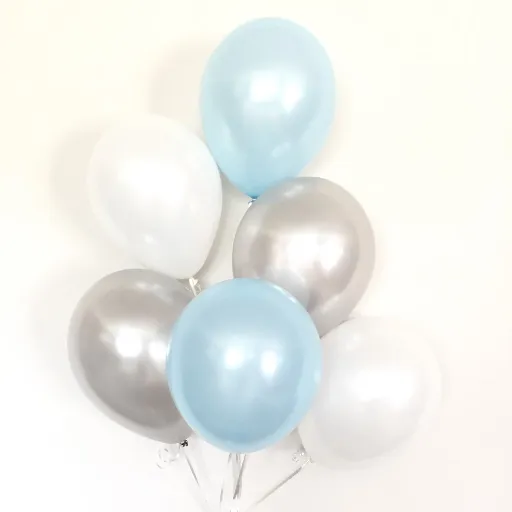
Latex Balloons: How Long Do They Last?
Latex balloons are the event planners’ best friend because of the variety of their use, along with their low cost and flexibility. The factors that affect the duration of their use include the environment, the way they are inflated, and if any preservation methods were used. Generally, air-filled latex balloons last 12 to 48 hours, that is, the hotter and more humid the area is, the shorter their life span will be.
Latex helium balloons, usually, have a floating period of 8 to 12 hours if the condition is normal indoors. Helium can escape through the tiny holes in the coating of latex and that is why balloons filled with helium have a shorter float life than those filled with air. Meanwhile, an aerosol such as Hi-Float can be applied inside balloons to increase float time. That time may go up to 24-48 hours or more, depending on the quality of the coating and storage conditions.
Foil Balloons vs. Latex Balloons
1. Material and Appearance
Foil balloons are manufactured from a layer of metallic foil or mylar, which is very thin and gives them a surface that is shiny and very reflective. Most often they are decorated with elaborate prints and that is why they are mostly used for themed parties and large events. In contrast, latex balloons are made of natural rubber latex and have a less shiny finish, thus giving a classic and vibrant appearance. Besides, they have a wide choice of colors and can be made into practically any desired shape such as arch or clusters.
2. Float Time and Durability
Floil balloons, in most cases, have a float time longer than that of latex balloons. Thanks to the helium filling, foil balloons can be kept airborne for up to 5-7 days or even longer if they are correctly secured, which is suitable for prolonged celebrations. Latex balloons, less costly, usually last in the air 12-24 h with no special treatment. Nevertheless, when sealed with specific sealants, like Hi-Float, their float time is extended to 24-48 hours. Foil balloons are less prone to bursting than their latex counterparts, as they are able to withstand heat and sun, but they are sensitive to sharp objects which may cause a total loss of the helium with time.
3. Environmental Impact
Latex balloons eventually decompose in nature, as they are made from natural rubber, thus they are considered biodegradable, although the process takes several months. However, if not disposed of properly the balloons may still cause harm to animals and nature. On the contrary, foil balloons are non-biodegradable and are treated as single-use plastics. Their shiny surfaces also pose a threat if they are accidentally released into the wilderness, especially in the case of power lines, as they can cause outages.
4. Price and Usability
Foil balloons are much more expensive than latex balloons; hence, the latter is the obvious choice for large decorations or events when the budget is tight. The price of foil balloons is mainly due to their longevity and the fact that they add elegance to the occasion, but they are very beautiful and worth it for the events that need glamorous and eye-catching displays. Moreover, foil balloons are self-sealing and reusable while latex ones are to be tied and are generally used only once.
Factors Affecting How Long Balloons Stay Inflated

Composition of Balloons
The majority of balloons consist of two types of materials – latex and foil – and each of them has unique attributes depending on the manufacturing process. Latex balloons are made from synthetic rubber which is a biodegradable substance extracted from rubber trees. This is the reason why it is considered an eco-friendly option. However, the downside of nature’s gift to mankind is that it is not very long lasting – latex is porous taking away helium or air faster so they end up getting deflated sooner. Normally helium filled latex balloons last for about 12 to 24 hours; the time varies with the size of the balloons and the surrounding conditions.
On the contrary, foil balloons are manufactured using a thin layer of nylon with a metal-like aluminum being the most common coating on top. This particular kind of composition not only makes them less penetrable but gives them the quality of being more sturdy; thus, usually, helium-filled foil balloons can last for 3-5 days or even longer in the right conditions. On the flip side, foil balloons are not biodegradable, a fact that puts them on the dark side environmentally notwithstanding their popularity due to visually appealing designs and being long-lasting.
Factors from Environment that Affect Lifespan
There are quite a number of environmental factors that dictate the timeline for decomposition of balloon materials and their respective characters. In the case of biodegradable latex balloons, direct sunlight is a major factor that speeds up the degradation of the latex. When latex is exposed to UV rays they not only conquering the strength of the rubber but also making it easier for the bacteria to do their work. Some researchers have concluded that latex balloons can decay within 6 to 12 months if they are in the sun. Conversely, whenever there is little or no light and poor air circulation like underwater or buried in soil it may take years or even longer for decomposition.
Foil balloons are typically made of metallic-coated nylon. These materials are not only synthetic but also impervious to natural degradation hence the manufacturers have to make sure the balloons are disposed of in a proper manner. Recent studies have shown that the materials used to make foil balloons are extremely tough to break down and so they can take decades or longer to completely disappear if not thrown away properly. Foil balloons that are thrown into marine environments have thus been identified as indirectly responsible for the death of marine animals because they can cause strangling, can be eaten by animals that mistake them for food, etc. Besides, there are very few recycling options available for this kind of material which adds to the overall negative effect they have on the environment.
Tips to Extend the Lifespan of Inflated Balloons
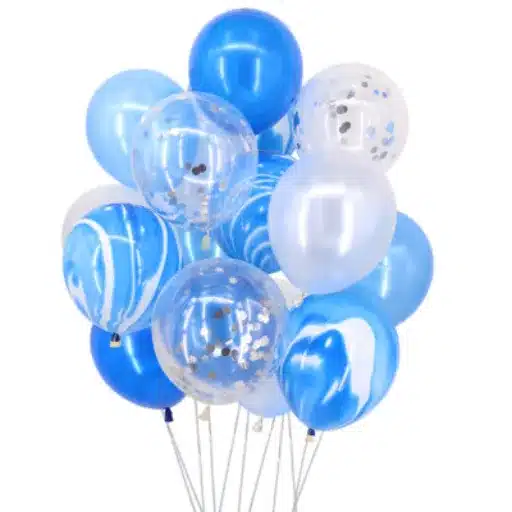
Best Practices for Inflation
Select the Right Inflation Medium
Make a decision between regular air and helium according to your requirements. Helium gives away the typical floating effect but on the other hand, it is more expensive and has a shorter lifetime due to the fact that its small molecular size allows it to escape over time. Regular air is not able to make balloons float, however, it is more cost-effective and keeps balloons inflated for a longer period.
Control Inflation Pressure
One of the main reasons for the balloon to pop is the over-inflating. It is suggested to keep a little “neck” at the bottom of the balloon while it is inflating to avoid the latex or material from being overtightened. The research recommends filling latex balloons to 90-95% of their capacity as being the best compromise between the look and the life.
Room Temperature Affects
The ambient temperature plays a big role in the balloons’ life. For example, helium gets bigger with heat and smaller with cold, which increases the chances of either bursting or losing air. To get the best results, keep the balloons in an atmosphere with controlled temperatures between 68°F and 72°F (20°C to 22°C).
Tips for the Storage of Inflated Balloons
Keep Balloons in a Cool Environment
Heat is one of the key elements that can result in the expansion, deformation, or bursting of balloons. Ideally, the inflated balloons should be stored in a cool and shady area where the temperature is kept between 68 and 72°F (20 and 22°C). Do not put them close to sunlight, heaters, or any other heat-emitting appliances.
Stay Away from Sharp Objects and Rough Surfaces
The storage space should be checked for any sharp points or rough areas that might puncture the balloons and these should be removed. It would be good to put the soft fabrics or bubble wrap under the storage area as an extra protection.
Use a Sealable Container for Latex Balloons
In case of latex balloons, put them in plastic bins or bags to lessen the exposure to air or changing humidity levels. Some studies indicate that controlled humidity can maintain balloon flexibility thus, it will be less likely to deflate.
Mylar Balloons Are Long-Lasting but Require Care
Mylar (foil) balloons are less permeable than latex balloons, thus they retain helium longer. Nevertheless, they are vulnerable to severe cold which could result in temporary shrinkage of the mylar material. If they are kept in a cold place, let them warm up slowly before use.
Scientific Explanation of Air Loss in Balloons

Understanding the Permeability of Balloon Materials
The permeability of balloon materials such as latex or mylar is a key factor in deciding how long a balloon will remain air or helium filled. Natural rubber is the source of latex balloons, which is a material with a lot of tiny holes. The gas molecules will eventually be able to escape through these pores, especially the smaller ones like helium, and the balloon will deflate. Mylar balloons, on the other hand, are made of synthetic material and have much lower permeability; therefore, they can keep the gas in them for a much longer time compared to latex balloons.
In scientific tests the differences are very clear. It has been estimated that helium generally escapes from latex ballons with a daily rate of 3% depending on the weather which results in deflation of about 10–12 hours for small balloons. As for mylar ones, then, they lose the gas very slowly and thus keep their lift for days or even weeks.
The Science Behind Helium Diffusion
He, the lightest element, is very easily difused owing to the small size and low molecular weight of the atoms, which lets them quickly pass through tinyInteratomic spaces that balloons are made of the materials. The process consists of two basic phenomena: permeability and effusion. Permeability is the rate at which helium atoms penetrate the molecular structure of the balloon material; effusion refers to the movement of helium through small pores or defects.
For instance, latex balloons consist of natural rubber, a material that is to some extent permeable, thus helium can escape from it rather quickly. In the case of untreated latex, it takes approximately 10–12 hours for a helium-filled blower to lose so much helium that it becomes significantly deflated. This is because rubber does not form an effective barrier against helium which has very tiny atoms and, therefore, it penetrates much faster than larger gases like oxygen or nitrogen.
Reference Sources
-
Party On Butler Blog
- Title: How Long Do Helium Balloons Last? Tips for Balloon Decor
- Summary: This blog provides insights into the float time of helium balloons, including tips for extending their longevity, making it a practical resource for event planners and decorators.
-
Chaoee Website
- Title: How Long Latex Balloons Last with Regular Air
- Summary: This article discusses the lifespan of latex balloons filled with regular air, offering detailed information on how long they stay inflated under different conditions.
-
Facebook Group Post
- Title: How Long Does Helium Last in Latex Balloons for Events
- Summary: A community discussion providing real-world experiences and tips on helium balloon longevity, including factors that affect their float time.
Frequently Asked Questions (FAQs)
What are the reasons for the fluctuations in the time of balloons being inflated?
The time the balloons keep their shape depends on a host of factors including their size, the type of material they are made of, the kind of gas filled (helium or air) and the environment they are in. For example, helium balloons can survive longer under cooler conditions.
Is there any method to prolong the freshness of the balloons?
To prolong the freshness of the balloons, you should store them indoors in a cool place away from direct sunlight. Besides, using high-quality balloons will really make a difference when it comes to their lifespan.
In what way do foil balloons compare in their lifespan to latex balloons?
Absolutely, foil balloons last long as compared to latex balloons. While the latter may last only hours to few days, foil balloons can stay inflated for days to weeks depending on the conditions.
What is the float duration of my balloons if they are filled with helium?
Twelve to twenty-four hours is the standard duration for helium-filled balloons to float, however, if proper care is given, they may last even longer. Keeping them in a cool place is one of the tips to extend their float duration.
Key Takeaway
Understanding balloon longevity helps you plan better events and celebrations. Choose latex for eco-friendliness and variety, or foil for longer-lasting displays. Proper storage and the use of products like Hi-Float can significantly extend your balloons’ lifespan, ensuring your decorations stay beautiful throughout your special occasion.